
The best compact digital camera for photos is the KODAK PIXPRO FZ55 for simple, sharp, travel-ready shooting.
You know the moment: your phone battery is low, storage is full, or the scene looks dull on a small screen. A compact camera solves that problem with a dedicated lens, real zoom, and simple controls. I tested these options by looking at size, photo detail, focus, zoom, battery needs, ease of use, and value. This guide will help you find the best compact digital camera for photos, whether you need a travel camera, a first camera for a teen, or a small tool for casual family shots.
KODAK PIXPRO FZ55 16MP Compact Camera

The KODAK PIXPRO FZ55 is the most balanced choice in this group. Its 16MP sensor gives you enough detail for prints, albums, and social posts without making the camera hard to use. The 5X optical zoom also gives you more reach than a typical phone camera. I like that it stays small enough for a coat pocket or a light travel bag.
The FZ55 uses a rechargeable battery, which makes it easier to manage on trips than a camera that needs disposable cells. Its controls are friendly for beginners, yet the dedicated zoom helps you frame a subject with more care. It is not a low-light specialist, but it performs well in daylight, family events, vacations, and outdoor walks. For many buyers, this is the best compact digital camera for photos because it offers a clear mix of price, size, and useful features.
Pros:
- 5X optical zoom helps frame distant subjects
- Compact body fits easily in a small bag
- Rechargeable battery reduces the need for AA cells
- 16MP resolution works well for everyday photos
- Simple controls suit first-time camera users
- Available in a classic black finish
Cons:
- Small sensor limits detail in very dim scenes
- Battery charging requires access to a cable or charger
- Not designed for advanced manual photography
My Recommendation
I recommend the FZ55 for travelers, parents, students, and anyone who wants a real camera without a steep learning curve. The optical zoom is useful for landmarks, pets, school events, and candid family photos. It also makes a good backup camera when you do not want to depend on your phone. If you want the best compact digital camera for photos at a sensible price, this model is the safest all-around pick in the list.
KODAK PIXPRO FZ45 16MP Compact Camera

The KODAK PIXPRO FZ45 keeps the experience simple. It has a 16MP image sensor and a 4X optical zoom, so it can handle normal portraits, travel scenes, and family moments with little fuss. The camera uses AA batteries, which may appeal to people who want quick replacements from a store. That feature can be helpful on road trips or camping days.
The FZ45 is a practical point-and-shoot camera rather than a creative manual camera. Its small size makes it easy to carry, and its basic layout helps a child, older user, or beginner learn the controls. In bright light, it can produce pleasant photos for sharing and small prints. I would choose it over a phone when you want a separate device that feels more focused and less distracting.
Pros:
- 16MP resolution suits common photo needs
- 4X optical zoom adds useful framing range
- AA batteries are easy to find and replace
- Simple design is friendly for beginners
- Light body is easy to carry all day
- Good fit for travel and family use
Cons:
- 4X zoom is shorter than the FZ55 zoom
- AA batteries add weight and long-term cost
- Image quality drops in low light
My Recommendation
The FZ45 is best for buyers who value easy battery replacement above maximum zoom. I especially like it for camping, school trips, family use, and older photographers who prefer simple controls. It is also a smart choice for a child who may misplace charging cables. As a budget option, it remains a strong candidate for the best compact digital camera for photos when bright-light shooting is the main goal.
FHD 1080P Point-and-Shoot Camera for Kids
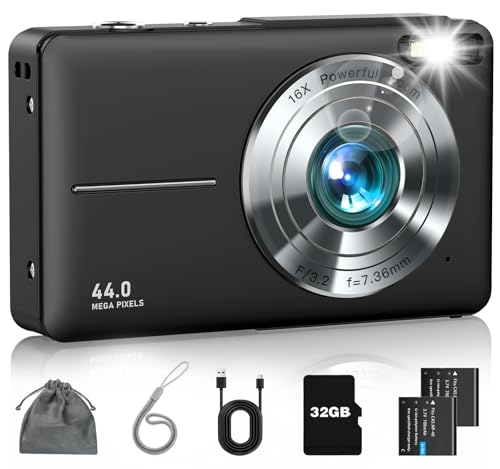
This small FHD camera is made with young users in mind. It offers simple point-and-shoot operation and records video at up to 1080p according to its listing. The included 32GB card helps a child start taking photos without buying storage right away. Its compact form also feels less precious than an expensive adult camera.
I see this model as a learning tool first. Kids can practice framing, timing, and basic camera care without facing complex menus. The results will not match a larger camera with a better sensor, especially indoors, but that is not the main purpose here. For birthdays, vacations, school projects, and creative play, it offers a friendly first step into photography.
Pros:
- Simple controls help children start quickly
- FHD video supports basic clips and projects
- 32GB card adds useful out-of-box value
- Small design suits young hands
- Less costly than many adult cameras
- Good option for travel and supervised use
Cons:
- Small sensor may struggle in dark rooms
- Image detail is aimed at casual use
- Children may need help with charging and file transfer
My Recommendation
I recommend this camera for kids and young teens who want their own photo tool. It is a better choice than handing over a phone when you want creative freedom with fewer distractions. Parents should set realistic expectations about indoor quality and zoom range. For a young beginner, this can be the best compact digital camera for photos because it keeps the learning curve gentle and the cost manageable.
48MP Autofocus 4K Vlogging Camera

This compact camera targets beginners who want both still photos and video. Its listing highlights autofocus, 48MP still images, 4K video, and a 32GB card. Those numbers look impressive, but I always remind buyers that megapixels do not tell the whole story. Lens quality, light, focus, and camera processing shape the final image just as much.
The camera makes sense for casual vlogging, short travel clips, and social content. Autofocus can make shooting easier when you are still learning how to keep a subject sharp. The included card adds convenience, while the small body remains easy to pack. It is a flexible starter kit, though serious creators may later want a larger sensor, a better microphone setup, or more control over exposure.
Pros:
- Autofocus helps beginners capture sharp subjects
- 4K video supports higher-resolution clips
- 48MP listed resolution offers cropping room in good light
- 32GB card lets you begin shooting right away
- Compact size works well for travel content
- Useful blend of photos and video features
Cons:
- High megapixel claims do not ensure high image quality
- Small sensor performance may fall in low light
- Advanced users may outgrow the controls
My Recommendation
This model suits a beginner creator who wants one small camera for photos, clips, and simple vlogs. It is a good gift for a teen or a first camera for a social media hobby. Use good light to get the most from its listed resolution. If your priority is versatility rather than the most natural low-light image, this camera is a useful alternative to the best compact digital camera for photos.
Duluvulu 4K 48MP Flip-Screen Camera

The Duluvulu compact camera is built around creator-friendly features. The product listing includes 4K video, autofocus, a 48MP image setting, a 180-degree flip screen, a 16X zoom claim, two batteries, and a memory card. The flip screen is helpful for selfies, front-facing videos, and checking your pose. Two batteries can also reduce stress during a long day of shooting.
I would treat the zoom figure as a convenience feature rather than a promise of telephoto camera quality. Digital zoom often enlarges the image instead of adding true detail, so optical performance and light still matter. The camera is most useful for beginners who want a fun, flexible kit with a screen they can see from the front. It has more creator appeal than a basic pocket point-and-shoot.
Pros:
- 180-degree screen helps with selfies and vlogs
- Two batteries support longer shooting sessions
- Autofocus simplifies casual photography
- 4K video gives creators a high-resolution option
- Included card improves starter value
- Compact body is easy to pack for trips
Cons:
- Digital zoom may reduce detail at long range
- Small sensor is not ideal for dark scenes
- Many listed features may feel excessive for simple photo use
My Recommendation
The Duluvulu is best for teens, new vloggers, and travelers who want a front-facing screen. I like it for self-recording because the flip display removes much of the guesswork. It also works for casual still photos when you have plenty of light. Choose it when video and selfies matter as much as finding the best compact digital camera for photos.
KODAK PIXPRO FZ55 Red Compact Camera

The red version of the KODAK PIXPRO FZ55 offers the same core appeal as the black model while adding a brighter look. It combines a 16MP sensor with a 5X optical zoom in a small point-and-shoot body. That zoom helps when you cannot move closer to a subject. The red finish may also make the camera easier to spot in a crowded bag.
I consider this a strong choice for buyers who want uncomplicated photography. It starts quickly, feels familiar, and does not ask you to study a long manual before taking pictures. Daylight scenes, vacation snapshots, pets, and family events are its natural territory. The main difference from the black version is style, so choose based on color and current availability.
Pros:
- 5X optical zoom gives useful reach
- 16MP sensor suits everyday photos
- Bright red finish is easy to identify
- Small body fits in travel bags
- Rechargeable design avoids routine AA purchases
- Friendly controls suit beginners
Cons:
- Low-light photos may show noise and soft detail
- Limited manual control for experienced photographers
- Color availability may vary by seller
My Recommendation
I recommend the red FZ55 for anyone who wants the FZ55 experience with more personality. It is a nice fit for travelers, parents, and users who prefer a camera that is easy to find at a glance. Its 5X optical zoom remains the key benefit. For simple, bright-light shooting, it is still a strong choice for the best compact digital camera for photos.
8K 96MP Wi-Fi Flip-Screen Camera

This camera is aimed at beginners who want a feature-rich creator kit. Its listing highlights Wi-Fi, autofocus, an 8K video mode, a 96MP setting, a 3.5-inch screen, a 180-degree flip display, anti-shake, and 20X zoom. Wi-Fi can make file sharing easier when the camera and phone work with the same app or connection method. The large screen may also help users review photos without squinting.
There is an important point about specifications here. A high megapixel number or 8K label does not prove that the camera will beat a quality phone or mirrorless camera. These modes can depend on processing, light, and storage, and large files fill a card quickly. I see this model as a fun all-in-one option for experimenting with photos and video, not as a professional replacement.
Pros:
- Wi-Fi can support convenient file sharing
- Large 3.5-inch screen helps with framing
- 180-degree display suits self-recording
- Autofocus reduces setup time
- Anti-shake may help during handheld shooting
- Many modes give beginners room to explore
Cons:
- High-resolution modes need plenty of storage
- Small sensors may limit real detail
- Wi-Fi setup may take patience
My Recommendation
I would choose this camera for a beginner creator who values features and a large screen. It can be enjoyable for travel videos, selfies, and casual stills in good light. Buyers should not judge it by resolution labels alone. If your goal is easy sharing and creative play, it may suit you better than a basic best compact digital camera for photos.
8K 88MP Wi-Fi Camera for Beginners

This 8K camera is designed for beginners who want Wi-Fi and high-number specifications in a compact body. The listing states an 88MP autofocus camera with Wi-Fi, giving users a simple way to take photos and move toward basic content creation. Autofocus can help when you are still learning how to place the subject. The camera is easy to understand compared with a full interchangeable-lens system.
As with any budget camera that advertises a very high pixel count, I would focus on real use rather than the number on the box. Good daylight will help this camera show its best side. Indoor scenes may need extra light, and the final result depends on the lens and processing. It is a reasonable starter for casual photos, family use, and short video projects.
Pros:
- Autofocus helps new users get started
- Wi-Fi offers a modern sharing feature
- Compact size makes travel easier
- High-resolution mode allows flexible cropping in good light
- Simple operation suits beginners
- Can handle both photos and video
Cons:
- Resolution claims should not be confused with sensor quality
- Low-light results may be limited
- Advanced photographers may want manual controls
My Recommendation
This camera is best for a first-time user who wants Wi-Fi and a modern feature list. It can work well for trips, casual portraits, and beginner video work. I would suggest it to someone who enjoys learning by trying different modes. It is not my first pick for the best compact digital camera for photos, but it can offer good value when its listed features match your needs.
4K 56MP Camera with Mode Dial

The 4K 56MP model stands out because of its mode dial. A physical dial can feel more natural than searching through a menu, especially for a new photographer. The listing also mentions 16X zoom, a 180-degree flip screen, 4K video, and a design for teens. These features make it more than a basic still-photo camera.
The mode dial may help a young user understand how different shooting settings change the image. The flip screen also makes self-portraits and front-facing videos easier. I would use it in daylight for travel, school projects, and simple creator work. The listed megapixel count should be viewed as a feature setting, not a direct promise of professional detail.
Pros:
- Mode dial gives quick access to shooting options
- 180-degree screen helps with selfies and vlogs
- 4K video supports detailed clips
- Compact design suits teens and travelers
- 16X zoom offers flexible framing
- Simple layout encourages hands-on learning
Cons:
- Zoom may rely partly on digital enlargement
- Small sensor performance can fall indoors
- Feature labels may exceed the needs of basic users
My Recommendation
I recommend this camera for teens ages 8 to 16 and new users who like physical controls. The dial can make photography feel more real and less like tapping a phone screen. It is also a useful pick for simple vlogging and travel photos. Choose it when learning, video, and fun matter more than finding the most polished still image.
Best-For Guide
| Best for | Why |
|---|---|
| Everyday travel photos | The KODAK PIXPRO FZ55 combines a small body, 16MP photos, and 5X optical zoom. |
| Kids and young beginners | The FHD point-and-shoot model keeps controls simple and includes a 32GB card. |
| Vlogging and selfies | The Duluvulu and 4K models add flip screens, video modes, and creator-friendly controls. |
How I Choose the Best Compact Digital Camera for Photos
Choosing a compact camera starts with the type of photo you take most. A traveler may care about size and zoom, while a parent may want quick focus and easy charging. A teen may prefer a flip screen and video tools. The best compact digital camera for photos should match your habits instead of chasing the largest number on a product page.
I first look at the lens and zoom. Optical zoom uses the lens to bring a subject closer, so it usually keeps more detail than digital zoom. A 4X or 5X optical zoom can help with buildings, pets, food, and people across a room. Still, no small camera can replace a long professional lens.
Next, I consider the sensor and light. More megapixels can help with cropping, but sensor size and image processing often matter more. Small compact cameras work best outdoors or near a bright window. In a dark room, a phone with strong computational processing may sometimes produce a cleaner photo.
Battery type also matters. Rechargeable batteries reduce the need to carry spare AA cells, but you need a cable or power bank. AA-powered cameras offer easy replacement almost anywhere. Neither option is always better. The right choice depends on whether you travel near shops, carry a charger, or spend time away from power.
Ease of use is another key test. A camera should let you turn it on, frame the shot, focus, and press the shutter without confusion. A physical mode dial can help users learn. A flip screen can help with selfies. Wi-Fi can save time, but only if the connection process feels reliable and simple.
Compact Camera Features That Matter Most
Many listings use large numbers to gain attention. I do not ignore those numbers, but I put them in context. A 96MP setting may create a large file, yet that does not mean it captures the same fine detail as a high-quality larger sensor. The same rule applies to 8K video. Resolution matters, but light, focus, lens quality, and stable handling matter too.
Autofocus is one of the most useful features for casual users. It helps you spend less time adjusting the camera and more time watching the moment. Still, autofocus works best when the subject has enough light and contrast. If you shoot a dark pet in a dim room, even a good focus system may need help.
Optical stabilization can make handheld shots easier, but not every compact camera includes it. Anti-shake claims may refer to digital processing. This can reduce the appearance of camera movement, but it cannot freeze a moving child or pet. For action, use a faster shutter or brighter light when the camera allows it.
Storage is easy to overlook. High-resolution photos and 4K or 8K video use more space. A 32GB card may be enough for casual photos, but video can fill it quickly. I suggest copying files to a computer or cloud service after important trips. Keep a spare card if you plan to record for long periods.
How to Get Better Photos From a Small Camera
Start with light. Face your subject toward a window or shoot outdoors during soft morning or late-day light. Hard midday sun can create deep shadows, so turn the subject slightly or find open shade. Better light often improves a photo more than a higher pixel setting.
Hold the camera with two hands when possible. Keep your elbows near your body and press the shutter with a calm touch. This small habit can reduce blur. If the camera has a delay, half-press the shutter first so it can focus before you take the picture.
Use optical zoom before digital zoom. Move your feet closer when it is safe and practical. If you must use digital zoom, keep the subject well lit and avoid extreme enlargement. A sharp image with a little empty space often looks better than a soft image that fills the frame.
Keep the lens clean. A fingerprint can make every photo look hazy, especially when a bright light sits in the frame. Use a soft lens cloth, not a shirt or paper towel. Store the camera in a small pouch to protect the lens and screen from dust.
Take more than one photo of important moments. People blink, pets move, and small cameras may need a moment to focus. A short burst of two or three shots can improve your odds. Then delete the weak images so your storage stays tidy.
Who Should Buy a Compact Digital Camera?
A compact digital camera suits people who want a dedicated tool without carrying a large camera bag. It is useful for travel, family gatherings, school events, casual portraits, and outdoor walks. The best compact digital camera for photos can also help you focus on the scene instead of notifications. That simple change can make photography feel more personal.
Compact cameras are also good for children and teens when parents want a safer, simpler device. A camera can encourage observation and creativity without opening the door to every app on a phone. Choose a basic point-and-shoot model for ease. Choose a flip-screen model if the child wants to make videos or selfies.
These cameras are less ideal for professional work, large gallery prints, or serious night photography. A mirrorless or DSLR camera gives you a larger sensor, better lenses, and more control. However, that equipment costs more and takes more time to learn. A compact camera wins when you value convenience and portability.
Buying Advice for Amazon Shoppers
Before ordering, check the exact camera model and color. The black and red FZ55 versions are separate listings, even though their core features are similar. Read the current listing for included items such as the battery, charging cable, memory card, and case. Bundles can change over time.
Also review the seller, return terms, and recent customer comments. Look for feedback about battery life, focus, menu use, and file transfer. A product can look excellent on paper but feel frustrating if the controls are unclear. Real user feedback often reveals small details that a specification list cannot.
Do not assume a memory card is included unless the listing clearly says so. If you plan to record high-resolution video, buy a compatible card with enough capacity and speed. Format the card in the camera when the manual recommends it. This can help reduce file errors.
Finally, consider your main use before paying more for extra modes. If you only want family photos, a simple KODAK model may be the better buy. If you want selfies and vlogs, a flip screen may justify a different design. Features have value only when you use them.
FAQs Of best compact digital camera for photos
What is the best compact digital camera for photos?
The KODAK PIXPRO FZ55 is my top all-around choice here. It offers 16MP photos, 5X optical zoom, a small body, and simple controls. It suits travel, family photos, and everyday use.
Are compact cameras better than phone cameras?
Not in every situation. A phone may perform better in dark scenes because of advanced processing. A compact camera can still offer a dedicated shutter, optical zoom, less distraction, and easy physical handling.
Is a higher megapixel count always better?
No. Megapixels describe image size, not total image quality. Light, lens quality, focus, sensor size, and processing also affect sharpness and color.
What compact camera is best for kids?
A simple FHD point-and-shoot camera is the easiest option for young users. It offers basic controls, FHD video, and a 32GB card. A teen who wants videos may prefer a flip-screen model.
Do I need a memory card for a compact camera?
Most users should buy one. A memory card gives you more room for photos and video. Check the camera listing and manual for the supported card type, capacity, and speed.
Final Verdict: Which Should You Buy?
The KODAK PIXPRO FZ55 is my top choice and the best compact digital camera for photos for most people. Its 5X optical zoom, 16MP sensor, small body, and easy controls create a strong everyday package.
Choose a kids’ model for simple learning or a flip-screen camera for vlogging. For travel photos and family moments, the FZ55 offers the best balance of value, ease, and portability.

Everett Ashford is a tech reviewer at mytechgrid.com specializing in SSDs, cameras, TVs, earbuds, headphones, and other consumer electronics. He provides honest, data-driven reviews based on hands-on testing and real-world performance analysis. Everett simplifies complex tech details to help readers make smart, confident buying decisions.
One Comment