Introduction
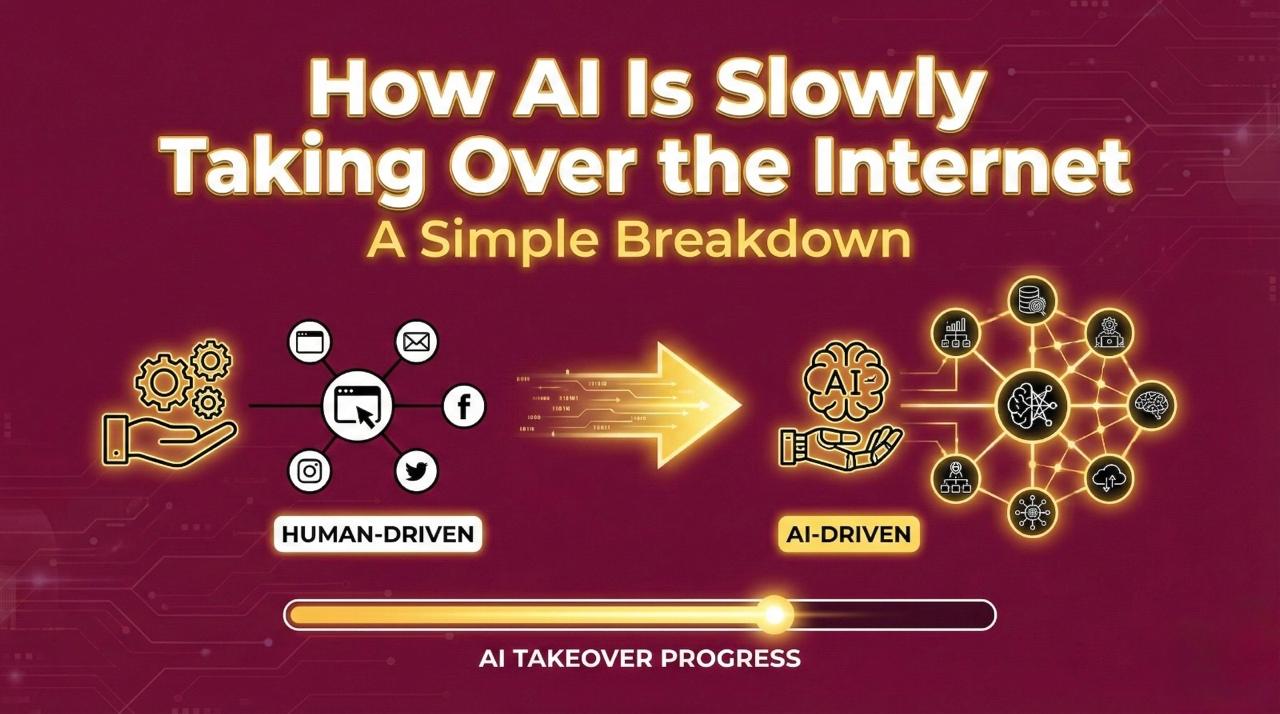
For people in the United States, AI is already changing how we search, work, shop, read news, and use social media. Google, Microsoft, Meta, Amazon, OpenAI, and many smaller U.S. companies now use AI to create, sort, summarize, and recommend online content.
But AI has not “taken over the internet” in the sense of replacing all human websites or conversations. The better answer is this: AI is becoming a powerful layer over the internet, while humans still create much of its trusted content, set its rules, and decide how it is used.
The largest change is not only that AI can write text or make images. AI can now shape what people see, answer questions without sending them to a website, produce large amounts of low-quality material, and act as an automated visitor to online services.

The short answer: AI is taking over parts of the internet, not the whole internet
AI is taking over some online tasks quickly:
- Writing basic articles, product descriptions, and social posts
- Creating images, videos, music, and computer code
- Summarizing search results and news stories
- Answering customer questions
- Ranking posts, videos, products, and advertisements
- Detecting spam, fraud, and harmful content
- Crawling websites through automated AI tools
- Personalizing feeds and recommendations
Yet several parts of the internet still depend heavily on people:
- Original reporting
- Personal experience
- Local knowledge
- Human relationships
- Expert judgment
- Legal responsibility
- Fact-checking
- Community moderation
- Creative direction
The internet is becoming a mixed system. Human-made content, AI-made content, AI-assisted work, and automated decisions now exist side by side.
The main question is not whether AI will replace the internet. It is which parts of the internet will become automated, which human skills will gain value, and who will control access to information.
What does “AI taking over the internet” mean?
The phrase can describe several different changes. These changes are related, but they are not the same.
1. AI-generated content
AI tools can produce:
- Blog posts
- News summaries
- Images
- Video clips
- Audio
- Code
- Reviews
- Product listings
- Social media comments
Some content is created with careful human review. Other content is generated in bulk with little checking. This creates a major quality gap.
AI can make a page sound clear and polished while still giving a wrong answer. It may also repeat details from other sources without adding new value.
2. AI-mediated search
Search engines can now place AI-written summaries above normal results. In the United States, Google’s AI Overviews are one example of this shift. Microsoft’s Bing also uses AI features to answer questions and summarize information.
This changes the role of websites. A person may get an answer from a search page without clicking through to the original publisher.
That may save time for the user. It can also reduce visits, advertising income, and subscriptions for websites that produce the source material.
3. AI recommendation systems
Most large online platforms use algorithms to decide what users see first. AI helps rank:
- Videos
- Posts
- News stories
- Products
- Advertisements
- Search results
- Job listings
- Dating profiles
These systems do not simply show the newest content. They predict what may keep a person watching, reading, clicking, or buying.
4. AI agents and automated browsing
An AI agent is a system that can perform tasks for a user. For example, an agent may search for products, compare details, fill out a form, or organize information.
This could reduce the need for people to visit many separate websites. Instead, one AI system may act as the user’s online assistant.
That creates new questions about access. Should an AI agent be allowed to browse every page? Should websites charge for automated access? How can a site tell the difference between a helpful tool and a harmful scraper?
5. AI infrastructure
AI also affects the hidden parts of the internet. Data centers need large amounts of computing power, electricity, cooling, and network capacity.
The International Energy Agency reported that data centers used about 1.5% of global electricity in 2022 and projected that their electricity use could more than double by 2026. The exact effect of AI alone is difficult to measure, but AI workloads are a major reason for rising demand.
In the U.S., this growth affects data-center construction, local power grids, water use, chip supply, and energy policy.
How much of the internet is AI-generated?
There is no single reliable number for the percentage of the internet made by AI.
That number is difficult to calculate for several reasons:
- Many pages combine human and AI work.
- AI tools do not always label their output.
- A human may edit or publish AI-generated material.
- Search engines index content at different times.
- Social platforms have different rules.
- Researchers use different definitions of “AI-generated.”
- A page may contain AI-written text but human photos, data, or opinions.
Some studies have found signs that automated or AI-assisted content is increasing. However, these studies do not prove that most online content is now created by AI.
A safer conclusion is:
AI-generated content is growing fast, but the total share of the internet remains uncertain.
This distinction matters. A large amount of AI content can appear in search results or social feeds even if it is still a minority of all online material.
Why AI content is spreading so quickly
AI content spreads because it lowers the cost and time needed to produce basic material.
A small business can use AI to draft an email. A publisher can create a first draft. A video creator can generate captions. A developer can ask for code examples.
The same benefit can become a problem when people publish content without checking it.
Low production cost
A person may spend hours writing a simple page. An AI system can create a draft in seconds. This makes it easy to publish at a scale that human writers cannot match.
Low cost can help people with limited resources. It can also reward websites that produce large volumes of weak content.
Demand for constant updates
Social networks and online publishers often need a steady flow of new material. AI can create headlines, short posts, images, and summaries on demand.
This may make online feeds feel busy, but volume does not equal value.
Better tools
Modern AI models can write more naturally than early systems. They can also work with images, audio, video, code, and structured data.
Improved tools make AI useful in more jobs. They also make it harder for readers to know how a piece of content was made.
Business pressure
Companies want to reduce repetitive work and serve customers faster. AI can help with support questions, document searches, translations, and routine analysis.
The business case is strongest when AI assists a trained worker. It is weaker when a company uses AI to replace careful review in a high-risk area.
Is AI replacing human writers, artists, and creators?
AI is replacing some tasks, but it is not replacing every creator.
The most exposed work tends to be:
- Repetitive
- Formulaic
- Easy to measure
- Based on common information
- Produced under tight time pressure
- Not dependent on personal access or original reporting
Examples include basic product descriptions, simple ad variations, routine summaries, and first-draft code.
Work that is harder to replace includes:
- Investigative reporting
- Original interviews
- Personal essays
- Local reporting
- Brand strategy
- Creative direction
- Complex research
- Work that requires trust
- Work that carries legal or ethical responsibility
The likely result is not a simple switch from “human” to “AI.” Many jobs will use a combination of both.
A writer may use AI for research notes or outlines but remain responsible for interviews, facts, tone, and final edits. A designer may use image generation for rough ideas but make the final creative decisions.
The key value may move from producing a first draft to choosing the right idea, checking the details, and making the result useful for a real audience.
Will AI destroy websites and online publishers?
AI search can reduce the number of visits that some websites receive. This is often called a “zero-click” search, because the user gets an answer without opening a result.
The effect will not be equal across all websites.
Websites at greater risk
Sites may face more pressure when they publish:
- Short definitions
- Generic travel information
- Basic recipes
- Simple product summaries
- Common software instructions
- Rewritten news
- Answers that appear in many places
AI systems can summarize these topics with little effort.
Websites with stronger protection
Sites may retain more value when they offer:
- Original reporting
- First-hand testing
- Unique data
- Legal documents
- Local knowledge
- Expert analysis
- Active communities
- Tools and calculators
- Strong brands
- Personal stories
AI can summarize a product review, but it cannot fully replace the value of a trustworthy test. It can describe a local event, but it may miss what residents know.
The risk to the information supply
If publishers lose traffic and income, some may publish less original work. That could create a feedback problem:
- People create useful information.
- AI systems summarize it.
- Users stop visiting the source.
- The source earns less money.
- Fewer people fund original reporting.
- Future AI systems have fewer reliable sources to use.
This outcome is not certain. New business models, licensing deals, subscriptions, direct audiences, and stronger publisher brands may reduce the risk.
Still, the issue is real: AI systems depend on a healthy supply of human-created information.

Does AI make the internet less trustworthy?
AI can make the internet less trustworthy when people cannot tell what is real, who created it, or whether it was checked.
The biggest risks include:
- False information
- Fake images and videos
- Voice impersonation
- Fraudulent reviews
- Automated scams
- Fake social accounts
- Poor medical or financial advice
- Biased recommendations
- Confident but incorrect answers
AI can also increase the speed of a false claim. A person no longer needs a large team to produce many convincing messages.
Deepfakes and impersonation
A deepfake uses AI to make a person appear to say or do something that did not happen. Voice cloning can make a scam call sound like a family member, manager, or public official.
The Federal Trade Commission has warned about impersonation scams and has taken action related to deceptive uses of AI. Consumers should treat unexpected requests for money, passwords, gift cards, or urgent transfers with care, even when the voice or video seems familiar.
AI hallucinations
An AI hallucination is an answer that sounds confident but contains made-up or incorrect information.
Common warning signs include:
- Sources that do not exist
- Incorrect dates
- Wrong names
- Invented court cases
- False statistics
- Unclear claims presented as facts
- A failure to admit uncertainty
For important decisions, check the answer against primary sources, official records, or a qualified professional.
Synthetic reviews and comments
Businesses or individuals may use AI to create fake reviews, comments, or testimonials. These can distort public opinion and make low-quality products appear popular.
Readers should look for patterns such as repeated wording, vague experiences, a sudden burst of reviews, and claims that lack specific details.
Will AI control what people see online?
AI already plays a major role in deciding what many people see.
Social platforms use recommendation systems to select videos and posts. Search engines rank pages. Online stores suggest products. Streaming services recommend shows.
These systems can be useful because the internet contains more content than any person can review. But they can also create problems.
Personalization can narrow attention
A recommendation system may show more of what a person already watches. This can make the internet feel tailored, but it may reduce exposure to different views.
The system may also favor content that creates strong reactions. Anger, fear, and surprise can drive more clicks than calm explanations.
Ranking is not the same as truth
A post may appear at the top of a feed because it is engaging, not because it is accurate.
This is one of the most important rules for using AI-powered platforms:
Popularity, ranking, and personalization do not prove that information is true.
Readers should separate “the system showed this to me” from “this has been verified.”
Human choices still shape AI systems
AI recommendations reflect choices made by companies, engineers, advertisers, regulators, and users. Data sets and design goals affect the results.
That means AI control is not automatic or mysterious. People can influence it through product design, laws, audits, transparency rules, and user settings.
Is AI-generated content bad for SEO?
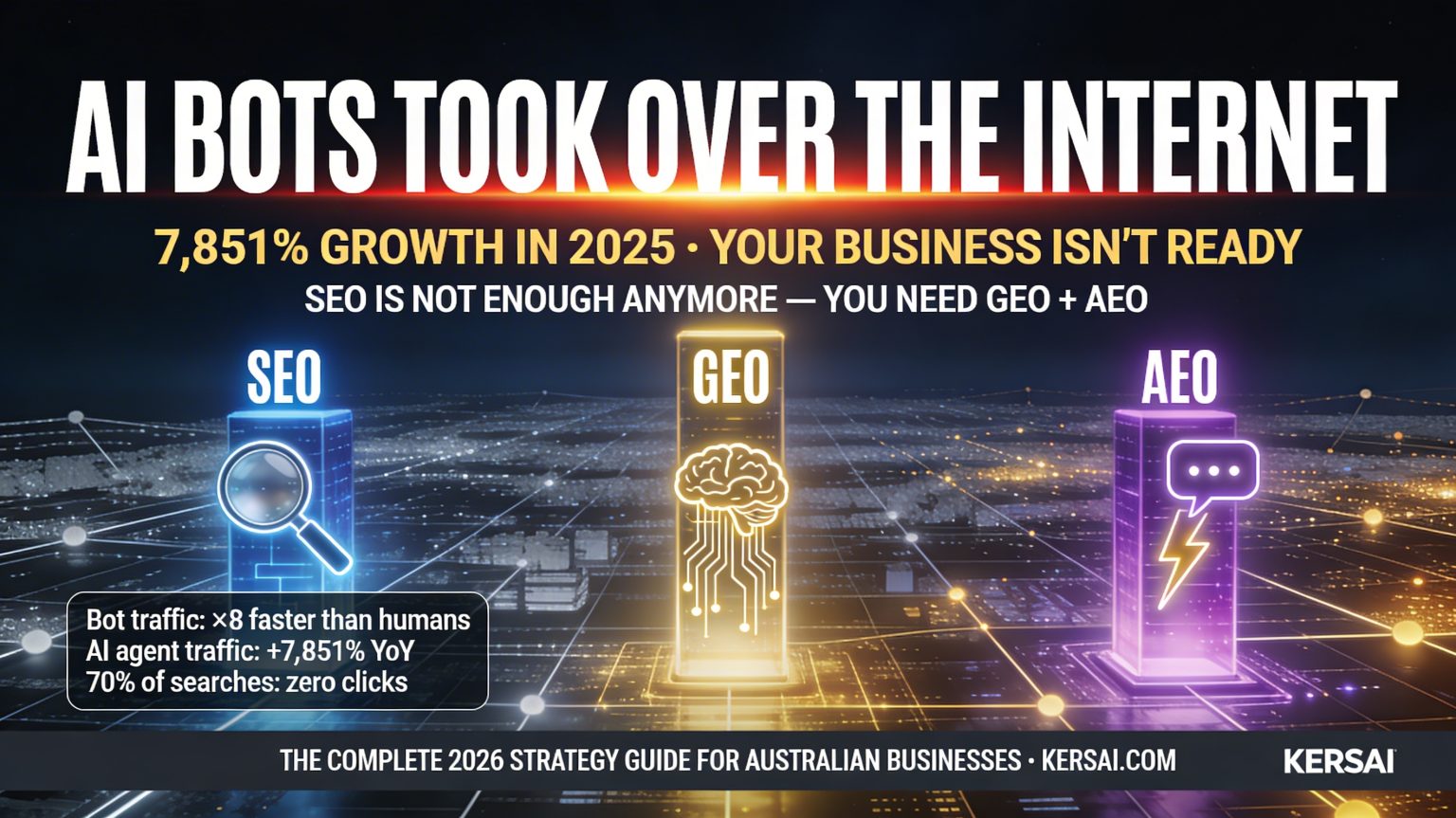
AI-generated content is not automatically bad for search engine optimization. The problem is content that offers little value, contains errors, or exists mainly to manipulate rankings.
Google’s Search Essentials and spam policies focus on helpful, reliable content rather than a simple ban on AI writing. Google has stated that using automation to produce content for the main purpose of manipulating search rankings violates its spam policies.
A useful page should:
- Answer a real reader question
- Add original information or analysis
- Use accurate sources
- Show who created or reviewed it when relevant
- Avoid unsupported claims
- Match the page title
- Provide clear next steps
- Keep the reader’s needs ahead of search traffic
AI can help with editing, outlines, translation, coding, and research organization. It should not be used as a reason to publish unchecked pages at scale.
A practical content test
Before publishing AI-assisted content, ask:
- What does this page add that existing pages do not?
- Which facts need a primary source?
- Has a person checked every important claim?
- Does the writer have first-hand knowledge?
- Could a reader make a bad decision because of an error?
- Is the page clear about its limits?
- Would the page still be useful without search traffic?
If the answer to most of these questions is no, the page probably needs more original work.
How can readers tell whether content was made by AI?
No visual or writing clue can prove that AI created a piece of content. AI detectors also make mistakes. They should not be treated as final proof of authorship.
Instead, evaluate the content itself.
Signs that call for extra checking
Be cautious when content has:
- Many broad claims but few sources
- Repeated phrases
- No clear author or organization
- Generic examples
- Strange names or incorrect citations
- Confident answers to complex questions
- Little evidence of first-hand experience
- Unusual errors mixed with polished writing
- Images that show distorted hands, text, or objects
- A large number of similar pages from one site
These signs do not prove deception. They simply suggest that the reader should verify key information.
Better ways to verify online information
For important claims:
- Check the original source.
- Look for the date and location.
- Compare at least two reliable sources.
- Use government, court, university, or company records when suitable.
- Search for the quoted study or report.
- Check whether an image is from the claimed event.
- Contact the organization through an official website.
- Do not rely on a screenshot alone.
For health, legal, financial, and safety decisions, online content should support—not replace—qualified advice.

How is AI changing online privacy?
AI systems need data to train, operate, personalize results, and improve performance. That data may include public information, user prompts, documents, images, voice recordings, location details, or behavior on a platform.
The privacy impact depends on:
- What data the system collects
- Whether the data is stored
- Who can review it
- Whether it is used for training
- How long it is retained
- Whether users can delete it
- Whether the company sells or shares it
- What security controls protect it
Users should avoid placing sensitive information into an AI tool unless they understand the service’s privacy terms and have permission to share the information.
Sensitive data may include:
- Social Security numbers
- Bank details
- Medical records
- Passwords
- Private legal documents
- Confidential business information
- Personal information about children
Businesses should create clear rules for employee AI use. A public chatbot is not automatically a secure document system.
What are the benefits of AI on the internet?
AI creates real benefits when used with clear limits.
Faster access to information
AI can summarize long documents, explain complex terms, translate text, and help users find relevant details.
This can support students, workers, people with disabilities, and users who speak different languages.
Better accessibility
AI can provide:
- Captions
- Transcripts
- Screen descriptions
- Voice interfaces
- Text simplification
- Translation
- Writing assistance
These tools can make online services easier to use.
More help for small businesses
A small company may use AI to draft customer replies, organize data, create a basic website, or translate product information.
This can reduce routine work without requiring a large staff.
Faster software development
Developers can use AI to explain code, find possible bugs, write tests, and create early prototypes.
The developer still needs to inspect the output. Incorrect code can create security or reliability problems.
Stronger fraud detection
Banks, payment companies, and online platforms can use AI to identify unusual patterns. This may help detect fraud, account takeovers, and automated abuse.
False positives remain a concern. A system may wrongly block a legitimate user.

What are the main risks of an AI-driven internet?
The largest risks are not limited to bad writing. They involve power, access, trust, and control.
Concentration of power
A small number of technology companies control many major AI models, cloud systems, app stores, search tools, and social platforms.
If these companies control the systems that create and distribute information, they can influence what becomes visible online.
Competition laws, open standards, public oversight, and user choice may affect how much power becomes concentrated.
Job disruption
AI may reduce demand for some routine tasks. Workers in writing, customer service, design, translation, data entry, and software development may feel pressure.
New jobs may emerge, but the transition may not be equal. Training, wages, and access to useful tools will shape the outcome.
Bias and unfair treatment
AI systems learn from data that can contain social bias or missing information. A system may produce different results for different groups.
This matters in hiring, lending, housing, education, insurance, policing, and health care. High-impact decisions need human review, testing, and legal safeguards.
Environmental costs
AI data centers use energy and may need water for cooling. The local effect depends on the facility, power source, cooling system, and region.
The benefits of AI should be weighed against its resource use, especially when the task has little public value.
Security abuse
Attackers may use AI to create convincing phishing messages, search for weaknesses, automate scams, or produce malicious code.
Defenders can also use AI, but security teams must assume that fraud attempts may become faster and more personal.
What can internet users do now?
Users cannot control the whole AI industry, but they can reduce personal risk.
Use AI as a helper, not a final authority
Ask AI to explain, summarize, brainstorm, or organize. Then verify facts that affect money, health, safety, work, or legal rights.
Protect private information
Do not paste confidential records into a tool without checking its terms and your organization’s policy.
Check the source behind the answer
When an AI system gives a citation, open it. Confirm that the source says what the answer claims.
Watch for urgency
Scams often demand immediate action. Verify requests through a separate channel, such as calling a known number rather than replying to a message.
Support original information
Subscribe to reliable local news, use reputable reference sources, and pay for useful tools when possible. Original reporting and research require funding.
Adjust platform settings
Review privacy, personalization, ad, and data-sharing settings. These controls vary by service, so check the current options in the account you use.
What should businesses do about AI-generated content?
Businesses should create a simple, written AI policy.
The policy should explain:
- Which tools employees may use
- What information they may enter
- Who reviews public content
- How the company checks facts
- When AI use must be disclosed
- Who owns the final work
- How the company handles customer data
- What happens when the tool gives a wrong answer
For public content, assign a human owner. That person should check claims, links, images, accessibility, tone, and legal concerns.
For customer support, give users a clear way to reach a person. Automated support should not trap users in a loop when the issue is complex or urgent.

A simple comparison: human-made, AI-assisted, and AI-generated content
The label alone does not determine quality. The process and review matter more.
| Content type | How it is made | Main strength | Main risk |
|---|---|---|---|
| Human-made | A person creates and checks the work | Original judgment and lived experience | Slower and more costly |
| AI-assisted | A person uses AI for part of the work | Faster drafts and routine support | Human review may be too weak |
| AI-generated | AI creates most of the work | High volume and low production cost | Errors, sameness, and low accountability |
| Human-verified AI output | AI creates a draft, then a qualified person checks it | Speed with added oversight | Review quality can vary |
For high-stakes content, human verification should be more than a quick grammar check. It should include fact-checking and a review of the possible harm caused by an error.
What happens next?
The internet will probably become more automated, but the outcome is not fixed.
Several developments may shape the next stage:
- Search tools may answer more questions directly.
- Websites may create rules for AI crawlers and agents.
- Publishers may seek payment or licensing for valuable data.
- Governments may set disclosure, privacy, and safety requirements.
- Companies may use smaller AI models for private or specialized work.
- Users may prefer services that show sources and explain limits.
- Human-made content may become more valuable when it includes proof of experience.
- Online identity and content origin may become harder to verify.
The most likely future is not a web filled only with AI. It is a web where AI handles more routine work and where human judgment becomes more important for trust, originality, and accountability.
Key takeaways
- AI is not replacing the entire internet. It is changing how content is created, found, ranked, and delivered.
- AI-generated content is growing, but its exact share of the web is unknown.
- Human reporting, expertise, local knowledge, and personal experience remain difficult to replace.
- AI search may reduce visits to some websites, especially those with generic information.
- AI can improve accessibility, productivity, fraud detection, and customer service.
- The main risks include false information, deepfakes, privacy loss, bias, job disruption, and concentrated power.
- Use AI for help, but verify claims that affect your money, health, safety, rights, or reputation.
Frequently asked questions
Is most of the internet made by AI?
No reliable source can show that most internet content is AI-generated. AI-created material is increasing, but much online content still comes from people, organizations, databases, forums, publishers, and businesses.
The amount also depends on what is counted. A short social post, a product listing, a video caption, and a news report are different types of content.
Will AI replace Google Search?
AI may change how people use search, but it has not eliminated traditional search. Many users still need links, comparison, local results, images, maps, shopping options, and original sources.
AI answers may become a larger part of search while standard results remain available. The balance will depend on accuracy, user trust, business incentives, and regulation.
Can AI tell whether another AI wrote something?
Not with complete accuracy. AI detection tools can produce false positives and false negatives, especially after editing or translation.
A detector result should not be treated as proof of authorship. Evidence about the writing process, source files, publication records, and human review is more useful.
Is AI content legal in the United States?
There is no single rule that answers every AI content question. Copyright, privacy, consumer protection, employment, publicity rights, and contract law may apply in different situations.
The legal result can depend on how the content was made, what material was used, where it was published, and whether it misleads or harms someone. Businesses with significant legal risk should consult a qualified U.S. attorney.
How can I avoid AI scams?
Do not trust an urgent request only because it uses a familiar voice, image, or writing style. Verify the request through a known phone number or separate method.
Never share passwords or send money based only on an unexpected message. Use multi-factor authentication and report suspected fraud to the relevant platform or government agency.
Will human content become more valuable?
It may become more valuable when it shows real experience, original evidence, clear responsibility, and strong trust. AI can produce common information cheaply, so unique information may stand out more.
A human label alone does not guarantee quality. The content still needs to be accurate, useful, and well supported.
Conclusion
AI is not taking over the internet as one sudden event. It is taking over specific tasks: drafting, ranking, summarizing, recommending, moderating, and automating online actions.
That shift brings useful tools and serious risks. The safest approach is neither blind excitement nor total rejection. Treat AI as a powerful assistant, question its answers, protect private data, and support the human work that keeps the internet reliable.
The internet’s future will depend less on whether AI can produce more content and more on whether people can preserve truth, accountability, choice, and trust.

Everett Ashford is a tech reviewer at mytechgrid.com specializing in SSDs, cameras, TVs, earbuds, headphones, and other consumer electronics. He provides honest, data-driven reviews based on hands-on testing and real-world performance analysis. Everett simplifies complex tech details to help readers make smart, confident buying decisions.