Introduction
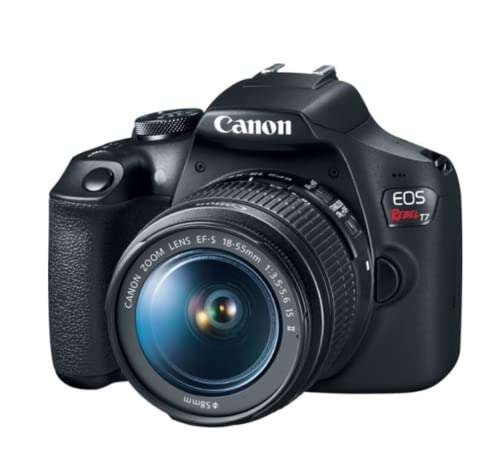
Yes, buying a refurbished Canon camera can be safe and cost-effective in the United States—but the seller matters more than the word “refurbished.” A camera restored and sold directly by Canon USA usually carries less risk than one sold by an unknown marketplace seller with no clear warranty or return policy.
Canon cameras are built to last, and many refurbished units need only minor cosmetic repair, cleaning, testing, or replacement of a small part. Still, refurbished does not mean risk-free. Before you buy, confirm the camera’s condition, shutter count, included parts, warranty, return window, and seller reputation.
What does “refurbished Canon camera” mean?
A refurbished Canon camera is a used, returned, display, or repaired camera that has been inspected and prepared for resale. The process may include:
- Cleaning the body and sensor
- Testing the shutter, autofocus, flash, and image processor
- Replacing worn parts
- Resetting the camera
- Updating firmware
- Checking the battery and charger
- Grading cosmetic wear
- Repacking the camera for sale
The exact process depends on the seller. “Refurbished” is not one universal condition grade. One seller may perform a full factory inspection. Another may only confirm that the camera powers on.
Canon’s official refurbished program is different from a private seller listing. When you buy from Canon USA, you can review Canon’s stated warranty and return terms. When you buy from a camera dealer or marketplace seller, that seller’s inspection process and warranty apply.
Refurbished, used, open-box, and renewed: what is the difference?
| Term | Typical meaning | Main concern |
|---|---|---|
| Refurbished | Inspected, repaired, or restored before resale | Quality varies by seller |
| Used | Previously owned and resold | May receive little or no service |
| Open-box | Returned with limited use or no use | May be missing parts |
| Renewed or renewed-like-new | Marketplace term for inspected used goods | Standards differ by platform |
| Demo or display model | Used for store demonstrations | May have high handling or shutter use |
These terms describe a sales condition, not a guarantee of performance. Read the listing and warranty instead of relying on the label.
Is a refurbished Canon camera as good as a new one?
A refurbished Canon camera can perform like a new camera, but it may have more cosmetic wear or less remaining product life. The answer depends on the model, the repair work, and the seller’s inspection standard.
A camera’s image quality does not automatically decline because it was previously owned. A refurbished EOS R6 can still produce the same type of image as a new EOS R6 when both cameras have the same sensor, firmware, and settings.
The greater risks are usually:
- A worn shutter
- A weak battery
- Damaged ports or card slots
- Sensor dust or scratches
- Autofocus problems
- Moisture or impact damage
- Missing accessories
- A short or unclear warranty
Canon’s product specifications can tell you what a camera is designed to do. They do not prove that a particular refurbished unit is in perfect condition. That is why the inspection policy and return period are critical.
When refurbished is a sensible choice
A refurbished Canon camera may be a good fit if:
- You want a lower price than a new model.
- You are buying from Canon USA or a trusted camera dealer.
- The camera has a clear warranty.
- You can return it if testing reveals a fault.
- You understand that cosmetic marks may be present.
- The model still meets your needs for photos, video, and connectivity.
When buying new may be safer
Buy new if:
- You need the lowest possible risk for paid work.
- You cannot test the camera during the return period.
- The refurbished discount is small.
- The seller will not state the warranty in writing.
- The camera is a rare or discontinued model with costly parts.
- You need a fresh battery and full factory accessory kit.
A large discount does not make a bad listing safe. Compare the total price, warranty, shipping, return cost, and included items.
Where is the safest place to buy a refurbished Canon camera in the USA?
The safest options are usually Canon USA or an established camera dealer with a written warranty and a real return process. The seller should clearly identify who handles repairs and how long you have to report a problem.
1. Canon USA
Buying through Canon’s official refurbished store can reduce uncertainty about inspection, compatibility, and warranty support. Check the product page and the applicable Canon warranty before ordering because terms can vary by product and sale.
Use Canon’s official website rather than an advertisement that only uses Canon’s name. Confirm that the website address is an official Canon USA domain and that the order is processed by Canon or an authorized seller.
2. Established camera retailers
Major camera retailers may sell used or refurbished Canon equipment. Look for:
- A detailed condition grade
- A stated shutter count, when available
- Real product photographs or clear grading
- A written return period
- A repair or replacement policy
- A business address and customer service contact
- A history of selling cameras and lenses
A dealer that specializes in photography equipment often provides better descriptions than a general marketplace.
3. Online marketplaces
Marketplace purchases can be safe, but the risk is higher. The platform may offer buyer protection, yet this protection may not replace a camera warranty. Check both the marketplace rules and the individual seller’s terms.
Avoid listings that:
- Use only stock photos
- Hide the seller’s identity
- Give no shutter count or condition details
- Claim “tested” without explaining what was tested
- Offer no return period
- Demand payment outside the platform
- Use a price far below similar listings
Do not assume that “fulfilled by” a marketplace means the camera was factory refurbished. It may only describe storage or shipping.
What should you check before buying a refurbished Canon camera?
Check the seller, warranty, condition, included items, and return terms before comparing camera features. These details determine whether you can recover your money if the camera has a fault.
Use this pre-purchase checklist
Seller and warranty
- Is the seller Canon USA, an established dealer, or an individual?
- Does the warranty name the seller or Canon?
- How long does the warranty last?
- Does it cover labor and parts?
- Who pays shipping for a warranty repair?
- Are accidental damage, liquid damage, and wear excluded?
- Is the warranty valid for buyers in the United States?
- Does the warranty require registration?
Camera condition
- Is the camera listed as refurbished, used, demo, or open-box?
- Does the listing show actual photos?
- Are scratches, dents, peeling rubber, or loose doors described?
- Has the camera been exposed to moisture?
- Has the sensor been cleaned?
- Does the seller provide a shutter count?
- Are all buttons, dials, ports, and card slots tested?
Included equipment
Confirm whether the package includes:
- Canon battery
- Battery charger
- Body cap
- Camera strap
- USB cable
- AC adapter, if the model uses one
- Original box or safe replacement packaging
- Manuals
- Software or registration materials, when relevant
A missing charger or genuine battery can reduce the apparent discount.
Compatibility
Check that the camera works with your existing equipment:
- EF lenses may need an adapter for Canon EOS R cameras.
- EF-S lenses have limits on some full-frame RF cameras.
- Older flashes may not support every modern camera function.
- Battery models differ across Canon product lines.
- Some cameras use SD cards; others may use CFexpress or another format.
- Video recording may require a card with suitable speed and capacity.
Canon’s official manuals and compatibility pages are useful here. Do not rely only on a seller’s short description.

How do you test a refurbished Canon camera after delivery?
Test the camera during the return period, not after it ends. Keep the box, packing materials, invoice, and all accessories until you are satisfied with the camera.
Step 1: Document the package
Take photos of the box and camera when it arrives. Record any damage to the shipping carton. Compare the contents with the listing and invoice.
If an item is missing, contact the seller before using the camera extensively. A written record makes a later dispute easier.
Step 2: Inspect the body
Look closely at:
- The lens mount
- Battery door
- Memory-card door
- Hot shoe
- Tripod socket
- USB and HDMI ports
- Screen hinge
- Viewfinder
- Rubber grips
- Sensor area
Light scratches may match the listed grade. Deep dents, bent mounts, loose doors, corrosion, or cracked screens are warning signs.
Step 3: Check the shutter count
The shutter count records how many shutter actuations the camera has made. It can help estimate use, but it is not a complete health report.
A low count does not prove that the camera is good. A high count does not prove that it is bad. Electronic shutters, video use, replacement shutters, and model-specific reporting can make the number incomplete.
Use a trusted shutter-count tool that supports your exact Canon model, or ask the seller for documentation. Never upload private images to an unknown website if the service does not explain how it handles files.
Step 4: Test basic controls
Take photos in several modes. Check:
- Power switch
- Mode dial
- Shutter button
- Autofocus
- Manual focus
- Exposure controls
- Touchscreen
- Viewfinder
- Playback
- Menu buttons
- Built-in flash, if included
- Wi-Fi or Bluetooth connection, if needed
Try every button and dial. Intermittent faults are easier to miss than a complete failure.
Step 5: Check image quality
Photograph a plain, bright surface at a small aperture, such as f/16 or f/22. Dust may appear as dark spots. Some dust can be removed with the camera’s approved cleaning function or by a qualified service center.
Do not touch the sensor with a household cloth, cotton swab, or liquid cleaner. A scratched sensor can cost far more to repair than a professional cleaning.
Take additional photos of a detailed subject. Look for:
- One side of the frame being consistently soft
- Dead or stuck pixels
- Uneven exposure
- Horizontal lines
- Autofocus errors
- Strange color patterns
- Shutter or mirror problems
Test with a known-good lens if possible. A faulty lens can look like a faulty camera.
Step 6: Test video and storage
Record short video clips and play them back. Check:
- Recording starts and stops normally.
- Audio records through the built-in microphone.
- The camera does not shut down unexpectedly.
- The memory card saves and reads files.
- The camera does not show card errors.
- The USB connection works if you need it.
Use a compatible, reputable memory card. A damaged or counterfeit card can create errors that are not caused by the camera.
Step 7: Test the battery and charger
Charge the battery fully, then use the camera normally. A refurbished battery may have less capacity than a new one.
Stop using the battery if it is swollen, cracked, unusually hot, leaking, or difficult to insert or remove. Do not puncture or open a lithium-ion battery. Follow Canon’s battery safety guidance and local disposal rules.
What are the main risks of buying a refurbished Canon camera?
The main risks are not the word “refurbished” itself. They are poor seller disclosure, hidden damage, weak batteries, unclear warranties, and limited return rights.
Shutter wear
Mechanical shutters have a finite design life, but the expected rating is not a promise that every shutter will last that long. The rating also does not cover every part of the camera.
If the seller does not provide a shutter count, treat the count as unknown. Decide whether the price still makes sense without it.
Moisture or impact damage
Water marks, corrosion, bent mounts, and intermittent faults may indicate past damage. Some cameras can work for a short time after moisture exposure and fail later.
A seller may not know the complete history. Buy from a source with a return policy if the camera’s history is unclear.
Battery degradation
Batteries lose capacity with age and use. A camera can be in good condition while its battery needs replacement. Include the cost of a genuine replacement battery in your budget.
Missing or non-genuine accessories
Third-party chargers and batteries may work, but quality varies. A low-cost battery can create charging, power, or safety problems. If the listing promises Canon accessories, confirm that the package contains them.
Firmware and account issues
A normal Canon camera should not remain locked to a previous owner’s account. Reset the camera and remove old wireless connections. Update firmware only through Canon’s official instructions.
Do not install unofficial firmware to solve a problem unless you understand the risks and the process comes from a reliable technical source.
Gray-market imports
A gray-market camera may be genuine but intended for sale in another region. It may have a different warranty, charger, language options, or repair path.
For a US purchase, check the model’s region and warranty before ordering. A lower price may disappear if Canon USA will not provide standard warranty service.
Is a refurbished Canon camera worth the money?
A refurbished Canon camera is worth considering when the discount is meaningful and the warranty is strong. Compare the total ownership cost, not just the listing price.
A simple comparison
Suppose a new camera costs $900. A refurbished camera costs $700, but you also need:
- $70 for a replacement battery
- $30 for a compatible charger
- $20 for shipping
- $50 in expected repair risk
The effective refurbished cost is:
$700 + $70 + $30 + $20 + $50 = $870
The apparent $200 discount is now closer to $30. This is a hypothetical example, but the method is useful.
A practical decision table
| Situation | Better choice |
|---|---|
| Refurbished price is only slightly lower than new | New |
| Canon or a trusted dealer provides a clear warranty | Refurbished may be worthwhile |
| Seller provides no return period | Usually avoid |
| Camera includes a weak or missing battery | Reduce your offer or budget for replacement |
| You need the camera for an important paid job | New or professionally inspected equipment |
| You are learning photography and can test the camera | Refurbished may offer good value |
| Model is discontinued and parts are scarce | Newer model or a safer seller |
A refurbished camera should save enough money to justify the extra uncertainty. If the price difference is small, buying new often gives better value.

Common mistakes to avoid
Many refurbished-camera problems begin before checkout. Avoid these mistakes:
Buying by model name alone
A Canon EOS R5, EOS R10, or EOS 90D can vary greatly in condition. The exact unit, seller, warranty, and accessories matter.
Ignoring the return deadline
Test the camera as soon as it arrives. Mark the final return date on your calendar. A warranty may cover repairs, but a return can be faster and simpler.
Treating cosmetic grade as a performance report
“Excellent condition” may describe appearance only. Look for separate information about shutter use, sensor condition, ports, battery health, and function testing.
Using a price that is too low to be believable
An unusually low price can indicate missing parts, a stolen item, a counterfeit listing, a gray-market import, or a camera with serious damage. Compare several current listings for the same model and condition.
Testing only the camera body
A camera may work with one lens but show autofocus or communication problems with another. Test the body, lens, battery, charger, memory card, and connection features you plan to use.
Sending payment outside the platform
Pay through a method that provides documented buyer protection. Avoid gift cards, wire transfers, cryptocurrency, or direct payment when the seller has not earned your trust.

Key takeaways
- Yes, a refurbished Canon camera can be safe to buy in the USA.
- Canon USA and established camera dealers generally provide more protection than unknown marketplace sellers.
- Check the warranty, return period, shutter count, accessories, and condition grade before buying.
- Test every major function as soon as the camera arrives.
- Include replacement batteries, chargers, shipping, and possible repair costs in the price comparison.
- Avoid listings with unclear seller identity, no return policy, stock-only photos, or unusually low prices.
- If the discount is small, buying new may be the safer financial choice.
FAQs
Does Canon sell refurbished cameras directly?
Canon USA has offered refurbished cameras through its official online store. Product availability, warranty terms, included accessories, and prices can change. Check the current Canon USA product page before placing an order.
Do refurbished Canon cameras come with a warranty?
Some do, but the warranty depends on the seller and product. Read the actual warranty terms before buying. Confirm the length, covered parts, repair process, shipping responsibility, and geographic limits.
Is it safe to buy a refurbished Canon camera from Amazon or eBay?
It can be safe when the seller is reputable and the listing provides clear condition details, a return period, and buyer protection. The marketplace name alone does not prove that Canon refurbished the camera.
Should I worry about the shutter count?
You should consider it, especially for a camera with a mechanical shutter. However, shutter count is only one condition measure. A camera with a low count can still have damage, while a well-maintained camera with a higher count can work properly.
Can I return a refurbished camera if it has a problem?
Only if the seller’s policy allows it and you meet the stated deadline and conditions. Save the listing, invoice, messages, packaging, and test results until the return period ends.
Is a refurbished Canon camera good for professional photography?
It can be, but paid work raises the cost of failure. Choose a seller with strong support, test the camera well before an assignment, and consider carrying a backup body when the job cannot be repeated.
Conclusion
A refurbished Canon camera is usually a reasonable purchase when it comes from a trusted US seller, includes a clear warranty, and costs meaningfully less than a new model. The safest approach is to treat the purchase like a small inspection project: verify the listing, calculate the real cost, test the camera quickly, and return it if it does not meet the stated condition.
Before checkout, review the current Canon USA warranty information, the seller’s return policy, and the exact model’s compatibility with your lenses, batteries, memory cards, and accessories.

Everett Ashford is a tech reviewer at mytechgrid.com specializing in SSDs, cameras, TVs, earbuds, headphones, and other consumer electronics. He provides honest, data-driven reviews based on hands-on testing and real-world performance analysis. Everett simplifies complex tech details to help readers make smart, confident buying decisions.