Introduction
Audiophile headphones are headphones made for people who care deeply about accurate, detailed, and enjoyable sound. The word audiophile describes the listener, not a formal technical grade. It does not guarantee that a pair will sound better, cost more, or suit every person.
In the United States, you may see this term on headphones for home listening, music production, gaming, travel, and daily use with phones or laptops. The label can describe a serious listening tool, but it can also be used as marketing language. The real test is how the headphones sound, fit, and work for your needs.
What Does “Audiophile” Mean in Headphones?
“Audiophile” means a person who takes a strong interest in sound quality. Audiophile headphones usually aim to reproduce music with low distortion, clear detail, a balanced sound, and good control across the bass, midrange, and treble.
The term is not regulated. There is no government body that certifies a headphone as “audiophile.” A low-cost model may offer a very pleasing sound, while a costly model may not suit your taste.


The key point is simple:
Audiophile headphones focus on the quality of music reproduction rather than only convenience, loudness, or extra features.
Many audiophile models are wired and have no active noise cancellation. Others use wireless connections, digital signal processing, or built-in amplifiers. The design matters less than the result and the listening goal.
Audiophile does not mean “perfectly flat”
Some listeners want a neutral sound. This means the headphones aim to change the recording as little as possible. Other listeners prefer extra bass, a smooth treble, or a wide sense of space.
A headphone can be audiophile-oriented and still have a colored sound. “Colored” means the headphones add a noticeable tonal character. For example:
- Extra bass can make electronic music feel larger.
- A mild treble lift can make detail seem sharper.
- A warm midrange can make vocals sound fuller.
- A relaxed treble can make long sessions less tiring.
There is no single sound that every audiophile prefers.


Audiophile headphones versus regular headphones
The difference is usually one of design priorities.
| Feature | Audiophile-focused headphones | General-purpose headphones |
|---|---|---|
| Main goal | Careful music listening | Convenience and broad use |
| Sound design | Often more controlled or detailed | Often tuned for easy appeal |
| Connection | Frequently wired | Often wireless |
| Noise control | May have no ANC | ANC is common |
| Comfort | Often designed for long home sessions | Varies by model |
| Features | Fewer extra functions | Apps, microphones, controls, and codecs |
| Price | From affordable to very high | From budget to premium |
This table shows a trend, not a rule. A general-purpose wireless pair may sound excellent. An audiophile model may lack the microphone, battery life, or noise control that you need.
What Makes Headphones Audiophile-Oriented?
Audiophile headphones often combine careful tuning, low distortion, solid construction, and a comfortable fit. No single feature proves that a model deserves the label.
1. A well-controlled frequency response
Frequency response describes how loudly headphones reproduce different parts of the audible range. Bass covers low sounds, mids cover much of the voice range, and treble covers high sounds.
A good frequency response can help you hear:
- Bass lines without boom
- Vocals without muddiness
- Guitars and pianos with natural tone
- Cymbals without harshness
- Small details without excessive brightness
A frequency-response graph can help compare headphones, but it does not tell the whole story. Measurement rigs differ, and human ears differ too. Fit also changes the result, especially with closed-back headphones and in-ear products.
2. Low distortion
Distortion adds unwanted changes to the original signal. It may make bass sound fuzzy, voices sound rough, or loud passages become hard to follow.
Most modern headphones have low enough distortion for normal listening. This means distortion alone may not separate an expensive pair from a good affordable pair. Still, low distortion gives the headphone more room to play demanding music cleanly.
3. Clear detail
Detail means the ability to hear small parts of a recording. These parts may include:
- A singer’s breath
- A quiet guitar string
- Room sound around a drum kit
- The start and decay of a piano note
- A low-level backing instrument
More detail is not always better. A sharp treble boost can make headphones seem detailed at first, but it may also make music tiring. Real detail should not require painful brightness.
4. Good channel matching
Headphones have a left and right channel. Good channel matching means both sides produce a similar tonal balance.
Poor matching can shift the center of the music to one side. It may also make the stereo image feel uneven. This issue is most noticeable with simple recordings, vocals placed in the center, and acoustic instruments.
5. A reliable physical fit
The fit affects sound as much as the driver. A poor seal can reduce bass. Glasses, hair, ear shape, and head size can all change the fit.
This is one reason a measurement may not match your experience. The same model can sound full on one person and thin on another.
6. Useful build quality and comfort
Audiophile headphones often use strong headbands, replaceable cables, and replaceable ear pads. These features can extend the useful life of the product.


Comfort matters because a headphone that sounds good but hurts after 20 minutes is not a good tool for you. Look at:
- Clamp force
- Headband pressure
- Ear-pad depth
- Heat buildup
- Weight
- Cable length
- Ease of pad replacement
Build quality should support long use. It should not be treated as proof of better sound.
7. A suitable soundstage
Soundstage describes the perceived space around the music. Some headphones create a broad left-to-right image. Others sound close and direct.
Open-back headphones often produce a more open sense of space because the ear cups allow air to pass through. This effect depends on the design and recording. A large soundstage is not automatically more accurate.
Open-Back and Closed-Back Audiophile Headphones
The best design depends on where and how you listen.
Open-back headphones
Open-back headphones have vents or grilles that allow air and sound to pass through the ear cups. They are common in home listening.
Advantages:
- Natural-feeling presentation
- Less pressure buildup around the ears
- Often good for quiet rooms
- Sound can feel more spacious
Limitations:
- They leak sound into the room.
- Outside noise can enter easily.
- They are a poor choice for public places.
- They usually need a quiet listening space.
Open-back headphones work well at a desk, in a home office, or in a private room. They are not ideal near a sleeping partner, coworker, or passenger.
Closed-back headphones
Closed-back headphones seal the rear of the driver. They are more useful when you need privacy or isolation.
Advantages:
- Less sound leakage
- Better passive isolation
- Useful in shared rooms
- Often stronger bass impact
- More suitable for travel than open-back designs
Limitations:
- Ears may feel warmer.
- The sound may feel more enclosed.
- The seal can change bass response.
- Comfort varies greatly between models.
Closed-back headphones are often the safer practical choice for work, travel, and shared spaces. They can still provide highly detailed sound.
Do Audiophile Headphones Need an Amplifier or DAC?
Not always. Many headphones work well from a phone, laptop, game console, or USB adapter. An amplifier or DAC becomes useful only when the source cannot provide enough power or when it has a problem with noise or output quality.
What is a DAC?
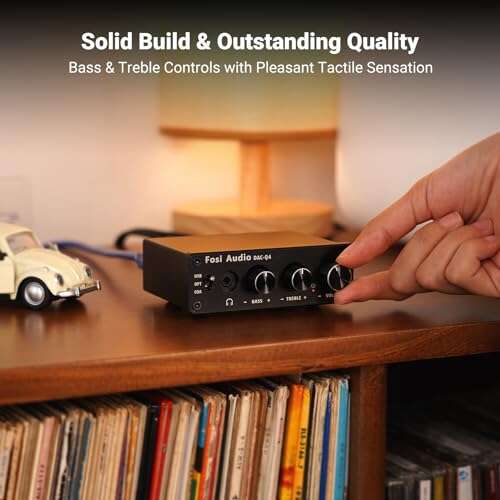
A DAC, or digital-to-analog converter, changes digital audio data into an analog electrical signal that headphones can play.


Phones, computers, music players, and USB adapters already contain DACs. Buying a separate DAC may help when:
- The built-in output has audible hiss.
- The device has a damaged or poor-quality headphone jack.
- You need a different connection.
- You want volume control or extra features.
- Your source does not support the format or setup you want.
A separate DAC does not automatically make music more detailed.
What is a headphone amplifier?
A headphone amplifier supplies the voltage and current needed to drive the headphones. It may help with headphones that are hard to power.
Important headphone specifications include:
- Impedance, measured in ohms
- Sensitivity, often listed as decibels per milliwatt or volt
- Power handling, which does not tell you how loud the headphones will play by itself
High impedance does not always mean high quality. Low impedance does not always mean easy to drive. Sensitivity and the source output both matter.
A practical setup check
Use this order:
- Connect the headphones to your current device.
- Play a familiar track.
- Check whether normal listening volume is loud enough.
- Listen for hiss, crackle, channel imbalance, or clipping.
- Add a dedicated amplifier only if a real problem remains.
Do not use an amplifier to chase volume. Loud listening can harm hearing, even when the sound is clean.
Are Audiophile Headphones Better Than Wireless Headphones?
Wired and wireless headphones can both deliver high-quality sound. The better option depends on your priorities.
Wired headphones send audio through a cable. They do not need a battery and can work with a wide range of sources. They may also avoid wireless compression or connection limits, although the audible effect depends on the codec, source, and headphone tuning.
Wireless headphones add convenience. They may include:
- Bluetooth connection
- Active noise cancellation
- A built-in microphone
- Touch controls
- App-based equalization
- Automatic device switching
These features can make wireless headphones the better choice for travel or office use. They also add battery, software, and connection concerns.
Wired versus wireless
| Need | Usually better fit |
|---|---|
| Home listening at a desk | Wired |
| Travel on planes or trains | Wireless with ANC |
| No battery charging | Wired |
| Easy phone use | Wireless or USB-C |
| Lowest connection delay | Wired |
| Gaming with a console | Depends on console and headset support |
| Quiet room and long sessions | Either |
| Shared or noisy spaces | Wireless closed-back with ANC |
A wireless model can be audiophile-oriented if its sound quality is a major part of its design. The label does not belong only to wired products.
How to Choose Audiophile Headphones
Start with your listening conditions, not the price.
Step 1: Choose where you will listen
For a quiet room, open-back headphones may offer the presentation you want. For an office, travel, or shared home, choose closed-back headphones. For outdoor use, wireless headphones with noise control may be more useful.
Step 2: Decide what sound you enjoy
Ask yourself:


- Do I want strong bass?
- Do I prefer natural voices?
- Do bright sounds bother me?
- Do I want a wide or close presentation?
- Do I listen for hours at a time?
No frequency graph can replace your own taste. If possible, buy from a seller with a clear return policy. Fit and personal preference are hard to predict online.
Step 3: Check device compatibility
Before buying, check:
- Connector type
- Cable length
- Phone or laptop port
- Need for an adapter
- Console compatibility
- Bluetooth support
- Microphone needs
- Amplifier requirements
A headphone may sound good but still be inconvenient if it needs an adapter you do not have.
Step 4: Consider comfort and repair
Look for replaceable ear pads and cables when long-term use matters. Check the product weight and shape. Read the warranty terms from the seller and manufacturer.
Do not assume that metal parts always mean better durability. A lighter plastic frame may be more comfortable and can last for years with careful use.
Step 5: Test familiar music
Use recordings you know well. Try several types:
- A vocal track
- A song with deep bass
- A live recording
- A dense rock or orchestral track
- A quiet acoustic track
Listen at a moderate volume. Loudness can make a headphone seem more exciting and detailed. Compare at similar volume levels when possible.
Common Myths About Audiophile Headphones
“More expensive means better”
Price can pay for better materials, design work, quality control, comfort, or low production volume. It does not guarantee a sound you will prefer.
“More detail is always better”
Too much treble can make a headphone seem detailed while causing fatigue. Good detail should let you hear more without making music harsh.
“High-resolution audio needs expensive headphones”
A good headphone can reveal recording differences, but expensive equipment does not create information that is absent from the recording. The recording, fit, source, and listener all matter.
“Balanced cables always improve sound”
A balanced connection can help with wiring, output power, or noise control in a compatible system. It does not automatically improve a headphone’s tuning or detail.
The amplifier, cable, and headphone must all support the same balanced connection. Never connect a balanced cable to equipment that does not support it.
“Burn-in is required for every headphone”
Driver parts may change slightly with use, but claims that burn-in transforms every headphone are not well established as a general rule. If a headphone sounds wrong after a reasonable fit check, returning it may be more useful than waiting for a dramatic change.
“Audiophile headphones are only for classical music”
They can work with any genre. The best choice depends on the recording and your taste, not the label on the music.
Hearing Safety and Listening Volume
Audiophile sound should be clear, not painfully loud. The National Institute on Deafness and Other Communication Disorders warns that repeated exposure to loud sound can contribute to hearing loss.
Use these safer habits:
- Keep the volume as low as practical.
- Take regular breaks.
- Reduce volume in quiet rooms.
- Do not use loud music to cover traffic or workplace noise.
- Stop if you hear ringing, pain, or muffled sound.
- Seek medical advice if symptoms persist.
Noise-canceling headphones may help in loud places because they reduce the need to raise the volume. They do not make unlimited volume safe.
There is no universal volume setting that is safe for every headphone and listener. Sensitivity, fit, source level, listening time, and personal hearing all affect exposure.
Key Takeaways
- Audiophile headphones are designed for careful, high-quality music listening, but “audiophile” is not a regulated technical grade.
- A good model should fit your ears, listening space, device, and sound preference.
- Open-back headphones suit quiet rooms. Closed-back headphones suit shared or noisy spaces.
- Most headphones do not need a separate amplifier or DAC.
- Price, high impedance, balanced cables, and burn-in do not guarantee better sound.
- Comfort, safe volume, and a clear return policy matter as much as specifications.
FAQs
Do audiophile headphones sound better than normal headphones?
They may sound more controlled, detailed, or natural, but “better” depends on your taste and use. A regular wireless headphone may be better for travel, phone calls, and noise control.
Can I use audiophile headphones with an iPhone or Android phone?
Often, yes. You may need a compatible USB-C or Lightning adapter, depending on the phone. Check the connector, sensitivity, and power needs before buying.
Are audiophile headphones good for gaming?
They can be. Clear imaging may help you locate sounds, while a comfortable fit can support long sessions. A gaming headset may still be better if you need a built-in microphone, chat controls, or console support.
Do audiophile headphones need lossless music?
No. They can play compressed and lossless files. Lossless files preserve more of the original data, but the audible difference depends on the recording, codec, equipment, and listener.
Should I buy open-back or closed-back headphones?
Choose open-back headphones for private, quiet listening. Choose closed-back headphones when you need isolation, less leakage, or more flexible use.
Conclusion
Audiophile headphones mean headphones built and tuned with serious attention to music reproduction. The term suggests a focus on sound, but it does not promise a specific quality level or guarantee that you will like the result.
The best choice is the model that matches your room, device, comfort needs, music, and preferred sound. Start with fit and use. Then compare tuning, connection needs, and price. Good sound is not only about buying more expensive equipment; it is about choosing the right tool and listening at a safe level.
Evidence and Further Reading
This guide uses established information from the following technical and public-health sources:
- Audio Engineering Society — audio engineering standards and technical education
- National Institute on Deafness and Other Communication Disorders: Noise-Induced Hearing Loss — hearing-risk information
- Headphone measurement research from Harman — published work on headphone preference and sound targets
- Audio Precision: Audio Measurement Basics — explanations of distortion and audio testing

Everett Ashford is a tech reviewer at mytechgrid.com specializing in SSDs, cameras, TVs, earbuds, headphones, and other consumer electronics. He provides honest, data-driven reviews based on hands-on testing and real-world performance analysis. Everett simplifies complex tech details to help readers make smart, confident buying decisions.