The Canon EOS 5DS and 5DS R offer 50.6 megapixels, the highest resolution in a standard full-frame DSLR.
If you ask what is the highest megapixel DSLR camera, the answer depends on how you define DSLR. For a traditional full-frame camera, Canon’s EOS 5DS R leads with 50.6 MP. Medium-format SLR-style cameras can reach 100 MP or more, while special multi-shot modes can create files far larger than the camera’s native sensor resolution.
This guide explains the differences clearly. You will learn which DSLR has the most megapixels, how resolution affects image quality, and when a high-resolution camera is worth the cost.
What is the highest megapixel DSLR camera?
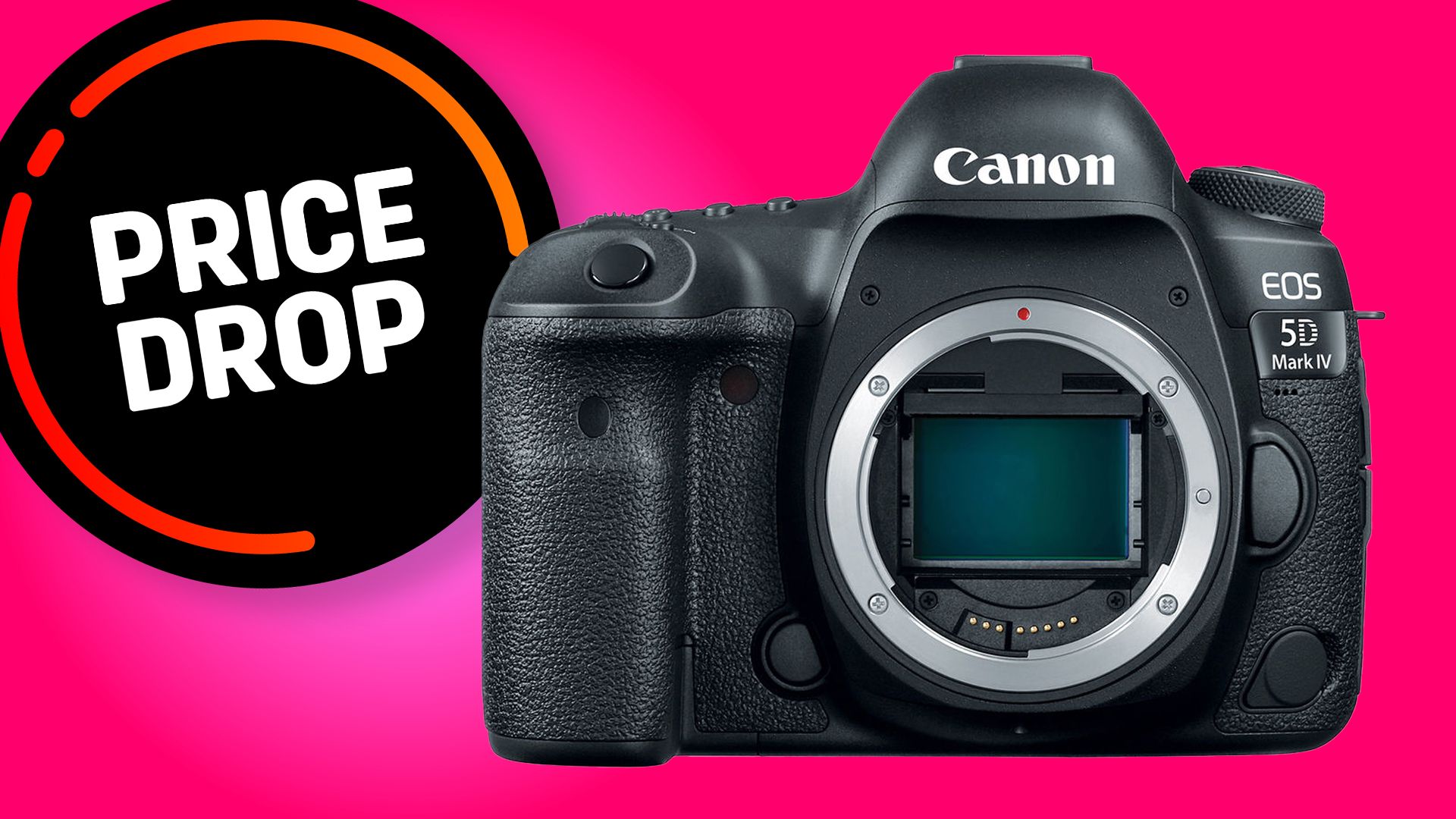
For a standard full-frame DSLR, the Canon EOS 5DS R is the clearest answer. It uses a 50.6-megapixel full-frame sensor and was designed for studio, landscape, product, architecture, and commercial photography.
The Canon EOS 5DS has the same 50.6 MP resolution. The EOS 5DS R removes the effect of its low-pass filter, which can produce slightly sharper fine detail. However, it may also show more moiré patterns when photographing repeated lines, fabrics, screens, or roof tiles.
When people search for what is the highest megapixel DSLR camera, they usually mean a 35mm or full-frame DSLR. Under that common definition, the Canon EOS 5DS R remains the leading model.
Important details include:
• Resolution: 50.6 megapixels
• Sensor type: Full-frame CMOS
• Lens mount: Canon EF
• Maximum image size: 8688 × 5792 pixels
• Camera type: Traditional optical-viewfinder DSLR
• Best uses: Landscape, studio, fashion, product, architecture, and large prints
The 5DS R is not the newest DSLR on the market, but it still produces extremely detailed files. It is a specialist camera rather than an all-purpose model.
Is the Canon EOS 5DS R really the highest-resolution DSLR?
Yes, if you mean a conventional full-frame DSLR. Its 50.6 MP sensor gives it more native resolution than popular models such as the Nikon D850, which has 45.7 MP, and the Sony A99 II, which has 42.4 MP.
The difference between 50.6 MP and 45.7 MP may sound large, but it is not dramatic in every photograph. The Canon provides about 10 percent more linear detail than a 45.7 MP camera. You may notice the benefit when cropping heavily or making very large prints.
The answer changes when medium-format SLR cameras enter the discussion. Cameras such as the Hasselblad H6D-100c and Phase One XF systems use larger sensors and can offer around 100 MP. They are technically SLR-style cameras because they use a mirror and optical viewing system, but many photographers place them in the medium-format category instead of the typical DSLR category.
So, the most accurate answer is:
• Highest standard full-frame DSLR: Canon EOS 5DS R, with 50.6 MP
• Highest medium-format SLR-style cameras: Models with native resolutions around 100 MP
• Highest special multi-shot output: Some cameras can create files above 200 MP, but these are not single-shot images
This distinction matters because camera labels can be confusing. A 100 MP medium-format SLR is not a direct replacement for a 50.6 MP full-frame DSLR.

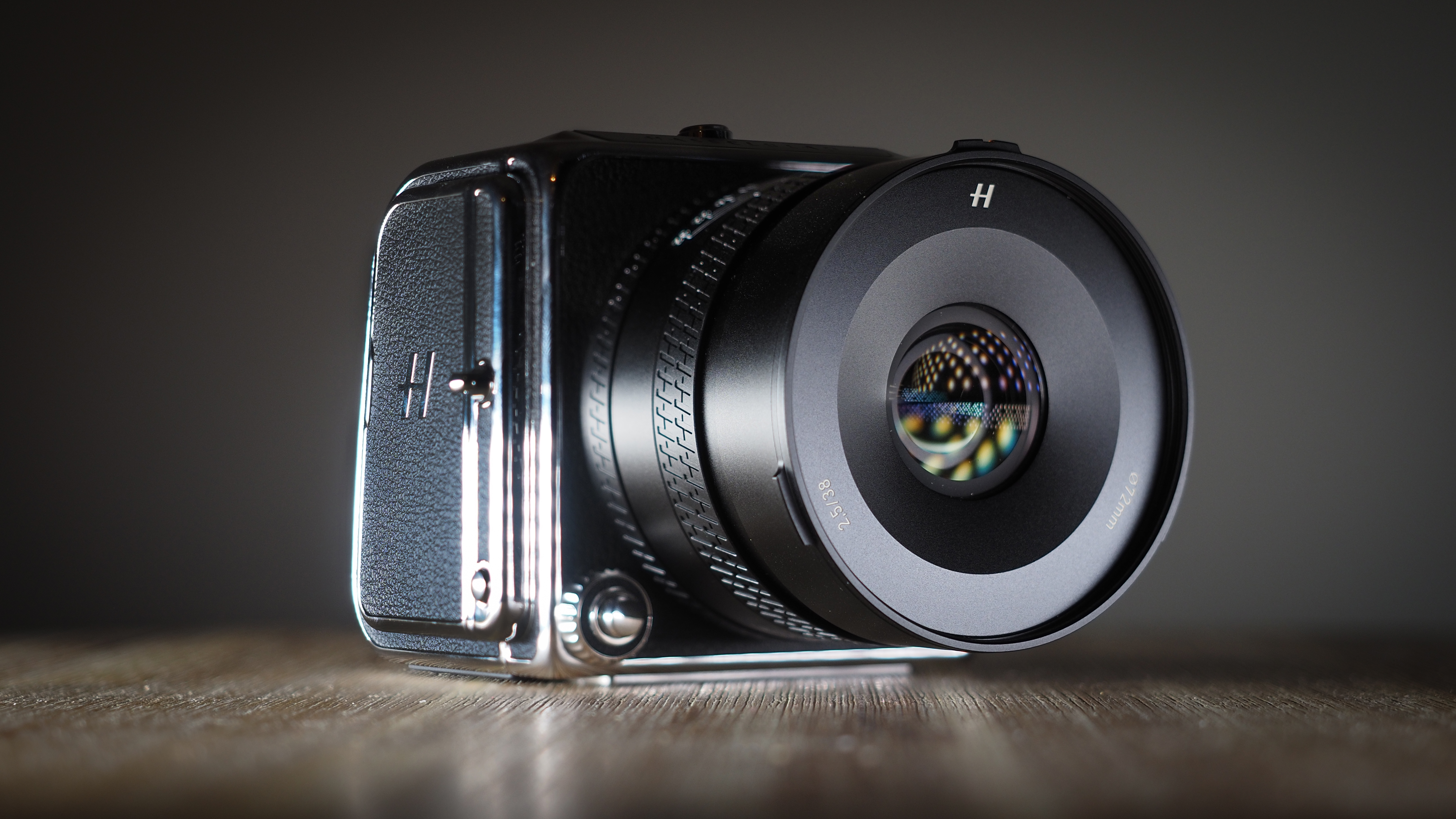
What about the 100-megapixel Hasselblad H6D-100c?
The Hasselblad H6D-100c has a 100 MP medium-format sensor. It is one of the cameras people may mention when answering what is the highest megapixel DSLR camera.
However, it is better described as a medium-format digital SLR or medium-format SLR-style camera. It has a large sensor, an optical viewfinder, and a mirror mechanism. Its body and lens system are also much larger and more expensive than those of a full-frame DSLR.
The larger sensor brings several benefits:
• More detail for large prints
• Stronger cropping ability
• Smooth tonal transitions
• Better control over shallow depth of field
• Excellent performance for studio and commercial work
There are also limits. The H6D-100c is not built for fast sports photography or casual travel. Its autofocus, burst shooting, storage needs, and system cost make it a focused professional tool.
A 100 MP camera also demands more from the photographer. Small focus errors, camera shake, and soft lenses become easier to see. High resolution is like a very clear window: it shows both the beauty and the flaws.
What is the highest megapixel DSLR camera for everyday photographers?
For most everyday photographers, the Canon EOS 5DS R is the highest-megapixel DSLR that makes practical sense. It uses a familiar full-frame format and a large collection of Canon EF lenses.
Still, “best” does not always mean “most megapixels.” A camera with 24 MP or 30 MP may be better for weddings, travel, events, or sports because it can offer faster shooting, smaller files, and better low-light performance.
The Canon 5DS R is strongest when you can control the scene. It works especially well for:
• Landscapes with fine textures
• Buildings and interior spaces
• Studio portraits
• Product photography
• Artwork reproduction
• Wildlife subjects photographed from a stable position
• Large wall prints
It is less ideal for:
• Fast action
• Dim venues
• Long handheld shooting sessions
• Video-focused work
• Photographers who need very small file sizes
A camera with more megapixels can create a heavier workflow. A single RAW file may take up a large amount of storage, and editing hundreds of high-resolution images requires a fast computer and reliable backup system.
/cdn.vox-cdn.com/uploads/chorus_asset/file/12844341/5ds.0.0.1423195659.jpg)
How many megapixels do you really need?
The right resolution depends on how you use your photos. More megapixels help when you print large, crop often, or need fine detail. They do not automatically make every image better.
Here is a simple guide:
• 12 to 20 MP: Good for online use, family photos, and moderate prints
• 24 to 36 MP: A strong range for general photography
• 40 to 50 MP: Excellent for landscapes, studio work, and large prints
• 60 to 100 MP: Best for demanding commercial, fine-art, and technical work
For a 12-by-18-inch print, even 20 MP can provide excellent results. For a large gallery print viewed up close, the extra detail from a 50 MP or 100 MP camera can be valuable.
The final image also depends on lens quality, focus accuracy, light, shutter speed, and technique. A sharp 24 MP image often looks better than a blurry 50 MP image.
This is one of the most important lessons when considering what is the highest megapixel DSLR camera. Resolution is only one part of image quality.
Does more megapixels mean better image quality?
Not always. Megapixels describe the number of pixels in an image, but they do not fully describe color, dynamic range, noise, autofocus, or lens performance.
A high-resolution camera can capture more small details under good conditions. But tiny pixels may show noise more clearly when you shoot in poor light and brighten the image later.
Image quality depends on several factors:
• Sensor size
• Pixel count
• Lens sharpness
• Dynamic range
• Autofocus accuracy
• Camera stability
• Exposure settings
• Lighting quality
• RAW processing
A full-frame 50.6 MP camera can produce remarkable detail, but it needs good lenses. Older or inexpensive lenses may not resolve enough detail to show the full benefit of the sensor.
Tripod use also helps. At high resolution, a small movement can soften fine textures. Use a fast enough shutter speed, enable mirror lockup when suitable, and focus carefully on the most important part of the subject.
Canon EOS 5DS R versus Nikon D850
The Nikon D850 is one of the closest full-frame DSLR competitors. It has a 45.7 MP sensor, excellent dynamic range, strong autofocus, and better all-around performance for many photographers.
The Canon EOS 5DS R offers a small resolution advantage. The Nikon D850 offers a broader balance of features.
Canon EOS 5DS R strengths
• Higher resolution at 50.6 MP
• Excellent fine detail in controlled light
• Strong Canon EF lens support
• Useful for large prints and heavy cropping
• Optical low-pass filter removed for sharper detail
Nikon D850 strengths
• 45.7 MP resolution
• Stronger general-purpose performance
• Better reputation for dynamic range
• More flexible for action and landscape work
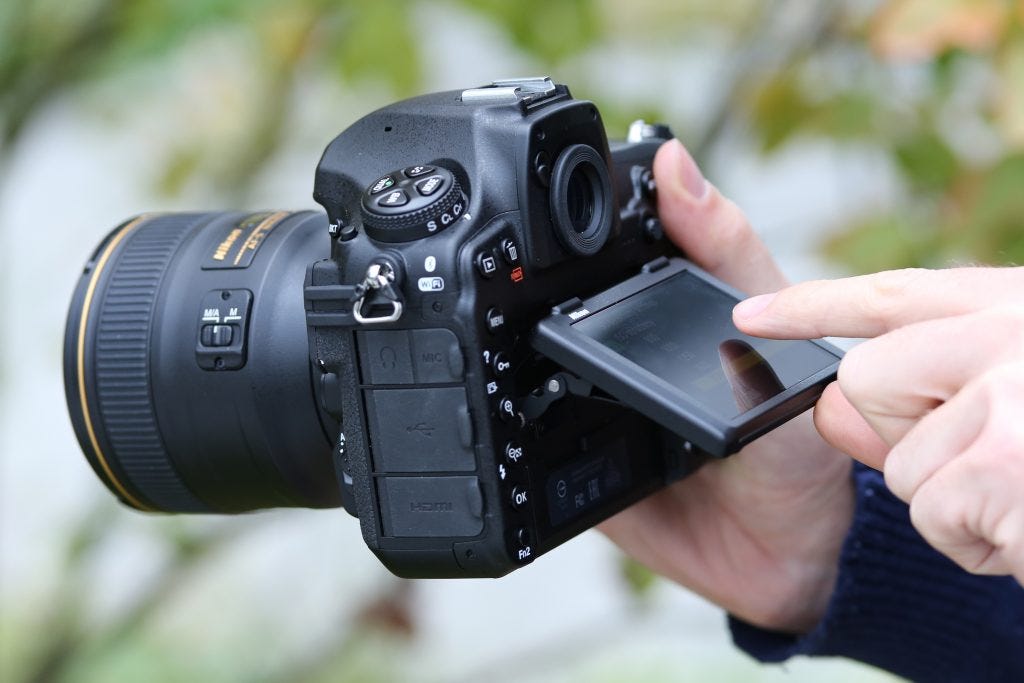
• Tilting touchscreen
• Good battery life and broad lens options
If the only question is what is the highest megapixel DSLR camera, the Canon wins between these two. If the question is which camera is more versatile, the Nikon D850 may be the better choice for many users.
Native megapixels versus multi-shot megapixels
A camera’s native resolution comes from its physical sensor. This is different from a multi-shot mode, which combines several exposures into one much larger image.
Some high-end cameras shift the sensor by tiny amounts between exposures. This allows the camera to record more color and detail than one exposure can capture. The final file may contain hundreds of megapixels.
Multi-shot photography has strict limits:
• The camera and subject must remain still
• Moving leaves, people, water, or clouds can create artifacts
• A tripod is usually required
• The process takes more time
• It is not suitable for sports or candid photography
For example, a camera may create a 400 MP file through a multi-shot process, but it does not have a native 400 MP sensor. This is why the answer to what is the highest megapixel DSLR camera should always explain whether it means native sensor resolution or special high-resolution modes.
Benefits of using a high-megapixel DSLR
A high-resolution DSLR can be a powerful tool when its strengths match your work. It gives you more room to crop and more flexibility when preparing large prints.