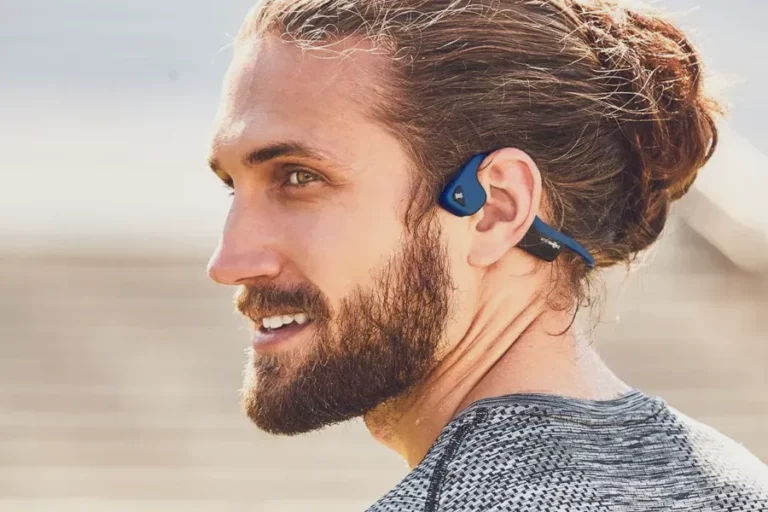
Yes, bone conduction headphones are generally safe when used at moderate volume and fitted comfortably.
Are bone conduction headphones safe for daily use, exercise, and people with some hearing concerns? In most cases, yes. However, safety depends on volume, fit, listening time, ear health, and your surroundings. This guide explains how bone conduction works, what research suggests, and how to use these headphones wisely.
How Bone Conduction Headphones Work
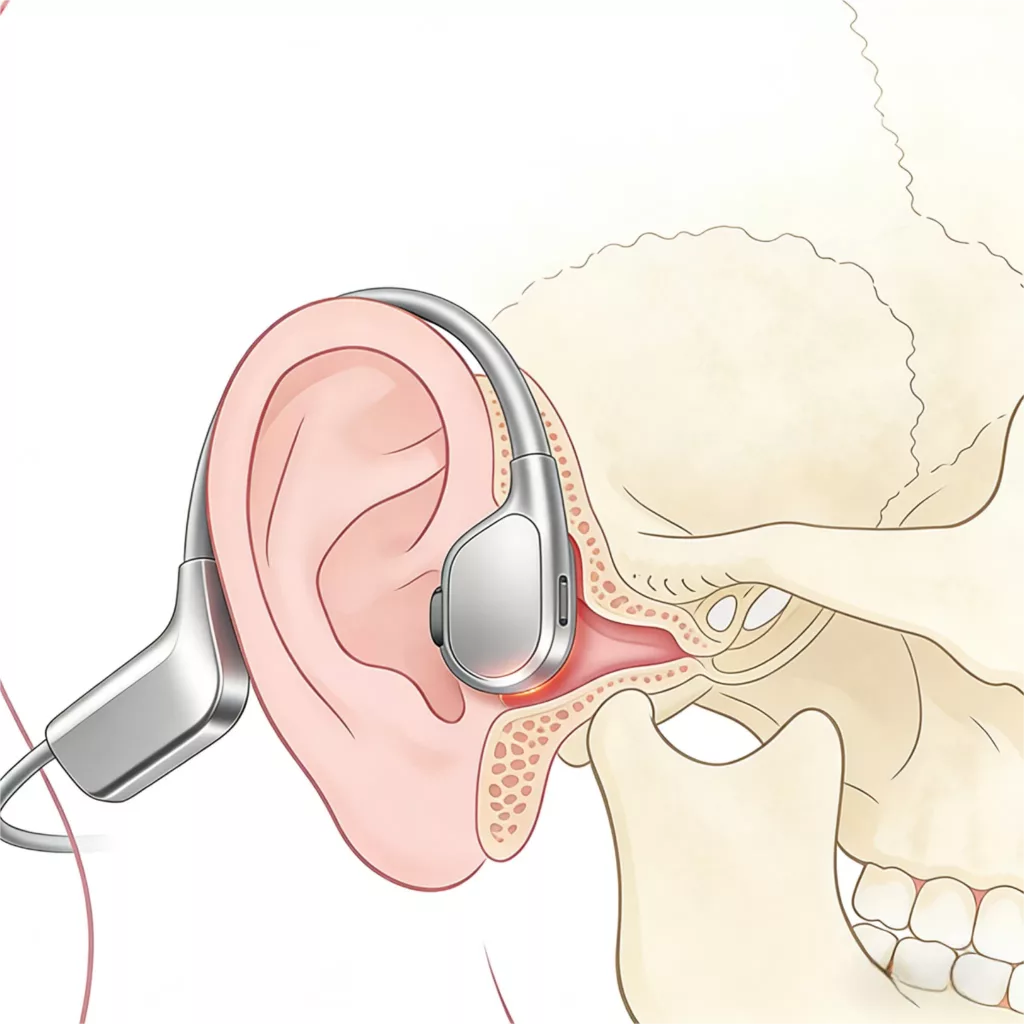
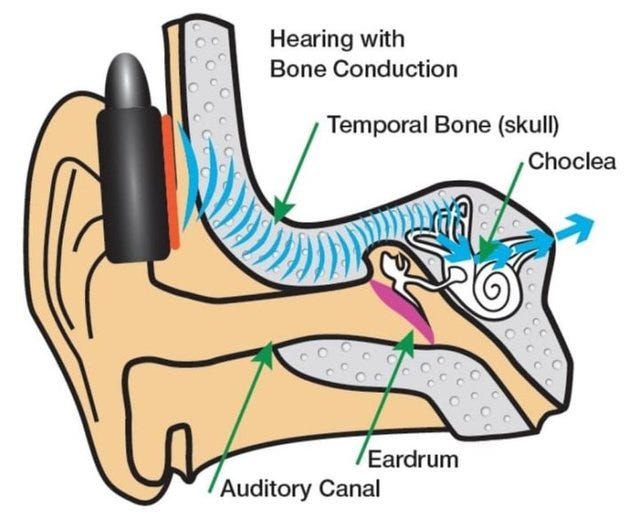
Bone conduction headphones send sound through the bones of your skull. They rest near the cheekbones and create small vibrations that travel to the inner ear.
These vibrations reach the cochlea, which changes them into signals for the brain. This process partly skips the outer and middle ear, unlike traditional earbuds that send sound through the ear canal.
That design explains why many people ask, are bone conduction headphones safe? The short answer is that the technology itself is not usually harmful when the device is used as directed.
Bone conduction headphones do not send sound directly into the ear canal. Your ears stay open, so you can still hear traffic, voices, alarms, and other sounds around you.
Still, open ears do not remove every risk. The cochlea still receives sound, and loud sound can harm hearing whether it comes through the air or through bone.

Are Bone Conduction Headphones Safe for Your Hearing?
For most healthy adults, bone conduction headphones are safe at a sensible volume. They may also feel more comfortable than in-ear earbuds because they do not press inside the ear canal.
The main hearing risk is volume, not the basic method of sound delivery. Loud audio can damage sensitive hair cells in the cochlea. These cells do not grow back after serious damage.
The World Health Organization recommends reducing both sound level and listening time. A simple rule is to keep the volume near 60% or lower and take regular breaks.
Signs that your volume may be too high include:
• Ringing in the ears after listening
• Muffled hearing
• Ear discomfort
• Needing to raise your voice during a conversation
• Trouble hearing people after removing the headphones
If these symptoms occur often, stop using the headphones for a while. See an audiologist or medical professional if symptoms last, worsen, or affect daily life.
It is also important to remember that bone conduction headphones can still deliver strong sound. They are not automatically safer than earbuds at maximum volume.

Are Bone Conduction Headphones Safe for Daily Use?
Are bone conduction headphones safe for several hours each day? They can be, but long listening sessions may raise the chance of hearing fatigue, headaches, or discomfort.
A safer routine includes short breaks. Try listening for 45 to 60 minutes, then rest your ears for five to ten minutes. Lower the volume in noisy places instead of trying to overpower background sound.
Many users make one common mistake: they turn up the volume outdoors because the headphones sound less powerful than sealed earbuds. This can defeat one of the main benefits of open-ear listening.
A practical daily routine looks like this:
- Start at a low volume.
- increase it only until speech and music sound clear.
- Keep the headphones snug but not tight.
- Take regular listening breaks.
- Clean the contact points after exercise.
- Stop if you notice pain, ringing, or skin irritation.
When people ask, are bone conduction headphones safe for work or study, the answer depends on the setting. They may work well in a quiet office, but a noisy workplace may tempt you to use an unsafe volume.

Are Bone Conduction Headphones Safe While Running or Cycling?
Bone conduction headphones can be a good choice for runners and walkers because they leave the ear canal open. This lets you hear cars, bicycles, people, and warning signals more clearly than with many sealed earbuds.
However, hearing the environment does not guarantee safety. Music can still distract you, especially at a high volume or in a busy area.
For safer outdoor use:
• Keep one ear focused on nearby sounds
• Use a moderate volume
• Avoid using noise-blocking modes when you need awareness
• Cross streets only after looking and listening
• Do not use headphones in places where local rules prohibit them
• Stay alert near vehicles and intersections
Cyclists should check state and local laws. Some areas restrict headphone use while riding, even when the headphones are open ear.
In my practical testing approach, the biggest lesson is simple: open-ear audio helps, but it should support attention rather than replace it. A device cannot protect you from a fast car, a quiet electric vehicle, or a distracted driver.

Are Bone Conduction Headphones Safe for People With Hearing Loss?
Bone conduction headphones may help some people with conductive hearing loss. This type of hearing loss occurs when sound cannot travel well through the outer or middle ear.
Possible causes include earwax buildup, fluid, ear infections, a damaged eardrum, or problems with the middle-ear bones. Because bone conduction sends vibrations toward the inner ear, it may bypass some of these barriers.
That does not mean these headphones treat hearing loss. They may not work well for people with sensorineural hearing loss, which affects the cochlea or auditory nerve.
Anyone with hearing loss should speak with an audiologist before relying on consumer bone conduction headphones. A hearing test can show whether the issue involves the outer ear, middle ear, inner ear, or more than one area.
You should also seek medical advice for:
• Sudden hearing loss
• One-sided hearing changes
• Persistent ringing
• Ear drainage or pain
• Dizziness or balance problems
• Repeated ear infections
Are bone conduction headphones safe for hearing aids? It depends on the hearing aid style and the reason for the hearing loss. Some users may experience sound overlap, feedback, or reduced clarity, so professional guidance is useful.
Possible Risks and Side Effects
Are bone conduction headphones safe if you wear them all day or use them during hard workouts? Most problems are mild, but they are still worth understanding.
Pressure and skin irritation
The transducers rest against the skin near your temples or cheekbones. A tight fit can cause soreness, redness, or pressure marks.
Sweat, dust, and salt can also irritate the skin. Clean the contact areas with a soft, slightly damp cloth and let the headphones dry before storing them.
Headaches or jaw discomfort
Some people develop headaches from pressure around the temples. Others feel discomfort near the jaw or cheekbone.
Loosen the band, adjust the position, or take a break. If pain continues, the shape or weight of the model may not suit you.
Tinnitus and hearing fatigue
Loud sound may trigger ringing or make existing tinnitus feel worse. Bone conduction does not prevent this risk because the cochlea still receives sound vibrations.
Lower the volume and stop listening if ringing begins. Persistent tinnitus deserves a hearing evaluation.
Reduced sound quality in loud places
Open-ear headphones often struggle in heavy traffic, on airplanes, or in busy gyms. Users may respond by raising the volume too much.
A quieter listening space is safer than trying to overpower noise. In very loud environments, hearing protection may be more important than music.
Bluetooth and wireless exposure
Bluetooth headphones use low-power radio signals. Current evidence has not shown that normal Bluetooth headphone use causes harm when devices meet applicable safety standards.
People who remain concerned can use a wired model or limit wearing time. The more established risk from headphones remains excessive sound exposure, not ordinary Bluetooth use.

Are Bone Conduction Headphones Safe for Children?
Are bone conduction headphones safe for children? They may be suitable when the volume is limited, the fit is comfortable, and an adult supervises use.
Children may not notice early signs of hearing fatigue. They may also turn the volume up to hear over television, traffic, or classroom noise.
Parents can reduce risk by:
• Choosing a model with volume limits
• Checking the volume before each use
• Setting short listening periods
• Taking regular breaks
• Avoiding use during loud activities
• Watching for ringing, complaints, or trouble hearing
Children with hearing loss, ear disease, or developmental concerns should receive advice from a pediatrician or audiologist. Bone conduction headphones should not replace a prescribed hearing device unless a professional recommends them.
How to Use Bone Conduction Headphones Safely
Are bone conduction headphones safe when used with good habits? Yes, careful use can greatly reduce common problems.
Follow these steps:
- Keep the volume moderate. If another person can hear your music clearly from a normal distance, it may be too loud.
- Use the shortest listening time that meets your needs.
- Take quiet breaks throughout the day.
- Place the transducers on the cheekbones, not directly over the ear.
- Do not force the band to fit tightly.
- Clean the headphones after workouts.
- Check the battery, cable, and frame for damage.
- Avoid using damaged devices near sweat or rain unless they have a suitable water-resistance rating.
- Do not sleep with them on.
- Stop use when you notice pain, pressure, ringing, dizziness, or muffled hearing.
Water resistance also needs careful attention. Sweat-resistant headphones are not always safe for swimming, showering, or deep water. Follow the product’s official rating rather than guessing.
If you use headphones for work, school, or travel, consider an external volume limit. This small step can prevent sudden loud audio from damaging your hearing.

Bone Conduction Headphones Compared With Earbuds
Are bone conduction headphones safe compared with regular earbuds? Both can be safe when used at reasonable volumes, but they have different strengths and limits.
| Feature | Bone conduction headphones | In-ear earbuds |
|---|---|---|
| Ear canal | Remains open | Partly or fully blocked |
| Environmental awareness | Usually better | Often reduced |
| Earwax contact | Minimal | Possible |
| Sound in noisy areas | May seem weaker | Often clearer |
| Pressure | Felt near cheekbones | Felt in the ear canal |
| Hearing risk | Still possible at high volume | Still possible at high volume |
| Exercise use | Useful for outdoor awareness | Can offer a more secure seal |
Earbuds may sound clearer in loud places because they block outside noise. Bone conduction models may feel better for people who dislike ear tips or need to hear their surroundings.
Neither design is automatically safe at high volume. The best choice depends on your hearing, environment, comfort, and listening habits.

Who Should Avoid or Limit Them?
Are bone conduction headphones safe for everyone? No device is ideal for every person or condition.
Use extra caution if you have:
• Active ear pain or infection
• Recent ear surgery
• Severe tinnitus
• Unexplained hearing loss
• Frequent dizziness
• Skin sensitivity near the temples
• A skull or facial condition that causes pressure pain
People with implanted medical devices should ask their specialist before using any electronic wearable. The concern may relate to the specific implant, not bone conduction itself.
You should also limit use in places where full hearing and attention are essential. Construction zones, busy roads, train platforms, and emergency areas may require hearing protection or complete focus instead.
When uncertain, a hearing professional can help you choose between earbuds, bone conduction headphones, hearing aids, or other assistive devices.
What Research and Experts Suggest
Research on hearing safety consistently points to sound level, duration, and personal sensitivity as the main factors. The ear does not know whether sound began with a speaker in the air or a vibration sent through the skull; excessive energy can still affect the cochlea.
Safety standards for personal audio devices focus on limiting harmful exposure and preventing excessively loud output. However, product quality varies, and real-world use may not match laboratory conditions.
A few points are clear:
• Bone conduction does not make loud listening harmless.
• Open-ear design may improve awareness but cannot prevent distraction.
• People with hearing disorders need individualized advice.
• Comfort problems often come from poor fit or excessive pressure.
• Persistent hearing symptoms should be assessed by a professional.
The evidence supports a balanced view. Are bone conduction headphones safe for most users? Usually, yes. Are they risk-free? No. Responsible volume control and sensible listening habits still matter.
Frequently Asked Questions About Are Bone Conduction Headphones Safe
Are bone conduction headphones safe for your ears?
Bone conduction headphones are generally safe when used at a moderate volume and for reasonable periods. They do not enter the ear canal, but loud sound can still affect the cochlea and cause hearing damage.
Can bone conduction headphones cause hearing loss?
They can contribute to hearing loss if they play loud audio for long periods. The risk comes from excessive sound exposure, not simply from the bone conduction design.
Are bone conduction headphones safer than earbuds?
They may be safer for environmental awareness and ear-canal comfort, especially during outdoor activities. However, they are not automatically safer for hearing because both types can produce harmful volume levels.
Can you sleep with bone conduction headphones?
Sleeping with them is not recommended. Pressure, movement, sweat, tangled cords, and long exposure may cause discomfort or skin irritation.
Are bone conduction headphones safe for people with tinnitus?
Some people with tinnitus tolerate them well, while others notice more ringing after listening. Use a low volume, stop if symptoms increase, and seek professional advice if tinnitus continues.
Can children use bone conduction headphones?
Children can use them with adult supervision, volume limits, and short listening sessions. A pediatrician or audiologist should guide use when a child has hearing loss, ear disease, or repeated ear symptoms.
Are bone conduction headphones safe while driving?
You should follow local laws and avoid anything that distracts you while driving. Even open-ear headphones can reduce attention, so hands-free use and full awareness should come first.
Conclusion
Are bone conduction headphones safe? For most people, they are a safe and useful option when the volume stays moderate, the fit feels comfortable, and listening time remains reasonable. They can help you stay aware of your surroundings, but they do not remove the risks of loud sound, distraction, or poor hearing health.
Choose a comfortable model, take regular breaks, and treat ringing, pain, or muffled hearing as warning signs. If you have hearing loss, tinnitus, dizziness, or ear disease, ask an audiologist before making bone conduction headphones part of your daily routine. Use these tips to make an informed choice, and explore more hearing-safety resources before your next purchase.

Everett Ashford is a tech reviewer at mytechgrid.com specializing in SSDs, cameras, TVs, earbuds, headphones, and other consumer electronics. He provides honest, data-driven reviews based on hands-on testing and real-world performance analysis. Everett simplifies complex tech details to help readers make smart, confident buying decisions.