The 1Mii B06TX is my top pick for stable TV sound, dual headphones, and simple long-range wireless use.
Picture this: the TV is loud enough for one person, but too loud for everyone else. Or you are on a flight with excellent headphones and no way to connect them to the seat jack. A Bluetooth transmitter solves that gap by sending sound from a TV, airplane screen, tablet, or game system to wireless headphones. The best Bluetooth transmitter for headphones should pair fast, stay in sync, support the right audio ports, and last through a full movie. I compared the most useful options for home, travel, and shared listening so you can choose with less guesswork.
2026 Upgrade Bluetooth 6.0 Adapter

The 2026 Upgrade Pro adapter is a flexible choice for people who want one small unit to handle both sending and receiving audio. In transmitter mode, it can send sound from a compatible TV, computer, or music player to Bluetooth headphones. In receiver mode, it can bring wireless music to a wired speaker or car stereo with an audio input.
Its Bluetooth 6.0 label makes it appealing to shoppers who want newer wireless technology, though real performance still depends on the connected devices and audio codec. I like the 2-in-1 design because it reduces cable clutter and gives the adapter more uses after a trip. This is a good fit for users who want a modern all-purpose device rather than a transmitter made only for television.
Pros:
- Works as both a transmitter and receiver
- Useful for TVs, computers, cars, and portable audio gear
- Modern Bluetooth 6.0 connection standard
- Compact design for travel bags and desk drawers
- Can help turn older wired equipment into wireless gear
- Good value for shoppers who need more than one function
Cons:
- Actual range and delay vary by headphones and source device
- Users must select the correct transmit or receive mode
- Some TVs may need an extra cable or audio setting change
1Mii B06TX Bluetooth 5.3 Transmitter

The 1Mii B06TX is built for one clear job: send TV audio to wireless headphones. It supports two Bluetooth headphones or speakers at the same time, which makes it useful for couples, parents, and anyone who wants shared listening without turning up the room volume. The Bluetooth 5.3 platform also gives it a current and dependable base for everyday use.
I see this as the strongest home pick in the group because the design stays focused. It does not try to be a music receiver or a travel gadget first. If you need a Bluetooth transmitter for headphones that can remain connected to a television and serve two listeners, the B06TX deserves a close look.
Pros:
- Designed specifically for TV audio transmission
- Supports two wireless headphones or speakers
- Bluetooth 5.3 offers a current wireless connection
- Good choice for shared movie and show watching
- Helps keep TV volume low in bedrooms or shared homes
- Simple purpose makes setup easier for many users
Cons:
- Less useful if you also need receiver mode
- Wireless delay can differ between two paired devices
- TV compatibility depends on available audio output ports
Avantree Relay Airplane Bluetooth Adapter

The Avantree Relay targets travelers who want to use AirPods or Bluetooth headphones with an airplane entertainment system. It plugs into the common 3.5mm seat jack and sends the movie or music audio wirelessly. The ability to connect two sets of headphones makes it a practical choice for couples and families flying together.
Travel gear has to be small, easy to pack, and quick to use when the cabin lights are low. The Relay fits that idea better than a bulky home adapter. I would choose it for frequent flyers who want a dedicated Bluetooth transmitter for headphones and do not need a large collection of input and output ports.
Pros:
- Made for airplane entertainment systems
- Can connect two AirPods or Bluetooth headphones
- Small form is easy to store in a travel pouch
- Removes the need for a wired headset during a flight
- Useful for couples sharing one seat-back screen
- Focused controls can reduce setup time while boarding
Cons:
- Depends on a working 3.5mm airplane audio jack
- Battery life must be checked before a long flight
- Not the best choice for users who need home receiver mode
OiDiPi Bluetooth 5.3 2-in-1 Adapter
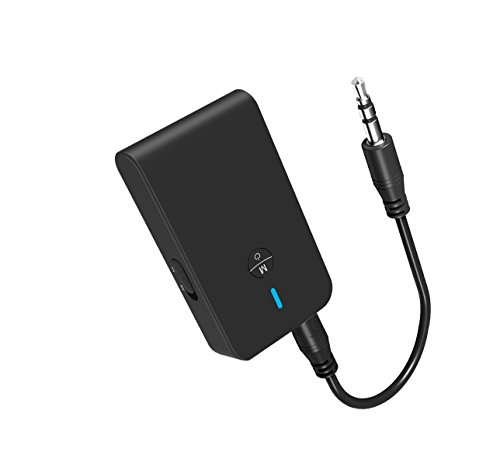
The OiDiPi Bluetooth 5.3 adapter is aimed at people who use several audio sources. Its 2-in-1 design lets it transmit sound from a TV, PC, MP3 player, gym machine, or airplane jack. Switch it to receiver mode, and it can send phone audio to equipment with a 3.5mm input.
That broad use makes the OiDiPi attractive as a spare adapter for the home and travel bag. It is especially helpful when an older device has a headphone jack but no Bluetooth. I would consider it a strong budget-friendly option for shoppers who want the best Bluetooth transmitter for headphones without giving up receiver functionality.
Pros:
- Supports both transmit and receive modes
- Works with many devices that have a 3.5mm audio jack
- Bluetooth 5.3 provides a modern connection platform
- Useful for TV, PC, gym, airplane, and car audio
- One device can replace two single-purpose adapters
- Good match for users who enjoy flexible travel gear
Cons:
- More modes can make setup less clear for new users
- It may not include every cable needed for each device
- Range and sound delay depend on the paired headphones
1Mii Bluetooth 5.3 TV and Airplane Adapter

This 1Mii adapter combines home and travel use in one small unit. It can transmit audio from a TV or airplane system to two pairs of headphones, making it a natural fit for shared viewing. Its receiver function also lets a phone or tablet play through a compatible wired speaker or car system.
I like this model for people who move between the living room and the airport often. It avoids buying one adapter for the TV and another for flights. If dual listening matters and you want a Bluetooth transmitter for headphones that can also receive music, this model offers a balanced feature set.
Pros:
- Supports TV and airplane audio use
- Can connect two headphones for shared listening
- Includes transmitter and receiver functionality
- Useful with older audio equipment through a wired jack
- Good choice for homes with more than one listener
- Versatile enough for travel and daily entertainment
Cons:
- Two connected headphones may not sound exactly alike
- Users must manage cables when switching between sources
- It may offer more features than a single-use TV buyer needs
UGREEN Bluetooth 6.0 Airplane Adapter

UGREEN designed this adapter around wireless travel, but its 3.5mm connection also supports TVs, car stereos, and other compatible audio sources. It can transmit sound to two AirPods or Bluetooth headphones, which is useful when two travelers want to follow the same movie. The receiver mode adds another layer of value for car and home use.
The compact shape should fit well beside a passport, charging cable, and earbuds. Bluetooth 6.0 sounds impressive, but I always remind shoppers that the newest number alone does not guarantee perfect sync or range. This is a smart pick for travelers who want a polished best Bluetooth transmitter for headphones with broad everyday use.
Pros:
- Supports two AirPods or wireless headphones
- Bluetooth 6.0 technology for a current connection
- Works with airplane, TV, car, and other 3.5mm sources
- 2-in-1 design adds receiver mode
- Travel-friendly size and simple use case
- Useful for couples who share entertainment
Cons:
- Airplane use still depends on the seat jack layout
- Small controls may be harder to use in dim cabins
- Some headphones may show a different delay than others
Twelve South AirFly SE Wireless Adapter

The Twelve South AirFly SE is a compact transmitter for users who want to connect Bluetooth headphones to a wired audio source. It is best known as a travel adapter for airplane seat systems, but it can also work with compatible gym machines, TVs, and other 3.5mm outputs. Its small body makes it easy to keep attached to a headphone case or travel pouch.
This model is appealing to shoppers who value a clean design and a trusted travel name. It focuses on sending audio instead of adding a long list of extra functions. I would recommend it to a solo traveler who wants a simple Bluetooth transmitter for headphones and does not need dual-headphone sharing or receiver mode.
Pros:
- Small and easy to carry
- Designed for wired audio sources and Bluetooth headphones
- Useful on airplanes, gym equipment, and some TVs
- Simple single-purpose design
- Easy to store with travel headphones
- Good option for solo listening
Cons:
- Does not provide the broadest 2-in-1 feature set
- May not suit two listeners at the same time
- Requires charging before extended travel
Premium Bluetooth 5.4 Airplane Adapter

This premium adapter focuses on low-delay wireless audio and dual headphone support. It is made for airplane, TV, gym, tablet, and car stereo use through a 3.5mm connection. The advertised aptX Low Latency support may help reduce lip-sync delay, but both the transmitter and headphones must support a compatible low-latency codec for the best result.
That codec detail matters, and it is one reason I do not judge any transmitter by a feature label alone. Still, this model has the right mix for users who watch video and care about timing. It is a good best Bluetooth transmitter for headphones choice for movie fans, frequent flyers, and users with compatible headphones that can take advantage of low-latency audio.
Pros:
- Supports two AirPods or Bluetooth headphones
- Bluetooth 5.4 offers a modern wireless platform
- Advertises aptX Low Latency support
- Works with airplane, TV, gym, tablet, and car inputs
- Strong fit for video and movie watching
- 2-in-1 design adds more value than a basic transmitter
Cons:
- Low-latency results require compatible headphones
- Codec support may vary across Apple and Android devices
- More settings can make pairing take a little longer
SOOMFON Bluetooth 5.3 TV Adapter

The SOOMFON adapter is a practical home option for sending television sound to up to two wireless headphones. It also includes receiver capability, so it can stream phone audio to a wired speaker or another device with an audio input. That makes it more flexible than a TV-only transmitter.
I would place this model on the shortlist for families and roommates who need shared TV audio. The main appeal is not flashy design; it is the ability to support two listeners while keeping the room quiet. If you want a reasonably versatile best Bluetooth transmitter for headphones for evening viewing, SOOMFON is worth considering.
Pros:
- Designed for TV use with two headphones
- Bluetooth 5.3 offers dependable modern connectivity
- Receiver mode supports wired speakers and audio systems
- Useful for families, couples, and roommates
- Can reduce sound spill in bedrooms and apartments
- More flexible than a transmitter-only product
Cons:
- TV setup may require changing the sound output menu
- Two headphones can have different volume levels or delay
- It may be larger than a dedicated airplane adapter
Bluetooth 5.4 Airplane, TV, and Gym Adapter

This Bluetooth 5.4 adapter is aimed at people who want one wireless audio tool for several places. It can serve an airplane screen, TV, gym machine, or other device with a suitable audio jack. The transmitter and receiver design gives it a useful second role when you want to stream phone audio to older wired equipment.
Its main strength is flexibility rather than a specialized home or airplane design. I would pack it for trips where plans change, such as moving from a flight to a hotel TV or rental car. For shoppers seeking a Bluetooth transmitter for headphones that works across daily routines, this model offers a sensible feature mix.
Pros:
- Works with several common 3.5mm audio sources
- Bluetooth 5.4 provides a current connection standard
- Supports both transmit and receive functions
- Useful for airplanes, TVs, gyms, and cars
- Can add wireless playback to older audio gear
- Good backup adapter for frequent travelers
Cons:
- Feature labels do not guarantee identical results with all headphones
- May require manual mode changes between uses
- Users should confirm cable and jack compatibility first
My Recommendation
For most homes, I recommend the 1Mii B06TX because it stays focused on TV audio and supports two wireless listeners. It is the best match for couples, parents, and roommates who want clear sound without raising the room volume. For frequent flyers, the Avantree Relay and UGREEN adapter make more sense because they are small and built around the airplane jack. For users who want one adapter for many jobs, the 2026 Upgrade Pro, OiDiPi, or 1Mii 2-in-1 models offer the most flexibility.
Before buying, check your source device. A TV may use optical audio, RCA output, USB audio, or a 3.5mm jack, and not every transmitter supports each one. Also check your headphones for codec support, since Bluetooth version and codec are separate features. The best Bluetooth transmitter for headphones is the one that matches your ports, listening style, and need for one or two connections.
| Best for | Why |
|---|---|
| Shared TV watching | The 1Mii B06TX supports two headphones and focuses on stable TV audio. |
| Airplane travel | Avantree Relay and UGREEN models offer compact designs for 3.5mm seat jacks. |
| Many audio devices | 2-in-1 models can transmit source audio and receive music from a phone. |
How I evaluate Bluetooth transmitters for headphones
I start with the connection type because a great wireless device cannot fix the wrong port. A transmitter needs an audio signal from the source, so the source must offer a usable output. On a TV, that may be a 3.5mm headphone output, red-and-white RCA output, optical output, or another supported port. I also check whether the needed cable comes in the box or must be purchased separately.
Next, I look at pairing. A good unit should enter pairing mode without a confusing button sequence. The indicator lights should offer useful clues, not a tiny light show that leaves the user guessing. I also consider how the device behaves after a power cycle because many people want the transmitter to reconnect without repeating setup each night.
Dual-device support is another key point. Connecting two headphones sounds simple, but the experience can change based on the headphones, codec, and distance from the adapter. Some pairs may play with a small timing difference. That may not matter for music, but it can matter when watching dialogue-heavy shows.
I also separate Bluetooth version from real-world performance. Bluetooth 5.3, 5.4, and 6.0 can provide newer technical features, but the transmitter does not control every part of the wireless chain. Headphones, walls, radio noise, codec support, and power levels all affect the final result. That is why I value clear use cases more than a large number printed on the package.
What to know about audio delay
Wireless audio can sometimes arrive a moment after the picture. You may notice this as lips that move before the words reach your ears. The effect depends on the transmitter, headphones, source device, and codec. For music, a little delay often goes unnoticed, but for TV, gaming, and movies, it can be distracting.
Low-latency codecs can help, but they do not work like magic. The transmitter and headphones need matching support. If one device falls back to a basic codec, the delay may remain. Some TVs also add their own processing delay, so changing the TV’s audio settings may help more than changing the transmitter.
When video sync is your top concern, look for a transmitter and headphones that share a low-latency codec. Keep both devices close during setup. Turn off other Bluetooth devices nearby if pairing becomes difficult. I also suggest testing the complete setup before a long flight or movie night.
TV connection tips
Start by finding the TV’s audio output. A 3.5mm jack is usually the simplest option because many small transmitters can connect directly. RCA output may need a red-and-white adapter cable. Optical output needs a transmitter with optical input, so a basic 3.5mm model will not work without a separate converter.
After connecting the adapter, open the TV sound menu. Some TVs keep playing through the built-in speakers, while others switch output automatically. If you want private listening, choose the correct external or headphone output. Keep the remote nearby because the TV volume may not control Bluetooth headphones in the same way.
If you hear no sound, check three things. Confirm the cable is in an output port, not an input port. Confirm the transmitter is in TX mode, then confirm the headphones are in pairing mode. Finally, make sure the TV is not sending sound through a muted or disabled output.
Airplane use and travel advice
Airplane adapters are popular because most seat-back systems still use a wired 3.5mm jack. The jack may be placed in the armrest or beside the screen. Some seats use a two-pin socket, and that may need a small airline audio adapter. Check the aircraft and seat design when possible, since layouts can vary.
Pair the transmitter with your headphones before boarding if you can. This saves time and avoids trying to read tiny labels in a dark cabin. Charge the adapter before leaving home, and pack a short charging cable. A transmitter with a dead battery is like a key with no lock; the feature is there, but it cannot help you.
Keep the transmitter close to the seat and avoid bending the plug. If the adapter hangs from the jack, a short cable can reduce strain. For two listeners, pair both headphones before the movie starts. Some devices pair one set first and then require a second pairing step.
Transmitter or receiver?
A transmitter sends sound out from a source. This is the mode you need when sending TV or airplane audio to wireless headphones. A receiver does the reverse. It receives Bluetooth audio from a phone and sends that sound to a wired speaker, car stereo, or older music system.
A 2-in-1 adapter costs a little more in some cases, but it can be useful for people who own older audio gear. You could use it as a TV transmitter at night, then switch it to receiver mode for a wired speaker. If you only need airplane use, a smaller transmitter-only model may be easier.
Do not assume every 2-in-1 product supports every audio port. Many compact units use a 3.5mm connection only. Read the product details and inspect your equipment before ordering. Port matching remains more important than the Bluetooth version.
Bluetooth range and walls
Manufacturers often list a maximum range under ideal conditions. Your home may have walls, furniture, Wi-Fi signals, and other wireless devices that reduce that distance. For TV listening, the transmitter usually sits within a few feet of the headphones, so range is rarely a major issue. In a large room, keep the adapter in an open spot rather than behind the TV cabinet.
Long-range claims also depend on the headphones. Both sides of the link need enough power and a good antenna. If sound cuts out, move closer to the transmitter first. Then remove possible obstacles and test again before deciding that the unit is faulty.
Power and battery life
Portable transmitters use built-in batteries, while some home models can draw power from USB. Battery performance depends on volume, pairing count, codec, and age. A product may last less when it connects to two headphones than when it connects to one. I recommend charging before each trip if the adapter has been sitting unused.
For a permanent TV setup, a USB-powered design can be convenient. You can leave it near the television and avoid daily charging. For airplane use, battery power matters more because seat USB ports may be missing, weak, or difficult to reach.
Look for clear charging indicators. A simple light that shows charging and full status can prevent surprises. If a device has no battery indicator, keep a regular charging habit and carry a backup cable.
Bluetooth codecs in plain English
A codec shapes how audio moves over Bluetooth. SBC is widely supported and works with many devices. AAC is common in Apple products and can sound good when the full system handles it well. aptX and related codecs may offer useful sound or delay benefits, but support must exist on both ends.
Do not buy only because a product lists aptX Low Latency. Your headphones must support the same codec, and some newer headphones use different systems. AirPods, for example, may not use every aptX option. Read the headphone specifications along with the transmitter specifications.
For most TV viewers, stable pairing and acceptable sync matter more than chasing a codec number. For gaming and fast video, codec matching deserves more attention. I treat codec support as a helpful tool, not a promise of perfect performance.
Common mistakes to avoid
The first mistake is buying a receiver when you need a transmitter. Product names can look similar, especially with small 2-in-1 devices. Look for TX mode or transmitter mode. RX mode means receiver mode and will not send TV sound to your headphones.
The second mistake is ignoring the audio port. A transmitter with only a 3.5mm plug cannot connect directly to an optical-only TV. The third mistake is expecting the TV remote to control headphone volume. Depending on the TV and adapter, you may need to adjust volume on the headphones themselves.
Another mistake is pairing too many devices at once. Turn off nearby Bluetooth headphones, speakers, and tablets during the first setup. Once the transmitter and headphones connect, turn the other devices back on. This simple step can make pairing feel much less frustrating.
FAQs Of best bluetooth transmitter for headphones
What does a Bluetooth transmitter do?
A Bluetooth transmitter sends audio from a wired source to wireless headphones or speakers. It can add Bluetooth to a TV, airplane screen, computer, or other compatible audio device.
Can one transmitter connect to two headphones?
Some transmitters support two headphones at the same time. Check the product details before buying, and remember that the two headphones may have different volume levels or slight timing differences.
Will a Bluetooth transmitter work with any TV?
It will work when the TV has a compatible audio output and the transmitter supports that output. Common options include 3.5mm, RCA, and optical connections. Always match the port before ordering.
How can I reduce Bluetooth audio delay?
Use a transmitter and headphones that support the same low-latency codec. Keep the devices close, reduce wireless interference, and check the TV’s audio processing settings.
Is a Bluetooth 6.0 transmitter always better?
Not always. A newer Bluetooth version can offer useful improvements, but port support, codec matching, antenna design, and stable pairing matter just as much for daily use.
Final Verdict: Which Should You Buy?
The 1Mii B06TX is my top pick for home TV use because it supports two headphones and keeps its purpose clear. Travelers should consider the Avantree Relay or UGREEN adapter for compact airplane use.
The best Bluetooth transmitter for headphones matches your source port, headphones, and listening needs. Choose the right fit, and private wireless sound becomes simple.

Everett Ashford is a tech reviewer at mytechgrid.com specializing in SSDs, cameras, TVs, earbuds, headphones, and other consumer electronics. He provides honest, data-driven reviews based on hands-on testing and real-world performance analysis. Everett simplifies complex tech details to help readers make smart, confident buying decisions.