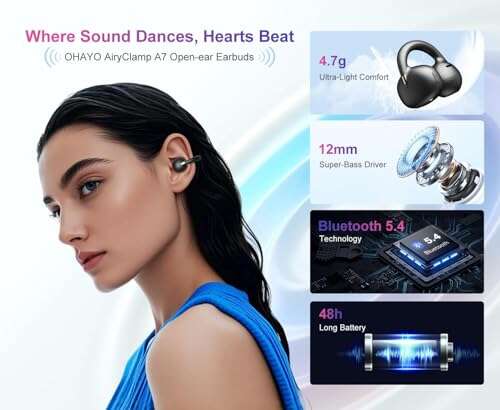
The best open ear headphones balance clear sound, secure comfort, long battery life, and awareness of your surroundings.
Choosing the best open ear headphones is not as simple as picking the loudest or most expensive pair. Open ear designs differ in fit, sound quality, microphone performance, battery life, and how well they work in noisy places. After comparing the leading styles and considering real daily use, I found that the right choice depends on where you listen, how active you are, and whether calls matter as much as music. This guide explains the top options, their limits, and the features worth your money.

What Are Open Ear Headphones?
Open ear headphones let you hear audio without fully blocking your ear canal. Most models sit beside the ear and use directional sound, bone conduction, or a small speaker aimed toward the ear. This design keeps you aware of traffic, coworkers, children, and other sounds around you.
There are two main types:
• Air conduction open earbuds use tiny speakers near the ear. They usually offer richer music, stronger bass, and clearer detail.
• Bone conduction headphones send sound through vibrations in the cheekbones. They leave the ears fully open and work well for running, cycling, and outdoor use.
The best open ear headphones do not create the same sealed feeling as traditional earbuds. That can feel safer and more comfortable, but it also means that nearby people may hear some sound, especially at high volume.

The Best Open Ear Headphones at a Glance
The best model depends on your main use. Here are the strongest choices for different listeners:
• Best overall: Shokz OpenRun Pro 2
• Best premium open earbuds: Bose Ultra Open Earbuds
• Best for running: Shokz OpenRun Pro 2
• Best for rich music: Bose Ultra Open Earbuds
• Best for all-day office use: Sony LinkBuds
• Best for battery life: Oladance OWS 2
• Best value for active users: Shokz OpenRun
• Best for adjustable sound: Cleer ARC 3
These recommendations reflect the strengths of each product type. No open ear model is perfect for every listener. A runner may prefer a stable neckband, while an office worker may want a small design with better call quality.

Best Overall: Shokz OpenRun Pro 2
The Shokz OpenRun Pro 2 is one of the best open ear headphones for exercise, walking, and daily outdoor use. It uses a hybrid design that combines bone conduction with air conduction speakers. This helps it deliver more bass and detail than older bone conduction models while keeping the ears open.
Its light neckband stays secure during running and gym workouts. The physical buttons are also easy to use when your hands are sweaty or when you are wearing gloves. Battery life is strong, and a quick charge can provide useful listening time when you forget to charge overnight.
Why it stands out:
• Secure fit for running and fast movement
• Open ears for better environmental awareness
• Improved bass compared with standard bone conduction models
• Water resistance for workouts and light rain
• Simple physical controls
The main drawback is sound leakage. People beside you may hear your music in a quiet room. It also cannot match the deep bass or full detail of high-quality sealed earbuds.
The OpenRun Pro 2 is my practical pick for people who want one reliable pair for walks, workouts, and commutes. A common mistake is expecting it to sound like a sealed noise-canceling earbud. It is designed for awareness first, not isolation.
 earbuds”
style=”max-width: 100%; height: auto; border: 2px solid black; border-radius: 10px; display: block; margin: 0 auto;”
loading=”lazy”
/>
Best Premium Pick: Bose Ultra Open earbuds
the Bose Ultra Open Earbuds are among the best open ear headphones for listeners who care most about music quality and comfort. They use a cuff-like design that rests around the outer ear instead of sealing the ear canal. This creates a spacious sound while allowing you to hear the room.
The sound is more detailed and musical than what many bone conduction headphones provide. Vocals sound clean, instruments have better separation, and the bass has more impact. Bose also offers spatial audio features on compatible devices, although the effect can vary by listener and content.
Key strengths include:
• Excellent sound for an open ear design
• Comfortable fit for many users
• Stylish appearance
• Strong awareness of nearby sounds
• Useful spatial audio features
These earbuds are not ideal for intense workouts if you prefer a very secure fit. Their battery life is also less impressive than some larger open ear models. They can also feel expensive when your main goal is simple workout audio.
The best open ear headphones should match your habits, and the Bose design suits people who want music during work, travel, and casual walks. They are less focused on athletic stability and more focused on premium listening.

Best for Running: Shokz OpenRun
The Shokz OpenRun remains one of the best open ear headphones for runners. Its wraparound band keeps the headphones in place, even when you move your head quickly. Since the speakers do not cover the ear canal, you can hear cars, bikes, conversations, and changes in your surroundings.
The sound is clear enough for podcasts, audiobooks, and upbeat music. It will not deliver powerful sub-bass, but that is a normal trade-off with bone conduction technology. The lightweight frame also reduces the pressure that some people feel from in-ear earbuds.
It works especially well for:
• Road running
• Outdoor walking
• Hiking
• Gym workouts
• Cycling on lower-risk paths
Always use care near traffic. Open ears improve awareness, but they do not make you protected from cars or other hazards. Keep volume moderate and stay alert.
For many active listeners, the original OpenRun offers better value than the Pro version. Choose the Pro model if you want longer battery life and stronger sound. Choose the standard model if you want a lighter price and simple performance.

Best for Office Use: Sony LinkBuds
Sony LinkBuds are small open ring-style earbuds made for people who need to stay connected to their environment. Their unusual center opening allows outside sound to pass through naturally. You can listen to music while still hearing a coworker, doorbell, or notification.
They are a strong choice for office workers and remote employees. You can wear them during long calls without the plugged-up feeling caused by sealed earbuds. Sony’s microphone processing also helps make voice calls clearer in many everyday settings.
Benefits include:
• Very light and compact design
• Natural awareness of surrounding sounds
• Good voice call features
• Useful app controls and sound adjustments
• Comfortable fit for many office users
The fit is more personal than a neckband design. Some people find the small earbuds secure, while others need time to adjust them correctly. They also offer less protection from wind and outside noise than traditional earbuds with active noise cancellation.
A useful office tip is to use one earbud when you need to focus but also respond quickly. Open ear headphones are helpful, but they do not replace good workplace habits or a quiet room.

Best Battery Life: Oladance OWS 2
The Oladance OWS 2 is a good choice for people who dislike frequent charging. Its larger ear-hook design provides room for a bigger battery and speaker system. This helps it deliver long listening sessions for workdays, travel, and extended walks.
The sound is generally fuller than basic bone conduction headphones. Podcasts and spoken content are clear, while music has a wider presentation. The ear hooks help keep the earbuds stable without placing pressure inside the ear canal.
Important advantages include:
• Long battery life
• Comfortable open-ear fit
• Stronger music performance than many bone conduction models
• Stable ear-hook design
• Useful for long work sessions
The larger shape may not appeal to everyone. It can also feel less discreet than compact open earbuds. Wind noise may affect calls and music when you are outside.
The best open ear headphones for long use often have a larger design because battery capacity needs space. If you value endurance more than a tiny profile, the OWS 2 is worth considering.

Best for Custom Sound: Cleer ARC 3
The Cleer ARC 3 is designed for listeners who want more control over sound. It uses an ear-hook shape and sits outside the ear canal. Depending on the version and features, it may include audio customization, spatial sound, and charging case functions.
It is a flexible option for people who want open awareness but still care about music detail. The fit is more stable than many small open earbuds, which helps during light workouts and daily movement.
Why consider it:
• Adjustable sound options
• Open design with a secure ear hook
• Better music focus than many basic sports headphones
• Suitable for calls, podcasts, and everyday listening
• More features than entry-level models
Feature-rich headphones can be harder to use. Take time to update the firmware, adjust the fit, and learn the app before judging the sound. A poor fit can make any open ear product seem weak.

How to Choose the Best Open Ear Headphones
Start with your main listening situation. The best open ear headphones for a runner may not be the best choice for an office worker or frequent traveler.
Consider the Fit
Open ear headphones usually use one of these designs:
• Neckband: A band rests behind your head. This is stable for exercise.
• Ear hook: A hook wraps around the ear. This balances comfort and security.
• Ear cuff: The speaker rests near the ear without a traditional hook. This often looks more discreet.
• Open ring: A small ring leaves part of the ear canal open. This can feel natural but may require careful positioning.
If possible, test the headphones for at least 20 minutes. Comfort can change after the first few minutes. Pressure behind the ear, glasses conflicts, and hair movement may not be obvious during a short try-on.
Check Sound Quality
Open ear headphones usually sound best when the speaker sits at the correct angle. If it moves too far away from your ear, volume and bass can drop. A secure fit matters as much as the speaker itself.
Look for:
• Clear speech
• Balanced vocals
• Enough bass for your preferred music
• Low distortion at moderate volume
• App-based equalizer controls
Do not judge open ear sound in a loud store. Background noise can make you raise the volume and misread the product’s performance.
Review Battery Life
Battery claims are often based on moderate volume and ideal conditions. Calls, high volume, spatial audio, and cold weather can reduce actual battery life.
For most buyers:
• Eight hours or more is suitable for a workday.
• Ten to twelve hours is useful for long trips and exercise.
• A charging case adds convenience for small open earbuds.
• A fast-charge feature helps when you forget to charge.
Evaluate Water Resistance
Water resistance ratings use an IP code. For example, IP55 offers protection from dust and water jets, while IPX4 indicates resistance to splashing water but does not include a tested dust rating.
Sweat resistance does not mean waterproof performance. Do not swim with headphones unless the manufacturer clearly states that they support swimming. Wipe sweat from the charging contacts and allow the headphones to dry before placing them in a case.
Open Ear Headphones vs. Traditional Earbuds
Traditional earbuds seal the ear canal. This usually creates stronger bass, better passive noise isolation, and more consistent sound. Open ear headphones trade some of that performance for comfort and awareness.
Open ear headphones are often better for:
• Outdoor exercise
• Walking in busy areas
• Office work
• Conversations during listening
• People who dislike ear canal pressure
Traditional earbuds are often better for:
• Airplane travel
• Loud public transit
• Deep bass
• Quiet listening at low volume
• Strong noise isolation
Neither design is automatically healthier or safer. Listening volume and duration matter. Open headphones can still produce loud sound, and users may turn them up in noisy areas.
Are Open Ear Headphones Safe?
Open ear headphones can help you remain aware of nearby sounds, but they are not a safety device. They do not prevent accidents, and they may still distract you when the volume is high.
Hearing experts commonly recommend keeping personal audio at a moderate level. A useful rule is the 60/60 approach: keep volume near 60% or lower and take breaks after about 60 minutes. The safe level depends on the headphones, recording, environment, and listening time.
Follow these habits:
• Keep volume low enough to hear important nearby sounds.
• Avoid wearing headphones when crossing roads without looking.
• Take regular listening breaks.
• Lower the volume in quiet places.
• Stop listening if you notice ringing, muffled hearing, or ear discomfort.
The Occupational Safety and Health Administration identifies 85 decibels over an eight-hour workday as an exposure level that requires caution in workplace settings. Consumer headphone output can vary, so treat this as a general warning rather than a personal limit.
How I Would Test the Best Open Ear Headphones
A short store demo does not reveal how headphones perform during daily life. I recommend a simple three-part test before keeping a pair.
-
Listen to spoken audio for 15 minutes. Check whether voices sound clear and whether the headphones create pressure.
-
Play several music styles. Use a podcast, acoustic song, pop track, and bass-heavy song to check balance.
-
Walk, turn your head, and make a call. Notice movement, wind noise, microphone quality, and control access.
One lesson that stands out from comparing open ear designs is that fit changes everything. Moving a speaker just a few millimeters can improve bass and speech clarity. Many buyers blame the headphones when the real problem is poor placement.
Also test them in the place where you will use them most. A model that sounds excellent in a quiet bedroom may struggle beside a busy street. This is one reason product reviews should guide your decision, not make it for you.
Common Mistakes to Avoid
Buying only by battery life is a common mistake. A pair may last all day but feel uncomfortable after one hour. Comfort, fit, and sound placement deserve equal attention.
Another mistake is expecting open ear headphones to block noise. Their purpose is to let sound in, so they are a poor match for airplanes, loud trains, and busy construction areas.
Avoid these errors:
• Choosing a model without checking its fit style
• Assuming open ear means silent sound leakage
• Using maximum volume outdoors
• Ignoring wind noise during calls
• Charging wet headphones
• Buying based only on brand popularity
• Failing to check return policies
A good return policy matters because ear shape varies widely. What feels secure for one person may slide or press for another.
Frequently Asked Questions About the Best Open Ear Headphones
What are the best open ear headphones overall?
The Shokz OpenRun Pro 2 is a strong overall choice for active users because it offers a secure fit, clear sound, and good environmental awareness. Bose Ultra Open Earbuds are better for listeners who prioritize premium music quality and a more stylish design.
Are open ear headphones better than earbuds?
Open ear headphones are better when you want to hear your surroundings or dislike pressure inside your ears. Traditional earbuds are usually better for deep bass, noise isolation, and travel in loud places.
Do open ear headphones leak sound?
Yes, most open ear headphones leak some sound because the speakers sit outside the ear canal. Leakage is usually minor at moderate volume but can become noticeable in quiet rooms.
Are open ear headphones good for running?
Yes, open ear headphones are well suited to running because they help you hear traffic, cyclists, and other people. A neckband or ear-hook design is usually more stable than a small open earbud.
Can open ear headphones damage hearing?
Open ear headphones can contribute to hearing damage if you use high volume for long periods. Keep the volume moderate, take breaks, and reduce the level when your surroundings are quiet.
Do open ear headphones work with glasses?
Many open ear headphones work with glasses, but the frame and ear hook can compete for space. Try both together before buying, especially if you wear glasses all day.
Are bone conduction headphones the same as open ear headphones?
Bone conduction headphones are one type of open ear headphone. They send vibrations through the cheekbones, while air conduction models use speakers placed near the ear.
Conclusion
The best open ear headphones give you a useful balance of awareness, comfort, and sound. Shokz models are excellent for running and outdoor activity, Bose offers stronger premium audio, Sony suits office users, and Oladance delivers long battery life.
Choose based on your real routine, not just a product label. Check the fit, test call quality, consider sound leakage, and keep the volume moderate. Explore more headphone guides, compare current prices, and share your experience if you find a model that works well for you.

Everett Ashford is a tech reviewer at mytechgrid.com specializing in SSDs, cameras, TVs, earbuds, headphones, and other consumer electronics. He provides honest, data-driven reviews based on hands-on testing and real-world performance analysis. Everett simplifies complex tech details to help readers make smart, confident buying decisions.