For people in the United States, bone conduction headphones may make listening more comfortable when ear pressure, earwax, or hearing loss makes regular earbuds hard to use. They may also cover tinnitus with outside sound. But they are not a proven treatment for tinnitus, and they do not work well for every type of hearing loss.
The best answer is: bone conduction headphones can be useful for some people with tinnitus, but they are a listening tool—not a cure. If your tinnitus is new, one-sided, pulsating, or linked with sudden hearing loss, see a health professional before relying on headphones.

How bone conduction headphones work
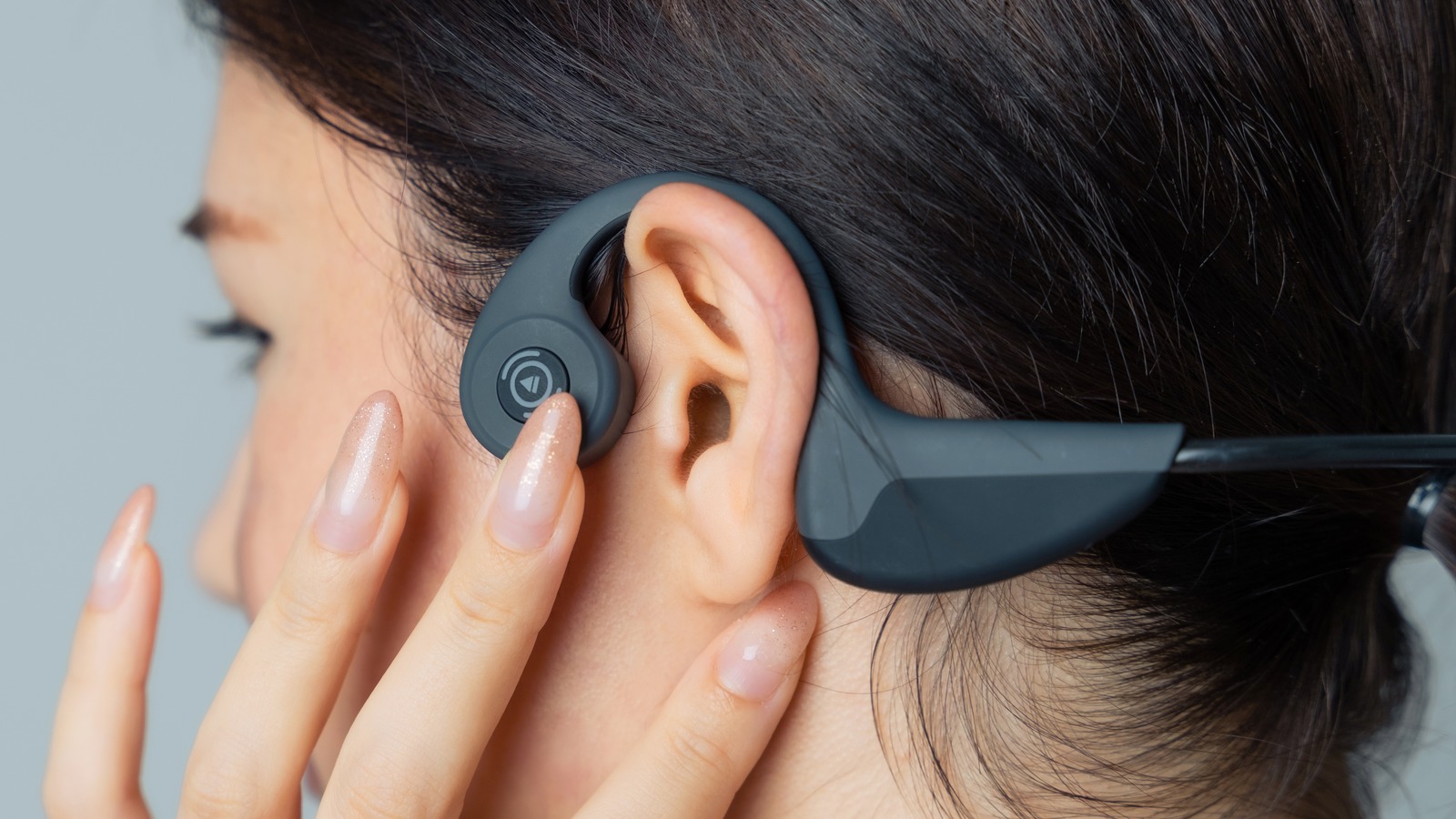
Bone conduction headphones send sound through small transducers that rest on the bones near your ears. The vibrations travel through the skull to the inner ear, where the cochlea turns them into nerve signals.
Regular headphones send sound through the outer ear and middle ear. Bone conduction headphones partly bypass those areas. They do not bypass the cochlea or the hearing nerve.
This difference matters:
- A person with blocked ear canals may still hear sound through bone conduction.
- A person with some middle-ear problems may find bone conduction more useful than earbuds.
- A person with damage to the cochlea or hearing nerve may still hear poorly.
- Bone conduction does not remove the source of most tinnitus.
- Loud bone-conduction sound can still add to noise exposure.
Many models also leave the ear canal open. You can hear traffic, a coworker, or a doorbell more easily than with sealed earbuds. That can be helpful in daily life, but it also means outside noise may mix with music or speech.
Bone conduction headphones versus bone conduction hearing devices
These terms can sound alike, but they are not the same.
Bone conduction headphones are consumer audio products. They play music, calls, podcasts, and other sound. They usually do not provide a medical hearing assessment or personalized amplification.
Bone conduction hearing devices are medical or assistive devices designed for certain types of hearing loss. Some are worn on a soft band. Others are implanted by a surgeon. An audiologist helps decide whether they fit the person’s hearing pattern.
A headphone manufacturer’s claim about “hearing through your bones” does not mean the product is a hearing aid.
Can bone conduction headphones help tinnitus?
They can help in three limited ways: by adding useful sound, reducing ear-canal irritation, or making speech easier to hear when the outer or middle ear is part of the problem.
1. They may mask or reduce awareness of tinnitus
Tinnitus often seems louder in a quiet room. Music, speech, nature sounds, or white noise can make the tinnitus less noticeable. This is called sound enrichment or masking.
Bone conduction headphones can deliver that sound while leaving the ears open. Some users may prefer this feeling over earbuds or over-ear headphones.
However, masking does not mean the tinnitus has healed. It changes the sound around you and may reduce the contrast between silence and the tinnitus signal. When the audio stops, the tinnitus may still be there.
2. They may help when earbuds cause discomfort
earbuds can worsen discomfort for people with:
- Narrow or sensitive ear canals
- Earwax buildup
- Recurrent outer-ear infections
- Ear drainage
- Certain ear surgeries
- A strong dislike of an earplug-like feeling
Because bone conduction headphones sit outside the ear canal, they may be more comfortable in these cases. Comfort can make it easier to use gentle background sound during work, travel, or rest.
3. They may help some people hear speech
If sound is blocked by the outer or middle ear, bone conduction may improve access to sound. This is most relevant to conductive hearing loss, which affects how sound moves through the outer or middle ear.
It may not help much when the main problem is sensorineural hearing loss, which affects the cochlea or hearing nerve. An audiogram is needed to tell these conditions apart.
What the evidence does—and does not—show
Medical guidance supports education, hearing evaluation, hearing aids for people with hearing loss, and behavioral care such as cognitive behavioral therapy for bothersome tinnitus. It does not establish consumer bone conduction headphones as a tinnitus treatment.
Research on bone conduction hearing technology often focuses on hearing loss, not ordinary consumer headphones and tinnitus. That evidence cannot be used to claim that every bone conduction headset reduces tinnitus.
So the practical conclusion is simple: use them if they improve access to sound or comfort, but do not buy them expecting a cure.

When bone conduction headphones may be a good choice
Bone conduction headphones may suit you if you want background sound without blocking your ears.
| Your situation | Likely value | Main limit |
|---|---|---|
| Earbuds cause pain or pressure | They may feel more comfortable | The headset still touches the skin and skull |
| You need to hear nearby sounds | Open ears may help | Busy streets can overpower the audio |
| Tinnitus is worse in silence | Music or soft noise may distract you | The effect may stop when audio stops |
| You have conductive hearing loss | They may improve access to sound | The cause still needs medical care |
| You have inner-ear hearing loss | Benefit may be limited | They do not repair cochlear damage |
| You want calls while staying aware | Open-ear use may help | Privacy and call quality vary |
| You have sound sensitivity | Low-level sound may be easier than sealed earbuds | Any audio can feel irritating during a flare |
They may be a poor fit if you need strong bass, deep noise isolation, or precise control over each ear. Open-ear designs often sound less full in loud places. Wind can also reduce speech clarity.
People with severe hearing loss should not assume a consumer headset will replace a properly fitted hearing device. Ask an audiologist about your hearing test results first.
A useful test before you buy
Try the simplest low-risk test:
- Play quiet speech or gentle music through a speaker.
- Notice whether the sound makes the tinnitus less prominent.
- Try the same sound through a bone conduction headset at a low level.
- Use it for a short period.
- Check how your ears and tinnitus feel later that day.
Stop if you notice pain, dizziness, ear fullness, a clear rise in tinnitus, or reduced hearing. A short trial cannot diagnose the cause of tinnitus, but it can show whether the listening style feels comfortable.
How to use bone conduction headphones safely with tinnitus
Safe use depends more on volume and listening time than on the route sound takes to reach the inner ear.
The National Institute for Occupational Safety and Health and the Centers for Disease Control and Prevention warn that repeated loud sound can damage hearing. Bone conduction headphones can still expose the inner ear to sound energy. “Open ear” does not mean “risk free.”
Use these habits:
- Start at the lowest volume that lets you understand the audio.
- Keep sessions short at first.
- Take quiet breaks.
- Avoid turning up the sound to compete with traffic, fans, or machinery.
- Do not sleep with headphones on unless a clinician has told you that your setup is safe.
- Clean the contact points as directed by the manufacturer.
- Keep the device away from water unless it has a suitable water-resistance rating.
- Avoid use while driving unless local law and safe driving conditions allow it.
A common practical guide is the 60/60 approach: keep volume near 60% or lower and take a break after about 60 minutes. This is not a guarantee of safety because device output differs by model, fit, and audio track. A lower setting may still be too loud in some situations.
If someone nearby can clearly hear your audio, or you need to raise your voice to speak over it, lower the volume.

What to do if bone conduction headphones make tinnitus worse
A temporary change in tinnitus can happen after loud sound, stress, poor sleep, or an ear problem. Do not keep testing the headset at a higher volume.
Follow this order:
- Stop using the headphones for the rest of the day.
- Rest in a quiet but not completely silent setting. Soft room sound may feel better than total silence.
- Check for other causes. Think about recent concerts, power tools, illness, earwax, new medicines, or poor sleep.
- Restart only at a lower level, and only if symptoms return to their usual state.
- Arrange a hearing or medical check if the change lasts, repeats, or affects daily life.
Get urgent medical care for sudden hearing loss, severe dizziness, facial weakness, severe ear pain, or a new neurological symptom. In the United States, sudden hearing loss is time-sensitive and should be assessed promptly.
Make an appointment soon if the tinnitus:
- Beats in time with your pulse
- Is mainly in one ear
- Began after a head injury
- Comes with ear drainage or pain
- Is paired with noticeable hearing loss
- Keeps you from sleeping or functioning
- Causes severe distress or thoughts of self-harm
Pulsatile tinnitus can have a blood-flow cause, so ordinary masking advice is not enough. One-sided tinnitus also deserves evaluation rather than a long self-treatment trial.
Better options for bothersome tinnitus
Bone conduction headphones are only one possible tool. The right next step depends on the cause, hearing level, and effect on your life.
Get a hearing evaluation
An audiologist can test each ear and check whether hearing loss is conductive, sensorineural, or mixed. This can prevent a frustrating cycle of buying headphones that cannot solve the real problem.
If hearing loss is present, hearing aids may help some people by making speech and everyday sound clearer. They are different from consumer headphones and can be fitted to a person’s hearing profile.
Consider structured tinnitus care
For tinnitus that causes major distress, cognitive behavioral therapy has some of the best support among non-drug treatments. It does not claim to erase the sound. Instead, it can reduce the distress and attention linked to it.
Some people also benefit from:
- A fan or sound machine at bedtime
- Quiet music or an audio app
- Better sleep routines
- Stress treatment
- Treatment for jaw clenching or neck problems when those are involved
- Hearing protection during truly loud activities
Avoid products that promise to cure tinnitus with vitamins, herbs, magnets, or a special audio setting. The U.S. Food and Drug Administration has warned consumers about unapproved products marketed to treat tinnitus.
Do not overprotect your ears
Hearing protection is wise around guns, fireworks, power tools, concerts, and other loud sources. Wearing earplugs all day in normal sound can sometimes make ordinary sounds feel more intense. Use protection for real noise hazards, not for every everyday sound.
Common mistakes to avoid
Mistake 1: Assuming “bone conduction” means no hearing risk.
The inner ear still receives sound vibrations. Excessive volume can still harm hearing.
Mistake 2: Using a headset to delay care.
Headphones cannot explain pulsatile tinnitus, sudden hearing loss, ear drainage, or a new one-sided symptom.
Mistake 3: Expecting permanent relief.
Masking may make tinnitus less noticeable while the sound plays. It is not proof that the tinnitus has gone away.
Mistake 4: Buying a consumer headset for serious hearing loss.
A hearing test may point to a hearing aid or medical device instead.
Mistake 5: Turning up the volume in noisy places.
This can defeat the safety benefit of an open-ear design. Move to a quieter place instead.
Mistake 6: Wearing the headset too tightly.
Pressure near the temples or behind the ears can cause soreness and may make sound sensitivity worse.
Bottom line
Bone conduction headphones can be good for tinnitus when you want gentle background sound, open ears, or relief from uncomfortable earbuds. They may be especially useful when a blocked ear canal or middle-ear issue limits regular headphones.
They are not a proven tinnitus cure, and they may offer little benefit when tinnitus comes from inner-ear or hearing-nerve damage. Keep the volume low, use short sessions, and stop if symptoms worsen.
If tinnitus is new, one-sided, pulsatile, linked with hearing loss, or hard to live with, arrange an evaluation with a medical professional or audiologist. In the United States, the National Institute on Deafness and Other Communication Disorders and the American Academy of Otolaryngology–Head and Neck Surgery provide useful patient guidance.
Frequently asked questions
Can bone conduction headphones make tinnitus worse?
Yes. Any headphones can make tinnitus seem worse if they are too loud, worn too long, or used in a noisy place. Bone conduction does not remove the risk of sound exposure. Stop use and seek care if the change is strong, persistent, or linked with hearing loss or dizziness.
Are bone conduction headphones better than earbuds for tinnitus?
Not for everyone. They may be better if earbuds cause pressure, irritation, or ear-canal discomfort. Earbuds may provide clearer sound and better noise control in some settings. The better choice is the one that lets you hear at a lower, comfortable level without worsening symptoms.
Can bone conduction headphones help tinnitus at night?
They may help some people hear soft music or background noise, but wearing them overnight can cause pressure, skin irritation, tangled cables, or prolonged sound exposure. A bedside speaker or sound machine is often simpler. Do not use sound loud enough to cover every trace of tinnitus.
Do bone conduction headphones improve hearing loss?
They can improve access to sound for some people with conductive hearing loss. They may not overcome damage in the cochlea or hearing nerve. Only a hearing test can show whether bone conduction is likely to help.
What type of headphones is safest for tinnitus?
No headphone type is automatically safe. Low volume, short listening periods, quiet surroundings, and regular breaks matter most. Open-ear bone conduction models may improve awareness of nearby sounds, while over-ear models may reduce the need to turn up audio in some noisy settings. Choose based on comfort and the volume you actually need.
Should I see an audiologist before buying bone conduction headphones?
Consider an audiologist first if tinnitus is new, one-sided, pulsatile, paired with hearing loss, or persistent. A hearing test can show whether the issue is in the outer ear, middle ear, inner ear, or hearing nerve. That information is more useful than choosing a headset by marketing claims.
Sources for further reading
- National Institute on Deafness and Other Communication Disorders: Tinnitus
- American Academy of Otolaryngology–Head and Neck Surgery: Clinical Practice Guideline—Tinnitus
- U.S. Food and Drug Administration: Hearing Aids
- CDC: Preventing Noise-Induced Hearing Loss
- NIOSH: Occupational Noise Exposure

Everett Ashford is a tech reviewer at mytechgrid.com specializing in SSDs, cameras, TVs, earbuds, headphones, and other consumer electronics. He provides honest, data-driven reviews based on hands-on testing and real-world performance analysis. Everett simplifies complex tech details to help readers make smart, confident buying decisions.