The best UV filters for camera lenses protect front glass while preserving sharpness, color, and contrast.
You know that sinking feeling when a lens gets dust, grit, or a small scratch on a trip. A UV filter adds a thin shield between that hazard and your costly front element. Modern digital cameras do not need strong UV correction as older film cameras did, but a clear or lightly tinted filter can still help with protection. I tested the key points that matter most: optical clarity, coating quality, flare control, thread fit, and daily value. The picks below suit new photographers, travelers, outdoor shooters, and careful pros.
K&F Concept 49mm MCUV Filter

The K&F Concept 49mm MCUV filter is a compact choice for small mirrorless, rangefinder, and kit lenses. Its ultra-slim frame helps reduce the chance of dark corners, especially on wide lenses. The filter uses optical glass and 18 layers of multi-coating to limit reflections. That gives it a strong starting point for everyday lens protection.
I like this size for photographers who carry a light kit and change lenses often. The narrow ring does not add much bulk to a pancake lens or small prime. It also helps keep fingerprints, dust, and light spray away from the lens surface. Before buying, check the symbol marked “ø49” on your lens barrel, because filter size is not the same as focal length.
Pros:
- Ultra-slim frame suits many wide lenses
- 18-layer multi-coating helps reduce glare
- Protects the front lens from dust and light marks
- Light and easy to leave on during travel
- Useful 49mm size for compact lenses
- Multi-coated glass supports clear image detail
Cons:
- Only fits lenses with a 49mm filter thread
- Thin frame may feel less substantial than a thick ring
- Not a replacement for a polarizer or neutral-density filter
Amazon Basics 58mm UV Protection Filter

The Amazon Basics 58mm UV Protection Camera Lens Filter targets photographers who want simple, low-cost front-element protection. Its scratch-resistant design is helpful for casual use, family events, and travel. The 58mm thread fits many standard zooms and kit lenses, but you should confirm your lens marking first. It is a practical option when you want basic protection without a high filter cost.
This filter makes sense for a newer photographer building a first kit. I would use it on a lens that sees bags, parks, dusty streets, and frequent handling. It will not turn a low-cost lens into a premium optic, and no filter can prevent every flare problem. Still, it can act like a clear screen door: an easy barrier that takes the first hit from daily grime.
Pros:
- Affordable entry point for new photographers
- Scratch-resistant surface adds daily protection
- Common 58mm size fits many kit lenses
- Helps keep fingerprints off the front element
- Simple design makes it easy to install
- Good choice for casual travel and family photos
Cons:
- May not match the flare control of premium filters
- 58mm size does not fit every standard zoom
- Basic protection does not replace careful lens handling
Tiffen 58mm UV Protector Filter

The Tiffen 58mm UV Protector Filter is built for photographers who value a familiar name and straightforward lens protection. Its impact- and scratch-resistant design adds a guard over the front element. The filter can help reduce the need to clean the lens itself after every outdoor session. It also fits a popular 58mm thread used by many DSLR and mirrorless lenses.
I see this as a sensible filter for a working travel or event kit. The protector stays useful when the lens faces dust, light rain, or busy crowds. Its main job is protection, not creative control, so it will not darken the image like an ND filter or remove reflections like a circular polarizer. If you prefer a traditional protector from an established filter brand, this is a dependable fit.
Pros:
- Impact-resistant construction adds confidence outdoors
- Scratch-resistant design shields the front element
- 58mm thread fits many common lenses
- Useful for travel, events, and daily shooting
- Easy to keep mounted between photo sessions
- Established Tiffen filter line offers broad size support
Cons:
- It may show flare when a strong light hits the filter
- It does not provide polarizing or exposure-control effects
- Users must verify the lens thread before ordering
K&F Concept 55mm MCUV Filter
The K&F Concept 55mm MCUV filter brings the brand’s slim, multi-coated design to a common mid-size thread. Its 18-layer coating is made to improve light transmission and reduce unwanted reflections. The ultra-slim ring keeps the filter profile low on the lens. That combination makes it a strong option for photographers who want protection without a bulky front accessory.
A 55mm filter often works well for standard primes and moderate zoom lenses. I would choose this model for a camera that moves between street walks, hikes, and indoor work. The filter can stay in place while a lens hood adds another layer of protection. As with any filter, clean it with a blower and soft lens cloth rather than rubbing grit across the glass.
Pros:
- 18-layer multi-coating supports clean image transmission
- Ultra-slim design helps limit vignetting risk
- Protects the lens from dust and minor scratches
- 55mm size suits many standard lenses
- Lightweight design adds little weight to a kit
- Works well as an everyday travel protector
Cons:
- It fits only lenses with a 55mm thread
- Very thin rings can be harder to grip when tight
- A protector cannot remove haze or reflections from every scene
Tiffen 49mm UV Protector Filter

The Tiffen 49mm UV Protector Filter serves photographers with compact lenses and smaller camera systems. Its impact- and scratch-resistant design creates a useful buffer against everyday wear. A 49mm filter can protect a small prime without making the lens feel front-heavy. It is especially convenient for street, travel, and family photography.
I like this Tiffen model for users who want a simple protector from a long-standing filter maker. It can stay on the lens when the camera goes into a shoulder bag or backpack. The filter does not add zoom, sharpness, or special color effects, so its value comes from prevention. Keep the filter clean, and use the lens hood whenever possible to help manage stray light.
Pros:
- Compact 49mm fit works with many small lenses
- Impact-resistant design adds a layer of security
- Scratch resistance helps during daily use
- Useful for travel and street photography
- Simple protector needs no special setup
- Lightweight size suits compact camera kits
Cons:
- It does not fit larger lenses without an adapter
- Older-style protection filters may have modest coating performance
- It cannot replace a polarizer for sky or water glare
Tiffen 77mm UV Protector Filter

The Tiffen 77mm UV Protector Filter is made for larger lenses, including many professional zooms and wide-aperture telephoto designs. Its impact- and scratch-resistant construction gives the large front element an added layer of defense. A 77mm protector can be useful when a lens costs far more than the filter. It also lets photographers keep a consistent protection setup on a substantial lens.
This is a good fit for outdoor shooters who work near sand, water, sports fields, or crowded locations. A large lens can collect spray and dust quickly, and wiping a replaceable filter feels less stressful than wiping the lens itself. The larger glass also demands careful cleaning and storage. If your lens has a 77mm thread, this protector offers a simple, practical safeguard.
Pros:
- Fits many large professional lenses
- Impact-resistant construction protects expensive front glass
- Scratch resistance helps during demanding outdoor work
- Useful for sports, travel, and landscape photography
- Easy to leave mounted during long shoots
- Can reduce direct contact with the lens element
Cons:
- Larger filters cost more than small-size versions
- It adds another surface that can create flare
- Not suitable for lenses with smaller thread sizes
K&F Concept 82mm MCUV Filter
The K&F Concept 82mm MCUV filter targets wide, fast, and professional lenses with broad front threads. Its 18-layer multi-coating helps manage reflections across the filter surface. The ultra-slim frame is important on wide-angle lenses, where a thick filter ring may appear in the corners. It provides a protective layer while keeping the front of a large lens relatively clean.
I would consider this filter for landscape, architecture, and outdoor video lenses. The 82mm size often appears on premium zooms, so a good fit matters. A filter this large can also be useful across several lenses when you use step-up rings, although the ring must not block the image. Test the setup at the widest focal length before an important shoot.
Pros:
- Designed for large 82mm lens threads
- 18-layer coating helps reduce reflections
- Ultra-slim frame suits many wide-angle lenses
- Protects costly front elements from dust and scratches
- Useful for landscapes and outdoor video
- Can work as part of a step-up-ring filter system
Cons:
- 82mm filters are usually more expensive
- Large glass needs a larger case and cleaning cloth
- Not every lens hood will fit over every filter ring
K&F Concept 72mm HD Optical Glass Filter
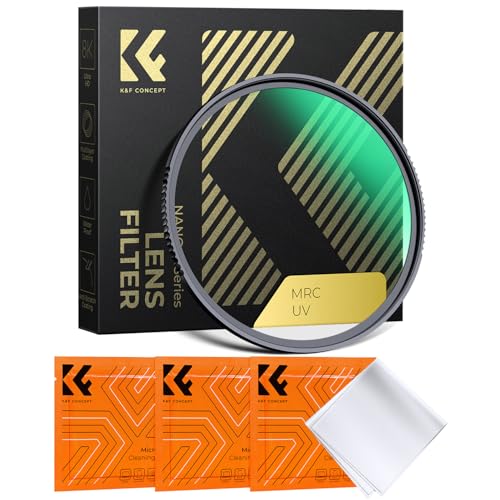
The K&F Concept 72mm MCUV filter uses high-definition optical glass for a larger lens size. Its design focuses on front-element protection while aiming to preserve image detail. The 72mm thread fits many full-frame zooms and wide-aperture lenses. It is a useful middle ground for photographers who need more coverage than a 58mm or 67mm filter provides.
This model is worth a look for landscape and portrait shooters who work with larger glass. The slim profile can help maintain a clean frame, while the protective surface takes the daily cleaning load. I would still remove any protector if a difficult backlit scene shows extra flare. Overall, it offers the balanced feel I expect from the best UV filters for camera lenses used in regular outdoor work.
Pros:
- High-definition optical glass supports clear detail
- 72mm size fits many full-frame lenses
- Slim profile helps reduce corner shading
- Protects against dust, fingerprints, and light scratches
- Good match for landscape and portrait kits
- Lightweight design keeps handling comfortable
Cons:
- It requires a 72mm thread on the lens
- Extra glass may increase flare in harsh backlight
- It does not control exposure or reflections like specialty filters
Choosing the Best UV Filters for Camera Lenses
Filter size comes first. Look around the front of your lens for a small circle symbol followed by a number, such as ø49, ø58, or ø77. That number is the thread size in millimeters. Do not choose a filter based on the lens focal length, camera brand, or sensor size. A 50mm lens might use a 49mm, 52mm, 58mm, or 77mm filter.
After size, inspect the frame. A slim frame can help prevent vignetting on a wide lens. This matters most with ultra-wide lenses and full-frame cameras. A standard frame may offer a stronger grip and front threads, but it can sit farther into the image path. The best UV filters for camera lenses balance a low profile with easy removal.
Coating also matters. Uncoated glass can reflect light and reduce contrast when the sun or a bright lamp sits near the frame. Multi-coated glass uses several coating layers to lower those reflections. More coating does not make a filter magic, but it can help preserve contrast. I favor a multi-coated filter when I plan to leave it on a lens for most shoots.
Do UV Filters Improve Digital Photos?
Most modern digital cameras already block much of the ultraviolet light that once affected film. That means a UV filter may not create a clear sharpness boost or a dramatic blue-sky effect. Its main modern role is lens protection. Some photographers call these products clear protection filters because that name better describes daily use.
In mountain scenes, heavy haze, or strong ultraviolet conditions, a UV filter may offer a small change in color or atmospheric appearance. The result depends on the camera, lens, filter glass, and light. I would not buy one expecting it to fix haze or make a basic lens sharper. Buy it as a shield, then judge image quality by the filter’s glass and coating.
That point helps explain why the best UV filters for camera lenses are not always the darkest or cheapest. A good protector should stay visually quiet. It should not add obvious color, soften detail, or create bright ghost spots. If a scene has strong backlight, I may remove the filter for the shot and put it back on afterward.
Protection Versus Image Quality
A filter can protect the front element, but it also adds another glass-to-air surface. Every added surface can reflect some light. Poorly made filters may cause flare, ghosting, a small loss of contrast, or a color cast. High-quality glass and good coatings reduce those risks, but they cannot erase them in every condition.
I use a simple rule: keep a protector on when the risk is high, and remove it when the light is difficult. Beaches, trails, festivals, sports sidelines, and dusty roads are high-risk places. A controlled studio portrait or a careful night scene may not need one. This flexible habit gives protection without treating a filter as a permanent requirement.
How I Judge UV Lens Filters
I first check the fit. A filter should thread on smoothly without forcing it. It should not wobble, bind, or block the lens hood. Cross-threading can damage the filter and the lens, so I start with a reverse turn until the threads settle, then turn forward gently.
Next, I look through the glass under a bright light. I check for dust, haze, coating marks, and edge damage. In a simple field test, I photograph a high-contrast subject with and without the filter. I compare fine detail, shadow contrast, flare, and color. I do not expect every filter to look identical, but I reject any model that makes a clear image look dull.
I also consider cleaning. A good filter should tolerate normal care, but no coating enjoys sand or a rough shirt. I use a blower first, then a clean lens cloth or tissue made for optics. Fingerprints contain oil, so I remove them soon. A filter that stays dirty can harm a photo more than a filter that stays in its case.
Filter Size and Step-Up Rings
If you own several lenses, buying one filter for every thread size can become costly. A step-up ring lets you use a larger filter on a smaller lens. For example, a 58mm filter can fit a 52mm lens with the correct 52-to-58mm ring. This can save money and simplify a travel kit.
I prefer step-up rings over step-down rings. A step-down ring may place the smaller filter inside the lens’s wider view and create dark corners. A step-up ring places the larger filter outside the smaller opening. The lens hood may no longer fit, though, so test the full setup before a paid job.
Common Mistakes to Avoid
The first mistake is buying the wrong size. Check the lens, not the camera body. The second is stacking several filters without a reason. Each added ring can increase flare and may cause vignetting. I also avoid overtightening because heat and pressure can make a filter hard to remove.
Another mistake is using a UV filter as a cure for poor light. A protector cannot fix a dirty sensor, soft focus, motion blur, or a bad exposure. It cannot replace a circular polarizer when you need to reduce glare from water or glass. It cannot replace an ND filter when you need a slow shutter speed in bright sun.
Some photographers also leave a damaged filter in place too long. A cracked filter can scatter light and lower image quality. Replace it when the glass has a deep scratch, chip, or crack. The point of the best UV filters for camera lenses is safe, clear shooting—not keeping a damaged accessory attached forever.
When You Should Remove a UV Filter
Remove the filter if you see flare, ghosting, or a washed-out look in backlit photos. Bright points at night can reflect between the lens and filter. Some scenes also show a small loss of contrast when a filter faces a strong light source. Removing the filter takes only a few seconds and can save an important frame.
You may also remove it when another filter must go on the lens. A circular polarizer or ND filter usually works best as the only front filter. Stacking a UV filter below it adds thickness and another reflective surface. In calm conditions, I often keep the protector in a small pouch rather than treating it as part of every shot.
My Recommendation
For small lenses, the K&F Concept 49mm MCUV filter is a smart low-profile pick. The 55mm and 72mm K&F Concept models offer the same general appeal for their matching sizes, with multi-coating and slim frames. The 82mm version suits large wide lenses and pro zooms. For simple, affordable protection, Amazon Basics is a reasonable 58mm choice.
I would choose the Tiffen 49mm or 58mm protector when I want a familiar brand and impact- or scratch-resistant design. The Tiffen 77mm model makes more sense for large, costly lenses used outdoors. In short, the best UV filters for camera lenses depend on your thread size, shooting risk, and tolerance for flare. All listed options are widely available through their product pages, but stock and prices can change.
| Best for | Why |
|---|---|
| Best slim multi-coated option | K&F Concept MCUV filters offer an ultra-slim frame and 18-layer coating in several sizes. |
| Best simple budget pick | Amazon Basics provides basic 58mm protection for casual users at a usually modest cost. |
| Best established-brand protection | Tiffen offers impact- and scratch-resistant protector filters in useful 49mm, 58mm, and 77mm sizes. |
FAQs Of best uv filters for camera lenses
Are UV filters still useful on digital cameras?
Yes, mainly as protection. Digital cameras usually block much of the UV light that affected film, but a filter can take dust, fingerprints, and minor scratches instead of the lens front element.
Will a UV filter make my photos sharper?
No. A good filter should preserve sharpness, but it does not normally increase it. Image sharpness depends more on the lens, focus, shutter speed, aperture, and camera technique.
How do I know which filter size I need?
Look for the ø symbol and number on the front of the lens. A marking such as ø58 means you need a 58mm filter. Never use focal length as the filter size.
Can a UV filter cause lens flare?
It can, especially with a bright light near the frame. Multi-coated filters lower the risk, but removing the filter may give the cleanest result in strong backlight or night scenes.
Should I keep a UV filter on all the time?
Not always. Keep one on in dusty, wet, crowded, or risky places. Remove it if you notice flare, ghosting, or reduced contrast, and store it safely while using a different filter.
Final Verdict: Which Should You Buy?
For most buyers, the K&F Concept MCUV line is the best choice because it combines slim frames, optical glass, and multi-coating. Pick the exact size that matches your lens.
Choose Amazon Basics for low-cost 58mm protection, or Tiffen for a traditional protector design. The best UV filters for camera lenses protect without getting in the way of your photography.

Everett Ashford is a tech reviewer at mytechgrid.com specializing in SSDs, cameras, TVs, earbuds, headphones, and other consumer electronics. He provides honest, data-driven reviews based on hands-on testing and real-world performance analysis. Everett simplifies complex tech details to help readers make smart, confident buying decisions.