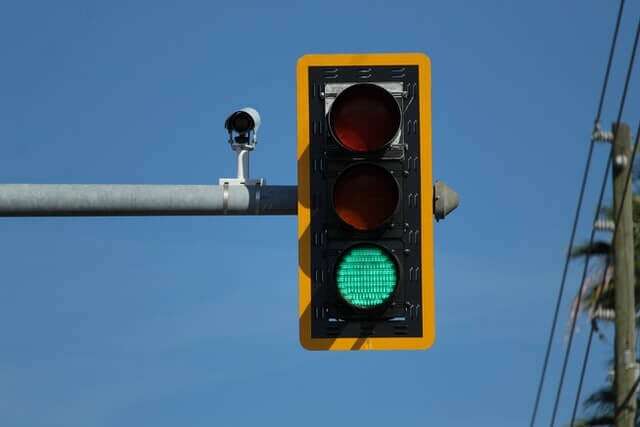
No, not all traffic lights have cameras; many use sensors, timers, or radar instead.
The question “do all traffic lights have cameras” often comes from seeing a small device near an intersection and wondering whether it can issue a ticket. In the United States, traffic lights use many types of equipment, and only some intersections have enforcement cameras. Understanding the difference can help you drive with confidence and avoid costly mistakes.
Do all traffic lights have cameras?
No, all traffic lights do not have cameras. Some intersections have cameras for red-light enforcement, traffic monitoring, license plate reading, or road safety studies. Others use simple timers, induction loops, radar, or other sensors that detect vehicles without recording images.
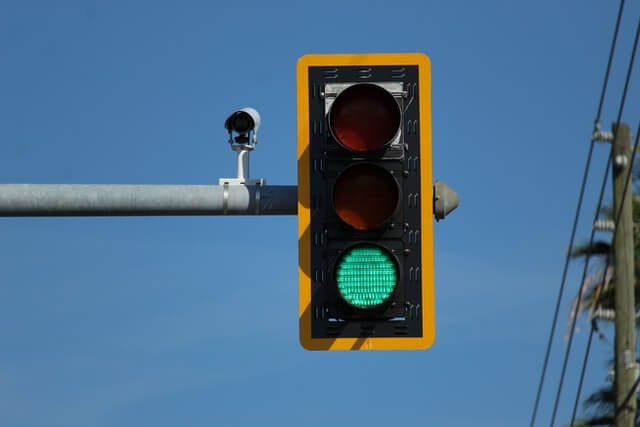
The equipment near a traffic signal can also serve several different purposes. A small box may detect cars, control signal timing, or watch traffic flow. It may look like a camera, but it might not capture a usable image of your vehicle or plate.
Whether an intersection has an enforcement camera depends on local and state rules. One city may use red-light cameras widely, while a nearby city may ban them or use them only at a few high-crash locations.

Why do some traffic lights have cameras?
Traffic cameras support several goals. Some are designed to enforce traffic laws, while others help transportation teams manage roads. These systems may look similar, but their purpose and legal effect can be very different.
Red-light enforcement cameras
A red-light camera takes photographs or video when a vehicle enters an intersection after the signal turns red. Many systems capture:
- The vehicle before it enters the intersection
- The vehicle inside the intersection
- The traffic signal showing red
- The license plate
- The date, time, and location
In many places, the system is triggered only after a vehicle crosses a marked stop line or enters a restricted area. A vehicle that crosses the line while the light is yellow and then continues through may be treated differently under local law.
Red-light camera rules vary greatly. Some states allow them only in certain cities. Others require warning signs, public hearings, or a review by law enforcement before a citation is issued.
Traffic monitoring cameras
Traffic monitoring cameras help transportation agencies watch congestion, crashes, road work, flooding, and blocked lanes. They often send live video to a traffic management center.
These cameras usually do not automatically issue tickets. An operator may watch traffic conditions, but the system is generally meant to improve traffic flow rather than punish drivers.
License plate reader cameras
Automated license plate readers scan plates and convert them into searchable data. Police departments may use them to locate stolen vehicles, investigate serious crimes, or identify vehicles connected to an alert.
A license plate reader near a traffic light does not necessarily mean the signal itself has a red-light camera. It may belong to a separate public safety system placed near the intersection.
Speed cameras near traffic lights
Some roads use speed cameras close to traffic signals. These cameras measure speed and may issue a citation when a driver exceeds the posted limit.
A speed camera and a red-light camera are not the same. A driver can receive a speeding citation even when the traffic light is green, depending on local law and the equipment in use.
What equipment do traffic lights use instead of cameras?
Many traffic lights work without image-recording cameras. They rely on vehicle detection systems that sense the presence, speed, or movement of traffic.
Common systems include:
- Inductive loop sensors buried under the pavement
- Radar sensors mounted on signal poles
- Video detection cameras
- Infrared sensors
- Magnetometers
- Pressure or motion sensors
- Fixed timing plans
An inductive loop is one of the most common systems. It detects changes in the magnetic field caused by a vehicle’s metal body. You may see a rectangular cut in the pavement near the stop line. That cut often marks the location of a loop sensor.
Radar detection works in a different way. It sends radio waves toward traffic and measures movement. It can detect cars, trucks, bicycles, and motorcycles without taking traditional photographs.
Video detection is more complex. A camera may watch lanes and identify vehicles for signal control, but that does not automatically make it an enforcement camera. The key question is what the system is programmed and legally authorized to do.
How can you tell if a traffic light has a camera?
There is no single visual clue that works in every city. The best approach is to look for several signs and then confirm the information through official local sources.
Look for warning signs
Many jurisdictions post signs such as:
- Photo enforced
- Red-light camera ahead
- Automated traffic enforcement
- Speed monitored by camera
Sign rules differ by location. The absence of a sign does not always prove that no camera exists, but a clear enforcement sign is an important warning.
Examine the equipment
Red-light enforcement cameras often appear as large boxes mounted on poles near the signal. They may point toward the stop line or toward traffic approaching from behind.
You may also see a flash unit or a second device aimed at the rear of vehicles. Newer systems may use infrared light, so they might not produce a bright visible flash.
Still, appearance can mislead you. A box may contain a traffic sensor, communication equipment, or a standard security camera. You should not rely on shape alone.
Check the city or county website
Transportation departments and police agencies often publish lists of camera locations. Some provide maps, program details, violation photos, and payment instructions.
Search for terms such as:
- Red-light camera locations
- Automated traffic enforcement
- Photo enforcement program
- Traffic camera map
- Intersection safety cameras
Use official government websites when possible. Third-party map apps can be outdated or may confuse traffic monitoring cameras with ticket cameras.
Review a mailed notice carefully
If a camera system records an alleged violation, the notice usually lists the date, time, location, and legal basis for the citation. It may also include photographs or a secure website where you can view evidence.
Be cautious with text messages or emails demanding immediate payment. Scammers often imitate traffic agencies. Confirm the notice through the agency’s official website or phone number, not through links in an unexpected message.

Do cameras record every vehicle at a red light?
Usually, no. Enforcement systems are generally designed to record specific events, not every vehicle waiting at a signal.
A red-light camera may activate when a vehicle crosses a detection zone after the signal becomes red. It may collect several images linked to the event. The agency may then review the images before sending a notice.
Traffic monitoring cameras can record a wider view of the road. Their footage may show many vehicles, but that does not mean every driver is automatically identified or cited.
Data storage also varies. Some systems keep video for a short period. Others save images linked to enforcement cases for longer periods, based on local retention rules and privacy policies.
Can a traffic light camera give you a ticket?
It can in some locations, but the answer depends on the camera type and local law. A camera may support a civil traffic notice, a criminal citation, or no ticket at all.
Red-light camera notices are often mailed to the registered vehicle owner. The process may not be the same as a traffic stop by an officer. Some jurisdictions treat the notice as a civil penalty, while others apply different legal rules.
A traffic monitoring camera normally does not issue a ticket by itself. Police may use video as part of an investigation, but that is different from an automated citation system.
If you receive a notice, check:
- The issuing agency
- The violation date and location
- The photographs or video
- The payment deadline
- The hearing or dispute process
- The rules for rented, sold, or stolen vehicles
Do not ignore a legitimate notice. Late fees, registration problems, or additional legal action may follow in some areas.
Are traffic-light cameras accurate?
Traffic camera systems can be accurate, but no technology is perfect. A reliable system must correctly identify the signal phase, vehicle position, lane, time, and license plate.
Potential problems include:
- A blocked or unclear license plate
- A vehicle that stops beyond the line but does not enter the intersection
- A confusing lane layout
- A malfunctioning signal
- A right turn allowed after a full stop
- Emergency vehicles forcing a driver through
- Incorrect vehicle ownership records
- Poor weather or poor image quality
Many programs use human review before issuing a citation. That review can reduce mistakes, but it does not remove the driver’s right to challenge an error.
In practical terms, the safest response is not to guess whether a camera is present. Follow the signal, stop before the marked line, and allow enough space to react safely.
What are the benefits and limits of traffic cameras?
Traffic cameras can improve safety, but they also raise questions about fairness, privacy, and enforcement quality.
Potential benefits
Research on automated enforcement has found that red-light cameras may reduce some dangerous red-light violations and certain types of crashes, especially right-angle crashes. Their value tends to be greater at intersections with a history of severe collisions.
Other benefits include:
- Continuous monitoring
- Faster detection of crashes
- Better traffic signal management
- Evidence for collision investigations
- Reduced need for an officer to stand at every intersection
- More consistent enforcement in some locations
A camera can act like a quiet witness. It may capture an event that no officer saw in person.
Important limits
Cameras cannot solve every traffic problem. Poorly designed intersections, short yellow-light timing, confusing signs, and unsafe road layouts can still cause crashes.
Critics also point to:
- Privacy concerns
- Errors in identifying vehicles
- Disputes over who was driving
- Unequal effects on low-income drivers
- Maintenance and operating costs
- Government misuse of collected data
- Confusion between safety cameras and enforcement cameras
A fair program needs clear signs, transparent rules, accurate equipment, secure data practices, and a simple appeal process. Camera use should support sound road design, not replace it.
What should you do when driving near a camera-equipped intersection?
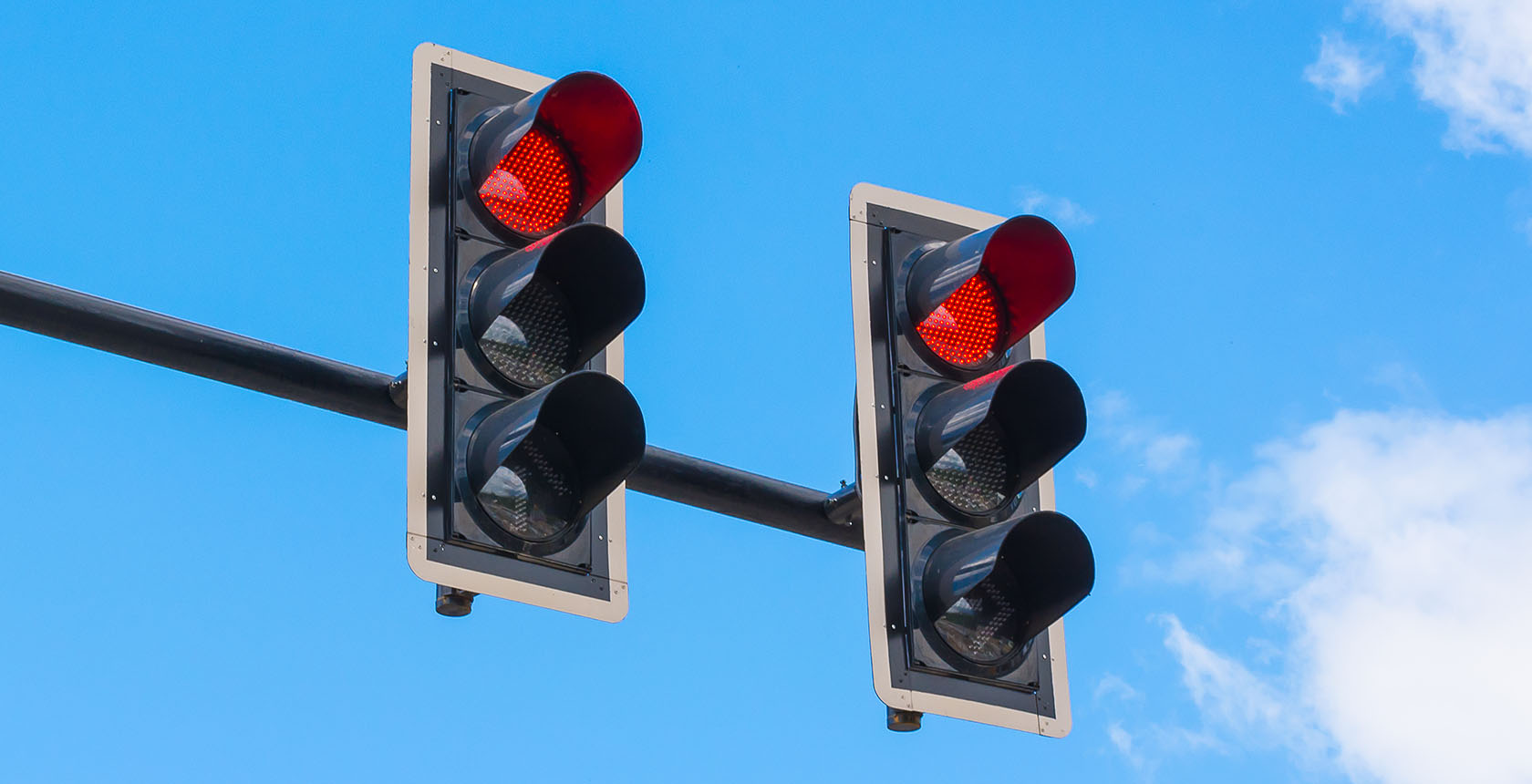
The best habit is simple: drive for the signal, not for the camera. Safe behavior remains the same whether a camera is present or not.
Use these steps:
- Watch the signal well before reaching the intersection.
- Slow down when the light changes from green if stopping is safe.
- Stop behind the marked line when the signal is red.
- Make a complete stop before turning right on red, where allowed.
- Check for signs that restrict right turns on red.
- Keep the intersection clear, even when your signal is green.
- Avoid blocking crosswalks and bike lanes.
- Give emergency vehicles a clear path.
- Check your local rules before challenging or paying a notice.
- Never stop suddenly if doing so would create a crash risk.
One common mistake is braking hard after a driver notices a camera. Sudden braking can cause a rear-end crash. A camera does not change the need to make a safe, controlled stop.
Another mistake is stopping in the wrong place. If your vehicle is already past the stop line, reversing may be unsafe and illegal. Follow the signal, watch surrounding traffic, and never reverse into an active intersection.
How do local laws affect traffic-light cameras?
State and local laws control much of the camera debate in the United States. Some states permit red-light cameras under strict conditions. Some allow local governments to choose whether to use them. Others restrict or prohibit automated enforcement.
Rules may cover:
- Where cameras may be installed
- Required warning signs
- Minimum yellow-light duration
- Review by police or trained staff
- Notice delivery
- Fine limits
- Driver identification
- Data retention
- Appeals and hearings
- Use of revenue
Yellow-light timing is especially important. Engineering standards consider speed limits, intersection design, grade, and driver reaction time. A city should not shorten the yellow phase simply to increase violations.
Because laws change, online discussions can become outdated. Check your state transportation agency, city government, or court website for current information.

A practical way to investigate a camera
If you want a reliable answer about one intersection, use a careful process rather than relying on guesswork.
First, write down the exact location. Include the road names, direction of travel, and nearby landmarks. A camera may cover one approach but not the others.
Next, search the official city, county, or state website. Look for an automated enforcement map, transportation project page, public meeting record, or police department notice.
Then, compare the equipment with the published information. A large pole-mounted box aimed at the rear of traffic may support enforcement, while a small radar unit pointed across the lanes may control signal timing.
Finally, contact the agency if the information is unclear. Ask whether the equipment is used for enforcement, traffic detection, public safety, or general monitoring. Keep written records if you are reviewing a citation.
In researching intersections, one lesson is consistent: visual guesses are often wrong. The same pole can carry signal hardware, detection tools, communication units, and cameras for different purposes.

Frequently Asked Questions About Do All Traffic Lights Have Cameras
Do all traffic lights have cameras?
No. Many traffic lights use timers, pavement loops, radar, or other sensors instead of cameras. Only some intersections use cameras for enforcement or traffic monitoring.
Can a traffic camera see inside my car?
Most traffic enforcement cameras are aimed at the vehicle, license plate, and intersection area. They are not normally designed to see clearly inside the passenger compartment.
Do traffic cameras always flash?
No. Some systems use a visible flash, while others use infrared light or no obvious flash. A lack of flash does not prove that no image was taken.
Can a traffic light camera record you when the light is yellow?
A red-light system usually focuses on vehicles entering after the signal turns red. Local rules may differ, and a camera may still record an event for review if a vehicle crosses a detection point during a signal change.
Do traffic monitoring cameras issue tickets?
Usually, they do not. Traffic monitoring cameras generally help agencies manage congestion, crashes, and road conditions, while enforcement cameras operate under separate rules.
How can I find out if an intersection has a red-light camera?
Check the official website of the city, county, police department, or transportation agency. Look for enforcement maps, warning signs, and published program information.
Can I fight a red-light camera ticket?
In many places, you can request a review or hearing. Read the notice carefully, check the evidence, and follow the deadline and appeal instructions listed by the issuing agency.
Conclusion
So, do all traffic lights have cameras? No. Some intersections use red-light or speed enforcement cameras, while many others rely on timers, radar, pavement loops, or video detection that does not issue tickets.
The most reliable way to identify a camera is to check official local information rather than judging equipment by its appearance. Drive carefully, stop behind the line, follow turning rules, and review any citation through the agency’s verified website.
Have you noticed a camera near an intersection in your area? Check your local transportation resources and share your experience or questions in the comments.

Everett Ashford is a tech reviewer at mytechgrid.com specializing in SSDs, cameras, TVs, earbuds, headphones, and other consumer electronics. He provides honest, data-driven reviews based on hands-on testing and real-world performance analysis. Everett simplifies complex tech details to help readers make smart, confident buying decisions.