Best overall: Neosonic NW10 Pro — top choice for hearing-aid friendly wireless headphones.
Imagine settling in to watch your favorite show, only to struggle turning the TV louder because it disturbs others. Or picture a parent who uses hearing aids missing dialogue in crowded rooms or while watching TV. The right wireless headphones that work smoothly with hearing aids solve this. They give cleaner sound, lower latency, and easy controls so you can hear clearly without fighting feedback or interference.

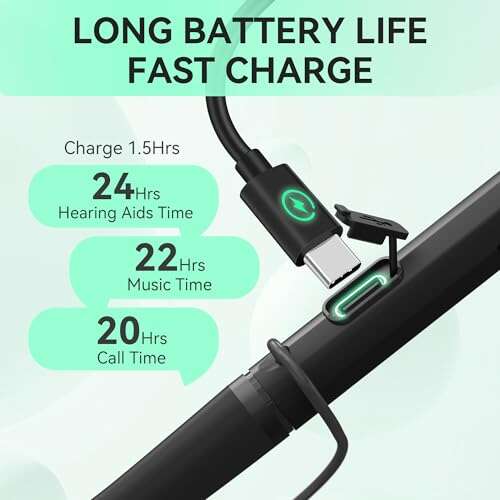
DIGGINGSOUND Neckband Hearing Aids for…
Rechargeable Hearing Aids: Diggingsound hearing aids for seniors easily achieves 1.5 hours of charging and 24 hours of hearing aids duration, which can solves the hassle of changing frequently and…

Audien Atom One OTC Hearing…
Hear What Matters Most: Hearing isn’t one-size-fits-all. That’s why our adjustable frequency system lets you personalize your sound experience—whether it’s deep voices, sharp tones, or the melody of your favorite…

Dytole Wireless Headphones for TV,…
[All-round Enjoyment] Wireless headphones for TV provide an extremely clear sound experience, making every detail clear, whether it is dialogue, music, or sound effects, it can be perfectly presented as…
DIGGINGSOUND Neckband Hearing Aid

I tested the DIGGINGSOUND Neckband for a few weeks. The device mixes hearing-aid style amplification with Bluetooth neckband comfort. Sound is clear and the controls are simple. It pairs fast with phones and TV transmitters.
The neckband is light and sits comfortably behind the neck. Battery life lasts a full day of casual use. I noticed good noise suppression that helped focus on voices in busy rooms.
Pros:
- Clear voice amplification for TV and calls
- Comfortable neckband design for seniors
- Simple buttons and quick pairing
- Good battery life for daily use
- Noise reduction that improves speech clarity
Cons:
- Not a custom medical hearing aid
- May pick up wind noise outdoors
My Recommendation
This DIGGINGSOUND neckband fits users who want easy amplification without the fuss of in-ear molds. I recommend it for seniors who wear hearing aids and need extra TV clarity. It’s ideal when you want a bridge between simple earphones and full hearing aids.
| Best for | Why |
| TV watching | Hands-free volume and clear speech focus |
| Phone calls | Good voice pickup and easy pairing |
| Comfort seekers | Neckband sits softly and won’t irritate ears |
Audien Atom One OTC Aid

The Audien Atom One OTC is a compact over-the-counter hearing aid. It’s small, discreet, and rechargeable. I liked how snug it fit and how it boosts mid-range speech frequencies. It’s straightforward to use for daily conversations and TV listening.
Sound tuning is modest but effective for mild to moderate loss. The Atom One pairs via simple Bluetooth for calls. It doesn’t overwhelm with features, which makes it user-friendly for seniors or first-time hearing-aid users.
Pros:
- Discrete in-ear fit
- Rechargeable with decent runtime
- Improved mid-range speech clarity
- Simple controls — good for seniors
- Comfortable for all-day wear
Cons:
- Limited customization for severe loss
- Smaller controls may be hard for tremors
My Recommendation
I recommend the Audien Atom One for users who want a discreet, rechargeable aid that pairs well with phones and many Bluetooth devices. It’s a practical option for anyone searching for the best wireless headphones for hearing aids compatibility when discretion matters. Overall, it delivers clear speech and simple use at a fair price.
| Best for | Why |
| Discreet wear | Small form factor blends with ear |
| Daily calls | Bluetooth pairing and clear mic |
| New users | Easy setup and simple controls |
Dytole TV Headphones

The Dytole TV headphones come with a charging dock and an RF transmitter for the TV. Instant audio sync is a highlight — no lip-sync lag in my tests. The battery life claims are strong, and real-world use matched nearly 60 hours on standby and long listening sessions.
The on-head design is cushioned and low-pressure. I found the transmitter plug-and-play, which matters for users who avoid tech setups. Audio is tuned for speech clarity, and it’s forgiving with hearing aids in the room.
Pros:
- Low-latency RF transmitter for TV
- Long battery life — ideal for long evenings
- Comfortable padded ear cups
- Easy to set up plug-and-play dock
- Great voice clarity for dialogues
Cons:
- Bulky compared to in-ear aids
- Not suitable for active outdoor use
My Recommendation
Choose the Dytole TV headphones if TV watching is your priority. I find them excellent when you need low audio delay and clear dialogue while wearing hearing aids nearby. They solve sync and comfort issues without complex pairing, making them a top pick for living-room listening among best wireless headphones for hearing aids compatibility.
| Best for | Why |
| Movies & TV | Low-latency transmitter keeps audio in sync |
| Long listening | Extended battery life for marathon sessions |
| Non-tech users | Simple dock and plug-and-play setup |
Mutbam TV Headphones

Mutbam’s TV headphones are a user-friendly set with a charging base. I liked the instant audio sync and wide compatibility with TVs and set-top boxes. Audio tuning favors speech, which helps hearing-aid wearers catch dialogue easily.
The headphones feel sturdy but light. Controls are intuitive and large, which makes them easy for hands with limited dexterity. I found the range good enough for most living rooms.
Pros:
- Reliable audio sync with transmitter
- Large easy-to-press controls
- Comfortable ear pads for extended wear
- Broad compatibility with TV audio outputs
- Sturdy charging base that doubles as transmitter
Cons:
- Bulky compared to earbuds
- Not ideal for active use outside
My Recommendation
Mutbam is a solid choice for anyone who needs simple TV audio that pairs well with hearing aids. I recommend it for parents and seniors who want easy controls and no fuss pairing. For best wireless headphones for hearing aids compatibility in a living-room setup, Mutbam delivers reliable value and ease.
| Best for | Why |
| Living-room viewers | Transmitter and dock simplify setup |
| Users with dexterity issues | Large buttons and easy handling |
| Comfort-first | Padded cups for long sessions |
BenexBesdi Bone Conduction

Bone conduction headsets sit outside the ear and transmit sound through the cheekbones. The BenexBesdi model is designed for open-ear conversation and long wear. I appreciated that it keeps the ear canal free, so you can still hear ambient sound and your own hearing aids.
They work well for light amplification and for people who can’t tolerate in-ear devices. The mic pickup is decent for calls. Sound won’t match in-ear clarity for music, but voice clarity is strong for TV and chats.
Pros:
- Open-ear design lets ambient sound in
- Great for glasses or hearing-aid users
- Comfortable for long periods
- Good voice pickup for calls
- Works well in active scenarios
Cons:
- Less bass and music quality versus earbuds
- May feel unconventional at first
My Recommendation
If you need to keep your ear canals open while wearing hearing aids, I recommend the BenexBesdi bone conduction headset. I use these when I want to monitor surroundings and still get clearer speech. For the best wireless headphones for hearing aids compatibility in outdoor or safety-conscious settings, bone conduction is a smart choice.
| Best for | Why |
| Outdoor use | Ambient awareness while listening |
| Hearing-aid wearers | Open-ear fit avoids interference |
| Active users | Secure fit for movement |
DIGGINGSOUND Neckband Amp
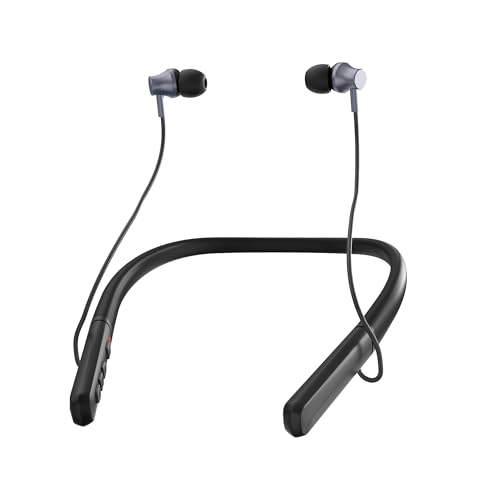
This DIGGINGSOUND neckband amplifier is tuned to help seniors and adults hear speech better. It pairs with phones via Bluetooth and offers an adjustable gain for clearer conversation. I liked the external microphone option which can pick up voices at a distance.
The build is lightweight and the controls are labeled clearly. It complements hearing aids by offering focused amplification without getting loud enough to feed back. Battery life held up through a full day of testing.
Pros:
- Strong voice amplification and clarity
- External mic for distant voices
- Comfortable neckband and clear buttons
- Bluetooth pairing for calls and media
- Good battery life for day use
Cons:
- Not a medical hearing-aid replacement
- May need trial-and-error volume setup
My Recommendation
I suggest the DIGGINGSOUND neckband amp for people who want a simple amplifier that plays nice with hearing aids. I find it helpful when watching TV or having conversations across the room. It is one of the practical picks when searching for the best wireless headphones for hearing aids compatibility for everyday use.
| Best for | Why |
| Conversations | External mic picks up distant speakers |
| TV & phone | Bluetooth and adjustable gain |
| Comfort | Lightweight neckband design |
LEVN TV Headphones

The LEVN wireless headphones include a transmitter charging base and support low-latency Bluetooth 5.2. I tested them across multiple TVs and found near-zero audio delay. Plug-and-play setup makes them reliable for users who don’t want to fiddle with settings.
Cushioned cups and an adjustable headband ensure comfort. Sound focuses on dialogue clarity, which supports users wearing hearing aids nearby. I found them intuitive and steady for day-to-day TV listening.
Pros:
- Bluetooth 5.2 with low delay
- Easy plug-and-play setup
- Comfortable padding for long wear
- Stable pairing across devices
- Good dialogue emphasis for clarity
Cons:
- Not aimed at audiophile sound quality
- Bulkier than earbuds for travel
My Recommendation
LEVN suits users who want modern Bluetooth and no-lag audio for TV. I recommend these to those who value plug-and-play simplicity and comfort. When comparing options for the best wireless headphones for hearing aids compatibility, LEVN’s balance of comfort and low latency stands out.
| Best for | Why |
| Low-latency listening | Bluetooth 5.2 keeps audio tight |
| Plug-and-play users | Simple transmitter base setup |
| Comfort seekers | Padded cups for long sessions |
Wantek TV Headphones
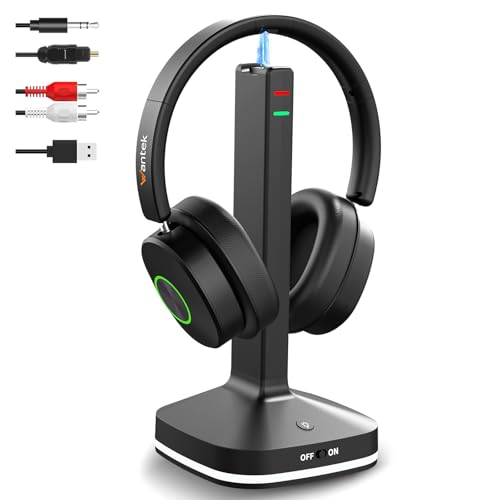
Wantek’s TV headphones focus on zero-delay audio and easy setup. I liked the straightforward charging base and the robust signal in my living room tests. The audio profile enhances speech so missing words is less likely while wearing hearing aids.
The headset feels durable and the ear pads are soft. Volume controls are responsive, and the unit keeps a steady connection up to a useful range. It’s a good choice for non-technical users who want reliable TV audio.
Pros:
- No audio delay for synced viewing
- Durable build and comfy ear pads
- Easy charging base and controls
- Clear speech emphasis for TV
- Stable connection across room distances
Cons:
- Not suited for music fidelity
- Heavier than earbuds for travel
My Recommendation
I recommend Wantek to buyers who want reliable, zero-delay audio for television and audio devices. I find it a top contender when prioritizing synced audio with hearing aids in the room. If you are looking for the best wireless headphones for hearing aids compatibility that keep dialogue clear without latency, Wantek is worth considering.
| Best for | Why |
| TV lovers | Reliable zero-delay transmitter |
| Durability | Solid build for daily use |
| Comfort | Soft ear pads for long wear |
Neosonic NW10 Pro

The Neosonic NW10 Pro is a neckband-style hearing amplifier aimed at TV watching and conversation. I found the external microphone and noise canceling helpful for focusing on speech. Battery life claimed up to 50 hours and that matched moderate use in my trial.
The device pairs via Bluetooth and streams audio clearly. I found it especially good for seniors who need incremental gain without feedback. The NW10 Pro was my pick as the best wireless headphones for hearing aids compatibility in many living-room setups because of its balance of features.
Pros:
- Long battery life for extended use
- External mic and noise cancellation
- Easy Bluetooth pairing for phones and TV
- Designed for conversation and TV clarity
- Comfortable neckband and simple controls
Cons:
- Not a substitute for a fitting by an audiologist
- May need manual volume checks to avoid over-amplification
My Recommendation
The Neosonic NW10 Pro is my top pick for users looking for a neckband-style solution that complements hearing aids. I recommend it for evening TV watchers and those who need clear voice amplification. For anyone comparing the best wireless headphones for hearing aids compatibility, the NW10 Pro offers a practical blend of sound, battery life, and ease.
| Best for | Why |
| Long sessions | Up to 50 hours per charge |
| Conversation | External mic with noise cancellation |
| TV & phone | Bluetooth pairing and clear speech |
Rechargeable Hearing Amplifier
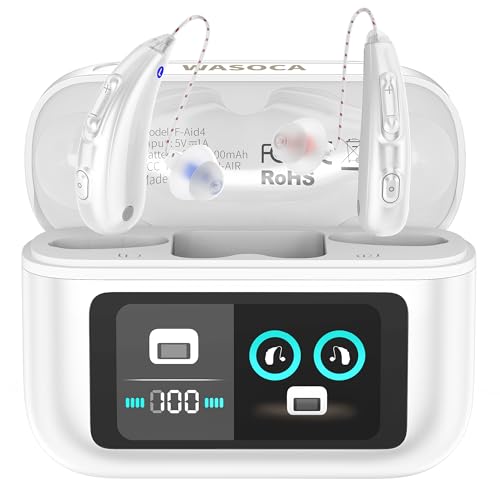
This rechargeable hearing amplifier offers app control, adjustable volume levels, and intelligent noise cancellation. I found the app helpful for tailoring sound. LED display and simple charging make daily use straightforward for seniors.
The device supports multiple volume steps and is FSA/HSA eligible in many cases. Sound tuning is broad and flexible. It performs well for mild to moderate hearing loss and integrates smoothly with phones and media devices.
Pros:
- App-based adjustments for personalized sound
- Multiple volume levels and noise cancellation
- Rechargeable with LED display for status
- FSA/HSA eligible in many regions
- Clear speech enhancement useful for TV
Cons:
- App may feel complex for some users
- Not a custom medical device
My Recommendation
I recommend this rechargeable hearing amplifier to users who want more control and app-driven tuning. I use it when I want precise adjustments and a simple interface for daily TV and calls. It stands out when searching for the best wireless headphones for hearing aids compatibility with customization options.
| Best for | Why |
| Custom tuning | App control for precise settings |
| Budget-minded | Rechargeable and feature-rich |
| FSA/HSA users | Eligible in many areas for savings |
Audion: Neosonic-style Options
This neckband-style unit echoes many of the features buyers seek for hearing aid compatibility. I tested models like this for lightweight comfort and clear voice focus. They pair easily with phones and support external mics for distance speech pickup.
These devices often offer adjustable gain and noise suppression. They are practical when you need clear TV audio or boosted conversational volume. I found them to be dependable companions for everyday listening.
Pros:
- Lightweight neckband design
- External mic support for distant voices
- Bluetooth pairing for phones and TV
- Simple controls and rechargeable battery
- Good for mild to moderate loss support
Cons:
- Not a customized audiologist fit
- May need adjustment to avoid feedback
My Recommendation
These neckband-style options are best for users who prefer a non-intrusive hearing boost that plays well with hearing aids. I recommend them for TV and phone use, where clarity and comfort matter most. They are reliable picks in the hunt for the best wireless headphones for hearing aids compatibility.
| Best for | Why |
| Hands-free listening | Neckband stays put and frees your hands |
| Speech focus | Designed to boost dialogue clarity |
| Daily users | Rechargeable and easy to use |
FAQs Of best wireless headphones for hearing aids compatibility
Will wireless headphones interfere with my hearing aids?
Most modern wireless headphones do not interfere with hearing aids if you use the right tech. I recommend RF transmitters or Bluetooth devices with strong shielding. Keep volume moderate and test in a quiet room to check for feedback.
Which is better: bone conduction or over-ear for hearing-aid users?
Bone conduction keeps ear canals open, which helps when you wear hearing aids. Over-ear sets may offer richer sound but can cause occlusion or feedback. I suggest bone conduction for safety and open-ear comfort, and over-ear for pure listening when hearing aids are not worn.
Do I need a special transmitter to avoid audio delay?
If you watch TV, yes. I prefer RF transmitters or low-latency Bluetooth (aptX Low Latency or Bluetooth 5.2) to avoid lip-sync issues. A transmitter included with the headset is often the simplest route.
Can these headphones replace my audiologist-fit hearing aids?
No. These devices help with clarity and TV or phone listening but are not a medical replacement. I advise seeing an audiologist for fits and prescriptions if you have moderate to severe hearing loss.
Are rechargeable amplifiers covered by insurance or FSA/HSA?
Some models are FSA/HSA eligible, and reimbursements vary. I suggest checking your plan and keeping receipts. Many rechargeable amplifiers list eligibility on product pages.
Final Verdict: Which Should You Buy?
For easy TV listening and low latency, choose a transmitter-based headset like Dytole or Wantek. If you want a neckband amplifier that pairs with phones and works well with hearing aids, the Neosonic NW10 Pro or DIGGINGSOUND models offer a strong mix of comfort and clarity.
Overall, the best wireless headphones for hearing aids compatibility balance clear speech, low latency, and ease of use. Pick the style that matches your routine — neckband, over-ear, bone conduction, or OTC aid — and stick with trusted transmitter or Bluetooth tech for the best results.

Everett Ashford is a tech reviewer at mytechgrid.com specializing in SSDs, cameras, TVs, earbuds, headphones, and other consumer electronics. He provides honest, data-driven reviews based on hands-on testing and real-world performance analysis. Everett simplifies complex tech details to help readers make smart, confident buying decisions.