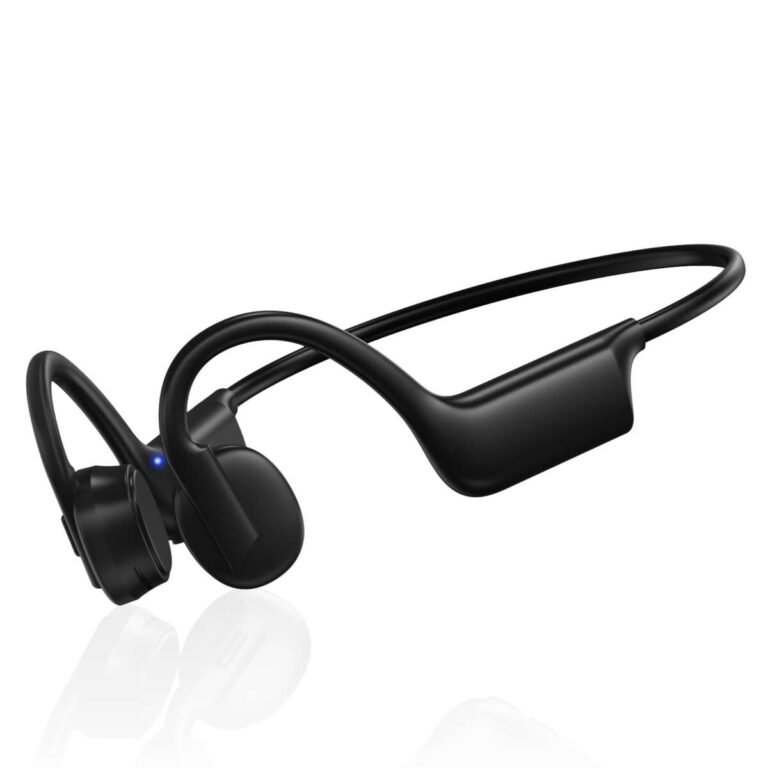
In the United States, AfterShokz headphones are now sold under the Shokz brand. They use bone conduction, a form of audio delivery that sends sound vibrations through the bones near your ears instead of sending sound through the ear canals.
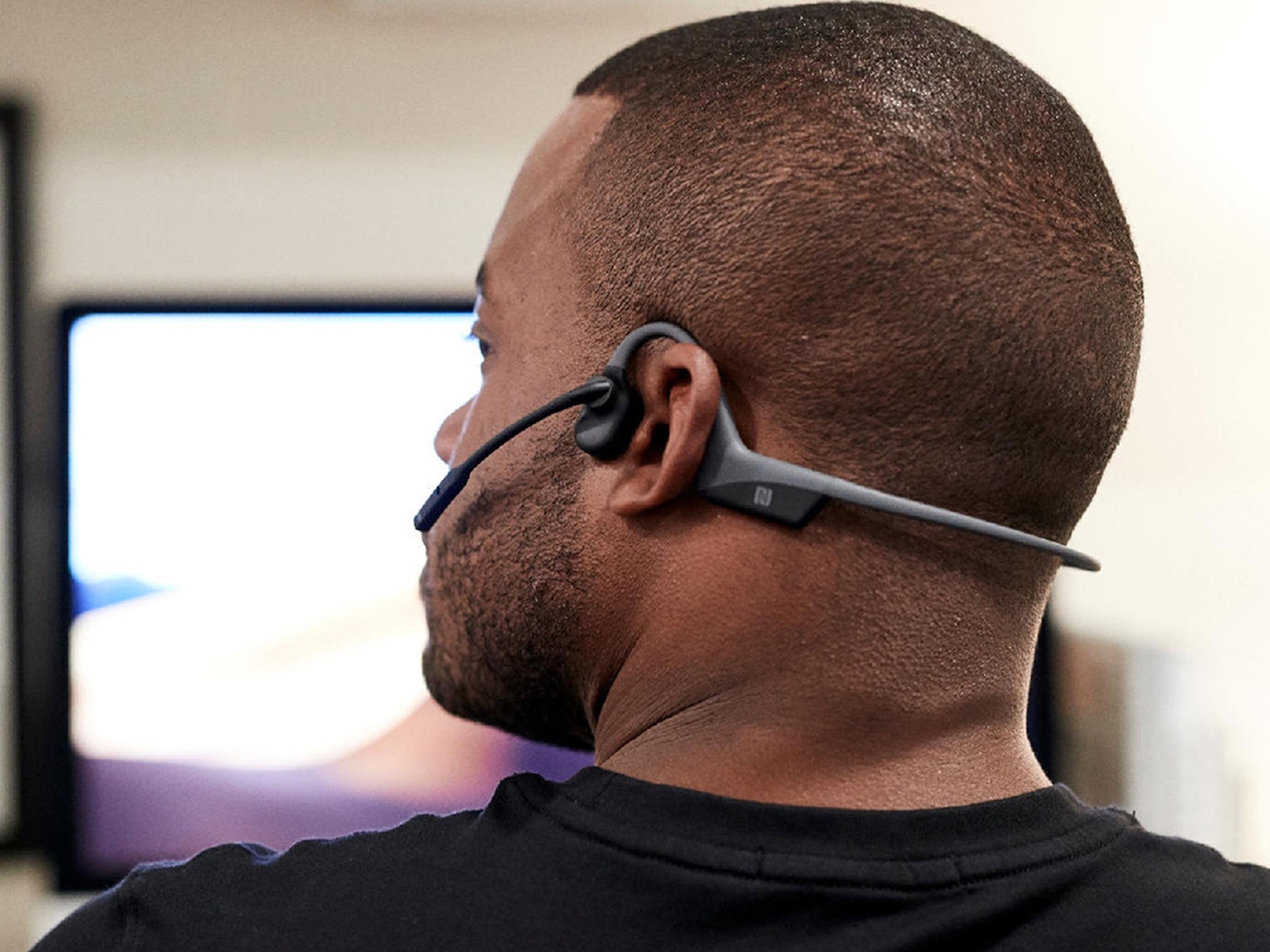
The headphones rest near the cheekbones, usually just in front of the ears. Small transducers vibrate against the skin and bone. These vibrations reach the inner ear, where the cochlea changes them into signals that the brain understands as sound.
This design leaves the ear canals open. You can listen to music, calls, podcasts, or navigation prompts while still hearing nearby sounds such as traffic, coworkers, or a doorbell.

What is bone conduction?
Bone conduction is the process of hearing sound through vibrations in the skull. It does not replace the normal hearing path in every way, but it can bypass parts of the outer and middle ear.
With standard headphones, the path is:
- The speaker creates sound waves.
- The waves travel through the ear canal.
- The eardrum vibrates.
- Tiny middle-ear bones carry the motion forward.
- The cochlea changes the motion into nerve signals.
With bone-conduction headphones, the path is different:
- The headphone transducer creates mechanical vibrations.
- The vibrations pass through the skin and cheekbone area.
- The vibrations reach the cochlea.
- The cochlea converts them into signals for the brain.
The cochlea is the hearing organ inside the inner ear. It contains tiny sensory cells that respond to movement. Your brain then uses those signals to create the experience of sound.
Bone conduction is not unique to headphones. People can also hear their own voice partly through bone vibration. This is why your recorded voice may sound different from the voice you hear while speaking.
Do AfterShokz headphones touch the eardrum?
No. AfterShokz and Shokz bone-conduction models do not send sound directly into the ear canal, so the transducers do not touch the eardrum.
However, “not touching the eardrum” does not mean the headphones cannot affect hearing. Loud sound, whether delivered through air or bone, can still stress the sensitive cells in the inner ear.
How do AfterShokz headphones create sound?
AfterShokz headphones use small electromagnetic transducers. A transducer changes electrical energy into physical movement.
When a phone sends an audio signal to the headphones, the headphones turn that signal into controlled vibrations. The transducers press gently against the area in front of the ears. The vibrations then travel through the skull toward the cochlea.
The device does not make the entire headphone frame vibrate equally. The main vibration comes from the transducers. The frame holds those parts in the right position and keeps the headphones around the head.
Most wireless models also include:
- A Bluetooth radio for the wireless connection
- A rechargeable battery
- Digital signal processing
- Built-in microphones for calls
- Buttons or controls for playback and volume
- Firmware that controls sound and power functions
The exact design depends on the model. Older AfterShokz products and newer Shokz products may use different transducers, microphones, controls, charging systems, and water-resistance ratings.
Why do they sit in front of the ears?
The area in front of the ear contains bone close to the inner ear. This position helps the transducers send vibrations toward the cochlea while leaving the ear opening uncovered.
Fit matters. If the transducers sit too far forward, too high, or at an uneven angle, the sound may become weak or unclear. A small position change can also affect bass, loudness, and comfort.
The headphones should feel stable without pressing hard. If the sound improves only when you push the transducers firmly against your skin, the fit or model may not suit your head shape.
How does Bluetooth work with bone-conduction headphones?
Bluetooth carries the audio signal from a phone, tablet, computer, or other compatible device to the headphones. Bluetooth does not create the bone-conduction effect. It only delivers the digital audio wirelessly.
The basic process is:
- You pair the headphones with a source device.
- The source device compresses and sends the audio through Bluetooth.
- The headphones receive and decode the signal.
- Internal electronics send the signal to the transducers.
- The transducers create vibrations that reach the cochlea.
The phone still handles much of the audio work, such as music playback, call routing, and volume control. The headphones handle wireless reception, signal processing, amplification, and vibration.
Some Shokz models also include storage for music. These models can play saved audio without maintaining a Bluetooth connection to a phone. This feature is useful for people who want to exercise without carrying a phone, but it is not available on every model.
Bluetooth compatibility can vary by product and source device. Before buying, check the exact model’s manual or product page for supported connection features, multipoint pairing, app support, and operating-system limits.

Why can you hear the outside world while wearing them?
The ear canal remains open, so outside sound can enter naturally. The headphones do not seal the ear like earbuds or over-ear headphones.
That creates a mixed listening experience:
- Environmental sound enters through the open ear.
- The headphone audio reaches the cochlea through bone vibration.
- Your brain combines both sources.
This is useful in places where awareness matters. For example, a runner may hear a car approaching, and an office worker may hear a colleague speak.
Open-ear listening is not the same as active noise cancellation. Noise-canceling earbuds reduce outside sound with electronic processing and a sealed or partly sealed fit. Bone-conduction headphones generally do not provide the same level of isolation or low-frequency impact.
The open design also creates trade-offs:
- Busy roads can cover speech and music.
- Wind can affect microphone performance and what you hear.
- Bass may feel lighter than it does with sealed headphones.
- People nearby may hear some of the audio.
- Loud playback may tempt you to raise the volume.
Sound leakage depends on the model, volume, fit, music, and surrounding noise. It is usually more noticeable in a quiet room than outdoors.
Do AfterShokz headphones work for people with hearing loss?
They may help some people, but they are not a universal hearing solution.
Bone-conduction headphones can bypass the outer and middle ear. This may be useful when those parts do not carry sound well. But the cochlea and hearing nerve still need to work well enough to receive and process the vibrations.
Hearing loss has many causes. It may involve:
- The outer ear
- The eardrum
- The middle-ear bones
- The cochlea
- The auditory nerve
- More than one part of the hearing system
A person with conductive hearing loss may experience a different result from a person with sensorineural hearing loss. The outcome also depends on the severity and cause of the loss.
Commercial headphones are not the same as medically fitted bone-conduction hearing devices. If you have hearing loss, tinnitus, ear pain, sudden hearing changes, or one-sided hearing problems, speak with an audiologist or medical professional. Do not use ordinary headphones as a substitute for diagnosis or hearing treatment.
Shokz also warns in its product materials that its headphones are not hearing aids. Check the current manual for the model you own.

Are AfterShokz headphones safer than earbuds?
They can reduce some risks linked to ear-canal use, but they are not automatically safer in every situation.
Because the ear canal stays open, bone-conduction headphones may be more comfortable for people who dislike ear tips or who experience irritation from in-ear devices. They also avoid the plugged feeling that some people get from sealed earbuds.
But the inner ear remains part of the listening path. Excessive volume or long listening sessions can still contribute to noise-related hearing damage. The National Institute on Deafness and Other Communication Disorders explains that loud sound can harm the sensory cells involved in hearing.
Use a moderate volume. Lower the volume when you are in a quiet place, and take breaks during long sessions. If you notice ringing, muffled hearing, ear pain, or discomfort after listening, stop and give your ears a rest. Persistent symptoms deserve medical advice.
The open design can also create a safety risk in another way. If music makes it harder to notice traffic, alarms, cyclists, or other hazards, pause the audio or lower it. Hearing the environment is helpful, but it is not a guarantee that you will detect every danger.
What are the main advantages and limits?
The best reason to choose bone-conduction headphones is access to audio without blocking the ear canals. The main compromise is usually sound quality and privacy compared with sealed headphones.
| Feature | Bone-conduction headphones | Earbuds or over-ear headphones |
|---|---|---|
| Ear canals | Usually open | Often covered or sealed |
| Awareness of surroundings | Usually higher | Often lower, especially with isolation |
| Bass impact | Often lighter | Usually stronger |
| Sound leakage | Possible | Lower with a good seal |
| Ear-tip pressure | None | Common with in-ear models |
| Traffic awareness | May help | Can be reduced by isolation |
| Hearing safety | Still depends on volume and time | Still depends on volume and time |
| Call quality | Depends on microphones and wind control | Depends on model and fit |
These are general differences. A specific Shokz model may perform better or worse in a particular area.
Bone conduction vs. air conduction
Traditional headphones use air conduction. Their speakers move air, and the sound travels through the ear canal to the eardrum.
Bone-conduction headphones use mechanical vibration to reach the inner ear through bone. Neither method is automatically better for every listener. Air-conduction headphones often provide fuller bass and less leakage. Bone-conduction headphones may be more useful when you want open ears and environmental awareness.
Bone conduction vs. hearing aids
A hearing aid detects sound through a microphone, processes it, and amplifies it for a person’s hearing needs. It is designed and adjusted for hearing loss.
Bone-conduction headphones mainly deliver entertainment or communication audio. They do not assess hearing, correct a hearing profile, or replace professional care.
How to get better sound from AfterShokz headphones
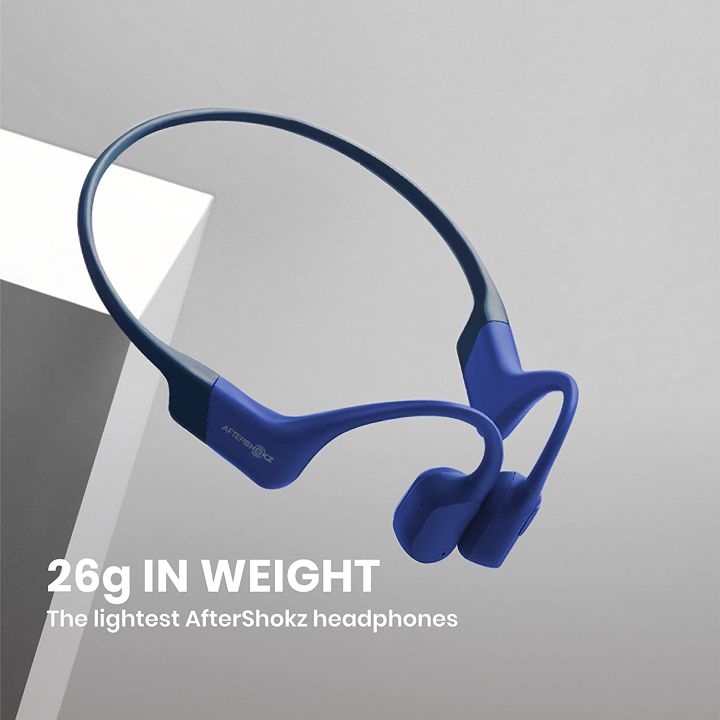
Correct placement is the first thing to check. Put the transducers on the cheekbones just in front of the ears, then adjust the band so it sits securely without squeezing.
Try these steps:
- Charge the headphones fully.
- Clean the transducer contact areas and your skin.
- Place both transducers at the same height.
- Move them slightly forward or backward to find the clearest position.
- Start with a moderate volume.
- Test music, speech, and a phone call separately.
- Adjust the source device’s equalizer only after the physical fit is correct.
If the sound is thin, low, or uneven, check the following:
- The headphones may be positioned incorrectly.
- The source device may be connected to another Bluetooth output.
- The phone or computer volume may be low.
- The headphones may need charging.
- The model may have a damaged transducer.
- Wind or background noise may be covering the sound.
- The audio file or app may have poor sound quality.
A tight fit is not always a better fit. Too much pressure can cause discomfort and may make the headphones harder to wear for long periods.

How to use AfterShokz headphones for phone calls
During a call, the headphones receive the other person’s voice through Bluetooth and send it to the transducers. Your voice travels through one or more built-in microphones.
Call quality depends on more than the bone-conduction system. Wind, traffic, clothing, the microphone position, and the phone’s Bluetooth connection can all affect the call.
For clearer calls:
- Keep the microphone openings free of hair, clothing, and dirt.
- Face away from strong wind when possible.
- Move to a quieter area for important calls.
- Confirm that the phone selected the headphones as its call output.
- Check microphone permissions in the calling app.
- Test both regular calls and app-based calls.
Some models include noise-reduction processing for the microphone. That may improve voice pickup, but it cannot remove every loud or irregular sound.
If you can hear the other person but they cannot hear you, check the microphone openings, Bluetooth call settings, app permissions, and connection status. If music works but calls fail, the problem may be with the call profile or app rather than the transducers.
Are AfterShokz headphones waterproof?
Water resistance is model-specific. Some Shokz headphones are designed to handle sweat and light rain, while others have stronger protection for swimming or water-based use.
Do not assume that every AfterShokz product has the same rating. Check the exact model’s official specifications and user guide. A water-resistance rating also has limits. It may not cover salt water, soap, high-pressure water, deep immersion, or damage caused by wear.
After exposure to water:
- Wipe the headphones with a soft, dry cloth.
- Let the charging contacts dry fully.
- Do not charge a wet device.
- Do not use a hair dryer or strong heat.
- Follow the model’s cleaning instructions.
Charging a wet electronic device can cause damage. If the headphones behave strangely after water exposure, stop using them until they are dry and contact the manufacturer if the issue continues.
Common questions about how AfterShokz headphones work
Do AfterShokz headphones work without touching the ears?
They do not need to sit inside the ear canal, but the transducers need contact with the area in front of the ears. They work best when they rest steadily against the cheekbone area.
Can other people hear what I am listening to?
Sometimes. Sound leakage increases with volume and may be easier to notice in a quiet room. The open design does not provide the same privacy as sealed earbuds or over-ear headphones.
Can AfterShokz headphones play music without a phone?
Only models with built-in music storage can do that. Other models need a Bluetooth source, such as a phone, tablet, smartwatch, or computer.
Why do AfterShokz headphones sound different from earbuds?
Earbuds send sound through the ear canal and often create a seal. Bone-conduction headphones send vibration through the cheekbone area and leave the ear open. This difference can change bass, loudness, detail, and the sense of space.
Can I wear glasses with AfterShokz headphones?
Many people can wear both, but the fit depends on the shape of the glasses and the headphone band. Put the glasses on first, then adjust the headphones so the arms of the glasses do not push the transducers away from the skin.
What should I do if one side sounds weaker?
Check placement, clean both contact areas, charge the headphones, and test another audio source. If one side remains weak after resetting and re-pairing the device, consult the model’s support instructions or contact Shokz.
Bottom line: how do AfterShokz headphones work?
AfterShokz headphones, now branded as Shokz, use bone-conduction transducers to turn electrical audio signals into vibrations. Those vibrations travel through the cheekbone area to the cochlea, while the ear canals remain open.
The design can help you stay aware of your surroundings and avoid ear-canal pressure. In return, you may get less bass, more sound leakage, and weaker performance in loud or windy places than with sealed headphones.
Choose them when open-ear listening matters most. Use a moderate volume, check the exact model’s limits, and seek professional hearing advice if you have hearing symptoms or hearing loss.

Everett Ashford is a tech reviewer at mytechgrid.com specializing in SSDs, cameras, TVs, earbuds, headphones, and other consumer electronics. He provides honest, data-driven reviews based on hands-on testing and real-world performance analysis. Everett simplifies complex tech details to help readers make smart, confident buying decisions.