A digital camera uses lenses, light-sensitive sensors, and computer processing to turn photons into digital image data.
Understanding how does a digital camera work physics makes many camera settings easier to use. Aperture, shutter speed, ISO, focus, dynamic range, and noise are not random features. They are practical results of optics, electromagnetism, electronics, and information processing. This guide explains the full process in simple terms, from the first ray of light entering the lens to the final image saved on a memory card.
The basic physics behind a digital camera
A digital camera records light. Light is electromagnetic radiation that travels in waves but also behaves as tiny packets called photons. When these photons reach a camera sensor, they transfer energy to the sensor’s pixels.
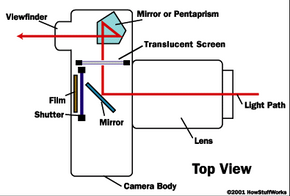
The process follows a clear path:
- Light reflects from a subject.
- The lens gathers and focuses that light.
- The aperture controls how much light enters.
- The shutter controls how long the sensor receives light.
- The image sensor converts light into electrical signals.
- An analog-to-digital converter changes those signals into numbers.
- The camera processor builds and saves the image.
This is the core answer to how does a digital camera work physics. The camera acts like a controlled light-measuring system. It does not “see” a scene in the human sense. It measures the amount and color of light at many small points.
A useful analogy is a window with a smart measuring grid behind it. The lens is the window, the aperture is the curtain opening, the shutter is the time switch, and the sensor is the grid that measures incoming light.
How a camera lens uses optics
The lens is the first major part involved in how does a digital camera work physics. Its job is to bend light rays and form a sharp image on the sensor.
Light normally travels in straight lines. When it moves from air into glass, its speed changes. This change causes the light to bend, a process called refraction. Curved glass elements use refraction to direct rays toward a common focus point.
A simple lens can create an image, but modern camera lenses use several elements. These elements correct problems such as:
• Chromatic aberration, where colors focus at slightly different points
• Spherical aberration, where edge rays and center rays do not focus equally
• Distortion, where straight lines appear curved
• Vignetting, where image corners become darker
• Coma, where small points of light look like comet shapes
The focal length affects the angle of view. A short focal length shows more of a scene, while a long focal length magnifies distant subjects and shows less of the scene.
For example, a 24 mm lens usually gives a wide view. A 50 mm lens gives a more natural perspective on a full-frame camera. A 200 mm lens brings distant subjects closer, much like a telescope.
Focus depends on lens position and subject distance. Moving lens elements changes where the light rays meet. When the meeting point falls on the sensor surface, the subject appears sharp.
One mistake many new photographers make is blaming the camera for soft images when the real issue is focus distance. Every lens has a minimum focusing distance. If the subject is too close, the lens cannot form a sharp image on the sensor.

What the aperture does
The aperture is the adjustable opening inside a lens. It controls the amount of light that reaches the sensor. Aperture size is written as an f-number, such as f/1.4, f/2.8, f/5.6, or f/16.
The f-number is calculated by dividing the lens focal length by the diameter of the entrance pupil. This means a smaller f-number represents a larger physical opening.
For example:
• f/2 lets in more light than f/8
• f/8 lets in more light than f/16
• Each full stop change doubles or halves the light
A wide aperture, such as f/1.8, produces a shallow depth of field. The subject may look sharp while the background becomes soft. This effect is common in portraits.
A narrow aperture, such as f/11, creates greater depth of field. More of the scene can appear sharp, which is useful for landscapes and architecture.
The aperture also affects diffraction. When light passes through a very small opening, it spreads slightly instead of traveling in a perfectly narrow path. This spreading is called diffraction. At very small apertures, such as f/22, diffraction can reduce fine detail even when more of the scene is in focus.
This is a key part of how does a digital camera work physics because aperture involves both exposure and wave behavior. It is not only a brightness control. It also changes depth of field, background blur, lens sharpness, and diffraction.
A practical lesson is to avoid choosing an aperture only because it creates a certain look. At f/1.4, a person’s eyes may be sharp while the ears and nose become soft. At f/16, the whole scene may be in focus, but diffraction may reduce crispness.
How shutter speed controls motion and light
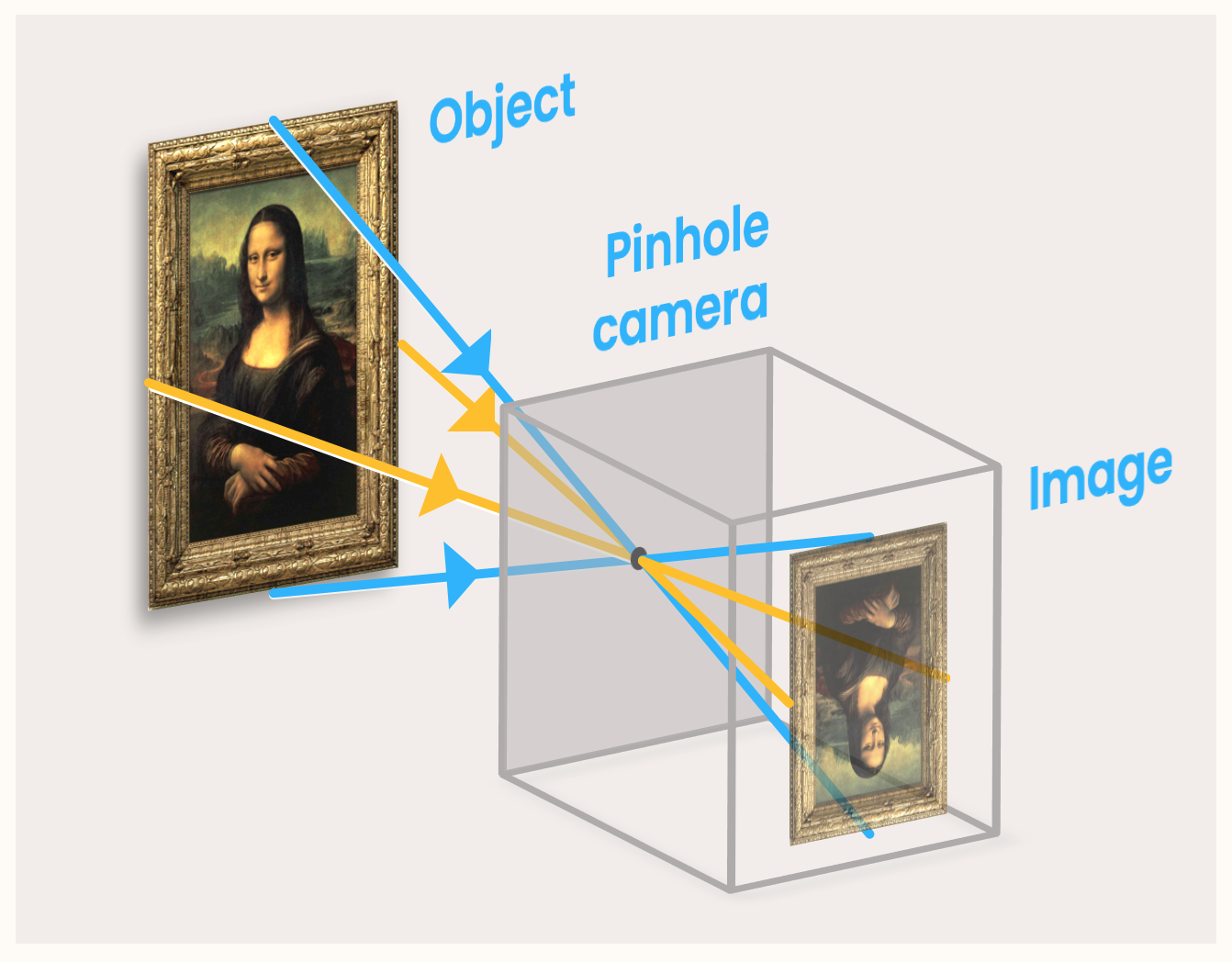
The shutter determines how long the sensor collects light. A fast shutter speed, such as 1/1000 second, allows very little time for light to arrive. A slow shutter speed, such as 1 second, allows much more light to reach the sensor.
Shutter speed has two main effects:
• It changes image brightness
• It controls how motion appears
A fast shutter can freeze a bird’s wings, a child running, or water droplets. A slow shutter can create blur from moving cars, flowing water, or camera shake.
The physics is simple. During exposure, moving objects change position on the sensor. If the object moves far enough before the shutter closes, its image spreads across several pixels. The result is motion blur.
Camera shake works in the same way. If the camera moves while the shutter is open, the entire scene shifts across the sensor. A tripod helps by keeping the camera stable. Optical image stabilization helps by moving a lens element or sensor to counter small movements.
A common field lesson is that shutter speed must match the subject. For a still subject, 1/60 second may work when the camera is steady. For sports, 1/1000 second or faster may be needed. These values are starting points, not strict rules.
Electronic shutters add another detail. Some cameras scan the sensor from top to bottom instead of recording every pixel at the same instant. Fast movement can then appear bent or tilted. This effect is called rolling shutter.
A mechanical shutter may avoid some rolling shutter problems, but it contains moving parts and can create sound and vibration. The best choice depends on the scene.

How the image sensor converts light into electricity
The image sensor is the heart of how does a digital camera work physics. Most digital cameras use either a CMOS sensor or a CCD sensor. CMOS sensors are now common because they use less power, read data quickly, and support advanced features such as fast autofocus.
A sensor contains millions of tiny light-sensitive areas called photosites. Each photosite measures incoming light. More photons generally create a stronger electrical signal.
In simplified form:
- A photon enters a photosite.
- The photon transfers energy to an electron.
- The photosite collects the electron.
- The camera measures the electrical charge.
- The charge becomes a digital brightness value.
This behavior comes from the photoelectric effect. Light energy can release or move electrons in certain materials. Digital camera sensors use semiconductor materials, usually based on silicon, to detect this energy.
A pixel is often used as a simple word for a photosite, but the terms are not always identical. A photosite is a light-collecting location on the sensor. A final image pixel is a processed color value created from sensor data.
Sensor size matters. A larger sensor can often collect more total light at the same exposure settings. This can improve signal quality, especially in dark scenes. However, sensor size is only one factor. Lens quality, pixel design, exposure, processing, and the final image size also matter.
The sensor does not directly measure red, green, and blue at every photosite. Most cameras place a color filter array over the sensor. The common Bayer pattern uses more green-filtered photosites because human vision is highly sensitive to green detail.
The camera then estimates missing color information through a process called demosaicing. This is one reason a raw file contains sensor data that still needs interpretation.

How color is recorded in a digital camera
Color begins with the wavelength of light. Visible light ranges from shorter blue and violet wavelengths to longer red wavelengths. Objects appear colored because they reflect some wavelengths and absorb others.
A digital camera usually records color through red, green, and blue filters. Each filtered photosite measures a limited part of the visible spectrum. The camera combines nearby measurements to estimate the full color of each image pixel.
This explains another part of how does a digital camera work physics. The camera does not store color as a simple physical object. It measures light intensity through filters and uses mathematics to reconstruct color.
White balance corrects for the color of the light source. Daylight, shade, fluorescent lamps, and household bulbs have different color temperatures. Without correction, a white wall may look blue, orange, or green.
Color temperature is measured in kelvins. Lower values often look warmer and more orange. Higher values often look cooler and more blue. Auto white balance estimates the light source and adjusts the image.
The camera’s color profile also affects the result. A JPEG file may receive contrast, saturation, sharpening, noise reduction, and color adjustments inside the camera. A raw file usually keeps more original sensor information for later editing.
A useful example is a photo taken indoors under warm bulbs. The eye adapts quickly, so the wall may look white to you. The sensor records the warmer light. White balance helps the final image match human perception.

What ISO means in digital camera physics
ISO describes the camera’s sensitivity setting, but the word can cause confusion. In most digital cameras, raising ISO does not make the sensor physically more sensitive to photons. Instead, it increases the amplification applied to the electrical signal.
Suppose a dark scene produces a weak signal. At low ISO, the camera may record that signal with a low amplification level. At high ISO, the camera amplifies the signal more strongly so the image appears brighter.
Amplification affects both the wanted signal and unwanted variation. This unwanted variation appears as image noise. It can look like colored specks, grain, or uneven brightness.
There are two important types of noise:
• Shot noise comes from the natural statistical variation in photon arrival
• Read noise comes from the sensor and electronic circuits during measurement
Shot noise becomes more noticeable when very few photons are collected. This is why a brighter exposure often gives cleaner shadows than a dark exposure that is brightened later.
High ISO can be useful when you need a fast shutter speed or a workable aperture. It is often better to use ISO 1600 and a sharp image than ISO 100 and a blurry image.