You can buy bone conduction headphones in the United States from the brand’s official website, major retailers such as Best Buy, Amazon, Walmart, and Target, and some specialty electronics stores. The safest choice is usually an authorized seller that offers a clear return policy, a U.S. warranty, and a product listing with full specifications.
Before buying, check whether you want true bone conduction headphones or open-ear headphones. They look similar, but they send sound in different ways. This guide explains where to shop, how to compare models, and how to avoid common buying mistakes.

Where to Buy Bone Conduction Headphones in the U.S.
The best place to buy depends on your need. Brand websites often provide the clearest warranty terms, while large retailers may offer faster delivery, store pickup, or easier returns.


1. Buy from the manufacturer
The official brand website is often the most reliable starting point. Common brands in the U.S. market include:
- Shokz, one of the best-known bone conduction and open-ear audio brands
- Suunto, which sells sports-focused open-ear audio products in some markets
- Other audio brands that use terms such as “bone conduction,” “open ear,” or “air conduction”
Buying direct can help you confirm:
- The exact model and generation
- The warranty offered in the United States
- Whether the seller is authorized
- Which accessories are included
- Whether the product is new, refurbished, or previously opened
- The brand’s return window
A manufacturer’s website may not always have the lowest price. However, it is useful for checking the official product name and specifications before you compare offers elsewhere.
2. Shop at major U.S. retailers
Large retailers may be a good choice when you want fast shipping, local pickup, or a familiar return process. Possible retailers include:
- Best Buy
- Amazon
- Walmart
- Target
- Costco, when a suitable model is in stock
- Sporting goods stores that sell running or cycling electronics
Retail availability changes often. On marketplaces such as Amazon and Walmart, check the name of the actual seller, not just the name of the website. A product page may be hosted by a major retailer but fulfilled by a separate marketplace seller.
Look for wording such as:


- “Sold by” the brand or an authorized retailer
- “Shipped by” the retailer
- A U.S. warranty
- A clear return policy
- A serial number or proof-of-purchase requirement
3. Consider electronics and sporting goods stores
Local electronics stores, running stores, bike shops, and outdoor retailers may carry bone conduction headphones. These stores can be useful if you want to try the fit before buying.
A local shop may also help you compare:
- Headband tension
- Comfort around glasses or helmets
- Button placement
- Charging accessories
- Fit during running or cycling
Stock can be limited, so call before making a trip.
4. Buy refurbished or used headphones carefully
Refurbished headphones can cost less, but the warranty and battery condition may differ from a new product. Used bone conduction headphones also come with extra concerns because the transducers and charging contacts touch the skin.
Before buying used, ask:
- Is the battery tested?
- Is the charging cable included?
- Does the warranty transfer?
- Can the headphones be returned?
- Are the contact pads clean and intact?
- Has the product been exposed to salt water or heavy sweat?
- Is the model still supported by the manufacturer?
Avoid listings with no model number, unclear photos, or claims that the headphones are “like new” without a return option.

What Is the Difference Between Bone Conduction and Open-Ear Headphones?
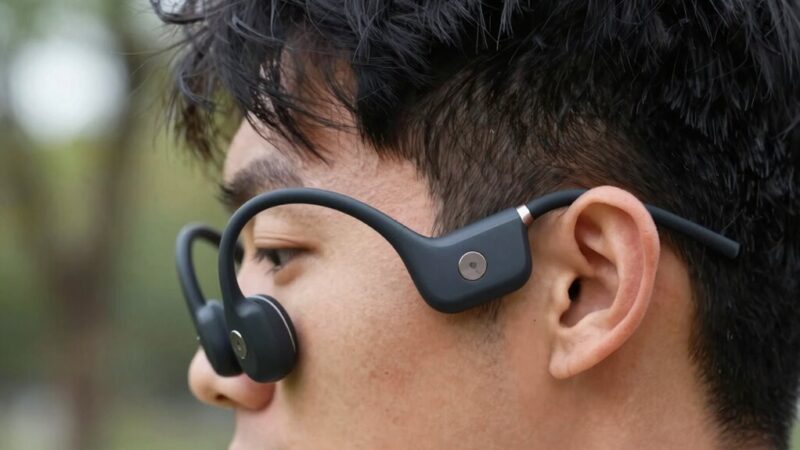
True bone conduction headphones send vibrations through the bones near your ears to the inner ear. They do not sit inside the ear canal. Open-ear headphones may also leave the ear canal open, but many use small speakers that direct sound toward the ear instead of vibrating the skull.
The terms are often mixed together in online listings. Read the technical description instead of relying only on the product title.
| Type | How it sends sound | Ear canal blocked? | Common strength | Common trade-off |
|---|---|---|---|---|
| True bone conduction | Vibrations through the skull | No | Keeps ears open | Less bass and privacy |
| Open-ear air conduction | Small speaker aimed near the ear | No | Often fuller sound | Sound may be more audible to others |
| In-ear earbuds | Speaker inside the ear canal | Yes | Strong isolation and bass | Less awareness of nearby sound |
Bone conduction models can work well for runners, cyclists, walkers, and people who want to hear traffic or conversation. They usually cannot match sealed earbuds or over-ear headphones for deep bass, strong noise isolation, or quiet listening in a busy place.
Check the product language
A trustworthy listing should state:
- Whether the product uses bone conduction or air conduction
- Battery life under stated conditions
- Bluetooth version or supported profiles
- Water-resistance rating
- Microphone features
- Charging method
- Warranty length
- Weight or fit details
Do not assume that “open ear” means “bone conduction.” It only means the design does not fully block the ear canal.
Know what bone conduction cannot do
Bone conduction headphones do not automatically improve hearing. They are consumer listening devices, not a substitute for hearing aids or a hearing evaluation.
The U.S. Food and Drug Administration explains the difference between hearing aids and personal sound amplification products in its consumer guidance. A person with hearing loss should seek advice from a qualified hearing professional rather than treating headphones as a medical device.


How to Choose the Right Place to Buy
Start with the return policy, warranty, and seller identity. These details matter more than a small price difference because comfort and sound quality can vary from person to person.
Compare sellers with this checklist
| Buying factor | What to check | Why it matters |
|---|---|---|
| Seller | Brand or authorized retailer | Helps reduce counterfeit and warranty risk |
| Return period | Number of days and return conditions | Fit may not feel right after a short trial |
| Warranty | Length, region, and covered defects | Protects against charging or battery problems |
| Product condition | New, refurbished, or used | Affects battery life and hygiene |
| Shipping | Delivery time and return shipping cost | Prevents unexpected delays or fees |
| Accessories | Charging cable, case, or plugs | Missing parts can reduce value |
| Water rating | Exact rating and use limits | Protects against misuse |
| Customer support | U.S. contact method | Makes warranty claims easier |
Check the exact model
Manufacturers often sell several models that look alike. A listing may use an older product photo while naming a newer version. Compare the model number on the retailer page with the model number on the manufacturer’s site.
Pay special attention to:
- Built-in storage for music
- Multipoint Bluetooth connection
- Microphone performance
- Physical controls
- Charging port type
- Swimming suitability
- Compatibility with a swim-focused music player
- Fit for helmets, glasses, or hats
Features vary by model. Do not assume that one product in a brand’s range has the same functions as another.
Read reviews for patterns, not single comments
Customer reviews can reveal comfort issues, charging faults, or weak microphone performance. One angry or glowing review does not prove a general trend.
Look for repeated comments about:
- Pressure near the ears
- Headband fit
- Connection drops
- Battery performance
- Sweat or water problems
- Call quality in wind
- Difficulty using the controls
Reviews are useful for finding questions to investigate. They are not a substitute for the manufacturer’s manual or warranty terms.
Which Retailer Is Best for Different Buyers?
There is no single best store for everyone. The right option depends on whether you value product support, speed, price, or the chance to try the headphones first.
Best for warranty clarity: the official brand store
Choose the manufacturer when you want the clearest model information and direct support. This is especially useful for a new product, a premium model, or a purchase where warranty coverage matters.
Best for easy returns: a major retailer
A large retailer may be more convenient if you are unsure about fit. Confirm that the item is sold by the retailer or an authorized seller and that the return policy applies to opened wearable electronics.
Best for fast delivery: local pickup or a large marketplace
Local pickup can help when you need headphones quickly. Still, check the return terms before opening the package. Marketplace listings may differ in warranty and seller support even when the products appear identical.
Best for trying the fit: a physical store
A store is useful if you wear glasses, a helmet, hearing protection, or a hat. Headband pressure and comfort are hard to judge from a product photo.
Best for saving money: refurbished stock from a reputable seller
Refurbished products may offer good value when the seller provides a written warranty and a return period. Avoid unusually cheap products with no clear seller, no serial number, or no proof of authenticity.


What to Check Before You Place the Order
Use a short pre-purchase check to avoid the most common problems.
- Confirm the type. Make sure the product is true bone conduction if that is what you want.
- Confirm the model number. Compare it with the manufacturer’s official page.
- Check device support. Most Bluetooth headphones work with modern iPhones, Android phones, tablets, and computers, but some features may require a specific app.
- Review the water rating. Water resistance does not always mean the headphones are safe for swimming.
- Read the warranty terms. Check who handles claims and whether accidental water damage is excluded.
- Check the return policy. Look for restocking fees, opened-product limits, and return shipping costs.
- Inspect the box on arrival. Keep the receipt, packaging, and serial number until you know the product works.
- Test the main features early. Pair the headphones, make a call, charge the battery, and test the controls within the return period.
Water ratings need careful attention
An IP rating describes protection under specific test conditions. It does not guarantee that a device is safe for every water activity.
For example, sweat resistance may be suitable for workouts but not for swimming. Salt water, soap, high-pressure water, and long submersion can create different risks. Follow the product manual rather than assuming that a high-looking rating covers all uses.
Bluetooth compatibility is usually broad, but features vary
Basic audio playback usually works with phones, tablets, and laptops that support compatible Bluetooth audio. Advanced features may not work across every device.
Potential limits include:
- App support for iOS or Android only
- Multipoint connection behavior
- Calls on computers
- Music storage controls
- Firmware updates
- Voice assistant support
If you plan to use the headphones with a work laptop, game console, or smartwatch, check that device’s Bluetooth support before buying.

Safety and Comfort Tips
Keep the volume low enough to hear your surroundings without causing ear fatigue. Open-ear designs can improve awareness, but they do not make a busy road or trail safe by themselves.
The National Institute on Deafness and Other Communication Disorders warns that loud sound can contribute to noise-induced hearing loss. Lower volume and shorter listening time reduce exposure.
Use extra care when:
- Running or cycling near traffic
- Crossing streets
- Working near machinery
- Listening in strong wind
- Using headphones for long periods
- Sharing headphones with another person
Bone conduction headphones may feel unusual at first. A light vibration or mild pressure can be normal, but pain, skin irritation, dizziness, or persistent discomfort is a reason to stop using them. Adjust the position, reduce the listening time, or return the product if the problem continues.
They are not a replacement for hearing protection. If you work around loud machinery, use hearing protection designed for that environment and follow workplace safety rules.

Common Buying Mistakes to Avoid
The most common mistake is treating every product labeled “open ear” as a bone conduction model. The second is buying from a seller that does not explain warranty coverage or product condition.
Avoid these errors:


- Choosing the lowest price without checking the seller
- Assuming all open-ear designs use bone conduction
- Ignoring the return policy
- Confusing water resistance with swimming support
- Buying an older model without checking battery condition
- Expecting bone conduction to deliver sealed-earbud bass
- Using headphones as a treatment for hearing loss
- Relying on one review instead of checking repeated patterns
- Failing to test calls, charging, and controls during the return period
- Wearing headphones at a volume that masks traffic or alarms
A good purchase is not just a product that arrives. It is a product that fits, works with your devices, and can be returned or supported if it fails.
Quick Takeaways
- Buy from the official brand site or an authorized U.S. retailer.
- Check whether the product is true bone conduction or another type of open-ear headphone.
- Confirm the seller, warranty, return policy, model number, and water rating.
- Use major retailers for convenience and local stores for fit testing.
- Treat refurbished and marketplace listings with extra care.
- Bone conduction headphones are not hearing aids.
- Keep volume moderate and do not rely on open-ear audio as a substitute for traffic awareness or hearing protection.
Frequently Asked Questions
Can I buy bone conduction headphones at Best Buy?
Best Buy may carry bone conduction or open-ear headphone models, but inventory varies by store and date. Check whether the product is sold by Best Buy or a marketplace seller, then review the return and warranty terms before ordering.
Are bone conduction headphones sold at Walmart?
Walmart may list these headphones through both Walmart and third-party marketplace sellers. Confirm the seller, product condition, warranty, and return process. A low price is less useful if the product has no reliable support.
Is Amazon a safe place to buy bone conduction headphones?
Amazon can be a reasonable option when the seller is the manufacturer or an authorized retailer. Read the “sold by” information carefully. Also confirm that the listing identifies the exact model and includes a valid U.S. warranty.
Do bone conduction headphones work with an iPhone or Android phone?
Most Bluetooth models can pair with current iPhones and Android phones for basic audio. App features, multipoint connections, and firmware updates may vary. Check the product manual or support page for the exact model.
Can I swim with bone conduction headphones?
Only use a model that the manufacturer specifically describes as suitable for swimming. A standard sweat- or water-resistant model may not be designed for submersion. Follow the manual and check whether you need a separate music storage device.
Are bone conduction headphones good for people with hearing loss?
They may work for some people, but they are not a universal solution and are not a substitute for hearing aids. If you have hearing difficulty, ringing in the ears, or trouble understanding speech, speak with a hearing professional.
Conclusion
For most U.S. buyers, the best starting point is the manufacturer’s website or an authorized retailer with a clear return policy. Compare the exact model, seller, warranty, water rating, and fit before you focus on price.
If you are unsure whether you want bone conduction or open-ear air conduction, buy from a store that allows returns. That gives you a practical way to test comfort, sound, calls, and device compatibility without being locked into the wrong design.

Everett Ashford is a tech reviewer at mytechgrid.com specializing in SSDs, cameras, TVs, earbuds, headphones, and other consumer electronics. He provides honest, data-driven reviews based on hands-on testing and real-world performance analysis. Everett simplifies complex tech details to help readers make smart, confident buying decisions.