
Dr. Amar Bose is widely credited with inventing the first practical noise-canceling headphones.
The story of who invented noise cancelling headphones is more complex than a single name. Dr. Amar Bose created the first practical active noise reduction headset after a noisy flight in 1978, but earlier scientists had already developed the core idea. This guide explains the key people, patents, inventions, and milestones that turned noise cancellation into the technology we use today.

Who invented noise cancelling headphones?
Dr. Amar Bose is widely recognized as the person who invented noise cancelling headphones in their practical modern form. He founded Bose corporation and began developing an active noise reduction headset after experiencing intense engine noise during an airplane flight.
The first Bose design was not made for music lovers. It was intended to help airline pilots and passengers reduce the steady roar of aircraft engines. Bose’s work later led to aviation headsets and the consumer QuietComfort line.
However, saying Amar Bose alone invented noise cancelling headphones leaves out an important part of the story. The basic science of reducing sound with an opposite sound wave existed decades earlier.
The clearest answer is this:
• Paul Lueg developed an early theory and patent for electronic sound cancellation in the 1930s.
• Dr. Amar Bose turned that theory into a practical headset for aviation use.
• Bose engineers later refined the system for consumer headphones.
So, if you ask who invented noise cancelling headphones for everyday use, Amar Bose is the most widely accepted answer. If you ask who first described the science, the answer reaches back to Paul Lueg.
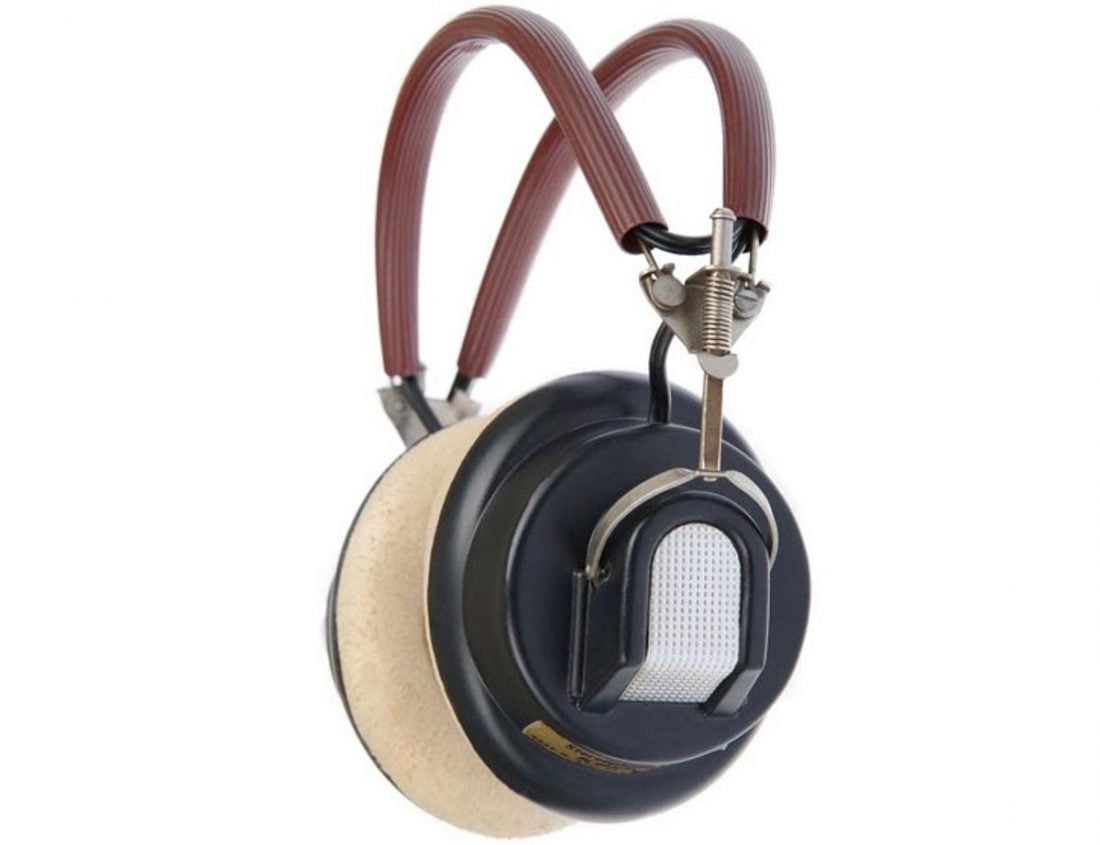
The early science behind noise cancellation
To understand who invented noise cancelling headphones, it helps to understand active noise cancellation, often called ANC. ANC uses microphones, electronic circuits, and speakers to reduce unwanted sound.
A microphone inside or outside the earcup listens to surrounding noise. The headphones then create a second sound wave with the opposite pattern. When the two waves meet, they partly cancel each other.
This process is called destructive interference. Think of two water waves meeting from opposite directions. Their peaks and dips can flatten each other. Noise-canceling headphones use the same basic idea with sound waves.
The science did not begin with modern wireless earbuds. In 1933, German inventor Paul Lueg received a patent related to canceling sound through an opposing signal. His work described the principle behind active sound reduction.
Still, the technology had major limits at the time. Electronics were bulky, microphones were less reliable, and portable power was not practical. Lueg’s work established an important foundation, but it did not produce the compact consumer headphones people use today.
This distinction matters when answering who invented noise cancelling headphones. Scientific discovery and commercial invention are often different stages of the same story.

How Amar Bose developed the first practical headset
Dr. Amar Bose reportedly began exploring noise reduction after taking a flight in 1978. The aircraft engine noise was so strong that it made listening to music difficult. Instead of accepting the problem, Bose considered whether electronics could create an opposing sound.
Bose Corporation developed a headset that used microphones to detect engine noise. Electronic circuits then produced an inverse signal through the headset speakers. The goal was to reduce low, constant sounds rather than block every sound completely.
The first major application was aviation. Pilots and passengers needed protection from long periods of engine noise. A headset that reduced background noise could improve comfort and make communication easier.
Bose worked with the aviation industry and developed noise-reduction headsets for airline use. These early products helped prove that active noise cancellation could work outside a laboratory.
That is why many historians and audio experts credit Amar Bose with inventing noise cancelling headphones. He did not create the first theory of sound cancellation, but he helped transform that theory into a useful, wearable product.

A short timeline of noise cancelling headphones
The history of who invented noise cancelling headphones includes several important milestones.
1930s: Paul Lueg’s early patent
Paul Lueg described a method for reducing unwanted sound with an opposing signal. This was one of the earliest known patents connected to active noise control.
The technology was still far from a small headphone. It needed better electronics, microphones, and power systems before it could become practical.
1950s and 1960s: Noise control research grows
Researchers continued studying active sound control for aircraft, vehicles, and industrial spaces. The work focused on reducing steady noise, such as engine vibration and machine hum.
These studies improved the mathematical and engineering foundation of active noise cancellation.
1978: Amar Bose begins headset research
After his airplane experience, Amar Bose began exploring how active electronics could reduce aircraft noise. This period marked a major step toward modern noise-canceling headphones.
1980s: Aviation headsets appear
Bose developed active noise reduction products for aviation. These headsets showed that the technology could be worn, powered, and used in real-world travel.
2000: Bose QuietComfort reaches consumers
Bose introduced the QuietComfort Acoustic Noise Cancelling headphones for general consumers. This product helped make active noise cancellation familiar to travelers, office workers, and music listeners.
2010s and 2020s: ANC becomes mainstream
Noise cancellation moved into wireless headphones and true wireless earbuds. Brands such as Sony, Apple, Sennheiser, JBL, and Bose added ANC to products at many price levels.
The answer to who invented noise cancelling headphones remains connected to Amar Bose, but modern ANC is the result of many decades of research and engineering.
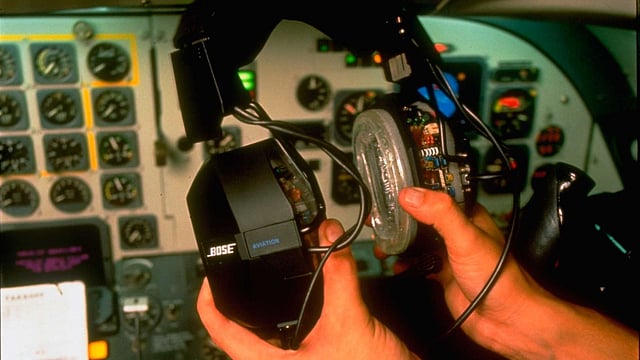
How active noise cancellation works
Active noise cancellation is easiest to understand as a sound battle. Outside noise enters the microphone, and the headphone creates a matching anti-noise signal.
A basic ANC system includes:
• External microphones that listen to nearby sound.
• Internal microphones that measure sound inside the earcup.
• A digital signal processor that analyzes the noise.
• Speakers that produce the inverse sound wave.
• A battery that powers the microphones and electronics.
Modern headphones may use feedforward, feedback, or hybrid ANC.
Feedforward ANC
Feedforward systems place microphones on the outside of the earcups. They hear noise before it reaches your ears and create an opposing signal.
This design can work well, but wind may confuse the outside microphones.
Feedback ANC
Feedback systems place microphones inside the earcups. They measure the sound that reaches your ears and adjust the cancellation.
This approach can improve control, but it may have less time to respond to sudden sounds.
Hybrid ANC
Hybrid systems use both outside and inside microphones. Many premium headphones use this design because it can provide stronger and more balanced noise reduction.
ANC works best with steady, low-frequency noise. It is often excellent for:
• Airplane engines
• Bus and train sounds
• Air conditioners
• Office ventilation
• Computer fans
It is less effective against sudden, high-pitched sounds such as clapping, shouting, or a dog barking nearby. The headphones may reduce these sounds, but they cannot always cancel them completely.

Passive noise isolation versus active noise cancellation
Many people use the terms noise isolation and noise cancellation as if they mean the same thing. They are related, but they work in different ways.
Passive noise isolation comes from the physical design of the headphones. Thick ear cushions, a tight seal, and in-ear tips block sound before it reaches your ears.
Active noise cancellation uses electronics. Microphones detect outside noise, and the headphones create an opposing signal to reduce it.
Good headphones often combine both methods. The earcups provide passive isolation, while ANC handles low-frequency background noise.
Here is a simple comparison:
• Passive isolation blocks sound with materials and fit.
• Active noise cancellation reduces sound with microphones and electronic processing.
• Passive isolation works without a battery.
• ANC requires power and may create a small amount of electronic hiss.
• The best results usually come from using both systems together.
When people ask who invented noise cancelling headphones, they usually mean active noise cancellation. Traditional earmuffs and closed headphones existed long before ANC, but they did not electronically counter outside sound.
Benefits and limits of noise cancelling headphones
Noise-canceling headphones can make travel and work much more comfortable. They reduce background noise, so you may not need to raise your music volume as much.
• Less engine noise during flights.
• Better focus in busy offices and cafés.
• More comfortable listening during long commutes.
• Clearer calls in moderately noisy places.
• Reduced distraction while studying or working.
There are also limits. ANC cannot remove every sound, and performance varies between models. The fit, earcup shape, microphone quality, and software all affect the result.
Some users notice pressure or a blocked-ear feeling when ANC is active. This sensation is not usually caused by a dangerous change in air pressure. It often comes from the brain reacting to the reduced low-frequency sound and the sealed earcup.
Battery life is another factor. Wireless ANC headphones need regular charging. If the battery runs out, some models still work as passive headphones, while others lose key features.
ANC also does not replace hearing protection. If you work near construction equipment, firearms, or very loud machinery, use certified hearing protection designed for that environment.
What I learned from using noise-canceling headphones
When comparing noise-canceling headphones, one lesson becomes clear: the most expensive model is not always the best fit. A comfortable seal often matters as much as the electronics.
For example, a pair with powerful ANC may perform poorly if the earcups are too small or the in-ear tips do not seal properly. Even a small gap can let outside noise enter.
Before buying, consider these practical points:
• Check the fit before judging the ANC.
• Test the headphones with steady noise, such as an air conditioner or fan.
• Listen for hiss during quiet moments.
• Compare battery life with ANC turned on.
• Check whether the headphones support transparency or ambient mode.
• Look for simple controls that you can use without opening an app.
A common mistake is to expect noise cancellation to create total silence. It does not. The goal is to lower unwanted sound so that music, speech, or quiet becomes easier to hear.
Another mistake is wearing ANC headphones in places where you need awareness, such as busy streets or train platforms. Use ambient mode when you need to hear announcements, traffic, or people around you.
Why Amar Bose receives most of the credit
The question of who invented noise cancelling headphones has a historical and technical answer. Paul Lueg helped establish the early concept, but Amar Bose helped make active noise reduction practical in a wearable headset.
Bose’s contribution included more than a single patent. It involved research into microphones, signal processing, speaker design, comfort, and real-world aircraft noise.
That combination of science and product engineering is why Amar Bose receives most of the credit. He helped move active noise control from an academic idea to a useful tool for travelers and professionals.
Modern companies have built on that foundation. Digital processors are now faster, microphones are smaller, batteries last longer, and wireless connections make headphones easier to use.
In this sense, who invented noise cancelling headphones is similar to asking who invented the modern smartphone. One person may receive the main credit, but many inventions and engineers make the final product possible.
Frequently asked questions about who invented noise cancelling headphones
Who is credited with inventing noise cancelling headphones?
Dr. Amar Bose is widely credited with developing the first practical modern noise-canceling headphones. He began researching the technology after a noisy airplane flight in 1978 and later created aviation headsets.
Did Paul Lueg invent noise cancelling headphones?
Paul Lueg did not create the modern consumer headphone, but he developed an early theory and patent for electronic sound cancellation in the 1930s. His work helped establish the principle behind active noise control.
When did noise cancelling headphones become popular?
Noise-canceling headphones became more popular after Bose introduced consumer QuietComfort headphones around 2000. Wireless models and true wireless earbuds later made ANC common at many price levels.
Do noise-canceling headphones block all sound?
No. They reduce sound, especially steady low-frequency noise such as airplane engines, buses, and air conditioners. They are less effective against sudden voices, sharp sounds, and changing background noise.
Are noise-canceling headphones safe?
For most people, noise-canceling headphones are safe when used at sensible volume levels. They do not replace certified hearing protection, and users should stay alert in places with traffic, machinery, or public safety announcements.
What is the difference between ANC and noise isolation?
ANC uses microphones and electronic signals to reduce outside noise. Noise isolation uses the physical fit and materials of the headphones to block sound without electronic processing.
[CodeImg? No, FAQ expressly no placeholder. Don't include.]
Conclusion
The best answer to who invented noise cancelling headphones is Dr. Amar Bose, who developed the first practical active noise reduction headset for aviation use. Paul Lueg’s earlier work supplied an important scientific foundation, while later engineers improved ANC for everyday consumers.
Today’s headphones combine active cancellation, passive isolation, digital processing, and wireless technology. If you are choosing a pair, focus on fit, comfort, battery life, sound quality, and safe use rather than ANC power alone.
Now that you know who invented noise cancelling headphones, compare models based on your real needs, test the fit, and share your experience with others looking for quieter listening.
Everett Ashford is a tech reviewer at mytechgrid.com specializing in SSDs, cameras, TVs, earbuds, headphones, and other consumer electronics. He provides honest, data-driven reviews based on hands-on testing and real-world performance analysis. Everett simplifies complex tech details to help readers make smart, confident buying decisions.