The Douk Audio U3 PRO is my top budget headphone amp for power, clarity, and flexible desktop use.
You may know the problem: your headphones sound quiet, thin, or flat when plugged into a laptop, phone, or game console. Some models need more power than a small device can give. Others use a large 6.35mm plug, while your source only has 3.5mm output. A good headphone amp can add clean volume, stronger bass control, and more room in the music without costing a fortune. I tested this list around real needs, such as desk use, travel, music listening, gaming, and guitar practice. The right pick depends on your headphones, source, and daily habits.
Douk Audio U3 PRO Headphone Amplifier

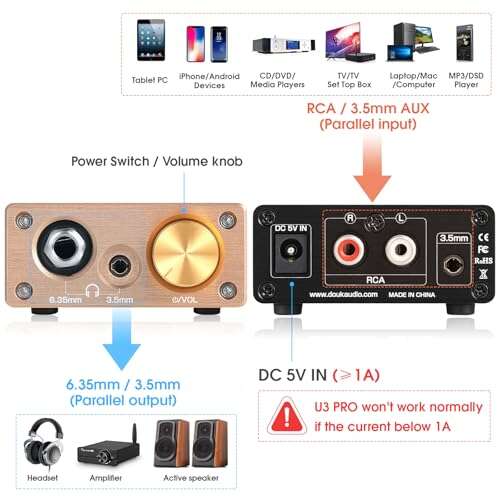
The Douk Audio U3 PRO is the strongest all-around choice in this budget headphone amp review. Its listed 1500mW output gives it plenty of headroom for many headphones, including harder-to-drive models. It supports headphones from 18 to 600 ohms, according to the product listing. That wide range makes it useful for common portable headphones, studio models, and many high-impedance sets.
This is a small desktop amp, not a pocket model. It uses a 3.5mm input and offers both 3.5mm and 6.35mm headphone connections, so it fits a mixed headphone collection well. The Class A design aims for a smooth and natural sound, though your source and headphones still shape the final result. I like the U3 PRO for listeners who want more power without moving into costly audiophile gear.
Pros:
- High listed output for demanding headphones
- Works with headphones rated from 18 to 600 ohms
- Includes both 3.5mm and 6.35mm headphone jacks
- Small size saves valuable desk space
- Useful for music, movies, gaming, and studio listening
- Simple controls make daily use easy
Cons:
- Needs a desktop power source
- Does not replace a full DAC for digital inputs
- High gain can expose hiss with very sensitive earbuds
My Recommendation
I recommend the Douk Audio U3 PRO to anyone who needs the best budget amp for headphones with serious power. It suits desktop listeners, studio users, and people who own both low- and high-impedance headphones. It is also a smart upgrade for a laptop or basic audio interface that sounds weak. The main value comes from its strong output and useful jack choices in a compact body.
Neoteck Portable Headphone Amplifier
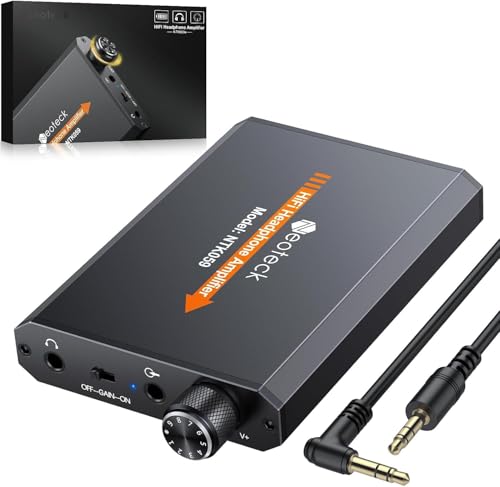
The Neoteck portable headphone amplifier focuses on simple power in a small, travel-friendly form. It supports headphones rated from 16 to 300 ohms, making it more capable than many phone and laptop outputs. Its single 3.5mm connection keeps the setup easy. You connect your source, plug in your headphones, and adjust the level.
I see this model as a practical choice for commuters, students, and travelers. It can help headphones sound louder and more controlled when a phone or tablet struggles. However, it is an analog amp, so it cannot clean up a poor digital source by itself. Battery care also matters, since portable use depends on keeping the unit charged.
Pros:
- Compact design fits in a pocket or small bag
- Supports a broad 16-300 ohm headphone range
- 3.5mm input and output suit most portable gear
- Useful when a phone has limited headphone power
- Easy setup for beginners
- Good match for travel and office listening
Cons:
- Uses only 3.5mm connections
- Not designed for balanced headphones
- Portable batteries need regular charging
My Recommendation
The Neoteck is best for people who want the best budget amp for headphones on the go. It makes sense for portable headphones that sound too quiet from a phone, tablet, or laptop. I would choose it over a larger desktop amp when size matters most. It offers useful power at a low cost, but serious desktop users may prefer the stronger Douk models.
Douk Audio U3 Mini Class A Amp
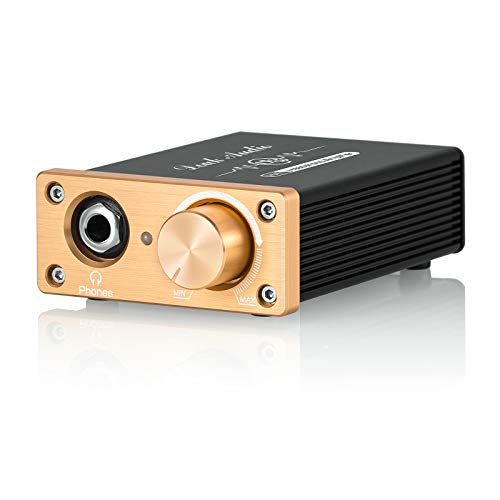
The Douk Audio U3 is a compact Class A headphone amplifier for a home desk. It includes RCA input plus 3.5mm and 6.35mm headphone connections. That layout works well with a computer setup, CD player, DAC, or other line-level source. The amp is small enough to sit beside a keyboard without getting in the way.
Compared with the newer U3 PRO, this model is the simpler choice. It still gives listeners a dedicated analog amplification stage, but the listed product information does not position it as the same high-output model. I like it for ordinary dynamic headphones and users who want a clean, basic desktop system. Its RCA input is a real benefit if your source does not use a 3.5mm cable.
Pros:
- RCA input adds flexible desktop connectivity
- Includes 3.5mm and 6.35mm headphone jacks
- Compact body fits small work areas
- Class A design appeals to traditional audio fans
- Simple analog signal path is easy to understand
- Good option for computers and home audio systems
Cons:
- Does not include USB, optical, or coaxial inputs
- Needs an external 5V power supply
- May not be ideal for very power-hungry planar headphones
My Recommendation
I recommend the Douk Audio U3 to desktop listeners who need the best budget amp for headphones but do not need digital conversion. It is a good fit for a basic DAC, RCA source, or home stereo setup. Choose the U3 PRO if you want more stated output and wider power claims. Choose this older U3 when simple connections and low cost matter more than maximum power.
FiiO JadeAudio GIGAS 1 Desktop Amp

The FiiO JadeAudio GIGAS 1 is the performance-focused model in this group. Its product listing states up to 4600mW of balanced output and uses a Class AB discrete circuit. It provides 4.4mm balanced and 3.5mm outputs, which gives experienced listeners more connection choices. That output level is especially interesting for planar magnetic and high-impedance headphones.
This amp is not the first product I would buy for a very basic pair of earbuds. Its strengths show more clearly with headphones that need current and voltage. Balanced output also requires a compatible balanced cable; simply using an adapter does not turn a normal cable into a balanced setup. For buyers who want room to grow, the GIGAS 1 may offer more long-term value than a tiny entry-level amp.
Pros:
- Very high listed balanced output
- Designed with planar and high-impedance headphones in mind
- Offers modern 4.4mm balanced output
- Also includes a standard 3.5mm output
- Discrete Class AB circuit offers a serious desktop focus
- Provides upgrade space for a growing audio system
Cons:
- Balanced benefits require a suitable cable
- May be excessive for easy-to-drive headphones
- Likely needs more desk space than portable amps
My Recommendation
The GIGAS 1 is best for listeners seeking the best budget amp for headphones with a focus on power and future upgrades. I would pair it with planar magnetic headphones, high-impedance studio models, or a balanced 4.4mm cable. It is less attractive for someone who only needs a little extra volume. Still, its power-focused design can delay the need for a more expensive amplifier.
Fosi Audio Q4 DAC Headphone Amp

The Fosi Audio Q4 stands out because it combines a DAC and headphone amplifier in one small desktop unit. It accepts PC-USB, optical, and coaxial inputs, then provides a 3.5mm headphone output and RCA outputs. This makes it useful for a computer, television, game console, or powered speaker system. You get more than a simple analog amp in a compact package.
I often suggest a DAC amp like the Q4 when the source is the weak link. A laptop headphone jack may have noise, low volume, or limited control. By taking the digital signal through USB, optical, or coaxial input, the Q4 can simplify the path to your headphones. It is not aimed at extreme power users, but it is one of the most versatile options here.
Pros:
- Combines DAC and headphone amp functions
- Supports USB, optical, and coaxial digital inputs
- Includes RCA outputs for powered speakers
- Useful for PC, TV, and gaming systems
- Compact desktop design saves room
- Better system value than buying separate entry-level units
Cons:
- Only offers a 3.5mm headphone output
- Not the best match for very demanding headphones
- Digital setup may take longer than a simple analog amp
My Recommendation
The Fosi Q4 is my pick for anyone who wants the best budget amp for headphones plus a useful DAC. It suits PC listeners, console gamers, TV users, and people who also run powered speakers. Choose it when input flexibility matters as much as headphone power. If you already own a good DAC, a dedicated amp such as the Douk U3 PRO may be the better buy.
Vox amPlug 3 AC30 Guitar Amp

The Vox amPlug 3 AC30 is a different kind of headphone amplifier. It is made for electric guitar practice, not for improving music from a laptop. The AC30 version provides a Vox-style guitar voice, stereo effects, tremolo, speaker emulation, built-in rhythms, and an aux input. It plugs into a guitar and sends the processed sound to headphones.
This model solves a very specific problem: practicing guitar without disturbing family or neighbors. The speaker emulation helps the guitar sound more natural through headphones than a plain dry signal. Built-in rhythms can also make practice feel less like a chore. Remember that this is an instrument amp, so it should not be your choice for normal headphone listening from a phone or computer.
Pros:
- Excellent for quiet electric guitar practice
- Includes speaker emulation for a fuller guitar sound
- Built-in effects add variety without extra pedals
- Rhythms support timing and practice drills
- Aux input allows backing tracks
- Small plug-in design is easy to carry
Cons:
- Not a general-purpose music headphone amplifier
- Requires batteries or suitable portable power
- Guitar-focused controls may confuse new users
My Recommendation
I recommend the Vox amPlug 3 AC30 to guitarists who search for the best budget amp for headphones for silent practice. It gives a guitar player effects, rhythms, and speaker-style tone in a very small unit. It is not suitable for powering ordinary headphones from a computer. For guitar practice, though, it offers far more useful features than a standard hi-fi headphone amp.
OneOdio A71D Wired Headphones
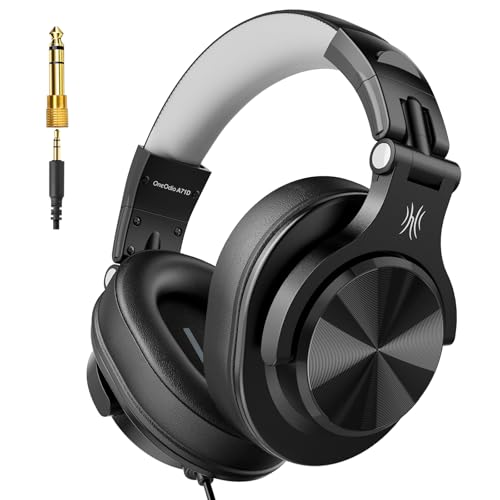
The OneOdio A71D is a pair of wired headphones rather than a standalone amplifier. I included it because many people begin an audio upgrade by matching a new amp with affordable headphones. Its over-ear design and wired connection make it a practical partner for a desktop amp. A wired headset also avoids the delay and compression that can occur with some wireless connections.
These headphones are easy to use with the 3.5mm outputs found on the Fosi Q4 and many small amps. They can also work with a 6.35mm adapter when connected to larger desktop gear. I would not buy them because they need huge amplifier power. I would buy them as a simple listening tool for music, games, mixing practice, or a first wired setup.
Pros:
- Wired design avoids battery charging
- Over-ear shape suits longer listening sessions
- Works with common 3.5mm headphone outputs
- Can pair with a 6.35mm adapter for desktop amps
- Useful for music, gaming, and basic studio work
- Affordable way to start a wired audio system
Cons:
- It is not a headphone amplifier
- No balanced 4.4mm connection is listed
- Sound quality depends on fit and source equipment
My Recommendation
The OneOdio A71D is best for shoppers building a low-cost headphone setup around the best budget amp for headphones. It makes sense for someone who needs a wired headset to use with a new desktop amplifier. It is also a simple choice for a student or casual listener. If you already own good headphones, spend your budget on the amp instead.
Mackie HM-4 Four-Channel Amp

The Mackie HM-4 is built for sharing one audio source with four pairs of headphones. It is a compact four-channel headphone amplifier and splitter. Each listener gets a separate headphone connection and level control, which is useful in a small studio, classroom, podcast room, or family music session. The goal is control and access, not a dramatic change in sound.
This distinction matters. A distribution amp like the HM-4 does not act like a powerful audiophile upgrade for one difficult headphone. Instead, it sends the same source to several users at once. I like its straightforward design for recording work, where an engineer and several performers need to hear the same signal. It can also help when two people want to watch or listen together.
Pros:
- Four headphone channels share one source
- Individual volume controls improve group comfort
- Useful for recording and podcast sessions
- Compact body fits a small desk or rack shelf
- Simple controls require little training
- Practical for classrooms and shared listening
Cons:
- Not intended as a high-power audiophile amp
- Needs a separate source and connecting cable
- More features than a solo listener may need
My Recommendation
The Mackie HM-4 is best for teams, musicians, teachers, and podcasters who need the best budget amp for headphones for shared monitoring. It is the wrong tool if you only want more power for one pair of headphones. For group use, its four outputs and separate level controls offer strong value. It can save money compared with buying several small amps.
LEKATO Rechargeable Guitar Headphone Amp
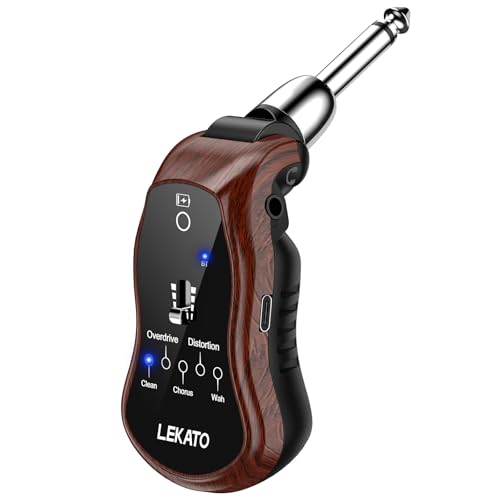
The LEKATO guitar headphone amp gives electric guitar and bass players a portable practice solution. The listing includes five effects: clean, chorus, overdrive, distortion, and wah. It uses a rechargeable design, so you can practice without a wall outlet. It is a handy alternative to carrying a larger practice amp.
I see the LEKATO as a value tool for beginners and casual players. The effects let you explore different sounds without purchasing separate pedals. It also helps players practice late at night through headphones. Like the Vox amPlug, this is not made to amplify music from a phone in the usual hi-fi sense; it is designed to process an instrument signal.
Pros:
- Rechargeable design supports portable practice
- Works with electric guitar and bass
- Five built-in effects add creative options
- Supports quiet playing with headphones
- Small size fits a gig bag or drawer
- Good starting point for new players
Cons:
- Not a general headphone amp for music playback
- Battery life depends on use and charging habits
- Built-in effects cannot replace a full pedalboard
My Recommendation
The LEKATO is a good fit for guitarists who want the best budget amp for headphones while keeping the setup small. I would choose it for home practice, travel, and first experiments with guitar effects. It offers more sound choices than a plain headphone adapter. Players who want a classic Vox-style tone may prefer the amPlug 3 AC30.
Vox amPlug 3 Bass Headphone Amp

The Vox amPlug 3 Bass is made for bass players who need quiet practice. It plugs into a bass guitar and sends the sound to headphones through a compact practice amp. The product listing highlights built-in effects and speaker emulation. That gives bassists more than a dry, direct signal when they practice without a speaker cabinet.
A headphone amp for bass must keep low notes clear enough to remain useful. The amPlug 3 Bass is designed around that need rather than normal music playback. It is a strong choice for apartments, dorm rooms, and late-night practice. I would not use it as the main amp for driving regular hi-fi headphones from a computer, but it fits bass practice very well.
Pros:
- Made specifically for electric bass practice
- Allows quiet playing through headphones
- Includes built-in effects for tonal variety
- Speaker emulation creates a more natural practice sound
- Very portable for lessons and travel
- Helps protect quiet hours at home
Cons:
- Not intended for general music listening
- Limited compared with a full bass amplifier
- Requires portable power or batteries
My Recommendation
The Vox amPlug 3 Bass is best for bassists who need the best budget amp for headphones for silent practice. It is small, focused, and easy to carry to lessons or rehearsals. The speaker emulation and effects make practice more enjoyable than a plain adapter. For everyday music listening, choose a dedicated hi-fi amp such as the Douk Audio U3 PRO or Fosi Q4.
How to Choose the Best Budget Amp for Headphones
Buying a headphone amp is easier when you start with the headphones, not the price. Check the headphone impedance, sensitivity, connector, and source device. Impedance is measured in ohms, but it does not tell the whole story. A high-impedance headphone often needs more voltage, while some low-sensitivity planar headphones may need more current.
Headphone makers usually publish impedance and sensitivity data. Independent audio measurements can also show output power, noise, and distortion. I pay close attention to output power at the headphone’s actual impedance, not only a large number printed on a box. A good amp should reach your normal listening level with clean headroom.
Match the Amp to the Source
An analog headphone amp needs an analog signal. A phone, laptop, DAC, or audio interface can provide that signal through a 3.5mm or RCA output. The Fosi Q4 is different because it includes digital inputs and its own DAC. It can connect directly to USB, optical, or coaxial sources.
Do not assume every USB port sends sound to an analog amp. A standard desktop amp cannot read digital audio without a DAC. If your computer has a noisy headphone jack, a DAC amp can solve two problems at once. If your source already has a clean line output, a simple amp may be all you need.
Understand Balanced Output
A 4.4mm balanced output can offer more power on some amplifiers. It may also reduce certain cable noise issues in a compatible system. However, balanced does not automatically mean better sound. You need an amp with a true balanced circuit and headphones fitted with a suitable balanced cable.
Never use a random adapter without checking its wiring. Some adapters can create a short or damage equipment. For most listeners, a good 3.5mm or 6.35mm output remains completely adequate. Balanced output is most useful when your headphones need extra power and you plan to use the correct cable.
Desktop or Portable?
Desktop amps usually offer more power, larger controls, and better connection options. They work well beside a computer, DAC, or audio interface. Portable amps save space and can help a phone or tablet drive wired headphones. The Neoteck is the travel-focused pick in this guide.
Portability brings trade-offs. A portable amp needs a battery and often has fewer inputs. A desktop model may need a wall adapter or USB power. Think about where you listen most. The best budget amp for headphones is the one that fits your routine, not just the one with the biggest specification.
Do You Need a DAC?
A DAC changes digital audio into an analog signal. Every digital device needs one somewhere in the chain. Your phone, computer, console, or amp may already include a DAC. Adding another DAC only helps when it offers cleaner output, better connections, or useful control.
The Fosi Q4 makes sense for a computer or television because it accepts several digital formats. The Douk Audio U3 and U3 PRO make more sense when you already have an analog source. I would not pay for a DAC feature you will never use. Spend that money on clean power, reliable controls, and a good fit with your headphones.
How Much Power Is Enough?
More power is not always better. An amp should provide enough clean output for your headphones, plus a safe amount of headroom. If you hear hiss with sensitive in-ear monitors, a powerful amp may be a poor match unless it has a suitable low-gain setting.
For easy portable headphones, a small amp can work well. For high-impedance studio headphones or planar magnetic models, a stronger desktop amp gives more comfort. The FiiO GIGAS 1 and Douk U3 PRO target buyers who want extra power. I still recommend starting at low volume and increasing it slowly.
Best Features at a Glance
| Best for | Why |
|---|---|
| High-impedance or planar headphones | Douk U3 PRO and FiiO GIGAS 1 offer strong stated output and desktop control. |
| PC, TV, and game console use | Fosi Q4 adds USB, optical, and coaxial inputs with DAC support. |
| Travel, guitar, bass, or group listening | Neoteck, Vox, LEKATO, and Mackie models solve specialized listening needs. |
Why Headphone Impedance Matters
Impedance describes how much electrical resistance a headphone presents to an amplifier. Low impedance does not always mean easy to drive, and high impedance does not always mean difficult. Sensitivity tells you how loud a headphone can become from a given amount of power. You need both figures for a better estimate.
A 300-ohm dynamic headphone may need more voltage than a typical laptop output can provide. A low-sensitivity planar model may need more current even when its impedance looks moderate. This explains why two headphones with similar ohm ratings can perform differently on the same amp.
My practical advice is simple. If your current source reaches normal volume but sounds strained, an amp may help. If it already plays loud and clean, an amp may not create a dramatic change. Look for better control, lower noise, useful connections, and enough headroom rather than chasing volume alone.
Common Mistakes to Avoid
The first mistake is buying an amp without checking the connector. A 6.35mm plug is common on desktop audio gear, while 3.5mm is common on phones and laptops. You can use a safe adapter, but confirm that the amp also accepts the source cable you own.
The second mistake is confusing an instrument amp with a hi-fi headphone amp. The Vox and LEKATO units process guitar or bass signals. They are excellent for quiet practice but do not replace the Fosi, Douk, or FiiO models for music playback.
The third mistake is trusting output claims without context. Power ratings can use different impedances, distortion levels, and output types. Balanced output numbers may be much higher than single-ended numbers. Read the full specification and match it to your headphones.
The last mistake is listening too loudly. A headphone amp makes high volume easy, but your ears still need protection. Start low, take breaks, and lower the level if music feels harsh or tiring. Better sound should feel relaxed, not painful.
FAQs Of best budget amp for headphones
What is the best budget amp for headphones?
The Douk Audio U3 PRO is my top general pick. It offers strong listed output, wide impedance support, and both 3.5mm and 6.35mm headphone jacks. Choose the Fosi Q4 instead if you also need USB, optical, or coaxial digital inputs.
Do I really need a headphone amplifier?
Not always. You may need one if your headphones sound quiet, weak, distorted, or poorly controlled from your current device. If your source already drives them cleanly at a comfortable level, an amp may provide only a small change.
Can a headphone amp improve sound quality?
It can improve volume control, power headroom, and noise performance when the original output is limited. It cannot repair a poor recording or transform every headphone. The result depends on the source, amp, headphones, and your listening level.
Should I choose a DAC amp or a regular amp?
Choose a DAC amp when you need to connect digital devices directly. The Fosi Q4 is useful for PCs, TVs, and consoles. Choose a regular analog amp when your source already provides a clean 3.5mm or RCA signal.
Are guitar headphone amps good for music listening?
Usually, no. Guitar headphone amps shape an instrument signal with effects and speaker emulation. They are built for guitar or bass practice. Use a hi-fi headphone amp for music, movies, gaming, and normal headphone playback.
Final Verdict: Which Should You Buy?
The Douk Audio U3 PRO is the best budget amp for headphones for most desktop listeners. It combines high stated power, broad compatibility, and useful 3.5mm and 6.35mm outputs.
Choose the Fosi Q4 for digital sources, the Neoteck for travel, or a Vox and LEKATO model for instrument practice. Match the amp to your headphones, source, and daily use for the best value.

Everett Ashford is a tech reviewer at mytechgrid.com specializing in SSDs, cameras, TVs, earbuds, headphones, and other consumer electronics. He provides honest, data-driven reviews based on hands-on testing and real-world performance analysis. Everett simplifies complex tech details to help readers make smart, confident buying decisions.