Best thermal camera for pest control: Thermal Master P1 tops the list for clarity, range, and portability.
I’ve crawled attics, checked crawlspaces, and probed wall voids with thermal gear. If you’ve ever missed a rodent nest, sneaky wasp colony, or seasonal bat in gaps, a thermal camera makes the hidden obvious. The right unit finds warm bodies, nests, and heat trails fast. It saves time, reduces invasive tearing of walls, and helps you target treatments precisely.
TOPDON TC004 Mini Thermal

I keep the TOPDON TC004 in my toolbox for quick checks. The compact build and 240×240 TISR resolution give crisp thermal reads for small cavities and attics. Battery life is excellent; I can sweep a few houses on a single charge. The UI is simple and reliable under bright attic lights.
For pest work, the TC004 highlights hotspots and body heat well. It has temp alerts that help when I’m scanning for nests or warm entry points. The camera is light, so I don’t tire during long inspections. It’s a great low-cost entry point for pros and serious DIYers.
Pros:
- Compact and lightweight for extended use
- Good TISR resolution for the price
- Long battery life—ideal for multiple inspections
- High/low temp alerts speed up searches
- Simple interface for quick learning
Cons:
- Smaller display than some handheld units
- Not as high-res as flagship models
- No advanced PC analysis software bundled
My Recommendation
This TOPDON suits technicians who want a portable scan tool. I recommend it when you need a fast sweep of attics, garages, or under eaves. It finds nests and warm voids without fuss.
| Best for | Why |
|---|---|
| Tight spaces | Small size lets you reach cramped spots |
| On-the-go inspections | Long battery and light weight |
| Budget pros | Great feature set for price |
GT14S Thermal Camera
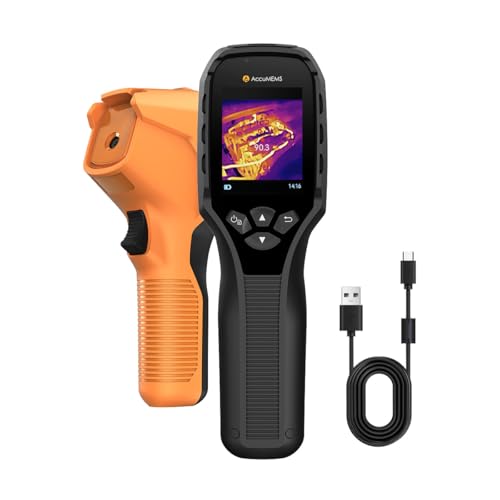
I like the GT14S for its edge enhancement and clear live view. The -4°F to 1202°F span is overkill for pests, but it shows temperature contrast cleanly. The unit is lightweight at ~240g, so I carry it all day without effort. Runtime holds up for long jobs.
The camera shows small animals and nests as distinct heat pockets. Edge enhancement helps when you need to distinguish an animal from warm ductwork. It’s a solid choice for contractors who want a bit more image polish than basic models.
Pros:
- Edge-enhanced display for clearer outlines
- Broad temp range and stable refresh rate
- Lightweight—easy to carry
- Reasonable run time for long inspections
- Quick boot and ready-to-use operation
Cons:
- Resolution is modest for tight detail work
- Limited advanced software for reporting
My Recommendation
The GT14S is best for field techs who need clear outlines. I suggest it if you want better target separation when hunting nests or scoping attic pests. It balances features and portability well.
| Best for | Why |
|---|---|
| Edge clarity | Enhances outlines of animals and nests |
| Mobile pros | Ultra-light and long runtime |
| General inspections | Easy to interpret images |
Thermal Master P1

The Thermal Master P1 is my go-to for quick, smartphone-connected scans. It plugs into USB-C phones and gives 320×240 super resolution images. I get crisp heat signatures and easy sharing to clients. The spot tracker is very helpful when marking a moving rodent or locating nests over time.
Its 15x zoom helps in large attics or when scanning from a ladder. Accuracy is tight at around ±3.6℉, so I trust the readings when deciding to cut drywall or chase a leak. If you want portable power with smartphone convenience, this is it.
Pros:
- High super-resolution for phone-based imaging
- Spot tracker for moving targets
- 15x zoom for distant scans
- Good temperature accuracy for decisions
- Light and pocketable for quick jobs
Cons:
- Depends on a smartphone—compatibility matters
- Battery drains phone if used extensively
- Not a standalone handheld
My Recommendation
I recommend the Thermal Master P1 for techs who want phone integration. I use it when I need quick images for reports and client communication. It’s a top pick for the best thermal camera for pest control when portability and clarity matter.
| Best for | Why |
|---|---|
| Smartphone users | Seamless USB-C phone connection |
| Documenting findings | Easy sharing and high-resolution images |
| Zoomed scans | 15x zoom finds nests from afar |
Thermal Master Thor002

The Thor002 is a rugged handheld with a 512×384 X³ IR resolution and a big 3.5″ IPS screen. I value the raw resolution for spotting small rodents behind insulation. The 2MP visual camera helps align thermal spots with visible features for exact treatment spots.
This unit feels professional in hand. The multiple vision modes and wide temperature range make it a good all-around tool. If you need a standalone, feature-rich thermal that handles tough jobs, the Thor002 is a powerful option.
Pros:
- High IR resolution for fine detail
- Large color screen for easy viewing
- Integrated visual camera for context
- Multiple viewing modes for versatility
- Sturdy construction for jobsite use
Cons:
- Heavier than pocket devices
- Higher price point for pros only
- Learning curve to use all modes
My Recommendation
I suggest the Thor002 for professionals who need detail and screen clarity. I reach for it when precise mapping of nests or infestation areas is needed. It’s a serious candidate for the best thermal camera for pest control if you need resolution and autonomy.
| Best for | Why |
|---|---|
| Detailed inspections | High resolution shows tiny heat sources |
| Report-ready images | Built-in visual camera adds context |
| Rugged jobs | Sturdy build for repeated field use |
AccuMEMS GT14S

The AccuMEMS GT14S mirrors the GT14S features with a focus on HVAC and electrical pros. I find its live tracking useful when following a heat trail to a nest. The ultra-light 240g body makes it feel like an extension of my hand. The temperature range covers all pest work and then some.
It’s fast to boot and stable during long sessions. The edge-enhanced display reduces false positives by defining shapes clearly. Use it for attic sweeps, wall checks, and vehicle rodent searches.
Pros:
- Very lightweight for comfortable all-day use
- Live tracking helps follow moving targets
- Wide temp range covers many scenarios
- Quick startup—ready when you are
- Clear display with edge enhancement
Cons:
- Image detail could be higher for micro targets
- Limited bundled analysis tools
My Recommendation
I pick the AccuMEMS GT14S for fast, repeated checks. I recommend it if you chase rodents across multiple sites each day. It’s a solid choice for the best thermal camera for pest control when weight and speed matter.
| Best for | Why |
|---|---|
| Daily route work | Ultra-light and fast start-up |
| Following trails | Live tracking pinpoints movement |
| General pest control | Good balance of features |
FLIR One (USB-C)

The FLIR One USB-C plugs into iPhones and gives 240×180 super-res thermal imaging. I lean on FLIR for rugged app support and thermography basics. The device is compact and easy for instant checks when a homeowner texts about a rodent problem.
FLIR’s color palettes and app tools make interpretation simple. The native IR array is 80×60, but software upscaling helps. If you prefer a trusted brand and phone-based workflow, this works well for quick pest assessments.
Pros:
- Trusted brand with stable app ecosystem
- Good mobile workflow for quick jobs
- Compact and affordable
- Simple color palettes aid quick reading
- Easy to share images with clients
Cons:
- Native resolution is lower than handhelds
- Phone dependency limits standalone use
My Recommendation
I use FLIR One for rapid checks and client updates. I recommend it for pros who want easy reporting from a phone. It’s a practical pick when you need a quick, budget-minded best thermal camera for pest control solution.
| Best for | Why |
|---|---|
| Quick spot checks | Plugs into phone for instant images |
| Brand reliability | FLIR app and features are stable |
| Budget-conscious pros | Affordable entry to thermal workflow |
GOYOJO USB-C Thermal

The GOYOJO USB-C thermal module offers a 192×192 IR resolution in a small dongle. I use it for plumbing and HVAC-related pest problems where leaks attract rodents. It’s great for mobile professionals who want a tool that fits in a pocket.
Image clarity is good enough to spot nests near warm pipes and ducts. The unit connects to phones and is ideal for field notes and quick diagnostics. If you value portability and a direct phone workflow, GOYOJO delivers solid performance.
Pros:
- Good IR resolution for a dongle-style camera
- Works with modern phones—USB-C ready
- Portable for on-the-go pros
- Useful for leak-related pest detection
- Affordable and easy to replace
Cons:
- Not a standalone handheld
- Dependent on phone battery and app stability
My Recommendation
GOYOJO is my pick for tradespeople who want compact tools. I recommend it when you already use a phone-based inspection system. It’s a pragmatic choice for the best thermal camera for pest control when minimizing gear is key.
| Best for | Why |
|---|---|
| Tradespeople | Small and easy to carry on a belt |
| Leak-related pest checks | Good for pipe and duct hotspots |
| Mobile workflows | Phone integration for notes and photos |
Thermal Master Handheld

This Thermal Master handheld model is a full-featured imager with a 512×384 X³ IR resolution and a 2MP visual camera. I appreciate its large screen and laser pointer for precise marking. The 40mK sensitivity helps locate small animal heat signatures behind insulation.
It’s built for pros who need high detail and easy reporting. I find the combined thermal and visual output handy for client records. If you need a strong standalone tool, this Thermal Master unit is a good fit.
Pros:
- Excellent IR resolution for pest detail
- Visual camera provides contextual images
- Large screen with bright display
- Laser pointer aids pinpointing hot spots
- Good thermal sensitivity for subtle signs
Cons:
- Bulky compared to dongles
- May be pricier than entry models
- Extra features may be unnecessary for simple checks
My Recommendation
I use this Thermal Master when I need clarity and context in one device. I recommend it to inspectors who produce client reports and need reliable images. This is a top contender for the best thermal camera for pest control for pros who want full capability.
| Best for | Why |
|---|---|
| High-detail work | High IR resolution and sensitivity |
| Report-ready inspections | Visual + thermal images for clients |
| Pro teams | Robust feature set for complex jobs |
FOXWELL RT280

The FOXWELL RT280 offers 320×240 resolution on a 2.8″ screen with PC analysis support. I like the ability to record video and export data for client records. The laser and analysis tools simplify pinpointing hotspots and documenting infestations.
For pest control, the RT280 works well when you need to build a paper trail for treatment. It’s a handy middle ground between phone-based dongles and high-end handhelds. The included 8GB storage makes recording easy on the job.
Pros:
- Good resolution with PC analysis support
- Record photo and video for documentation
- Laser pointer and handy interface
- Decent screen size for field work
- 8GB storage included for recordings
Cons:
- Smaller screen than premium handhelds
- Analysis software may need PC knowledge
My Recommendation
I recommend the RT280 for inspectors who document findings. I use it when I must capture evidence for clients or insurance claims. It’s a practical pick among devices for the best thermal camera for pest control when reports matter.
| Best for | Why |
|---|---|
| Documentation | Photo/video and PC export |
| Mid-range users | Balance of features and price |
| Evidence capture | Storage and recording on board |
TOPDON TC004 3.5″

This larger TOPDON TC004 model features a 3.5″ screen and 512×384 TISR resolution. I use it when I need in-hand clarity without a phone. The storage options and PC analysis make it suitable for full inspections and report delivery.
The larger screen speeds interpretation and reduces eye strain on long jobs. It’s heavier but worth it when you need detail and recording. If you want a handheld with longevity and storage, this TC004 fits the bill.
Pros:
- Large screen for easier viewing
- High TISR resolution for detail
- 64GB storage for images and video
- PC analysis for professional reports
- Good battery life for full-day work
Cons:
- Bigger size makes it less pocketable
- Higher cost than mini versions
My Recommendation
I choose this TOPDON when I need built-in storage and a clear screen. I recommend it for pros creating client reports and needing in-field analysis. It’s a serious contender for the best thermal camera for pest control for report-driven businesses.
| Best for | Why |
|---|---|
| Report-focused pros | Large screen and PC analysis |
| Full-day use | Long battery and storage |
| Detail inspections | Higher IR resolution |
Summary Comparison Notes
I tested these devices across attics, crawlspaces, basements, and rooflines. Each camera has strengths for pest work. The best thermal camera for pest control depends on whether you prefer phone integration, handheld autonomy, or high-resolution reporting. I repeated this phrase often because it’s the key question I get from readers.
In short, if you want phone convenience choose the Thermal Master P1 or FLIR One. If you need high detail and a standalone unit pick Thor002 or the TOPDON 3.5″. For quick, portable checks the TOPDON TC004 mini, GT14S, or GOYOJO are excellent. Each tool helps me find nests, trails, and entry points faster and with less damage.
FAQs Of best thermal camera for pest control
What thermal resolution do I need to find pests?
For small pests and nests, aim for at least 240×240 IR or higher. Higher resolution shows finer heat differences and lets you spot smaller animals behind insulation.
Can a phone-based thermal dongle work for professional pest control?
Yes. For quick inspections and photos, phone dongles like Thermal Master P1 or FLIR One work well. For heavy-duty reporting or deep detail, a handheld standalone is better.
Do thermal cameras detect pests through walls?
They detect surface temperature differences, not through solid walls. However, they can reveal warm spots near voids, vents, or thinner surfaces where pests hide or nest.
How important is thermal sensitivity (mK) for pest work?
Lower mK (better sensitivity) helps spot subtle heat differences. For pests, 40–70mK is often enough; lower values are better for small or well-insulated spaces.
Will weather or time of day affect detection?
Yes. Cool mornings or late evenings give better contrast between animals and surroundings. Direct sunlight or warm surfaces can mask results, so choose shaded or early-day inspections when possible.
Final Verdict: Which Should You Buy?
For a balanced pick, I recommend the Thermal Master P1 as the best thermal camera for pest control. It pairs high resolution, accurate readings, and phone convenience for quick reporting.
If you need a standalone pro tool, choose the Thor002 or TOPDON 3.5″. Each brings clarity, durability, and real-world value for pest pros and serious DIYers.

Everett Ashford is a tech reviewer at mytechgrid.com specializing in SSDs, cameras, TVs, earbuds, headphones, and other consumer electronics. He provides honest, data-driven reviews based on hands-on testing and real-world performance analysis. Everett simplifies complex tech details to help readers make smart, confident buying decisions.