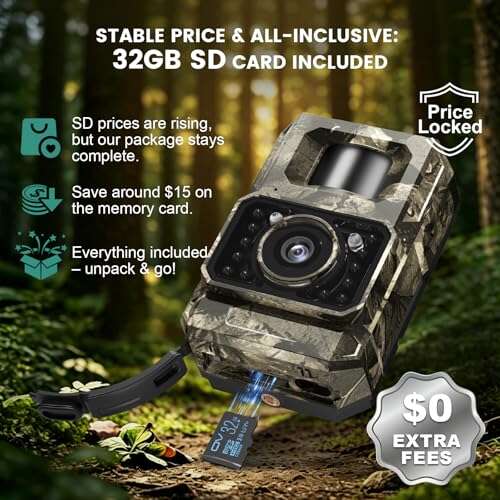
Top pick: MAXDONE 4K Solar Trail Cam 2-Pack — reliable, clear deer cams.
I’ve spent seasons testing trail cameras at dawn and dusk, tracking deer patterns and learning what matters most. Whether you’re hunting pressured fields or scouting new ground, the right camera solves the guesswork. It reveals travel lanes, timing, buck habits, and bait results—so you can make better decisions and save time in the blind.
MAXDONE 4K Solar Trail Cam 2-Pack

I used this MAXDONE 4K Solar Trail Cam pair across two properties for a full season. Setup was quick and the solar panels gave steady power in wooded edges. Image clarity at 64MP still surprised me in low light. The Wi‑Fi and Bluetooth options made field downloads fast when I needed quick intel.
The night shots use no‑glow IR that keeps deer calm. Trigger speed is acceptable for close passes, and the IP66 rating handled rain and mud. If you want a set of cams that last through a season without constant battery swaps, this model earns its keep.
Pros:
- Sharp 4K/64MP images for easy ID of antlers
- Solar recharge reduces battery swaps
- Wi‑Fi/Bluetooth for quick image pulls
- Durable IP66 housing for wet conditions
- No‑glow night vision keeps deer unaware
Cons:
- Occasional false triggers from leaves
- App can be clunky for first‑time users
- Solar panel needs good sun exposure
My Recommendation
This MAXDONE 4K Solar Trail Cam 2-Pack is best for hunters who want a reliable, long‑run scouting solution. I recommend it to people who place cameras on field edges or open cover where the solar panel can recharge. It’s also a great fit for anyone who wants high‑resolution photos to study antler detail and deer age.
| Best for | Why |
|---|---|
| Long deployments | Solar charging reduces battery swaps |
| High detail scouting | 4K/64MP images show antler detail |
| Quick checks | Wi‑Fi/Bluetooth lets you pull photos fast |
MagicEagle 4G Cellular Trail Camera

I ran the MagicEagle 4G camera in a remote box stand area where I could not visit often. The 13,000 mAh battery paired with the solar panel lasted weeks. The cellular alerts kept me posted when bucks were active. The image quality at 2K was crisp enough for quick checks and confirms track timing.
The unit’s audible video feature helps when you want to spook deer during tests. It’s IP66 rated, so I didn’t worry about storms. Setup with the app was simple, and the camera sent images reliably over 4G.
Pros:
- 4G cellular pushes photos without site visits
- Large battery with solar support for long life
- Good night vision range for yarding deer
- Durable for wet, outdoor use
- Easy app alerts for real‑time info
Cons:
- Requires cellular plan and coverage
- 2K is not as detailed as 4K for antler study
- Solar panel size adds bulk
My Recommendation
Use the MagicEagle 4G Cellular Trail Camera if you need live intel without trekking to the woods. I find it ideal for landowners and hunters who want near real‑time updates of deer movement. The large battery and solar panel make it a great choice for remote locations with decent cell coverage.
| Best for | Why |
|---|---|
| Remote monitoring | 4G sends photos so you can stay off the property |
| Long battery life | 13,000 mAh battery with solar backup |
| Quick alerts | Real‑time notifications for deer activity |
MAXDONE 4K Solar WiFi Trail Cam
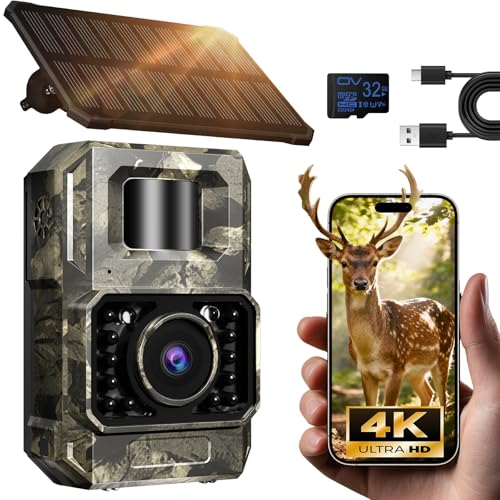
This MAXDONE WiFi model is compact and easy to place in tight funnels. The 4K sensor grabbed sharp photos and the 2000 mAh battery was adequate for short runs. I liked the Bluetooth option for quick downloads when I was nearby. Setup took minutes and the menus are straightforward.
The camera handled low light well for evening movement. I recommend mounting it shoulder height on trails for clear face shots. It’s a solid pick for hunters who want good image quality and occasional remote access without a data plan.
Pros:
- 4K image capture for clear daytime photos
- WiFi and Bluetooth for fast local downloads
- Compact form fits tight locations
- Rechargeable battery for quick swaps
- Good night performance for deer detection
Cons:
- Battery life shorter than larger models
- No cellular if you need remote updates
- Solar option not included with base unit
My Recommendation
I recommend the MAXDONE 4K Solar WiFi Trail Cam for hunters who favor sharp photos and easy local download. I find it best where you can physically reach the cam periodically. If you want crisp images for antler review and don’t need cellular service, this camera delivers strong value.
| Best for | Why |
|---|---|
| Tight funnels | Compact size fits narrow trails |
| High‑res photos | 4K imaging helps antler ID |
| Quick local access | WiFi and Bluetooth downloads |
WOSODA Mini Trail Camera 4 Pack

The WOSODA Mini Trail Camera 4 Pack gives you multiple points of view for a low price. I used the pack to cover trails, food plots, and funnel entrances. Each camera took clear 24MP photos and 1080P video. They trip fast and caught many crepuscular movements for me.
The small form factor is easy to hide and place at scent posts. Battery life held up for a few weeks with moderate activity. If you want broad coverage across a property on a budget, this four pack is a practical choice.
Pros:
- Four cameras expand coverage affordably
- 24MP photos and 1080P video for decent detail
- Fast trigger captures quick passing deer
- Small and easy to conceal on trails
- Waterproof housing for rainy weather
Cons:
- Lower low‑light detail compared to 4K units
- Individual battery life varies
- No cellular connectivity
My Recommendation
I use the WOSODA Mini Trail Camera 4 Pack when I need broad, cost‑effective coverage. I recommend it for hunters who want multiple camera angles to read deer flow. This set helps you map travel patterns fast without breaking the bank.
| Best for | Why |
|---|---|
| Budget coverage | Four cams for wide area monitoring |
| Trail mapping | Place on multiple funnels to learn paths |
| Easy concealment | Mini size hides well on posts |
WOSPORTS Mini Trail Camera

The WOSPORTS Mini Trail Camera is a solid entry‑level cam for deer scouting. I placed it on narrow trails and around small clearings. It produced 24MP stills and reliable IR night shots. Trigger time is responsive and it handled cold nights without issue.
The unit is waterproof and simple to run. I liked the small screen for quick checks after retrieval. For hunters new to trail cams, this model is easy to learn and dependable in the field.
Pros:
- Clear 24MP stills for identification
- IR night vision for quiet nocturnal shots
- Compact and light for easy mounting
- Simple controls for new users
- Waterproof for all‑season use
Cons:
- No cellular or Wi‑Fi features
- Smaller battery capacity than premium cams
- Limited image resolution vs 4K models
My Recommendation
I recommend the WOSPORTS Mini Trail Camera for hunters learning how to use cams. I used it to learn pattern timing and to find bedding areas. It’s a dependable, low‑cost option that still gives useful photos for planning hunts with the best trail cameras for deer hunting.
| Best for | Why |
|---|---|
| Beginners | Easy setup and simple controls |
| Small clearings | Compact body fits tight spots |
| Budget conscious | Good value for basic scouting |
KJK 4K 64MP WiFi Trail Camera

The KJK 4K 64MP camera stands out for fast triggers and wide angle coverage. I used it on a cornfield edge and got crisp daylight images across the lane. The 130° lens catches more of the scene, which helps when bucks quarter wide. Night shots were usable for tracking movement at range.
It is IP67 rated, so it survived heavy rain. The Wi‑Fi lets me review images on a phone when I’m close. If you want a wide view that still shows antler detail, this KJK model is worth trying.
Pros:
- 4K/64MP for sharp daytime detail
- Wide 130° field of view captures more action
- Fast 0.1s trigger catches quick passes
- IP67 protection for harsh weather
- Wi‑Fi for local image pulls
Cons:
- Wide angle can distort distant antlers
- Large files need bigger SD cards
- Battery life depends on usage patterns
My Recommendation
I recommend the KJK 4K 64MP WiFi Trail Camera if you need wide coverage and high detail for scoring bucks. I use it where trails open into fields. It works well with the other best trail cameras for deer hunting because it balances reach and resolution.
| Best for | Why |
|---|---|
| Wide lanes | 130° angle captures broad scenes |
| Quick passes | 0.1s trigger reduces missed shots |
| Field edges | High resolution for antler checks |
KJK 36MP 2.7K Mini Trail Camera

This KJK mini camera is small but capable. The 36MP stills and 2.7K video struck a good balance between file size and clarity. The 0.1s trigger and 130° lens captured deer movement across lanes without many missed events. The 2.0” display makes quick checks easier.
I found it handy in thick cover where bulkier cams struggle. The waterproof case held up through mud and drizzle. If you want a compact cam with clear photos and a screen for field checks, this one fits well.
Pros:
- High 36MP stills for clear ID
- 2.7K video captures movement well
- Fast trigger reduces missed targets
- Compact for dense cover placement
- Onboard screen for quick review
Cons:
- Not full 4K resolution
- Smaller battery than big cams
- Wide lens may include unwanted background
My Recommendation
I recommend the KJK 36MP 2.7K Mini Trail Camera for hunters needing a small, flexible cam in thick cover. I used it to check bedding exits and narrow trails. It’s a reliable tool among the best trail cameras for deer hunting when you want mobility and clear images.
| Best for | Why |
|---|---|
| Dense cover | Compact size fits tight spots |
| Quick field checks | Onboard screen speeds review |
| Balanced quality | Good stills and video without huge files |
MAXDONE 4K 6000mAh Solar Trail Cam
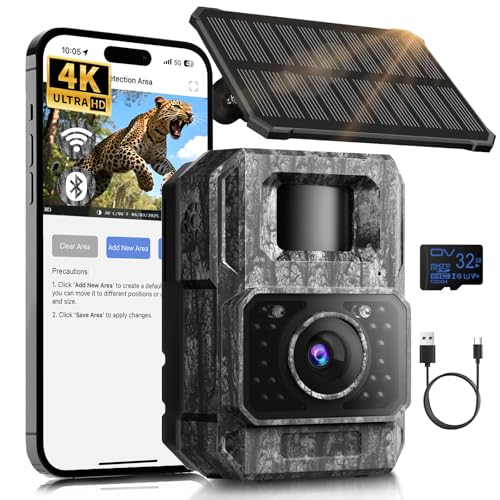
The MAXDONE 4K with a 6000mAh battery is built for longer sits. I placed it on a food plot and it ran through several weeks of activity. The solar trickle charge helped on overcast days. Image clarity at 4K allowed me to check subtle antler cues at a distance.
Its night vision was discreet and did not spook animals. The housing felt solid and I trusted it during wind and rain. For anyone wanting high res and long battery life, this model makes a strong case.
Pros:
- Large 6000mAh battery for extended deployments
- 4K images capture fine antler detail
- Solar support extends field life
- Night vision performs well without glow
- Sturdy build for harsh weather
Cons:
- Bigger and heavier than mini cams
- Solar effectiveness depends on sun exposure
- Higher price than entry models
My Recommendation
I recommend the MAXDONE 4K 6000mAh Solar Trail Cam for hunters who want extended runs and high detail. I used it where I could not check cameras often. It’s a top pick when considering the best trail cameras for deer hunting that need long life and crisp photos.
| Best for | Why |
|---|---|
| Extended sits | 6000mAh battery plus solar support |
| High detail | 4K images reveal subtle features |
| Weatherproof use | Built to hold up in storms |
OUTDOOR EXPERT 20MP Mini Trail Camera

The OUTDOOR EXPERT 20MP Mini Trail Camera brings no‑glow 940nm IR for stealth. I used it around bedding to avoid alerting deer. The 1080P capture is clear enough for behavior study, and the 80ft illumination range surprised me in dense cover. It’s a small cam that stays hidden and effective.
Setup is simple and the device runs on common batteries. Durability is good and the cam withstands typical field knocks. It’s a smart choice for covert scouting and pressure‑sensitive areas.
Pros:
- No‑glow 940nm IR keeps deer from seeing the flash
- 20MP stills for identification
- 80ft illumination gives long night range
- Compact for discreet placement
- IP66 waterproof rating for rough weather
Cons:
- Batteries may need frequent changes with heavy use
- 1080P video lacks higher resolution detail
- No wireless features for remote checks
My Recommendation
I recommend the OUTDOOR EXPERT 20MP Mini Trail Camera for stealthy scouting near beds and funnels. I use no‑glow cams on pressured properties to avoid alerting deer. This camera fits well into a lineup of the best trail cameras for deer hunting when you need quiet, unseen monitoring.
| Best for | Why |
|---|---|
| Stealth scouting | No‑glow IR avoids spooking deer |
| Long night range | 80ft illumination improves detection |
| Pressured lands | Small size keeps placement discreet |
Meidase P70 64MP Trail Camera

The Meidase P70 non‑cellular trail camera focuses on image quality with 64MP and 1296p video. I used it where I wanted the best still detail without paying for data plans. The no‑glow IR preserves natural animal behavior at night. The housing is rugged and resisted heavy rain.
Trigger speed is solid and the motion detection is reliable. If you favor highest‑resolution stills for scoring bucks at range and don’t need wireless features, this unit is a strong value. It fits well into a mixed camera setup.
Pros:
- Very high 64MP stills for antler detail
- No‑glow IR for discreet night photos
- Solid trigger and motion sensing
- Waterproof case for outdoor durability
- Good value without cell fees
Cons:
- No wireless connectivity for remote access
- Large files require big SD cards
- Battery consumption higher with heavy use
My Recommendation
I recommend the Meidase P70 64MP Trail Camera if you want top still resolution without cellular costs. I use it for close inspection of antlers and age cues. It’s an excellent inclusion among the best trail cameras for deer hunting when detail matters more than live alerts.
| Best for | Why |
|---|---|
| Antler detail | 64MP stills reveal fine features |
| No‑cell setups | No subscription or data plan needed |
| Rugged use | Waterproof housing holds in storms |
FAQs Of best trail cameras for deer hunting
How long should I leave a trail camera in the field?
I leave most trail cameras in place for 2–4 weeks on average. With solar or large batteries you can extend that to months. Check based on battery life, SD card space, and local theft risk.
Do I need cellular cameras or are non‑cellular enough?
Use cellular cams if you want near real‑time updates and have coverage. Non‑cellular cams are fine for routine scouting if you check them in person. I mix both types to balance cost and intel.
What trigger speed is good for deer?
I look for 0.2s or faster. Fast triggers reduce missed photos of quick passes. Combined with short recovery times, they catch more movement.
Is no‑glow IR important for pressured deer?
Yes. No‑glow IR is less likely to spook wary deer at night. I use no‑glow cams near bedding and in pressured areas to avoid alerting deer.
What resolution do I need to ID bucks?
For antler ID, I aim for 12MP or higher. 4K stills and 36–64MP cameras give the best detail. But in practice, good placement and angle matter as much as resolution.
Final Verdict: Which Should You Buy?
For long runs and high detail, the MAXDONE 4K Solar options and KJK 4K models stand out among the best trail cameras for deer hunting. They combine battery life, sharp images, and durability for reliable scouting.
If you need remote alerts, choose a 4G cellular cam like MagicEagle. For budget coverage or stealth near beds, the WOSODA packs and OUTDOOR EXPERT no‑glow cams work well. Pick the cam that fits your coverage plan and hunting style.

Everett Ashford is a tech reviewer at mytechgrid.com specializing in SSDs, cameras, TVs, earbuds, headphones, and other consumer electronics. He provides honest, data-driven reviews based on hands-on testing and real-world performance analysis. Everett simplifies complex tech details to help readers make smart, confident buying decisions.