SSD prices are rising because NAND flash supply is tighter while data center and AI demand keeps growing.
If you have checked the price of a 1TB or 2TB solid-state drive lately, you may have noticed a sharp change. The answer to “why are SSD prices going up” is not one simple event. It is a mix of factory cuts, stronger enterprise demand, higher production costs, and the normal boom-and-bust cycle of the NAND flash market. This guide explains each factor, what it means for shoppers, and how to buy storage without overpaying.
Why are SSD prices going up right now?
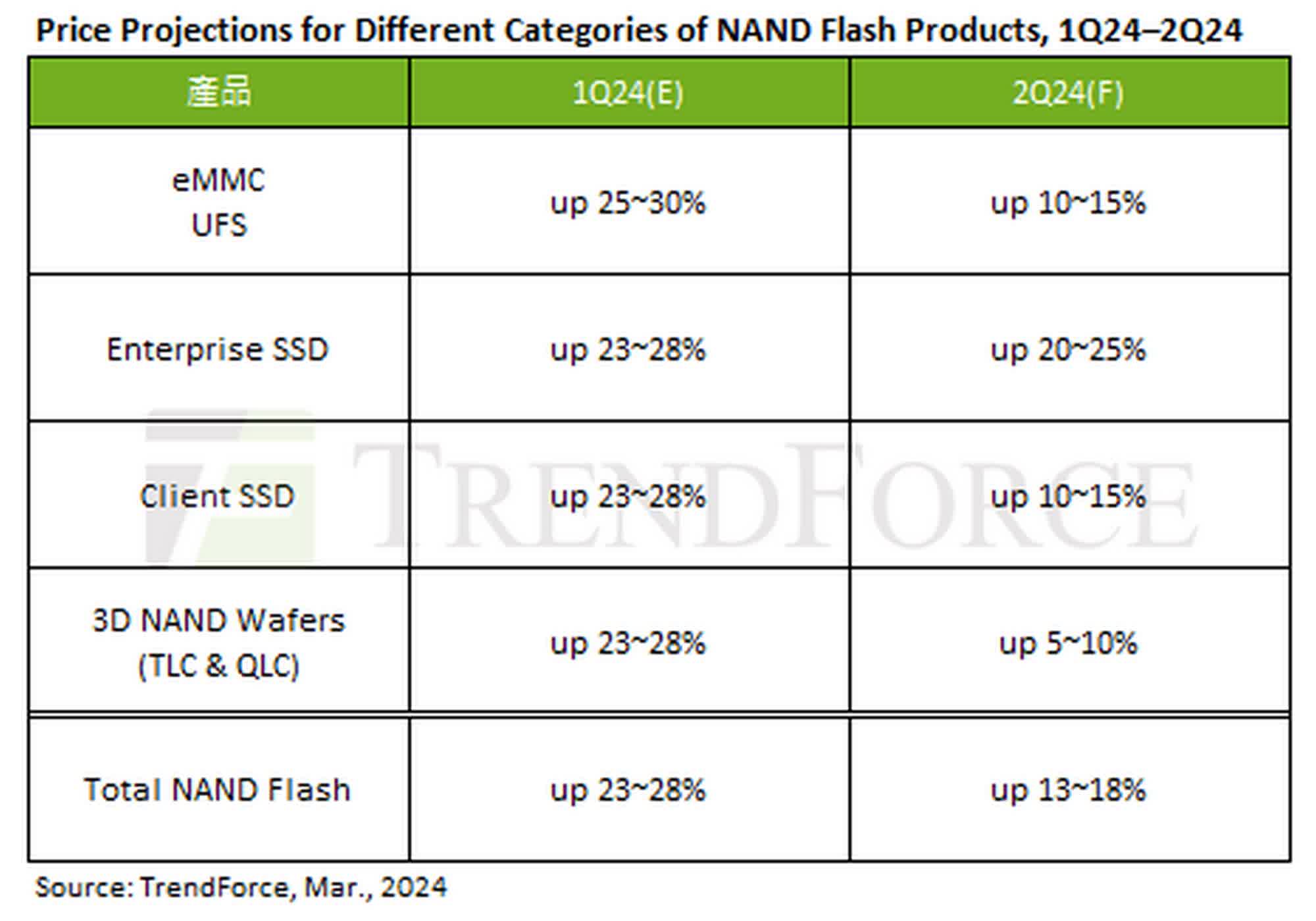
The main reason SSD prices are going up is that NAND flash memory has become more expensive. NAND flash is the storage chip inside nearly every modern SSD. When the price of NAND rises, drive makers usually pass some of that increase to retailers and customers.
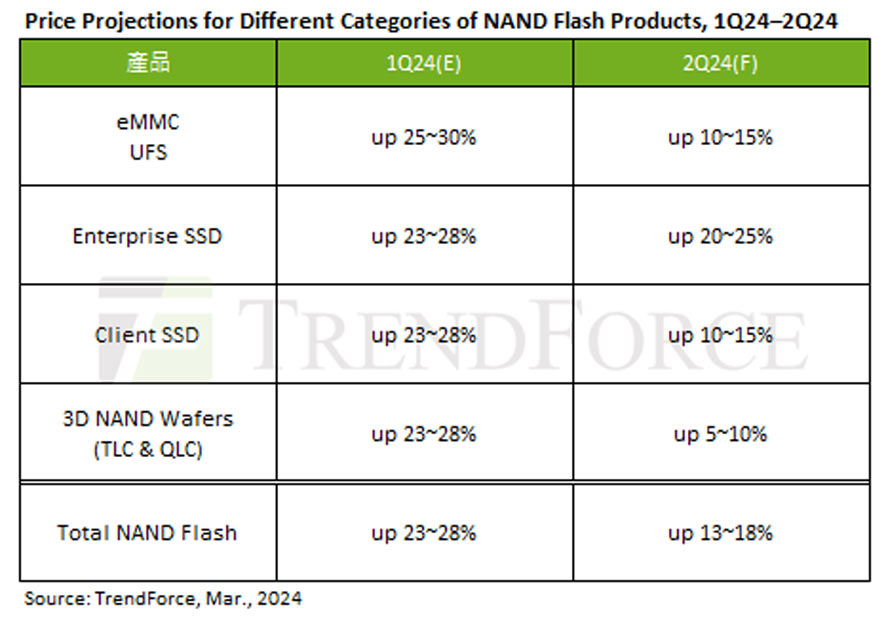
For much of 2023 and early 2024, NAND manufacturers faced weak demand and excess inventory. Prices fell so far that some companies sold chips at a loss. To slow the decline, major manufacturers reduced production and delayed expansion plans.
That strategy worked. Lower output helped clear old inventory and brought the market closer to balance. As demand returned, there was less spare supply available. The result was a fast change from falling SSD prices to rising SSD prices.
Several forces are now working together:
• NAND manufacturers have reduced wafer production.
• Cloud companies are buying more enterprise SSDs.
• AI systems need large amounts of fast storage.
• PC and smartphone makers are rebuilding inventory.
• New manufacturing capacity takes years and billions of dollars to develop.
• Retail prices often rise faster than chip prices because stores are replacing older stock.
This is why the answer to “why are SSD prices going up” involves both supply and demand. Think of NAND as a crop. If producers plant less after a poor season, even a normal harvest later may not be enough when buyers return.

The NAND flash supply cycle
NAND flash is a highly competitive memory product. Companies such as Samsung, SK hynix, Kioxia, Western Digital, and Micron produce huge volumes of it. Their products are used in SSDs, phones, tablets, servers, game consoles, and embedded devices.
The market often moves in cycles:
-
Manufacturers add production when demand is strong.
-
Supply grows faster than demand.
-
Chip prices fall.
-
Companies cut output and delay new factories.
-
Inventory shrinks.
-
Prices rise when buyers return.
This cycle explains why SSD prices can change even when the technology itself has not changed. An SSD may use the same controller and NAND type as a model from last year, yet cost more because the underlying memory chips cost more to make.
The market is also difficult to control. A NAND factory cannot quickly produce more chips when prices rise. Building a fab can take several years, and qualifying new equipment takes even longer. That delay makes price swings more likely.
Another factor is the move to higher-density NAND. Newer memory can store more data in the same physical space, but advanced production methods are complex. Manufacturers must spend heavily on research, equipment, energy, and quality control.
Production cuts pushed prices higher
Production cuts are one of the clearest answers to why are SSD prices going up. When NAND prices fell, manufacturers reduced wafer starts and slowed factory utilization. Some companies also reduced capital spending.
A wafer is a thin silicon disk used to create many memory chips. If a factory processes fewer wafers, the market receives fewer finished NAND chips. Even a modest cut can matter because the industry produces storage at enormous scale.
These cuts had two effects:
• They reduced the amount of unsold inventory.
• They gave manufacturers more control over pricing.
In the short term, production cuts can hurt supply. In the longer term, they can make the industry healthier by preventing endless oversupply. However, consumers feel the impact through higher SSD prices.
Manufacturers also prioritize the products with the best profit margins. During a shortage, they may focus on enterprise SSDs, high-capacity chips, or newer NAND designs. That can limit the supply of inexpensive consumer drives.
The process is similar to a store that stops ordering too much stock after a long period of weak sales. Once customers return, the store has fewer items on its shelves and can charge more.
AI and data centers are increasing SSD demand
Artificial intelligence is a major part of the current answer to why are SSD prices going up. AI servers need fast storage for training data, model files, operating systems, temporary data, and customer workloads.
Most attention goes to graphics processors, but storage is also essential. Large AI clusters may use many enterprise NVMe SSDs to move data quickly between storage and compute systems. Cloud providers are expanding their data centers, and those facilities require reliable, high-performance drives.
Enterprise SSDs are usually more expensive than consumer models because they may offer:
• Higher endurance for constant writing.
• Better power-loss protection.
• Longer warranty coverage.
• More consistent performance.
• Advanced error correction.
• Firmware designed for server workloads.
When data center companies purchase large numbers of these drives, they compete for the same NAND supply used in consumer products. Enterprise demand does not always raise every retail price equally, but it can tighten the overall market.
AI also increases demand for high-capacity drives. A 4TB or 8TB enterprise SSD can hold large data sets and model files. As large drives become more popular, the industry may allocate more NAND to those products instead of low-cost 500GB or 1TB drives.
Why consumer SSD prices can rise suddenly
You may wonder why SSD prices are going up at a local retailer when the change in NAND pricing happened months earlier. Retail pricing does not move in perfect real time.
Retailers purchase stock at different costs. A store may sell older drives at a low price until that inventory runs out. The next shipment may cost more, causing a sudden jump.
Online sellers also use automated pricing. If inventory is low or demand rises, software may adjust prices several times in one day. A popular drive can become expensive during a sale, then return to a lower price after a restock.
Other factors include:
• Shipping and warehouse costs.
• Currency changes.
• Import duties and tariffs.
• Controller and component shortages.
• Brand pricing decisions.
• Seasonal demand during back-to-school and holiday periods.
• Temporary promotions ending.
This is why you should compare several retailers instead of judging the entire market by one product. A single model may be overpriced while a similar drive from another brand remains affordable.
Are all SSD types getting more expensive?
No. Price increases vary by SSD type, capacity, and market segment. The answer to why are SSD prices going up may be clear at the market level, but individual products can behave differently.
SATA SSDs are often less sensitive to new demand because the interface is older and widely available. They can still rise in price when NAND costs increase, but discounts may remain common.
PCIe 3.0 NVMe SSDs may offer strong value because manufacturers have large inventories and many consumers now prefer newer PCIe 4.0 drives. However, older models can become expensive if production has slowed.
PCIe 4.0 SSDs are popular in new gaming PCs and workstations. Their prices depend on NAND costs, controller supply, cooling design, and brand competition.
PCIe 5.0 SSDs are newer and often cost more. They can deliver very high sequential speeds, but many users do not need them. They also tend to produce more heat and may require a larger heatsink.
Enterprise SSDs are the most exposed to data center demand. Their price depends not only on capacity but also on endurance, performance consistency, firmware, and protection features.
Capacity matters too. A 2TB SSD may offer better value per gigabyte than a 1TB model, but large drives can rise sharply when high-density NAND becomes scarce.

How SSD price increases affect PC builders and gamers
For most PC builders, storage is only one part of the total system cost. Still, a higher SSD price can change the best buying decision.
A gaming PC does not usually need the fastest SSD available. Game load times can be similar across many decent SATA and NVMe drives. A reliable PCIe 4.0 SSD is often a better value than an expensive PCIe 5.0 model.
Laptop buyers have fewer choices. Many modern laptops use an M.2 NVMe drive, but some models have only one storage slot. If you need more space, you may have to replace the original drive instead of adding a second one.
Content creators and professionals may feel the increase more strongly. Video editing, 3D work, software development, and large photo libraries can require several terabytes of fast storage.
A practical setup is to separate storage by purpose:
• Use a fast SSD for the operating system and active projects.
• Use a larger SSD for games and frequently used files.
• Use a hard drive or network storage for backups and archives.
• Keep at least one backup in a different physical location.
Do not treat an SSD as a backup. NAND flash can fail, and data recovery may be difficult or expensive.

How to buy an SSD without overpaying
Understanding why are SSD prices going up can help you avoid panic buying. Prices may continue rising for a while, but that does not mean every drive deserves a premium.
Use these steps before purchasing:
-
Compare the price per terabyte. A low sticker price does not always mean good value.
-
Check independent reviews. Look for sustained write tests, temperature data, and real-world workload results.
-
Confirm the NAND type. TLC NAND is often a good balance of speed, endurance, and cost.
-
Be cautious with very cheap QLC models for heavy workloads. They can be fine for games and light use, but large sustained writes may slow down.
-
Check the warranty and total bytes written rating.
-
Confirm that your computer supports the drive’s interface.
-
Look for a proper return policy.
-
Watch price history instead of trusting a large discount label.
For a normal office PC, a 1TB TLC NVMe SSD is often enough. For gaming, 1TB or 2TB may be more practical. For video work, capacity and sustained write performance matter more than headline read speed.
One mistake I often see in storage comparisons is focusing only on the maximum sequential speed. That number looks impressive, but daily tasks also depend on random performance, latency, firmware, thermals, and how full the drive is. A balanced drive is usually a better purchase than the fastest drive on the box.

Will SSD prices go down again?
SSD prices will likely fall again at some point, but the timing is uncertain. NAND is a cyclical market, so higher prices can encourage manufacturers to increase production. If supply grows faster than demand, the cycle can turn downward.
Several factors will shape the next move:
• Enterprise and AI storage demand.
• PC and smartphone sales.
• Manufacturer production plans.
• New NAND technology and layer counts.
• Global economic conditions.
• Inventory levels at distributors and retailers.
• Trade rules and energy costs.
Consumers should avoid making precise predictions from one week of pricing. A short sale does not prove the market is falling, and one expensive listing does not prove a long-term shortage.
The most reliable approach is to buy when you have a real need and when the price is reasonable. If your current drive works and you are not running out of space, waiting for a promotion may be sensible. If you need storage for work, losing time while waiting for a perfect price may cost more than the drive itself.
What experts watch when tracking SSD prices
Analysts usually monitor NAND contract prices, factory utilization, inventory levels, and shipment forecasts. Public earnings reports from memory manufacturers can also reveal whether demand is improving or whether companies are still cutting output.
Retail shoppers can track simpler signals:
• The prices of several similar drives.
• How often popular models go out of stock.
• Price per terabyte over several weeks.
• Discounts during major shopping events.
• Changes in warranty terms or included accessories.
It is important to separate wholesale prices from retail prices. A change in NAND contract pricing may take time to reach stores. Likewise, retailers may keep prices low to clear inventory even after chip prices begin rising.
There is also a limit to any forecast. No analyst can perfectly predict demand, factory problems, geopolitical events, or a sudden change in consumer spending. Treat price predictions as informed estimates, not guarantees.
Frequently Asked Questions About Why Are SSD Prices Going Up
Why are SSD prices going up in 2025 and 2026?
SSD prices are going up because NAND flash supply has tightened after manufacturers reduced production, while enterprise, cloud, and AI demand has increased. Retail prices are also affected by inventory, shipping, currency changes, and regional trade costs.
Will SSD prices go back down?
They may go down when manufacturers add supply faster than demand grows. However, the timing is uncertain because NAND production changes slowly and data center demand may remain strong.
Should I buy an SSD now or wait?
Buy now if you need storage for work, school, or a system upgrade and the price is reasonable. If your current drive has enough free space, tracking prices for a few weeks may help you find a better deal.
Are NVMe SSDs affected more than SATA SSDs?
Both types use NAND flash, so both can be affected by higher memory costs. NVMe prices may change more quickly because demand for newer PCIe drives is strong, while SATA models may have different inventory and production patterns.
Is it worth buying a more expensive SSD?
A more expensive SSD can be worthwhile for heavy writes, professional work, high endurance, power-loss protection, or a longer warranty. For basic gaming and everyday use, a reliable midrange TLC NVMe drive is often enough.
Does SSD capacity affect price increases?
Yes. Larger drives can experience stronger price changes when high-density NAND is in demand. Even so, a 2TB drive may still provide a lower price per terabyte than buying two 1TB drives.
Conclusion
SSD prices are going up because the NAND market has moved from oversupply toward tighter supply. Production cuts, AI and data center demand, inventory changes, manufacturing costs, and retail pricing all play a role. The increase does not affect every SSD equally, so comparing capacity, NAND type, endurance, warranty, and real-world performance remains essential.
Do not panic buy, but do not focus only on advertised speed either. Choose a drive that matches your workload, compare its price history, and keep reliable backups. Check current SSD deals from trusted retailers, track prices over time, and share your buying experience in the comments.

Everett Ashford is a tech reviewer at mytechgrid.com specializing in SSDs, cameras, TVs, earbuds, headphones, and other consumer electronics. He provides honest, data-driven reviews based on hands-on testing and real-world performance analysis. Everett simplifies complex tech details to help readers make smart, confident buying decisions.