Yes, others can hear your music with bone conduction headphones, especially at high volume or in quiet spaces.
Bone conduction headphones send sound through vibrations in the bones near your ears instead of sealing the ear canal. That design makes them useful for runners, cyclists, office workers, and people who want to hear their surroundings. However, “open ear” does not mean “soundproof.” In this guide, you’ll learn when sound leakage happens, how loud it may seem, and how to reduce it in real life.

How Bone Conduction Headphones Work
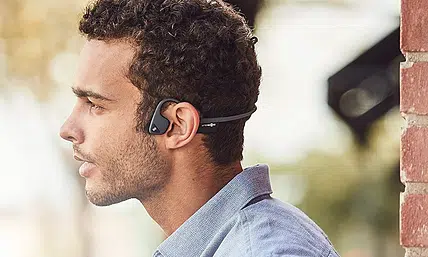
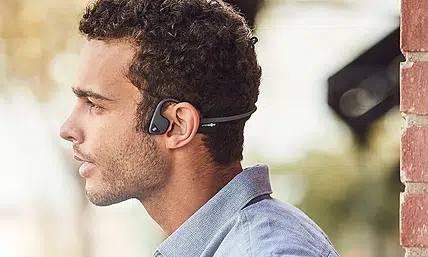
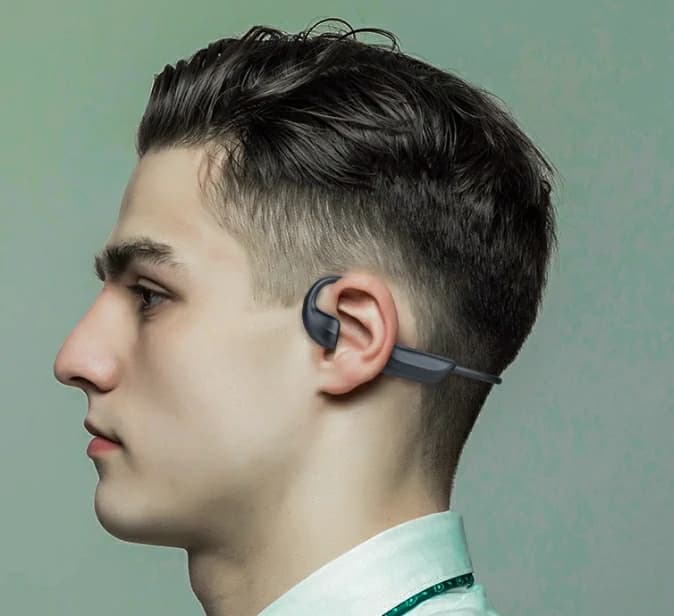
Bone conduction headphones use small transducers that rest against the cheekbones, usually just in front of the ears. These transducers create gentle vibrations. The vibrations travel through the bones of the skull and reach the inner ear, where the brain processes them as sound.
Traditional headphones send sound through the air. Bone conduction headphones take a different path:
- The audio signal reaches the headphone transducer.
- The transducer vibrates against the side of your head.
- The vibration travels through bone to the cochlea.
- The cochlea changes the vibration into signals for the brain.
Your ear canal stays open. This is the main reason you can hear traffic, conversations, alarms, and other nearby sounds while listening to music.
The open design also explains why others can sometimes hear your music. Sound energy does not stay entirely inside your head. Some vibration moves through the air from the transducer, your skin, and the surrounding frame.
Can Others Hear Your Music With Bone Conduction Headphones?
Yes, others can hear your music with bone conduction headphones. The amount they hear depends on several factors, including your volume, headphone fit, music type, and the distance between you and another person.
At a low or moderate volume, leakage may be hard to notice in a busy place. In a quiet room, however, someone sitting close to you may hear a faint version of your music. It may sound like a tiny speaker or a soft, distant whisper.
Others are more likely to hear your music when:
• The volume is near maximum
• The headphones sit loosely against your head
• The music has strong treble or sharp vocals
• You are in a quiet library, office, or bedroom
• The listener is within a few feet of you
• The headphones have powerful transducers
• You wear glasses, a hat, or hair that changes the fit
So, can others hear your music with bone conduction headphones in every situation? No. Leakage is not constant. In many daily settings, people will not notice it. Still, these headphones cannot provide the same level of privacy as well-sealed in-ear or over-ear models.
How Much Sound Leakage Should You Expect?
There is no single leakage level for every bone conduction headset. Brands use different transducers, frame designs, cushions, and power systems. Your listening habits also have a major effect.
At a normal volume, a nearby person may hear little or nothing in a loud coffee shop. In a silent office, that same person may notice a faint beat. At a high volume, the sound can become clear enough for someone beside you to identify the song.
A simple way to think about leakage is this:
• Quiet room and low volume: Little leakage
• Quiet room and medium volume: Possible faint leakage
• Quiet room and high volume: Noticeable leakage
• Busy street and medium volume: Usually difficult to hear
• Person sitting next to you: More likely to notice
• Person several feet away: Less likely to notice
The sound often becomes more noticeable during pauses in conversation. A listener may not hear the music clearly, but they may notice a soft buzz, beat, or melody.
Can others hear your music with bone conduction headphones from across a room? Usually not at a safe, moderate volume. Sound spreads and loses strength quickly, so distance helps reduce the problem.

Why Do Bone Conduction Headphones Leak Sound?
Sound leakage happens because bone conduction headphones are open and sit outside the ear. They do not create a closed chamber around the ear canal.
Several causes work together:
The transducer is exposed
The transducer must touch your head to transfer vibration. Because it is outside the ear, some of its energy also moves through the air. This airborne sound is what nearby people may hear.
The volume is too high
High volume creates stronger vibrations. It also increases the amount of sound that escapes into the air. Many people raise the volume when they are outside or near traffic, which can make leakage worse.
The fit is poor
A loose headset may not transfer sound efficiently through the bone. You may respond by increasing the volume. A poor fit can also make the transducer vibrate more freely, which may increase audible leakage.
Your surroundings are quiet
Noise masks sound leakage. In a busy gym, other sounds may cover the faint music. In a silent room, even a small amount of leakage can stand out.
The music contains sharp sounds
High-pitched instruments, cymbals, speech, and bright electronic sounds often leak more clearly than deep bass. This is because higher-frequency sound can be easier to notice in the air.

Bone Conduction Leakage Compared With Other Headphones
Bone conduction headphones are not the most private type of headphones. Their main benefit is awareness, not isolation.
Here is how common designs compare:
• Bone conduction headphones: Open, comfortable for awareness, but may leak sound
• Open-back headphones: Natural sound and airflow, but often leak more
• Closed-back headphones: Better privacy and stronger isolation
• In-ear headphones: Usually good privacy when sealed correctly
• Earbuds without a tight seal: Moderate leakage and limited isolation
• Noise-canceling headphones: Can reduce outside noise, but may still leak at high volume
In practical use, bone conduction headphones often leak less than large open-back headphones but more than sealed earbuds. The exact result depends on the product and volume.
Can others hear your music with bone conduction headphones more than with earbuds? Usually, yes, especially if the earbuds form a proper seal. Sealed earbuds keep more sound inside the ear canal. Bone conduction models leave the ears open by design.
That tradeoff is not a flaw. It is the feature that helps you hear a car horn, a coworker, or a public announcement.

When Bone Conduction Headphones Are a Good Choice
Bone conduction headphones work well when awareness matters more than complete privacy. They can be useful in settings where sealed headphones may block important sounds.
Common examples include:
• Outdoor running
• Cycling on familiar roads where local laws allow headphone use
• Walking in busy areas
• Working in an office while staying aware of coworkers
• Listening for announcements at an airport
• Wearing headphones with hearing aids or other ear devices
• Listening during light exercise
• People who dislike earbuds inside the ear canal
The open-ear design can feel more comfortable during long sessions. It may also reduce the warm, plugged-up feeling that some people experience with in-ear headphones.
Still, bone conduction headphones do not make outdoor listening automatically safe. You must keep the volume low enough to hear your surroundings. On roads, trails, or near vehicles, visual awareness and attention remain essential.

When They May Not Be the Best Option
Bone conduction headphones may be a poor fit when privacy, rich bass, or strong noise isolation matters most.
Consider another headphone type if you need to:
• Listen privately beside another person
• Work in a silent library
• Enjoy deep bass and detailed music
• Block aircraft, subway, or office noise
• Record or monitor audio
• Hear every detail in a professional music session
• Avoid disturbing someone who is sleeping
Audiobooks and podcasts often work well with bone conduction headphones. Music can also sound enjoyable, but it may feel less powerful than it does through sealed headphones. The open design gives up some bass and isolation in exchange for comfort and awareness.
This is an important expectation. Bone conduction headphones are not designed to replace studio headphones. They solve a different problem.

How to Reduce Sound Leakage
You cannot remove leakage completely, but you can reduce it with a few simple steps.
1. Lower the volume
Volume is the biggest factor you control. Start at a low level and increase it only until speech and music are clear. If people nearby can easily identify the song, the volume may be higher than necessary.
Lower volume also supports safer listening. The World Health Organization advises keeping personal audio exposure within safe limits, especially during long listening sessions.
2. Adjust the transducers
Place the transducers where the manufacturer recommends. They should rest firmly against the bone in front of your ears, not float beside your head.
A secure fit can improve clarity. You may then need less volume, which usually reduces leakage.
3. Choose the right band size
A loose frame may bounce during exercise. A frame that is too tight may cause pressure and discomfort. Select the correct size if the model offers different options.
4. Use music with less sharp treble
If privacy matters, music with strong cymbals or bright vocals may be more noticeable. Spoken audio and softer tracks often create less obvious leakage.
5. Create distance
Even a small increase in distance can help. If you are in a quiet office, avoid placing the transducers at maximum volume while sitting shoulder to shoulder with a coworker.
6. Test before using them in public
Play music at your normal setting. Ask a trusted person to sit one foot, three feet, and six feet away. Test in both a quiet room and a noisy place.
This test gives you a more useful answer than a product claim. Personal fit and listening habits can change the result.

A Practical Listening Test You Can Try
If you are wondering, “Can others hear your music with bone conduction headphones?” you can check in less than five minutes.
- Sit in a quiet room.
- Play a familiar song at your normal volume.
- Ask someone to stand beside you.
- Ask what they can hear.
- Repeat the test at a lower volume.
- Try speech, bass-heavy music, and bright music.
- Test the headphones after adjusting their position.
Do not ask only whether the person hears “something.” Ask whether they can identify the words, beat, or song. That gives you a clearer idea of how noticeable the leakage is.
A useful real-life lesson is that people often set the volume too high without noticing. This happens outdoors because traffic and wind compete with the music. Lowering the volume before leaving home can prevent that habit.
Another common mistake is assuming that open-ear means private. It does not. If you need private listening, use sealed earbuds or closed-back headphones instead.
Are Bone Conduction Headphones Safe for Your Hearing?
Bone conduction headphones still deliver sound to the cochlea. Your inner ear responds to sound energy whether that energy arrives through the air or through bone.
That means bone conduction headphones are not exempt from volume-related hearing risk. Listening too loudly for too long can contribute to temporary or permanent hearing damage.
Use these habits:
• Keep the volume as low as practical
• Take regular listening breaks
• Avoid raising the volume to cover every background sound
• Follow the manufacturer’s fit instructions
• Give your ears quiet time after long sessions
• Consider a hearing check if you notice ringing, muffled hearing, or pain
The National Institute for Occupational Safety and Health and other hearing health groups emphasize that exposure depends on both loudness and time. A moderate volume for a short period is not the same as a high volume for several hours.
Bone conduction headphones may help you stay aware of the environment, but they do not protect your hearing from loud music.
Are They Suitable for Shared Workplaces?
They can be, but courtesy matters. In a shared office, keep the volume low and check for leakage before playing music. Podcasts at a moderate level may be less noticeable than bright music with strong vocals.
Avoid using them during meetings unless your workplace allows it. Because the ears remain open, you may hear people more easily, but you can still become distracted.
If a coworker says they hear your music, do not assume the headphones are defective. Move the transducers, lower the volume, or switch to a more private model. A small adjustment often solves the issue.
In libraries, study rooms, and quiet trains, sealed earbuds are usually the better choice. They reduce the chance of disturbing others.
Benefits and Limitations at a Glance
Bone conduction headphones offer a clear set of benefits, but they also involve tradeoffs.
Benefits
• Keep the ear canals open
• Help you hear nearby sounds
• Feel comfortable for many users
• Work well for outdoor activity
• Can suit people who dislike in-ear tips
• Reduce the plugged-ear feeling
• Make it easy to hear speech and music together
Limitations
• Others may hear your music
• Bass may sound less powerful
• They provide little passive noise isolation
• Loud environments may force you to raise the volume
• They may not offer the best music detail
• Fit can vary from person to person
• They are not ideal for private listening
The best choice depends on your goal. If awareness and comfort come first, bone conduction may be a smart option. If privacy and sound quality come first, sealed headphones may work better.
Frequently Asked Questions About Can Others Hear Your Music With Bone Conduction Headphones
Can people hear bone conduction headphones from a distance?
Usually, people cannot hear them clearly from across a room at a safe listening volume. Leakage becomes more noticeable when someone is close, the room is quiet, or the volume is high.
Can others hear your music with bone conduction headphones in a quiet office?
Yes, they may hear a faint sound if they sit close to you. Lowering the volume and adjusting the transducers can reduce leakage, but it cannot guarantee complete privacy.
Are bone conduction headphones louder to other people than earbuds?
They can be. Properly sealed earbuds usually keep more sound inside the ear canal, while bone conduction headphones use exposed transducers near the ears.
How can I stop people from hearing my music?
Keep the volume moderate, make sure the transducers fit firmly, and test the headphones with another person. For complete privacy, choose sealed earbuds or closed-back headphones instead.
Do bone conduction headphones leak more at high volume?
Yes. Higher volume creates stronger vibrations and more airborne sound near the transducers. It also increases the chance of hearing damage during long listening sessions.
Can bone conduction headphones damage hearing?
They can still contribute to hearing damage if used too loudly or for too long. The open-ear design does not remove the need for safe volume levels and listening breaks.
Are bone conduction headphones good for phone calls?
They can work well for calls because your ears remain open to nearby sounds. Call quality depends on the microphones, wind noise, fit, and the environment around you.
Conclusion
Can others hear your music with bone conduction headphones? Yes, but the amount of leakage varies with volume, fit, music, distance, and background noise. At a moderate level, leakage may be barely noticeable. At a high level in a quiet space, nearby people may hear it clearly.
Bone conduction headphones are best when you want music or calls while staying aware of your surroundings. They are not the best choice for private listening or strong sound isolation. Keep the volume low, adjust the fit, and test the headphones before using them around others. If privacy matters most, explore sealed earbuds or closed-back headphones, and share your experience or questions in the comments.

Everett Ashford is a tech reviewer at mytechgrid.com specializing in SSDs, cameras, TVs, earbuds, headphones, and other consumer electronics. He provides honest, data-driven reviews based on hands-on testing and real-world performance analysis. Everett simplifies complex tech details to help readers make smart, confident buying decisions.