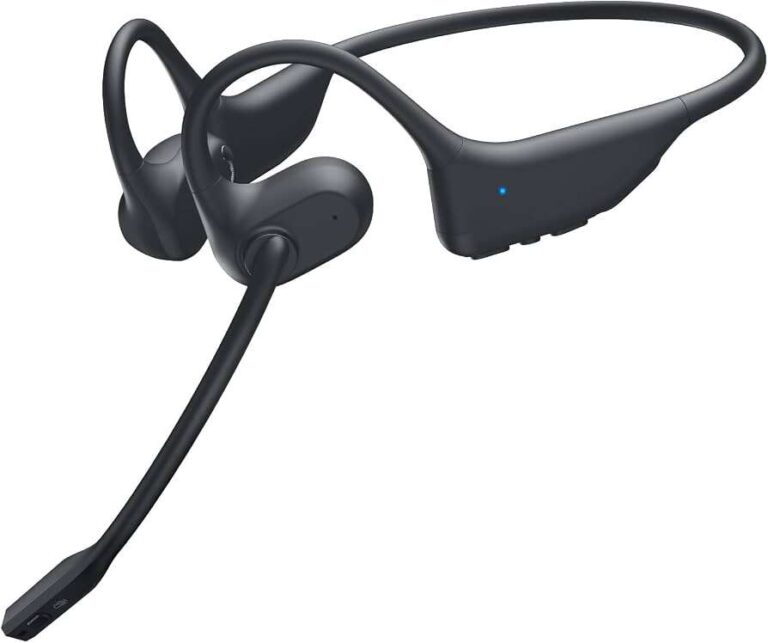
Open ear headphones let you hear music while staying aware of sounds around you.
If you have searched for what are open ear headphones, you are likely comparing comfort, safety, sound quality, and privacy. This guide explains how they work, how they differ from regular earbuds and open-back headphones, and when they make sense in daily life.
What Are Open Ear Headphones?
Open ear headphones are listening devices that play sound without fully blocking or sealing the ear canal. Instead of sitting inside your ears, they rest near the ear or use vibration through the bones around the ear.
This design lets outside sounds remain audible. You can listen to a podcast while hearing a car, a coworker, a doorbell, or a bicycle bell nearby.


The term includes several designs:
• Air conduction headphones use small speakers that direct sound toward your ears.
• Bone conduction headphones send vibrations through the cheekbones to the inner ear.
• Ear-hook models sit around the ear and keep the speaker just outside the ear canal.
• Clip-on models attach to the outer ear without using a traditional earbud tip.
Open ear headphones are not the same as open-back headphones. Open-back headphones still cover the ears, but their ear cups have vents that create a more natural sound. Open ear headphones leave the ear itself uncovered.


How Do Open Ear Headphones Work?
Open ear headphones work by sending sound through the air or through physical vibration.
Air conduction
Air conduction models use small speakers placed near the ear. The speaker sends sound toward the ear canal, much like a tiny external speaker.
Because the speaker does not form a seal, some audio energy escapes. This can reduce bass and detail in loud places, but it also allows you to hear your surroundings.
Bone conduction
Bone conduction headphones sit against the cheekbone, usually just in front of the ear. They create gentle vibrations that travel through the skull to the cochlea, the part of the inner ear that converts vibration into signals for the brain.
Your outer and middle ear play a smaller role in this process. However, bone conduction does not bypass the hearing system completely. It still depends on a healthy inner ear and auditory nerve.
Directional sound
Some newer open ear headphones use directional audio. This system aims sound toward the ear while limiting the amount that spreads outward.
Directional audio can improve privacy, but it does not make the headphones completely silent to people nearby. Volume, fit, room noise, and headphone design all affect sound leakage.
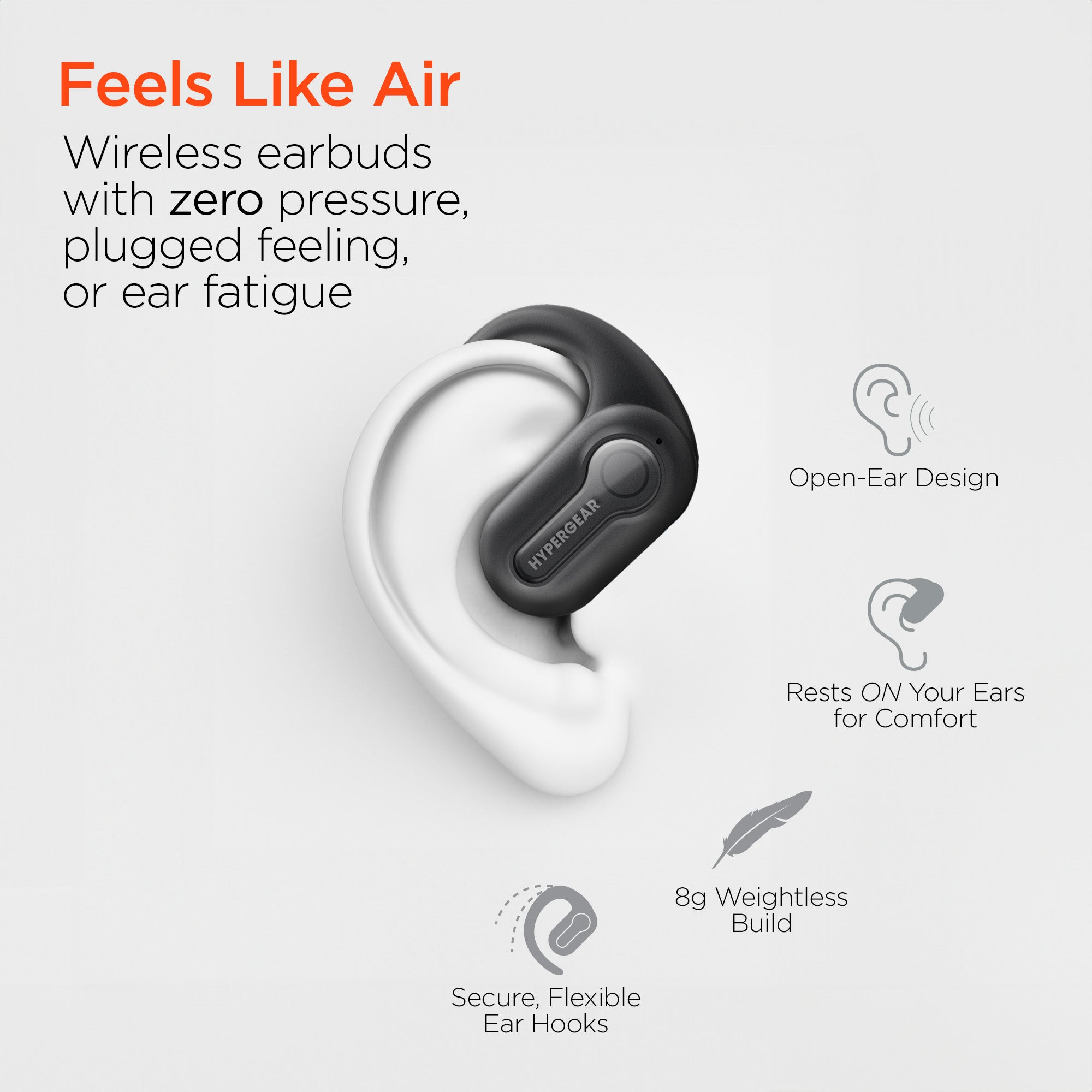
Open Ear Headphones vs. Traditional Earbuds
Traditional earbuds sit inside the ear canal or form a seal near its opening. Open ear headphones sit outside the canal, so each style creates a very different listening experience.
| Feature | Open ear headphones | Traditional earbuds |
|---|---|---|
| Ear canal | Stays open | Partly or fully covered |
| awareness | Usually higher | Usually lower |
| Noise isolation | Limited | Moderate to strong |
| Bass response | Often lighter | Usually stronger |
| Comfort | Good for some users | Can cause pressure for some users |
| Privacy | Limited | Usually better |
| Outdoor awareness | Strong advantage | May require transparency mode |
Open ear headphones can feel less tiring during long walks or work sessions. They also avoid the plugged-up feeling that some people get from sealed earbuds.
Earbuds usually perform better in airplanes, gyms, trains, and busy offices. Their seal helps block noise and gives music more impact.
Many people keep both types. They use open ear headphones for outdoor awareness and earbuds for travel, focused work, or private listening.
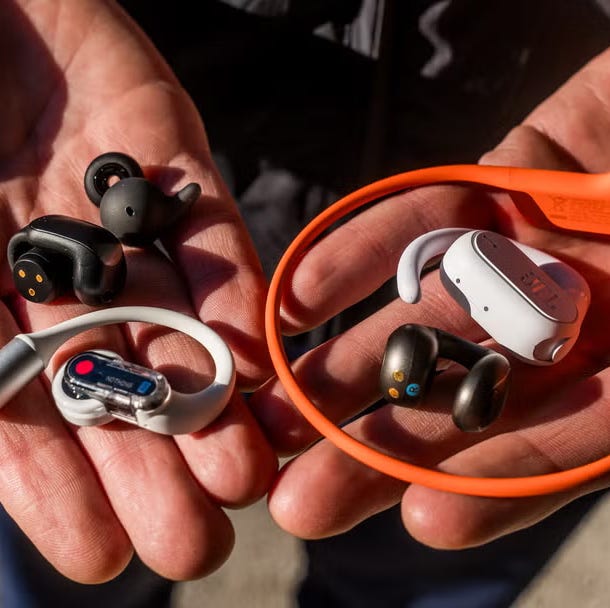
Open Ear Headphones vs. Open-Back Headphones
These names sound similar, but they describe different products.


Open-back headphones have ear cups that cover or surround your ears. Their backs contain vents or grilles that allow air to move through the ear cups. This can create a wide and natural soundstage.
Open ear headphones do not normally cover the ears. Their speakers sit outside the ear, or they use bone conduction.
The main differences include:
• Open-back headphones often deliver richer sound and stronger bass.
• Open ear headphones usually provide better awareness of nearby sounds.
• Open-back headphones leak a lot of audio and are best in quiet places.
• Open ear headphones are often lighter and better suited to movement.
• Neither design provides strong noise isolation.
If you want detailed music at a desk, open-back headphones may be the better choice. If you want to walk, cycle carefully, or work while staying alert, open ear headphones may fit your needs better.
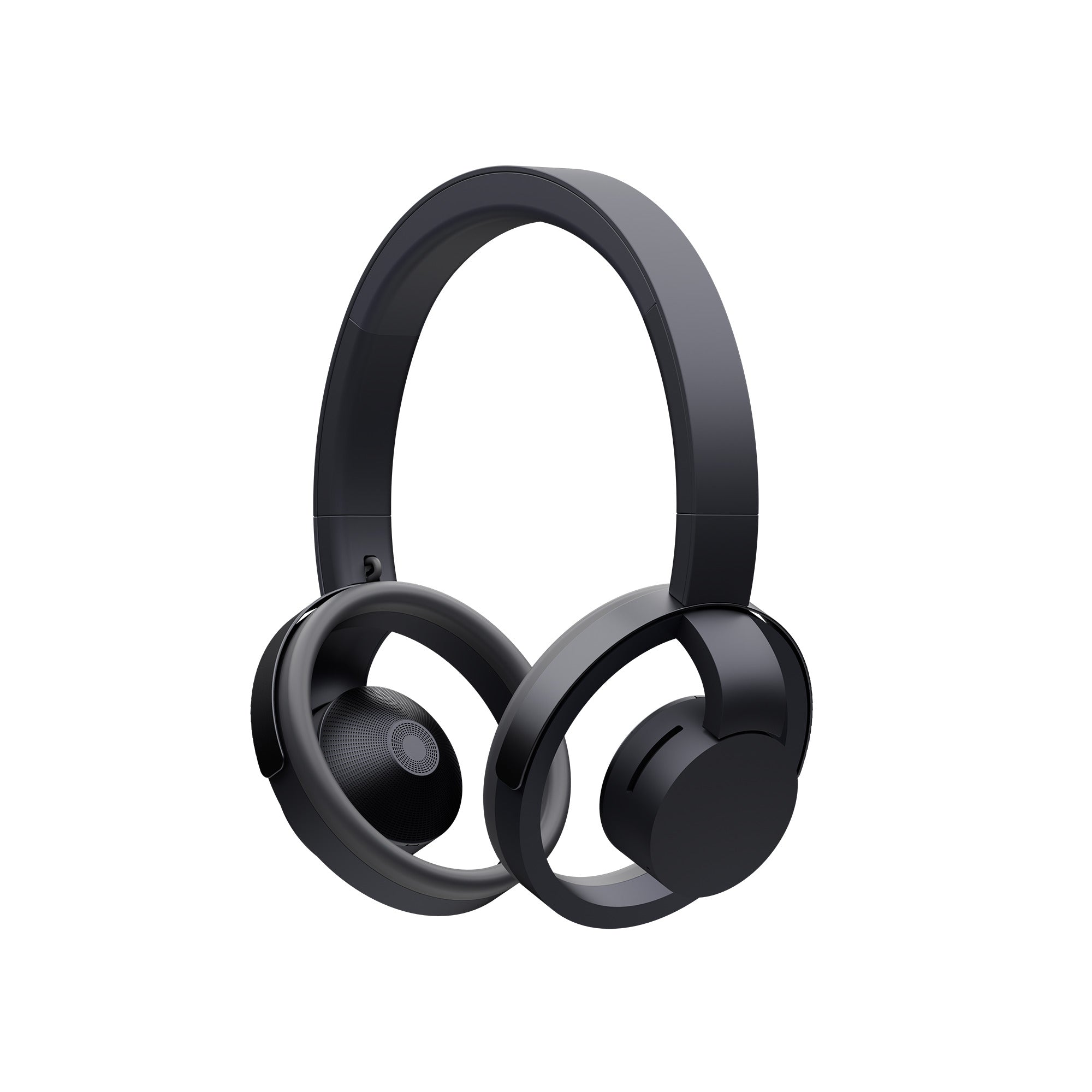
Benefits of Open Ear Headphones
The biggest benefit is awareness. You can enjoy audio without completely separating yourself from the world.
Better awareness outdoors
Open ear headphones allow you to hear traffic, people, alarms, and changes in your environment. This makes them useful for walking, running, commuting, and outdoor work.
They do not replace safe habits. You should still look both ways, follow traffic laws, and avoid using high volume near roads.
More comfortable for some listeners
Many people dislike the pressure or heat caused by in-ear earbuds. Open ear headphones avoid deep ear tips and may feel more comfortable during long sessions.
Comfort still depends on the frame, clamp, weight, and pressure point. A poorly shaped model can cause soreness behind the ears or along the cheekbone.


Useful for conversations
You can often speak with someone without removing the headphones. This is helpful at work, at home, or when ordering coffee.
The experience feels more natural because you are not switching between an isolated audio world and the room around you.
Helpful for people who dislike ear tips
Some listeners have small ear canals, sensitive skin, or trouble keeping earbuds in place. Open ear designs can solve those fit problems.
They are not a medical treatment, though. Anyone with hearing loss, pain, ringing, or dizziness should speak with a hearing professional.
Good for long, low-pressure listening
Open ear headphones can work well for podcasts, navigation, online meetings, and background music. They are less about total immersion and more about staying connected.

Limitations of Open Ear Headphones
Open ear headphones are not perfect. Their main strength, awareness, also creates their biggest weakness: outside noise remains part of the listening experience.
Limited bass and detail
Without a seal, low frequencies can sound lighter. In a noisy area, soft details may disappear under traffic, wind, or conversation.
Bone conduction models often have less traditional bass than sealed earbuds. Air conduction models may sound fuller, but they still cannot always match a good in-ear seal.
Sound leakage
People nearby may hear your music, especially at high volume. This can be distracting in a quiet office, library, airplane, or shared bedroom.
Directional speakers can reduce leakage, but no open design guarantees complete privacy.
Wind noise
Wind can hit the speaker or microphone and make music or calls harder to hear. This is common during running, cycling, and fast outdoor movement.
A secure fit and wind-reduction microphones can help, but they cannot remove the problem in every condition.
Lower performance in loud places
A busy subway or airport can overpower open ear audio. Raising the volume may make the sound clearer, but it can also increase hearing risk.
The National Institute for Occupational Safety and Health and other hearing experts recommend managing both sound level and exposure time. A simple rule is to use the lowest volume that lets you hear comfortably.


They may not stay secure for everyone
Ear-hook, clip-on, and band-style designs fit people differently. Hair, glasses, helmets, and face coverings can affect stability.
Try the headphones with the items you normally wear. A model that feels secure in a living room may move during a run.

Are Open Ear Headphones Safe?
Open ear headphones can be a safer choice for situational awareness, but they are not automatically safe for your hearing.
Hearing damage depends mainly on sound level, listening time, and repeated exposure. Because open ear headphones do not block noise, some users turn them up to compete with traffic or wind. That habit can cancel out the awareness benefit.
Use these practical habits:
• Keep the volume at the lowest comfortable level.
• Take regular listening breaks.
• Avoid using high volume to overpower traffic or machinery.
• Remove one side or pause audio when crossing roads or speaking with someone.
• Use hearing protection in loud work areas instead of relying on open ear headphones.
The World Health Organization promotes safe listening practices based on volume, duration, and recovery time. Your phone may also provide headphone exposure alerts or volume limits.
Open ear headphones can help you hear the environment, but they cannot tell you where a sound is coming from. Always use your eyes and remain alert.

Are Open Ear Headphones Good for Running and Cycling?
Open ear headphones are popular for running because they let athletes hear traffic, other runners, and changes in the path. They can also stay more secure than loose earbuds when the frame is designed for movement.
For cycling, the answer requires more care. Many places have rules about headphones, and some roads are too dangerous for any audio device. Check local laws and avoid blocking important environmental sounds.
When testing a pair for exercise, look for:
-
A stable fit that does not bounce.
-
Sweat or water resistance suitable for your activity.
-
Physical buttons that are easy to find.
-
Clear microphones for calls.
-
A battery that lasts longer than your usual workout.
-
Low wind noise.
-
A design that works with sunglasses, helmets, or hats.
A useful lesson from product testing is that comfort matters more than a long feature list. A headphone with perfect specifications is not useful if it shifts, pinches, or needs constant adjustment.

Are Open Ear Headphones Good for Work and Calls?
Open ear headphones can be excellent for office work, especially when you need to hear colleagues. You can listen to music at a low level and still notice someone speaking nearby.
Call quality depends more on the microphone system than on the speaker style. Multiple microphones may reduce some background noise, but strong wind, loud rooms, and nearby conversations can still affect your voice.
They work best for:
• Home offices
• Reception desks
• Light warehouse tasks
• Customer service areas
• Shared workspaces
• Online meetings in moderate noise
They are less useful in loud offices where you need clear speech from a meeting. In that setting, a headset with noise cancellation may provide better results.
During calls, check whether the microphone picks up sound leakage. Some models sound clear to you but transmit nearby noise to the other person.

What to Look for When Buying Open Ear Headphones
Choosing open ear headphones is easier when you focus on your daily use instead of marketing terms.
Fit and comfort
Check where the frame touches your head. It should feel stable without creating sharp pressure behind the ears or against the cheekbone.
If possible, wear the headphones for at least 20 minutes before deciding. Short store tests may not reveal pressure that appears later.
Sound quality
Listen for clear speech, balanced music, and enough volume for your normal environment. Do not judge a model only by bass. Strong bass often requires a seal that open designs do not provide.
Battery life
Think about your routine. A runner may need six hours, while a commuter or office worker may prefer a full day of use.
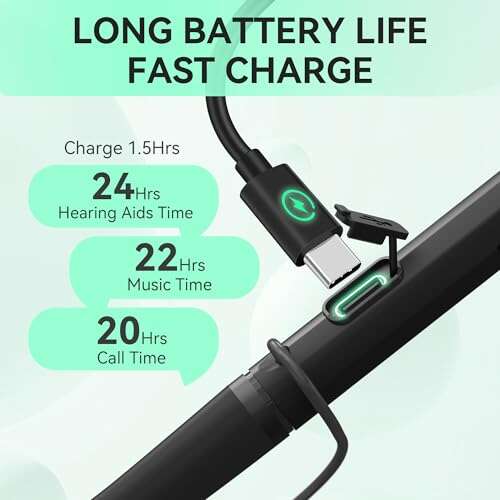
Fast charging can be valuable. Some models provide enough power for a short workout after a brief charge.
Water resistance
Sweat resistance is not the same as full waterproofing. Look for an IP rating and confirm what the rating covers.
For example, resistance to splashes does not always mean the headphones can handle swimming or heavy rain.
Controls
Physical buttons are often easier to use during exercise. Touch controls can work well, but sweat, hair, or hats may cause missed taps.
Bluetooth performance
Look for a stable connection, simple pairing, and support for the devices you use. Multipoint pairing is useful if you switch between a phone and a computer.
Microphone quality
Record a short voice note in a quiet room and outdoors if you can. This reveals more than a product description.
Privacy
If you work near other people, test sound leakage at your normal volume. Do not assume that directional audio makes the headphones private.
How to Use Open Ear Headphones Well
A few habits can improve comfort, safety, and sound.
-
Start at a low volume and increase it only when needed.
-
Position air conduction speakers near, but not directly inside, the ear opening.
-
Adjust the frame until it stays secure without pressing hard.
-
Keep microphones clear of hair, collars, and scarves.
-
Lower the volume near roads, construction, and crowds.
-
Pause audio when you need full attention.
-
Clean the contact points with a soft, dry cloth.
-
Store the headphones in a case to protect the frame and charging port.
-
Charge the device before long trips or workouts.
-
Replace the headphones if the battery swells, the frame cracks, or the sound becomes distorted.
One common mistake is choosing a volume level that sounds comfortable indoors and then keeping it unchanged outside. Noise changes quickly, so check the level often rather than turning it up automatically.
Who Should Use Open Ear Headphones?
Open ear headphones may be a strong fit for people who value awareness and comfort over complete isolation.
They are often useful for:
• Walkers and runners
• People who work in shared spaces
• Parents who need to hear children
• Office workers who move between tasks
• Listeners who dislike in-ear tips
• People who want light audio during outdoor activities
They may not be the best fit for:
• Frequent airplane travelers
• People who need strong noise isolation
• Listeners who want powerful bass
• Shared spaces that require privacy
• Loud industrial environments
• Anyone who needs medical-grade hearing support
The best choice depends on your setting. Open ear headphones are tools for a specific job, not a universal replacement for every type of headphone.
Frequently Asked Questions About What Are Open Ear Headphones
What are open ear headphones used for?
Open ear headphones are used for music, podcasts, calls, navigation, exercise, and background audio while keeping the ears open to outside sounds. They are especially useful when environmental awareness matters.
Do open ear headphones go in your ears?
Most open ear headphones do not go inside the ear canal. They sit near the ear, attach around the outer ear, or use bone conduction through the cheekbone.
Are open ear headphones better than earbuds?
Neither is better for everyone. Open ear headphones usually provide more awareness and less ear pressure, while earbuds often provide stronger bass, better privacy, and more noise isolation.
Can people hear your music with open ear headphones?
They may hear some sound, particularly when you use a high volume in a quiet room. Directional designs can reduce leakage, but open ear headphones are not completely private.
Are bone conduction headphones the same as open ear headphones?
Bone conduction headphones are one type of open ear headphone. They send vibrations through the cheekbone, while air conduction models send sound through the air from a speaker near the ear.
Are open ear headphones safe for hearing?
They can support safer awareness outdoors, but they can still harm hearing if used too loudly for too long. Keep the volume low, take breaks, and avoid using them to overpower loud surroundings.
Conclusion
Open ear headphones let you listen without sealing your ear canals. Their main strengths are comfort, awareness, and easy use during walks, workouts, work, and daily tasks. Their tradeoffs include sound leakage, weaker bass, wind noise, and limited performance in loud places.
Choose a model based on fit, volume control, microphone quality, water resistance, and your normal environment. If awareness matters most, open ear headphones may be an excellent option; if privacy and deep bass matter more, traditional earbuds may serve you better.
Try them at your usual volume and with the gear you normally wear. Then explore more headphone guides, compare suitable models, and share your experience with open ear headphones.

Everett Ashford is a tech reviewer at mytechgrid.com specializing in SSDs, cameras, TVs, earbuds, headphones, and other consumer electronics. He provides honest, data-driven reviews based on hands-on testing and real-world performance analysis. Everett simplifies complex tech details to help readers make smart, confident buying decisions.