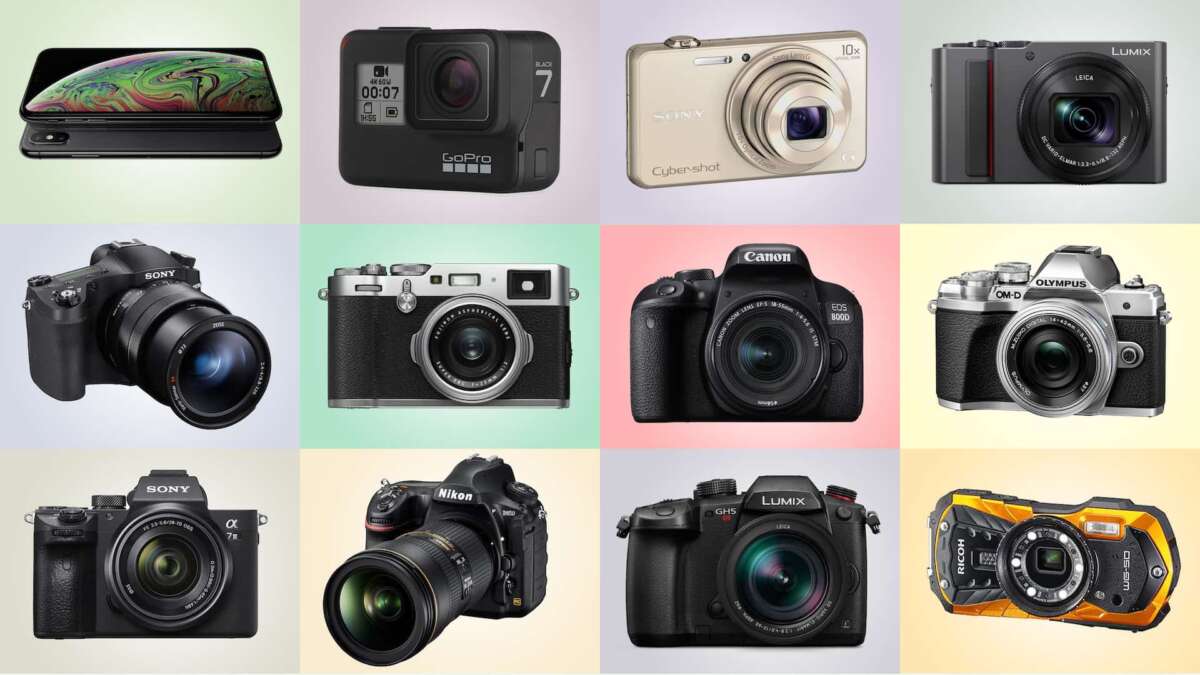
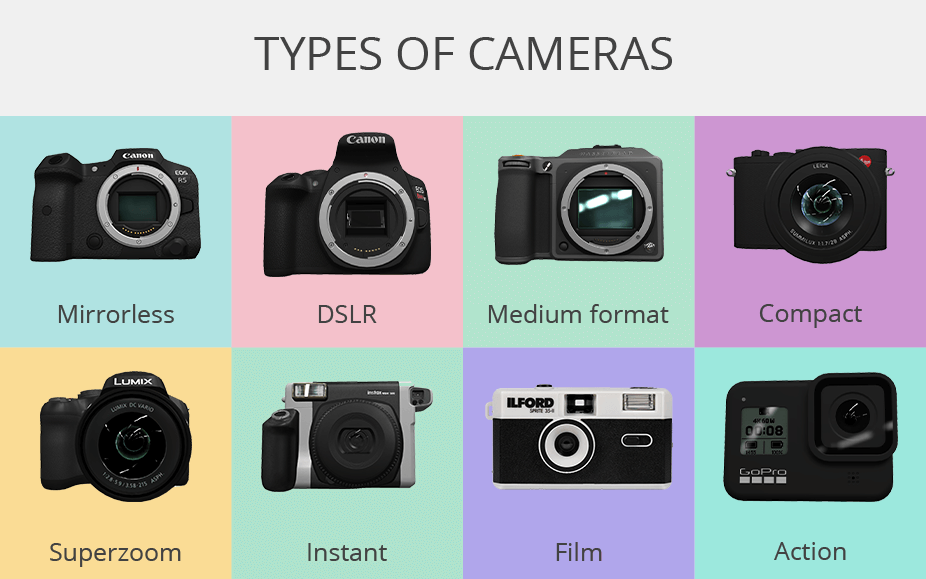
Digital cameras include compact, bridge, DSLR, mirrorless, action, 360-degree, medium-format, and smartphone cameras.
Knowing what are the different types of digital cameras helps you choose the right tool for travel, family photos, wildlife, video, or professional work. Each camera type balances image quality, size, speed, lens choice, and price in a different way. I’ll explain those differences in simple terms, with practical tips that make your buying decision easier.

What Is a Digital Camera?
A digital camera captures images with an electronic image sensor instead of film. The sensor changes light into digital data, which the camera saves as a file such as JPEG or RAW.
Most digital cameras use either a CMOS or stacked CMOS sensor. Sensor size affects image quality, low-light performance, background blur, and camera size. Larger sensors usually collect more light, but they also increase the size and cost of the camera.
Digital cameras may have a fixed lens or an interchangeable lens. A fixed-lens camera keeps its lens attached, while an interchangeable-lens camera lets you use wide-angle, telephoto, macro, and specialty lenses.
When people ask what are the different types of digital cameras, they often mean the main camera designs available today. These designs include compact cameras, bridge cameras, DSLRs, mirrorless cameras, action cameras, 360-degree cameras, medium-format cameras, and camera phones.

The Main Types of Digital Cameras
The best way to understand what are the different types of digital cameras is to compare how each one works and who should use it.
1. Compact digital cameras
Compact cameras are small, light, and easy to carry. They usually have a built-in lens that cannot be removed. Many models use a one-inch sensor, while basic models may use a smaller sensor.
Compact cameras are useful for:
• Travel photography
• Family events
• Street photography
• Everyday snapshots
• Simple video recording
Premium compact cameras can produce excellent photos. Some offer large apertures, manual controls, RAW capture, and long zoom ranges. They can fit in a jacket pocket while offering more control than most basic point-and-shoot cameras.
The main limitation is the fixed lens. You cannot replace it with a longer wildlife lens or a wide macro lens. Small sensors in cheaper models may also show more noise in dark scenes.
2. Bridge cameras
Bridge cameras sit between compact cameras and interchangeable-lens cameras. They usually have a fixed lens with a very wide zoom range. Some models can zoom from a wide landscape view to a tight view of the moon or a distant bird.
Bridge cameras are a good choice for people who want reach without buying several lenses. They often include an electronic viewfinder, manual exposure controls, image stabilization, and strong video features.
Their large zoom range is also their weakness. The lens may not be as bright as a dedicated lens, especially at the long end of the zoom. Most bridge cameras also use smaller sensors than DSLRs and mirrorless cameras.
A bridge camera is like a Swiss Army knife. It can handle many tasks, but a specialist tool may perform better in a demanding situation.
3. DSLR cameras
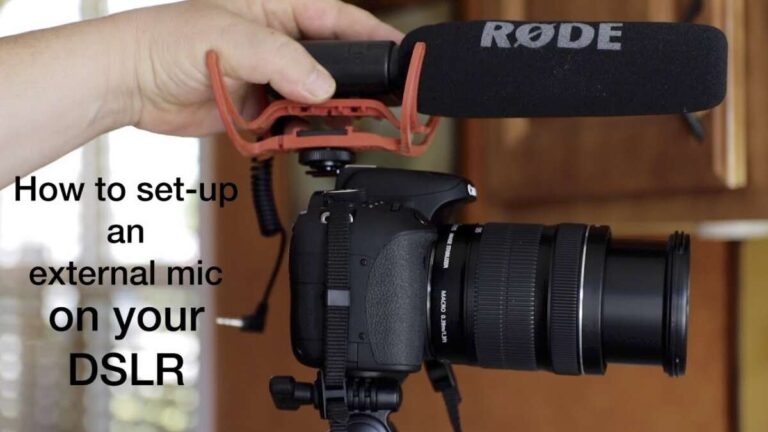
DSLR stands for digital single-lens reflex. A DSLR uses a mirror and prism system to send light from the lens to an optical viewfinder. When you press the shutter button, the mirror moves so light can reach the sensor.
DSLR cameras became popular because they offered strong image quality, fast performance, reliable autofocus, and interchangeable lenses. They are still useful for portraits, sports, wildlife, weddings, and studio work.
DSLR advantages include:
• Clear optical viewfinders
• Long battery life
• Large lens collections
• Strong hand grip
• Excellent used-market value
• Reliable controls for advanced users
The main drawbacks are weight, size, and slower development compared with newer mirrorless systems. Many companies now focus more of their research on mirrorless cameras, although DSLRs remain capable and affordable.
4. Mirrorless cameras
Mirrorless cameras do not use the mirror and optical prism found in a DSLR. Light travels directly to the image sensor. The camera then displays a live preview on the rear screen or electronic viewfinder.
Mirrorless cameras range from small entry-level models to high-end professional bodies. They are available with Micro Four Thirds, APS-C, full-frame, and medium-format sensors.
Key benefits include:
• Smaller bodies in many systems
• Electronic viewfinders
• Real-time exposure previews
• Advanced face and eye detection
• Fast electronic shutters
• Strong video performance
• Silent shooting modes
A mirrorless camera can show how bright or dark the final photo will look before you take it. This is helpful for beginners because the viewfinder acts like a live lesson in exposure.
The drawbacks include shorter battery life on some models, menu complexity, and the high cost of modern lenses. Electronic viewfinders also use power, though they provide useful information such as histograms, focus peaking, and exposure warnings.
5. Action cameras
Action cameras are small, rugged digital cameras made for movement and outdoor use. They often include waterproof housings, wide-angle lenses, strong stabilization, and simple controls.
Action cameras work well for:
• Cycling
• Hiking
• Surfing
• Skiing
• Motorcycle trips
• Family adventures
• Behind-the-scenes video
They are easy to mount on helmets, cars, bikes, and chest harnesses. Their wide lens captures a large view and helps keep fast action in the frame.
The small sensor limits image quality in low light. The wide lens can also make people and objects near the edge look stretched. Action cameras are best for movement and video, not for soft portraits or professional low-light photography.
6. 360-degree cameras
A 360-degree camera uses two or more lenses to record a view in every direction. The camera combines those images into a spherical photo or video.
You can use 360-degree cameras for:
• Virtual tours
• Real estate
• Travel videos
• Adventure footage
• Immersive social media content
• Creative camera movements
One useful feature is reframing. You can record everything first and choose the viewing direction later. This reduces the chance of missing an important moment.
The image must be stitched from multiple lenses, so nearby objects may show stitching errors. 360-degree video can also require more editing, storage, and processing power than standard video.
7. Medium-format digital cameras
Medium-format cameras use sensors larger than full-frame sensors. They are designed for photographers who need exceptional detail, smooth tones, and strong control over depth of field.
Medium-format cameras are common in:
• Commercial photography
• Fashion photography
• Fine-art work
• High-end portraits
• Landscape photography
• Product campaigns
A larger sensor can produce rich tonal transitions and a distinctive depth-of-field effect. However, medium-format systems are often expensive, heavy, and slower than sports-focused full-frame cameras.
They are not automatically better for every situation. A professional wildlife photographer may prefer a smaller, faster camera with a lighter telephoto lens. The right choice depends on the subject, not just sensor size.
8. Smartphone cameras
Smartphones are digital cameras built into mobile phones. They use small sensors and tiny lenses, but modern phones rely heavily on computational photography.
Computational photography combines multiple frames, software processing, HDR, noise reduction, and machine learning. This lets a phone create bright, detailed images in situations that once required a larger camera.
Smartphone cameras are ideal for:
• Quick daily photos
• Social media
• Scanning documents
• Family memories
• Travel notes
• Instant sharing
Their limitations include small physical controls, less natural background blur, limited optical zoom, and reduced quality when the image is heavily cropped. Still, the best camera is often the one you have with you, and smartphones win that contest for many people.
Digital Camera Types by Lens and Sensor
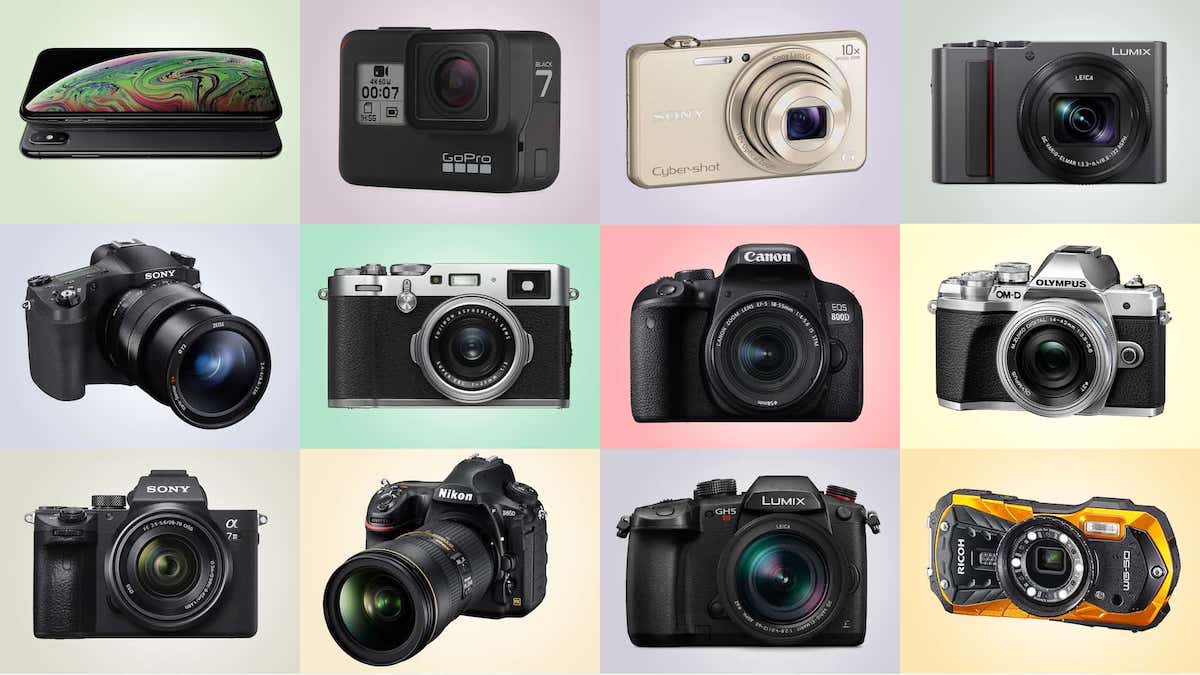
Another useful way to understand what are the different types of digital cameras is to group them by lens design and sensor format.
Fixed-lens cameras
A fixed-lens camera has a built-in lens. Compact, bridge, action, 360-degree, and smartphone cameras usually belong to this group.
Fixed-lens cameras are simple because you do not need to choose, clean, or carry extra lenses. Their lens is matched to the camera body, which can improve portability and ease of use.
Interchangeable-lens cameras
DSLRs and mirrorless cameras use interchangeable lenses. You can select a lens based on the subject:
• Wide-angle lenses suit landscapes, buildings, and interiors.
• Standard lenses work well for travel and everyday scenes.
• Telephoto lenses help with wildlife, sports, and distant subjects.
• Macro lenses reveal small details.
• Fast prime lenses create strong background blur.
Interchangeable-lens cameras offer more creative control, but the system costs more. The camera body is only one part of the investment. Lenses, batteries, memory cards, bags, and flashes can add up quickly.
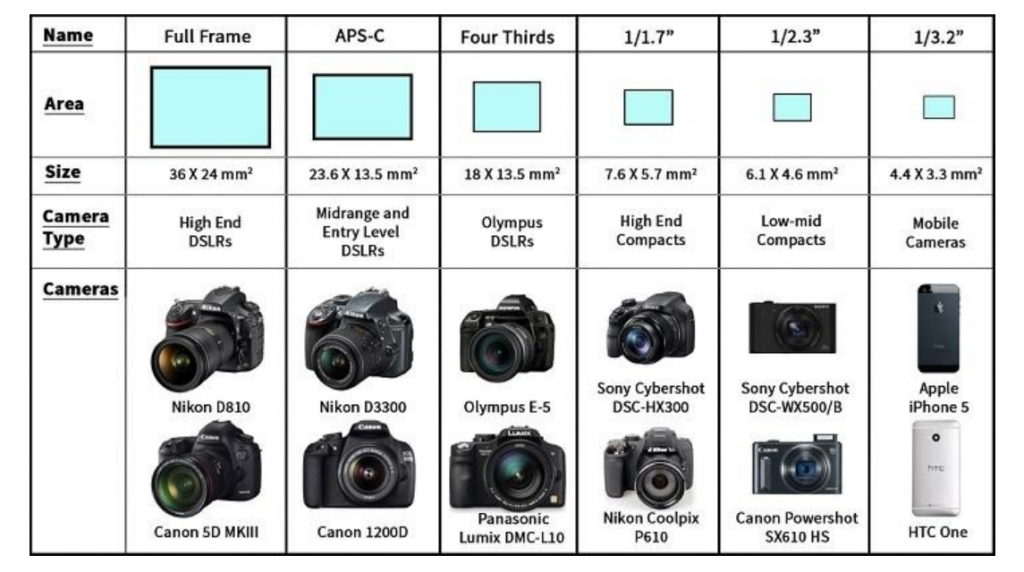
Common sensor sizes
Sensor size is one of the most important technical differences among digital cameras.
• Full-frame sensors measure about 36 by 24 millimeters.
• APS-C sensors are smaller and often provide a useful balance of size, price, and quality.
• Micro Four Thirds sensors are smaller but support compact camera bodies and lenses.
• One-inch sensors are common in premium compact and bridge cameras.
• Medium-format sensors are larger than full-frame sensors.
A larger sensor generally offers better low-light performance and more control over background blur. A smaller sensor can make a camera lighter and can provide more apparent depth of field, which helps in wildlife and travel photography.

How Different Digital Cameras Compare
The following comparison gives a quick view of what are the different types of digital cameras and their main strengths.
| Camera type | Main strength | Common limitation | Best for |
|---|---|---|---|
| Compact | Small size | Fixed lens and small sensor | Travel and daily use |
| Bridge | Huge zoom range | Smaller sensor | Birds, travel, and general use |
| DSLR | Battery life and lens choice | Large and heavy | Portraits, sports, and events |
| Mirrorless | Modern autofocus and video | Battery use and cost | Enthusiasts and professionals |
| Action | Tough design and stabilization | Weak low-light quality | Outdoor action |
| 360-degree | Captures every direction | Stitching and editing needs | Immersive content |
| Medium format | Detail and tonal quality | High cost and weight | Commercial and fine-art work |
| Smartphone | Convenience and software | Limited sensor and controls | Everyday photos and sharing |
No camera type wins in every category. A compact camera may be better than a professional body when you need to travel light. A smartphone may be more useful than an expensive camera if speed and convenience matter most.
How to Choose the Right Digital Camera
Choosing among what are the different types of digital cameras starts with your real needs. Do not begin with megapixels alone. A camera is a tool, and the best tool depends on the job.
Consider your main subject
Think about what you photograph most.
• For family photos, a smartphone, compact camera, or entry-level mirrorless camera may work well.
• For wildlife, choose a camera with fast autofocus and a compatible telephoto lens.
• For sports, look for fast burst rates, low shutter lag, and reliable subject tracking.
• For portraits, consider a large sensor and a bright prime lens.
• For travel, balance image quality with weight and battery life.
• For video, check stabilization, microphone support, recording limits, and autofocus.
Think about size and weight
A heavy camera may stay at home. That is an important lesson many new buyers learn after purchasing a large kit.
I have found that a smaller camera carried every day often produces more useful photos than a powerful camera left in a closet. Before buying, hold the camera with its lens attached. Check whether the grip feels secure and whether the controls are easy to reach.
Set a complete budget
The body is not the entire cost. Include the following items:
• One or two lenses
• Extra batteries
• Memory cards
• A camera bag
• A protective filter
• A tripod, if needed
• Backup storage
A modest camera with a good lens often produces better results than an expensive body paired with a poor or unsuitable lens.
Check autofocus and stabilization
Modern autofocus can detect faces, eyes, animals, vehicles, and aircraft. These features are useful, but they do not replace good technique.
Image stabilization helps reduce blur caused by hand movement. It cannot freeze a moving child, athlete, or bird. For moving subjects, you still need a fast shutter speed.
Decide whether you need RAW files
JPEG files are processed inside the camera and are ready to share. RAW files preserve more image data and give you greater control during editing.
RAW files are useful for difficult light, professional work, and serious editing. They take more storage and require software such as Adobe Lightroom, Capture One, or another RAW editor.
Common Mistakes to Avoid
Learning what are the different types of digital cameras is helpful, but buying mistakes can still happen.
Buying based only on megapixels
More megapixels can provide more detail and cropping room. They do not guarantee better photos. Lens quality, lighting, focus, sensor performance, and technique matter just as much.
Choosing too much camera
A professional camera may have features you never use. Complex menus and heavy lenses can make photography less enjoyable.
Start with the features that solve your problems. You can always upgrade later when you understand what your current camera cannot do.
Ignoring lenses
A camera body affects performance, but the lens shapes the look of the image. A bright 50mm or 35mm prime lens can teach composition and low-light technique while producing beautiful background blur.
Using digital zoom too often
Optical zoom changes the lens magnification. Digital zoom crops or enlarges the image through software. It may be useful for quick sharing, but it usually reduces detail.
Forgetting storage and backups
Memory cards can fail, and phones can be lost. Keep at least two copies of important photos. For valuable work, use a local drive and a separate cloud or off-site backup.
Practical Tips for Better Digital Camera Photos
The camera is only one part of the result. Good light, timing, and composition often matter more than price.
-
Learn the exposure triangle. Aperture controls light and depth of field. Shutter speed controls motion. ISO controls sensor sensitivity and image brightness.
-
Watch your shutter speed. If the subject moves, use a faster shutter speed. If the camera moves in your hands, stabilization or a tripod may help.
-
Focus on the nearest eye in a portrait. Sharp eyes make a photo feel alive.
-
Use light from a window. Soft window light can create flattering portraits without expensive equipment.
-
Keep the background simple. A clean background helps the subject stand out.
-
Review photos at full size. Small camera screens can hide missed focus and motion blur.
-
Practice one feature at a time. Try aperture priority this week, then manual focus or exposure compensation next week.
One mistake I often see is chasing gear instead of practice. A new camera can inspire you, but it cannot replace time spent observing light and making deliberate images.

Are Digital Cameras Still Worth Buying?
Digital cameras remain valuable because they offer larger sensors, physical controls, longer lenses, better ergonomics, and more creative options than most smartphones.
However, not everyone needs one. A current smartphone may be enough for casual photos, online sharing, and family memories. A dedicated camera becomes more useful when you need fast action tracking, strong background blur, long optical reach, high-quality RAW files, or dependable controls.
The market also includes excellent used cameras. A two- or three-generation-old DSLR or mirrorless camera can produce outstanding images. Check the sensor, shutter count, battery condition, lens mount, ports, and return policy before buying used equipment.

Frequently Asked Questions About What Are the Different Types of Digital Cameras
What are the main types of digital cameras?
The main types include compact cameras, bridge cameras, DSLRs, mirrorless cameras, action cameras, 360-degree cameras, medium-format cameras, and smartphone cameras. They differ in sensor size, lens design, controls, durability, and intended use.
Which type of digital camera is best for beginners?
An entry-level mirrorless camera, compact camera, or modern smartphone can suit a beginner. Choose a model that feels comfortable, has simple automatic modes, and fits your budget for lenses and accessories.
Are mirrorless cameras better than DSLRs?
Mirrorless cameras usually offer newer autofocus, smaller designs, electronic viewfinders, and strong video features. DSLRs can provide longer battery life, optical viewfinders, and lower prices on the used market, so the better choice depends on your needs.
What type of digital camera is best for wildlife photography?
A mirrorless or DSLR camera with fast autofocus, a high burst rate, and a telephoto lens is usually best for wildlife. A bridge camera can also work well when you need a long zoom at a lower cost.
What type of camera takes the best photos?
There is no single camera that takes the best photos in every situation. A medium-format camera may offer excellent detail, while an action camera may produce better results during a fast outdoor activity.
Is a smartphone considered a digital camera?
Yes. A smartphone camera is a digital camera with a small sensor, built-in lenses, and software-based image processing. It is designed for convenience, fast sharing, and everyday photography.
Do more megapixels mean better image quality?
Not always. More megapixels can help with large prints and cropping, but lighting, lens quality, focus, sensor size, and image processing also affect the final image.
Conclusion
The different types of digital cameras serve different goals. Compact cameras favor portability, bridge cameras offer huge zoom ranges, DSLRs provide proven control, mirrorless cameras deliver modern performance, and action, 360-degree, medium-format, and smartphone cameras each solve specific problems.
Start by identifying your subjects, travel habits, budget, and need for lenses or video. Then handle a few cameras in person before buying. Explore trusted reviews, test your chosen camera in real conditions, and share your questions or experience in the comments.

Everett Ashford is a tech reviewer at mytechgrid.com specializing in SSDs, cameras, TVs, earbuds, headphones, and other consumer electronics. He provides honest, data-driven reviews based on hands-on testing and real-world performance analysis. Everett simplifies complex tech details to help readers make smart, confident buying decisions.