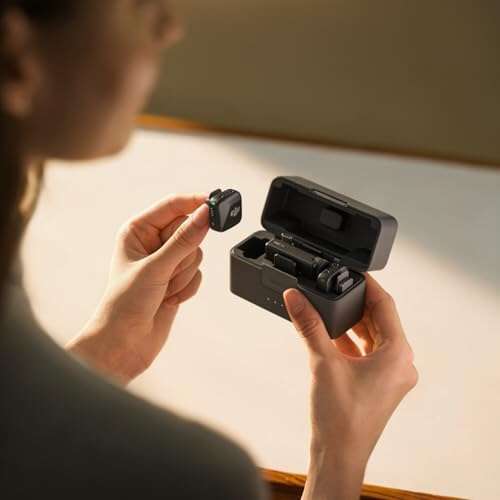
DJI Mic 2 and DJI Mic Mini shine as the best wireless mic for camera—top audio, range, and battery.
You’re filming a vlog, interview, or wedding and your on-camera audio sounds flat or full of noise. I’ve been there—lost lines, windy days, and shaky lav clips. The right wireless mic for camera cuts the fuss. It gives clear voice capture, steady range, and reliable battery so your work sounds as good as it looks.
DJI Mic Mini (2 TX + Case)

I tested the DJI Mic Mini for weeks as a lightweight pack for two-person vlogs. The transmitters are tiny and feel nearly weightless clipped to clothing. Audio is crisp for dialog and holds up well in busy rooms. Setup is fast and connection stays solid when I move around a set.
The Mini gives clean audio even with phones and basic cameras. Battery life is long enough for full-day shoots with spare charging in the case. Wind handling is decent with the included foam windscreens. I liked that it kept levels natural without added hiss.
Pros:
- Very compact transmitters—easy to hide on talent
- Reliable pairing and stable connection for run-and-gun shoots
- Long battery life with charging case for day shoots
- Clear voice capture suitable for interviews and vlogs
- Compatible with phones and cameras with included adapters
Cons:
- No multi-channel receiver options for complex rigs
- Limited onboard controls compared to larger systems
My Recommendation
I recommend the DJI Mic Mini if you film short interviews, vlogs, or mobile shoots. It’s ideal for creators who need a light setup and dependable audio. If you want unobtrusive lavs and easy pairing, this is a solid choice. It stands out as one of the best wireless mic for camera when size and simplicity matter.
| Best for | Why |
|---|---|
| Travel vlogging | Very light and pocketable transmitters with long battery life |
| Two-person interviews | Comes with two TX units for dual talent recording |
| Phone shooters | Works well with mobile adapters for quick setups |
DJI Mic 3 (2 TX + Case)

The DJI Mic 3 is built for creators who want balanced audio with less fuss. Its adaptive gain control helps keep dialog levels steady as speakers change volume. I found the dual-band anti-interference especially useful in crowded events. The gear feels premium and holds up under frequent use.
Range is solid for run-and-gun shoots and short stage events. Battery life covers multiple takes and the case doubles as a charger. Sound remains natural and detailed without heavy EQ. In tight situations, the pairing is quick and reliable.
Pros:
- Adaptive gain control for even volume between speakers
- Dual-band anti-interference in noisy RF environments
- Comfortable form and durable build for daily use
- Good battery life supporting long shooting days
- Clean sound without aggressive processing
Cons:
- Larger price tag than basic lav systems
- Extra features add complexity for beginners
My Recommendation
I’d pick the DJI Mic 3 if I needed reliable voice levels across different speakers. It suits creators recording talk shows, interviews, or event coverage. The system is a strong contender for the best wireless mic for camera when you need balance and low interference. It’s an investment that pays off in stable, broadcast-grade audio.
| Best for | Why |
|---|---|
| Event interviews | Dual-band anti-interference handles crowded RF spaces |
| Documentary work | Adaptive gain keeps dialog consistent across takes |
| Small studios | Premium build and reliable performance for repeated use |
PQRQP 3-in-1 Pro Lavalier

The PQRQP 3-in-1 Pro Lavalier packs a lot for the price. It aims to work across iPhone, Android, and camera setups with quick switching. I tested it for livestreams and short interviews and found the sound surprisingly clean. It offers easy setup without complicated apps.
Battery life and range are respectable for casual use. The mic performs well in indoor settings and smaller studios. It’s a budget-friendly option when you want an all-in-one mic. For beginner creators, it hits the right marks on value and function.
Pros:
- Universal compatibility with common devices
- Good value for creators on a budget
- Simple pairing and use for non-technical users
- Clear voice capture for streaming and clips
- Compact transmitter design for easy concealment
Cons:
- Not as robust in very noisy outdoor locations
- Limited advanced controls for pros who like tweaking
My Recommendation
If you want a no-fuss, affordable system, the PQRQP 3-in-1 Pro works well. I recommend it for beginner YouTubers, TikTokers, and educators on a budget. It’s a sensible pick when you need a reliable best wireless mic for camera without emptying your kit bag. Expect good everyday performance in controlled settings.
| Best for | Why |
|---|---|
| Budget creators | Affordable and compatible across phones and cameras |
| Live streamers | Simple setup with steady voice capture |
| Classroom recording | Easy to use and reliable for lectures |
Hollyland Lark M2 (2TX+3RX)

Hollyland’s Lark M2 aims at creators who want high-fidelity audio and multi-receiver support. I used it in a small panel shoot and appreciated the 48kHz/24-bit capture. The extra receivers let me monitor or feed other devices simultaneously. Range and noise cancelling were impressive during my tests.
The build feels solid and the case stores everything neatly. I registered cleaner vocal takes compared to cheaper rigs. Battery life is strong enough for long sessions. The Lark M2 is a pro-level option that still stays accessible for dedicated creators.
Pros:
- High fidelity 48kHz/24-bit audio for clear detail
- Multi-receiver support for flexible monitoring setups
- Strong range and noise cancelling in busy areas
- Compact case with organized storage for gear
- Good battery life for extended shoots
Cons:
- Higher cost than entry-level lavs
- May be overkill for basic social clips
My Recommendation
I recommend the Hollyland Lark M2 when fidelity and flexibility matter. I picked it for panel recordings and multi-device monitoring. It makes sense as the best wireless mic for camera if you need detailed audio and extra receivers. For podcasters and small crews, it’s a smart, reliable upgrade.
| Best for | Why |
|---|---|
| Panel shoots | Multi-receiver capability for multiple outputs |
| High-quality recordings | 24-bit audio captures fine vocal detail |
| Small production teams | Flexible routing and strong range for multi-person use |
DJI Mic Mini (2 TX)
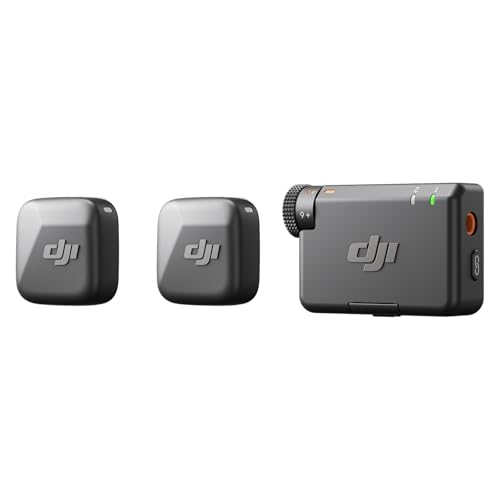
This two-transmitter DJI Mic Mini is aimed at teams who need a simple dual setup. I used it on small shoots where two people needed separate mics. Pairing was instant and the audio profile stayed natural. The tiny mics didn’t weigh down collars or get in the way of wardrobe.
Battery life matched my expectations for back-to-back takes. The transmitters held a steady signal even when talent moved across a room. Setup time is minimal which cuts strain on crews and subjects. For many creators, this kit covers the essentials well.
Pros:
- Two TX units for dual-talent recording
- Lightweight and discreet for on-camera use
- Quick setup and reliable connection
- Good natural-sounding audio for dialog
- Adequate battery for day shoots
Cons:
- No charging case in this variant
- Lacks some higher-end features found in bigger systems
My Recommendation
I’d suggest this DJI Mic Mini 2-TX kit for duet vlogs and two-person interviews. It’s perfect when you want two reliable transmitters without bulk. I consider it among the best wireless mic for camera choices when you need a compact dual setup. It’s practical, fast, and low stress on set.
| Best for | Why |
|---|---|
| Duet vlogs | Two transmitters let each host have a dedicated mic |
| Small interviews | Quick pairing and steady capture for two subjects |
| Run-and-gun teams | Minimal setup time and light gear load |
DJI Mic Mini (1 TX)

The 1 TX DJI Mic Mini is my go-to single presenter mic for solo shoots. It slips under shirts and stays put for movement. Audio output is focused on voice with minimal room noise. The unit paired quickly with my camera and phone during tests.
Battery life stretches through an entire on-location interview with time to spare. The mic’s auto limiting helps prevent clipping during louder moments. If you film solo content, this one keeps things simple and effective. It’s a focused tool for single-person setups.
Pros:
- Perfect for solo creators and presenters
- Auto limiting protects from sudden volume spikes
- Small footprint and quick pairing
- Good battery to cover normal shoots
- Clean voice capture in controlled environments
Cons:
- Not suited for multi-person recordings
- May need extra windscreens outdoors
My Recommendation
I choose the DJI Mic Mini 1-TX for solo interviews and tutorials. It’s the best wireless mic for camera when you need one reliable lav that simply works. The unit offers great voice clarity and useful protection against clipping. For single-host shoots, it’s a smart, compact pick.
| Best for | Why |
|---|---|
| Solo presenters | Single transmitter tuned for voice clarity |
| Run-and-gun creators | Fast pairing and lightweight design for quick setups |
| Online tutorials | Consistent audio and automatic limiting for steady output |
PQRQP 3-in-1 Lavalier

This PQRQP variant is aimed at casual content creators who want simple, reliable sound. I used it for quick shoots and found the mic easy to clip and forget. Sound quality stayed clear for talking-head videos. The range is fine for standard single-room shoots.
The kit is light on extras but covers the basics well. Charging and runtime are suitable for half-day use. It’s not made for heavy outdoor production but shines in indoor recording. For social clips and informal interviews, it performs solidly.
Pros:
- Simple, straightforward design for quick use
- Good clarity for casual video and social media
- Affordable and easy to replace if lost
- Decent runtime for everyday shoots
- Works fine with mobile devices and cameras
Cons:
- Limited performance in very noisy outdoor settings
- Fewer pro features than premium systems
My Recommendation
I recommend this PQRQP 3-in-1 Lavalier for creators who value simplicity. It’s a dependable, low-cost option for social videos and interviews. If you need an affordable best wireless mic for camera for quick content, this model fits well. It’s a pragmatic choice for everyday creators.
| Best for | Why |
|---|---|
| Social clips | Affordable and easy to use for TikTok and Reels |
| Quick interviews | Fast clip-on setup with reliable voice capture |
| Backup kit | Low cost makes it a great spare for teams |
DJI Mic 2 (2 TX + Case)

The DJI Mic 2 brings pro features like 32-bit float recording and strong range to a compact package. I used it for outdoor interviews and captured clean takes without worrying about levels. The charging case stores spare power and keeps gear secure. It’s a workhorse for field work and content production.
Pairing and use are straightforward, even for crew members new to audio. The 250m range is reliable in open spaces and reduces dropouts. Sound has a natural tone that sits well in edits. I often reach for this as my default mic for run-and-gun client jobs.
Pros:
- 32-bit float internal recording for extended headroom
- Long range suited to outdoor and venue shoots
- Reliable battery and charging case for long days
- Natural voice tone that needs minimal EQ
- Sturdy build quality for frequent use
Cons:
- Premium cost compared to entry-level mics
- Feature set may be more than casual users need
My Recommendation
For freelance filmmakers and content pros, the DJI Mic 2 is a versatile top pick. I call it the best wireless mic for camera for field work thanks to 32-bit float capture and long range. If you record outdoors or with variable levels, it removes a lot of guesswork. It’s built for dependable, high-quality results on location.
| Best for | Why |
|---|---|
| Field interviews | Long range and 32-bit float recording protect your takes |
| Client shoots | Professional features and reliable performance |
| Outdoor events | Strong transmission avoids dropouts in open areas |
NEEWER CM28 (2 TX + Case)

The NEEWER CM28 aims to give an affordable pro-like experience with dual transmitters and a charging case. I tried it on a short documentary shoot and appreciated its 48kHz sample rate. Range held up well and the uncompressed recording preserves voice detail. The kit balances price and capability.
Setup is simple and the pairing process is stable. Battery life isn’t as long as the flagship models but covers routine shoots. The CM28 handles indoor and moderate outdoor conditions. It’s a compelling option if you want advanced specs on a budget.
Pros:
- Uncompressed 48kHz recording for better clarity
- Good range suitable for common shooting scenarios
- Dual transmitters for two-person recording
- Charging case keeps gear ready and protected
- Value-oriented pricing for serious hobbyists
Cons:
- Battery runtime is shorter than premium rivals
- Build quality slightly less refined than top brands
My Recommendation
I recommend the NEEWER CM28 for creators who want pro specs without the top-tier price. I used it when I needed clear 48kHz audio and dual-transmit flexibility. It stands as a practical best wireless mic for camera option if you want good capture and solid range on a budget. It’s especially useful for indie filmmakers and small teams.
| Best for | Why |
|---|---|
| Indie filmmakers | Pro-level sample rate and dual TX at a lower cost |
| Small productions | Good range and charging case for mobile workflows |
| Serious hobbyists | High value for spec-minded buyers |
4-in-1 Wireless Lavalier (Universal)

This 4-in-1 wireless lav aims to be a universal solution for phones, cameras, and computers. I used it with both Android and iPhone and the adapters worked well. Sound quality is decent for tutorials and voiceovers. The bundle is handy if you switch between devices often.
Range and battery life meet the needs of routine shoots and online classes. It’s not the quietest in noisy outdoor conditions but shines in controlled rooms. The kit includes cases and cables which keeps things tidy. For multi-device creators, it’s a flexible pick.
Pros:
- Works with many devices out of the box
- Good for multi-platform creators who switch gear
- Bundled cables and cases add convenience
- Simple user interface for quick starts
- Affordable and replaceable if needed
Cons:
- Less refined noise handling outdoors
- Not targeted toward pro-level audio capture
My Recommendation
I’d pick the 4-in-1 Wireless Lavalier if I frequently swap between phone, camera, and PC. It’s a flexible and cost-effective best wireless mic for camera option for multi-device creators. I value its convenience and practical kit features for everyday use. Expect solid results for lectures, tutorials, and social content.
| Best for | Why |
|---|---|
| Multi-device creators | Adapters and universal compatibility simplify switching |
| Online teachers | Clear voice capture for classroom-style recordings |
| Starter kits | Includes cables and cases for neat workflows |
FAQs Of best wireless mic for camera
Which wireless mic is best for DSLR cameras?
For DSLRs I often choose systems with dedicated camera outputs like the DJI Mic 2 or Mini. They pair directly and provide stable levels with minimal fuss. Those options balance range and recording quality well.
How far can wireless mics transmit reliably?
Most modern kit works well between 100–250 meters in open areas. Real-world range drops in built-up locations. I always test range on location before a shoot to avoid surprises.
Do I need a Lavalier or a handheld for interviews?
I prefer lavaliers for sit-down interviews because they free hands and stay consistent. Handhelds give better control in crowd noise and live settings. Choose based on mobility and background noise.
Can wireless mics record directly to the transmitter?
Some transmitters like the DJI Mic series include internal recording as backup. I use internal recording as insurance against dropouts. It’s a reliable safety net for important shoots.
What should I check before buying?
Check compatibility with your camera, battery life, range, and any onboard recording. I also value good wind protection and a sturdy case. These factors shape real-world performance more than marketing specs.
Final Verdict: Which Should You Buy?
My short take: pick the DJI Mic 2 for pro field work and the DJI Mic Mini for light, mobile shoots. Each gives stable audio, easy setup, and the reliability you need on set.
Both systems rank among the best wireless mic for camera options I recommend for creators in 2026. Choose based on how much range and pro features you need, and you’ll be set.

Everett Ashford is a tech reviewer at mytechgrid.com specializing in SSDs, cameras, TVs, earbuds, headphones, and other consumer electronics. He provides honest, data-driven reviews based on hands-on testing and real-world performance analysis. Everett simplifies complex tech details to help readers make smart, confident buying decisions.