The instant camera was invented in 1947, and the first Polaroid camera reached stores in 1948.
Understanding when the instant camera was invented reveals more than a date. It shows how Edwin H. Land turned a child’s simple question into a major change in photography. This guide explains the invention, the first camera, how instant film works, and why the idea still matters today.
When was the instant camera invented?
The instant camera was invented in 1947 by American inventor Edwin H. Land. He introduced the first working version, called the Land Camera, at a meeting of the Optical Society of America in New York City on February 21, 1947.
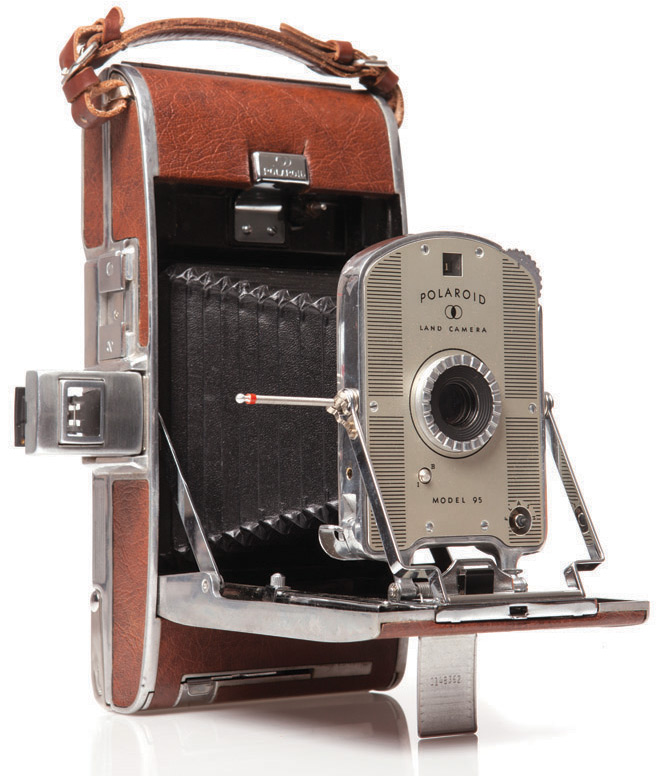
The camera was not sold to the public until November 1948. The first commercial model was the Model 95, made by Land’s company, Polaroid Corporation. It cost $89.75, which was a high price at the time.
This difference is important:
• 1947 was the year the instant camera was publicly demonstrated.
• 1948 was the year consumers could buy the first Polaroid instant camera.
So, when was the instant camera invented? The best short answer is 1947. When did people first buy one? The answer is 1948.

Who invented the instant camera?
Edwin Herbert Land invented the instant camera. He was a physicist, inventor, and business leader who founded Polaroid Corporation in 1937.
Land was already known for developing practical polarizing filters. These filters helped reduce glare in car headlights, sunglasses, cameras, and other products. His work in optics gave him the skills needed to develop instant photography.
The idea began with a family moment. In 1943, Land’s young daughter asked why she could not see a photograph right after it was taken. At that time, photographers had to wait for film to be processed in a darkroom. Land began thinking about a camera that could expose and develop a print in one unit.
That question helped shape the answer to when was the instant camera invented. It took several years of research, but Land and his team created a system that combined:
• A camera lens and shutter
• Light-sensitive film
• Developer chemicals
• A positive print layer
• A timed process for producing the image
Land did not simply make a faster camera. He created a new kind of photographic system.

How did the first instant camera work?
The first Polaroid camera used a special film pack. Each pack contained the materials needed to create a photograph inside the camera.
When someone pressed the shutter, the camera exposed the film. Rollers then pulled the exposed sheet out of the camera. As the sheet moved through the rollers, chemicals spread across the image area and started the development process.
After about one minute, the user could peel away the outer layer and see the finished print. This is why early Polaroid film was often called peel-apart film.
The process worked through several layers:
-
The camera exposed the negative material.
-
Rollers spread a chemical reagent over the film.
-
The image formed as the chemicals moved through the layers.
-
The user peeled the print away from the negative.
-
The photograph continued to stabilize after exposure.
This method removed the need for a traditional darkroom. It also made photography more social. People could take a picture, watch it appear, and share it within moments.
The chemistry was complex, but the experience felt simple. It was a bit like planting a seed and watching a picture grow in your hand.

A timeline of instant photography
The history of instant photography includes several key dates. Looking at the timeline makes it easier to understand when was the instant camera invented and how the technology developed.
1943: The idea takes shape
Edwin Land’s daughter asked why photographs could not be viewed immediately. Land later described this moment as an important source of inspiration for his research.
1947: The invention is demonstrated
Land showed the first instant camera system at the Optical Society of America meeting. The demonstration proved that a photograph could be taken and developed without a conventional darkroom.
1948: The first Polaroid camera goes on sale
Polaroid released the Model 95 at a department store in Boston. The first batch sold out quickly, showing strong public interest in instant photography.
1963: Color instant film appears
Polaroid introduced color instant photography with its instant color film. This made the format more attractive for family snapshots, travel, creative work, and commercial use.
1972: The SX-70 changes the format
The Polaroid SX-70 became one of the most important instant cameras in history. Unlike earlier peel-apart systems, it produced a finished photograph that developed in front of the user without requiring the print to be peeled away.
1980s and 1990s: Instant photography becomes mainstream
Instant cameras became common at parties, weddings, schools, vacations, and family events. The cameras were easy to use, though film costs and image quality limited some buyers.
2000s: Digital cameras create pressure
Digital cameras offered free previews, large storage, and easy sharing. As a result, instant photography declined for a time.
2010s to today: Instant cameras return
New products from Polaroid, Fujifilm, Kodak, and other brands helped renew interest. Many younger users enjoy instant prints because they feel physical, personal, and less disposable than digital images.
Why was the instant camera invented?
The instant camera was invented to shorten the wait between taking a photograph and seeing the result. Traditional film photography required chemical processing, printing, and often several hours or days of waiting.
Land wanted photography to feel immediate. His goal was not only speed. He also wanted to make photography easier for people who did not own a darkroom or understand film processing.
The invention solved several common problems:
• It reduced the delay after taking a picture.
• It removed the need for darkroom equipment.
• It let people check expressions and composition quickly.
• It created a physical print at the moment of capture.
• It made photography more engaging for families and casual users.
The first instant camera was especially useful for people who wanted a memory they could hold right away. This included travelers, parents, artists, police investigators, and business professionals.
Instant photography also helped people understand the connection between a camera and a finished image. With digital photography, a picture can remain hidden on a phone for years. An instant print demands attention. It becomes part of the room, a scrapbook, or a wallet.

How instant cameras changed photography
The invention of the instant camera changed photography in several lasting ways.
First, it made the photograph an object rather than only a negative or a file. People could write notes on the border, give prints to friends, or place them on a refrigerator.
Second, instant photography encouraged experimentation. Users could try unusual angles, double exposures, close-ups, and creative lighting. The result was visible almost at once.
Third, it made photography more social. At a party, an instant camera could move from person to person. Each picture became part of the event instead of a file that stayed on one person’s device.
Artists also used instant film in ways that went beyond family snapshots. Photographers explored:
• Collage
• Image transfer
• Emulsion lifting
• Double exposure
• Manipulation of the developing print
• Instant portrait studies
The format had flaws, including high film costs and limited sharpness. Yet those limits became part of its appeal. The soft colors, strong contrast, and unpredictable results gave instant photos a distinct visual style.

Instant cameras versus digital cameras
Instant cameras and digital cameras serve different needs. Neither is automatically better.
Digital cameras and smartphones are useful when you want:
• Many images at a low cost
• High resolution
• Easy editing
• Cloud storage
• Fast online sharing
Instant cameras are useful when you want:
• A physical print right away
• A slower and more thoughtful shooting process
• A personal gift
• A fun group activity
• A vintage look
• A record that cannot be edited instantly
A digital photo is like a message saved in the cloud. An instant photo is like a handwritten note. Both preserve a moment, but they create different experiences.
One practical lesson from using instant cameras is to slow down before pressing the shutter. Film is not free, and most instant cameras have limited control over focus and exposure. Check the light, ask people to hold still, and leave space around the subject.
Another common mistake is opening the film door in bright light. This can expose and ruin the remaining film. Keep the film pack sealed until you are ready to load it, and follow the camera maker’s instructions.

The benefits and limits of instant cameras
Instant cameras remain popular because they offer a clear and enjoyable experience. Still, they are not perfect.
Benefits
• Immediate physical prints
• Simple controls
• Strong social appeal
• No printer or computer required
• A fun way to document events
• A useful tool for creative experiments
Limitations
• Film can be expensive
• Prints are usually small
• Image quality may be lower than digital photography
• The film has an expiration date
• Exposure errors can be difficult to correct
• Some models perform poorly in dim light
• Prints may fade if stored in heat, humidity, or direct sunlight
Modern instant film is more reliable than early film, but it still needs care. Store unused packs in a cool, dry place. Avoid leaving film in a hot car. For long-term storage, keep prints away from strong sunlight and moisture.
When learning when was the instant camera invented, it is easy to focus only on the invention date. The bigger lesson is that every photographic tool involves trade-offs. Instant cameras exchange technical control for speed, touch, and emotion.
What to look for when buying an instant camera
If you want to try instant photography, choose a camera based on how you plan to use it.
Film format
Different cameras use different film sizes. Small formats are easy to carry and often cost less. Larger formats can create more impressive prints but may cost more per image.
Focus range
Some cameras work best for portraits, while others focus more easily on nearby objects. Check the minimum focus distance before buying if you plan to take selfies or close-up photos.
Flash and lighting
A built-in flash helps indoors, but it can create harsh light. For outdoor use, look for a camera with simple exposure control or a way to manage flash settings.
Film price
The camera may be affordable, but film is the ongoing cost. Compare the price per print before making a decision.
Reusable features
Some newer instant cameras include rechargeable batteries, self-timers, flash control, and smartphone printing. These features can make the camera more flexible, though they may reduce the simplicity that attracts people to instant photography.
A good first camera is one that matches your habits. If you attend parties, choose a simple model with easy film loading. If you enjoy art projects, consider a camera with manual controls or a film format that supports image manipulation.
Why instant cameras are popular again
The renewed interest in instant cameras is partly a response to digital overload. Many people take hundreds of phone photos but rarely print any of them.
An instant photograph creates a small moment of commitment. You have one frame, one exposure, and one print. That limit can make the image feel more meaningful.
The format also fits current interest in:
• Analog hobbies
• Scrapbooking
• Journaling
• Vintage design
• Handmade gifts
• Offline experiences
• Creative photography
The answer to when was the instant camera invented also helps explain this revival. The original goal was immediacy, but modern users often value the physical and imperfect nature of the result.
Instant cameras are not popular because they replace smartphones. They are popular because they offer something smartphones do not: a photograph you can hold before the moment has fully passed.
Frequently Asked Questions
When was the instant camera invented?
The instant camera was invented in 1947 by Edwin H. Land. The first commercial Polaroid camera, the Model 95, went on sale in 1948.
Who invented the first instant camera?
Edwin H. Land invented the first commercially successful instant camera system. He developed the technology through his company, Polaroid Corporation.
What was the first instant camera called?
The first commercial instant camera was called the Polaroid Land Camera Model 95. It used peel-apart film and produced a photograph in about one minute.
When did color instant photography begin?
Polaroid introduced color instant film in 1963. This helped instant photography expand beyond black-and-white family snapshots and technical uses.
How long did the first instant camera take to produce a photo?
The first Polaroid camera produced a visible print in roughly one minute. The exact development time could vary with temperature, film condition, and handling.
Are instant cameras still made today?
Yes. Companies such as Polaroid and Fujifilm still make instant cameras and film. Current models range from simple point-and-shoot cameras to hybrid cameras that combine digital features with instant printing.
Why are instant camera photos sometimes blurry?
Blur can result from low light, subject movement, camera shake, or incorrect focus distance. Holding the camera steady and using enough light can improve the image.
Conclusion
The instant camera was invented in 1947 by Edwin H. Land, while the first commercial Polaroid camera arrived in 1948. Its key innovation was simple but powerful: it allowed people to take a photograph and see a physical print within minutes.
The technology changed how families, artists, travelers, and professionals experienced photography. Today, instant cameras remain popular because they turn a digital-style moment into something real and touchable.
If you want to explore instant photography, start with a simple camera, learn the correct film format, and take time to understand light. Then share your best prints, try a creative project, and keep discovering how a small photograph can preserve a big moment.

Everett Ashford is a tech reviewer at mytechgrid.com specializing in SSDs, cameras, TVs, earbuds, headphones, and other consumer electronics. He provides honest, data-driven reviews based on hands-on testing and real-world performance analysis. Everett simplifies complex tech details to help readers make smart, confident buying decisions.