The first practical reel-based motion-picture camera appeared in 1888, created by inventor Louis Le Prince.
The question “when was the first reel camera invented” sounds simple, but the answer depends on what “reel camera” means. Early film history includes several key steps: photographic sequences, flexible film, film reels, and cameras that could capture moving images. This guide explains the timeline clearly, separates fact from common myths, and shows why Louis Le Prince, Thomas Edison, William Kennedy Laurie Dickson, and George Eastman all matter.
What does “reel camera” mean?
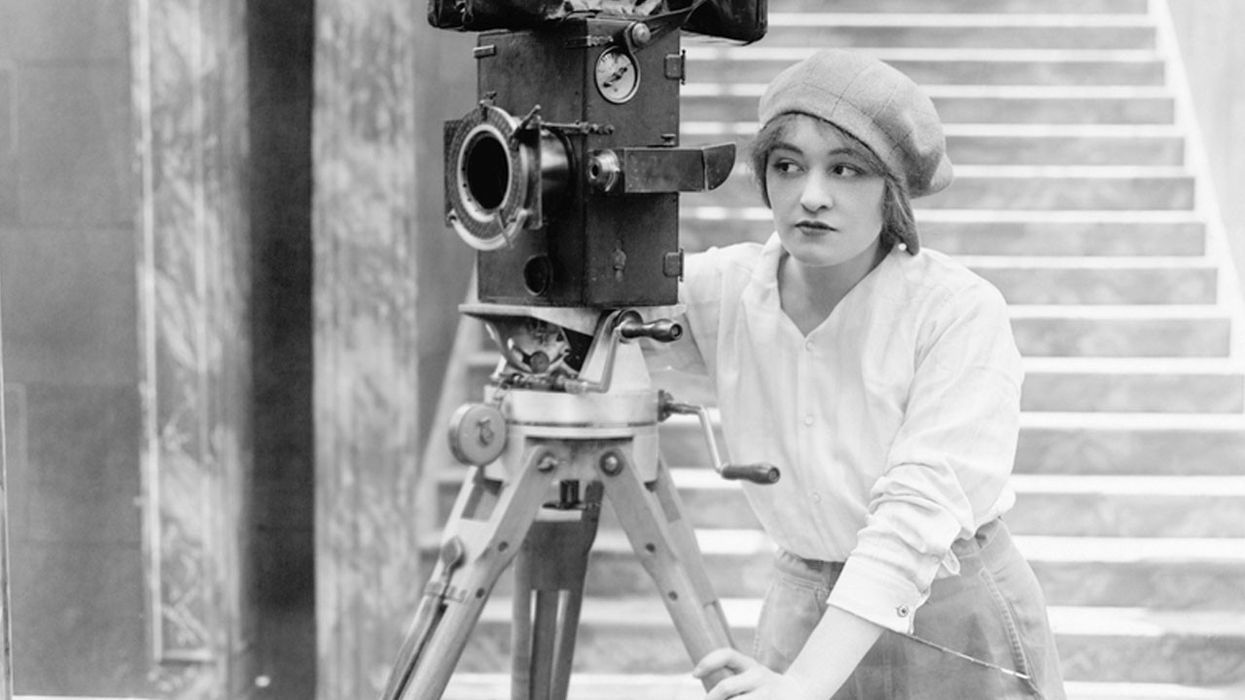
A reel camera is not one official historical camera category. Most people use the phrase to mean a movie camera that records images onto a strip of film wound from one reel to another.
Unlike a still camera, a motion-picture camera captures many frames in rapid succession. The film moves through the camera, one frame at a time, much like a long paper train passing through a station. After filming, the exposed strip can be developed, edited, and projected.
The phrase “reel camera” may refer to several related ideas:
• A camera that records moving images on photographic film
• A camera that uses a roll or reel of flexible film
• A movie camera used to create films for theater projection
• A reel-to-reel film system with separate supply and take-up reels
This difference matters because the first camera to capture motion was not necessarily the first camera to use a standard film reel. Several inventions came together before modern movie cameras became practical.

When was the first reel camera invented?
The best short answer is 1888. French inventor Louis Le Prince built an early motion-picture camera in that year and used it to record moving scenes in Leeds, England.
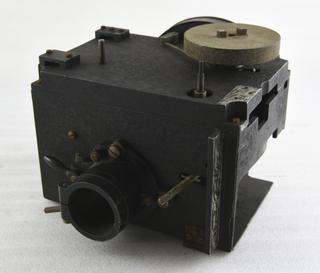
Le Prince’s camera is often called the LPCC Type-16 camera. It used a roll of photographic film and captured a series of images in quick succession. In October 1888, he made short moving-image experiments, including scenes commonly linked with Roundhay Garden and Leeds Bridge.
This makes Le Prince one of the strongest answers to the question, “when was the first reel camera invented?” His work came before the better-known movie cameras of Thomas Edison and the Lumière brothers.
However, history is not always neat. Le Prince’s camera was experimental, and his films were not publicly projected in the same way later cinema films were. For this reason, some historians use different dates when discussing the first motion-picture camera.
The most accurate summary is:
• 1878: Eadweard Muybridge used multiple still cameras to photograph motion
• 1888: Louis Le Prince created an early practical motion-picture camera using moving film
• 1889: Eastman Kodak introduced flexible photographic film that helped cinema develop
• 1891: Edison and Dickson developed the Kinetograph motion-picture camera
• 1895: The Lumière brothers demonstrated a successful camera-projector system to public audiences
So, when was the first reel camera invented? The answer is generally 1888, but the invention of cinema happened through a series of advances rather than one single event.
Louis Le Prince and the first reel-based motion camera
Louis Aimé Augustin Le Prince was born in France and later worked in England and the United States. He had a background in art, engineering, and photographic methods. Those skills helped him explore how still photographs could be turned into moving scenes.
Le Prince’s camera used a strip of film that moved through the device. Each exposure recorded a separate frame. When the frames were displayed quickly, the viewer saw an illusion of movement.
His system was important for three reasons:
• It used a camera designed to capture a sequence of images
• It relied on flexible photographic film rather than separate glass plates
• It showed that moving scenes could be recorded outside a laboratory
The surviving evidence is limited. Some original equipment and film history records are incomplete, and Le Prince disappeared in 1890 while traveling by train in France. Because of this disappearance, his contribution was overshadowed for many years.
Still, the available evidence supports the view that Le Prince made one of the earliest successful attempts to record moving pictures with a reel-based camera.

The role of flexible film and photographic reels
A motion-picture camera needs more than a lens and shutter. It also needs a recording material that can move smoothly, hold many images, and survive handling.
Early photographers often used glass plates. Glass produced detailed pictures, but it was heavy, fragile, and unsuitable for long moving-image sequences. Flexible film changed the direction of photography.
George Eastman and the Eastman Kodak Company helped popularize flexible photographic film in the late 1880s. Early film was made from cellulose nitrate, a material that was flexible but highly flammable. Later safety films used cellulose acetate and other less dangerous materials.
Flexible film offered several benefits:
• It could be rolled onto a reel
• It allowed many frames to fit in a small space
• It moved through a camera at a steady speed
• It could be copied and edited
• It made longer motion sequences possible
This development explains why the answer to “when was the first reel camera invented” cannot focus on the camera alone. The film stock was just as important. A camera without suitable film was like a typewriter without paper.
How the first motion-picture cameras worked
The basic idea behind an early reel camera was simple, but the engineering was difficult. The camera had to expose each frame, move the film, stop it briefly, and repeat the process many times per second.
A typical early motion-picture camera included:
• A lens to focus light
• A shutter to control exposure
• A film gate to hold the film flat
• Sprockets or rollers to move the film
• A crank or motor to advance the film
• A supply reel and take-up reel
The camera operator often turned a hand crank. The speed was not always perfectly steady, which could make early films appear faster or slower than real life.
Film perforations also improved reliability. Small holes along the edges of the film allowed sprockets to grip the strip and move each frame into the correct position. Without this system, the image could shake, slip, or blur.
The principle remains familiar today. Digital cameras replace film with an electronic sensor, but they still capture a series of images over time. The modern video file is different in form, yet it follows the same basic idea of recording separate frames in sequence.
Important inventions before and after 1888
Understanding when the first reel camera was invented requires looking at the inventions that came before and after it.
Eadweard Muybridge’s motion studies
In 1878, Eadweard Muybridge arranged multiple cameras to photograph a running horse. The cameras fired one after another, producing a sequence of still images.
Muybridge did not create a single reel camera. His work was still a major step because it proved that rapid photographs could break motion into visible phases.
Étienne-Jules Marey’s chronophotographic gun
French scientist Étienne-Jules Marey developed a camera in the 1880s that could capture several images on a single photographic surface. His chronophotographic work helped scientists study movement.
Marey’s equipment was designed mainly for analysis, not theatrical entertainment. Even so, it helped establish the technical foundation for motion photography.
Thomas Edison and William Kennedy Laurie Dickson
Edison’s laboratory developed the Kinetograph around 1891. William Kennedy Laurie Dickson played a central role in designing and testing the system.
The Kinetograph used film and a mechanical movement to record motion. Edison’s team also developed the Kinetoscope, a viewing machine that allowed one person at a time to watch a short film through a peephole.
The Lumière brothers
Auguste and Louis Lumière introduced the Cinématographe in the 1890s. It could record, print, and project moving images. That combination made it more useful for public screenings than many earlier systems.
The Lumières’ public demonstrations in 1895 helped establish cinema as a popular form of entertainment. Their success is why some people incorrectly say the first movie camera was invented in 1895.
Why some people say 1891 or 1895
Different dates appear because historians use different definitions of “first.”
If the question means the first camera to record motion on film, 1888 is the strongest answer because of Louis Le Prince.
If it means the first commercially developed motion-picture camera associated with a major laboratory, 1891 is often used for the Edison and Dickson Kinetograph.
If it means the first widely recognized public cinema system that could record and project films, 1895 is a reasonable date because of the Lumière Cinématographe.
Here is a simple comparison:
| Date | Person or group | Main achievement |
|---|---|---|
| 1878 | Eadweard Muybridge | Photographed motion with multiple still cameras |
| 1888 | Louis Le Prince | Recorded early moving images with a reel-based camera |
| 1889 | Eastman Kodak | Helped make flexible film widely available |
| 1891 | Edison and Dickson | Developed the Kinetograph and Kinetoscope |
| 1895 | Lumière brothers | Popularized public film projection |
This timeline avoids a common historical mistake: treating the first camera, the first film, and the first public movie screening as the same event.
What was the first film recorded with a reel camera?
The earliest surviving moving-image examples linked with Louis Le Prince include short scenes recorded in Leeds in 1888. One famous example is often called Roundhay Garden Scene.
The surviving film is extremely short. It shows people moving in a garden, but it does not tell a complex story. That is not a weakness. It demonstrates the main technical achievement: the camera captured real movement and preserved it on film.
Another early Le Prince film shows traffic and activity on Leeds Bridge. These scenes are valuable because they document ordinary life during the Victorian era.
Early films were often simple for practical reasons:
• Film was expensive
• Cameras were difficult to operate
• Exposure times could be demanding
• Film reels were short
• Editing methods were still developing
The first reel camera was not built to create modern feature films. It was built to answer a basic question: can movement be captured as a rapid series of photographs?
Reel camera versus film projector
A camera records images. A projector displays them. These machines work in opposite directions, although both use film reels.
A reel camera pulls unexposed film from a supply reel, exposes each frame, and winds the exposed film onto a take-up reel. A projector takes developed film from one reel, shines light through each frame, and casts the enlarged image onto a screen.
This distinction is important when discussing early cinema. Some early inventions could record images but could not project them for an audience. Others could display images but did not create the original film.
A complete movie system usually required:
• A camera for recording
• Film processing to develop the images
• Editing equipment to arrange the scenes
• A projector for public viewing
• A screen or suitable viewing surface
The Lumière Cinématographe became influential because it combined several of these functions in one practical system. That is one reason 1895 remains a major date in film history, even though the first reel-based motion cameras appeared earlier.
Why the invention of the reel camera mattered
The reel camera changed photography from a record of single moments into a record of events unfolding over time.
A still photograph freezes one instant. A motion-picture reel preserves a sequence. It can show a person walking, a train arriving, workers leaving a factory, or a family waving at the camera.
This ability affected many areas of life:
• Entertainment: It created the foundation of cinema.
• Science: Researchers could study animal and human movement.
• Education: Teachers could show processes that were hard to explain with words.
• Journalism: Cameras could document public events.
• Family history: People could preserve personal memories in motion.
• Advertising: Businesses could demonstrate products and services.
The technology also changed how people understood time. A reel could be stopped, replayed, slowed, or studied frame by frame. In that sense, early film cameras became visual clocks that measured movement.
Common mistakes when researching the first reel camera
Many online articles simplify film history too much. The most common mistake is naming one inventor without explaining the definition being used.
Watch for these errors:
• Saying Thomas Edison invented the first motion-picture camera without mentioning Le Prince
• Treating the 1895 Lumière screening as the date of the first camera
• Confusing Muybridge’s multiple still cameras with a reel camera
• Assuming the first film camera and first film projector were the same device
• Ignoring the importance of flexible film and perforations
A reliable historical answer should state the date, inventor, technology, and limitation. For example: Louis Le Prince built an early reel-based motion-picture camera in 1888, but later systems made film recording and public projection more practical.
That wording is both accurate and fair. It recognizes Le Prince’s priority while explaining why Edison, Dickson, and the Lumières remain central to cinema history.
A practical way to remember the timeline
When I explain the history of the first reel camera, I use a four-step memory aid:
-
Muybridge separated motion into still photographs in 1878.
-
Le Prince placed moving images on film in 1888.
-
Edison and Dickson developed a more formal motion-picture camera system around 1891.
-
The Lumières helped bring film projection to public audiences in 1895.
This method prevents the dates from blending together. It also shows that inventions often grow like a relay race. One researcher solves part of the problem, and another improves the next part.
For students, museum visitors, and photography fans, the key lesson is simple: do not judge invention only by commercial success. A later product may become famous, but an earlier experiment may deserve credit for proving that the idea could work.
How early reel cameras compare with modern cameras
Early reel cameras and modern digital cameras differ greatly in materials and speed, but their core purpose is similar.
Early film cameras:
• Used physical film
• Needed chemical development
• Had limited recording time
• Required careful loading
• Could suffer from scratches, tears, and exposure errors
Modern digital cameras:
• Use electronic image sensors
• Store video on memory cards or drives
• Allow instant playback
• Offer automatic exposure and focus
• Can record for long periods
Film cameras still have a special appeal. The physical reel creates a direct link between the recorded scene and the finished image. Each frame exists as a real object, not only as electronic data.
From a practical standpoint, early reel cameras also teach a useful lesson: reliable results depend on the entire system. Good images require the right film, steady movement, correct exposure, careful processing, and proper projection.
Frequently Asked Questions About When Was the First Reel Camera Invented
When was the first reel camera invented?
The first practical reel-based motion-picture camera is generally dated to 1888. Louis Le Prince built the camera and used it to record early moving images in England.
Who invented the first reel camera?
Louis Le Prince is widely credited with creating one of the first successful reel-based motion-picture cameras. His work came before the better-known Kinetograph developed by Edison’s laboratory.
Was the first reel camera invented by Thomas Edison?
No. Thomas Edison and William Kennedy Laurie Dickson developed the Kinetograph around 1891, several years after Le Prince’s 1888 experiments. Edison’s system was highly influential, but it was not the earliest reel-based motion-picture camera.
What was the first reel camera used for?
The first reel cameras were used to record short sequences of movement. Early subjects included people in gardens, traffic, workers, animals, and simple everyday actions.
Did the first reel camera use film?
Yes. Early motion-picture cameras used flexible photographic film wound into a roll or reel. This allowed the camera to capture many frames in sequence.
What is the difference between a reel camera and a movie projector?
A reel camera records images onto unexposed film. A movie projector displays developed film by shining light through the frames and enlarging them onto a screen.
Why is 1895 important in film history?
The year 1895 is important because the Lumière brothers helped popularize public film projection. It marks the rise of cinema as a shared theater experience, not the invention of the first motion-picture camera.
Conclusion
The clearest answer to “when was the first reel camera invented” is 1888, when Louis Le Prince built an early camera capable of recording moving images on flexible film. Muybridge, Eastman, Edison, Dickson, and the Lumière brothers each contributed important pieces to the larger invention of cinema.
The history is more accurate when we separate the first motion camera, the first practical film system, and the first public movie screening. If you explore old film equipment or study photography, keep that timeline in mind and look beyond the most famous names. Share this guide with anyone curious about film history, and explore museum archives or restored early films to see the technology in action.

Everett Ashford is a tech reviewer at mytechgrid.com specializing in SSDs, cameras, TVs, earbuds, headphones, and other consumer electronics. He provides honest, data-driven reviews based on hands-on testing and real-world performance analysis. Everett simplifies complex tech details to help readers make smart, confident buying decisions.