The Vuepod 2K AI camera is my top pick for clear, close reptile enclosure monitoring.
Your gecko may hide when you walk by, while a hatchling can change position in seconds. A good enclosure camera lets you check feeding, shed cycles, heat zones, and night activity without opening the habitat. I look for close focus, a wide view, safe mounting, clear night video, and steady Wi-Fi. The best camera for reptile enclosure use should watch quietly and show useful detail without adding stress, heat, or bright light to the habitat.
Vuepod 2K AI Reptile Camera

The Vuepod 2K AI camera stands out as a strong all-around choice for a reptile enclosure. Its 2K video should give you a sharper view than basic 1080p cameras, which helps when you need to check a small lizard, fresh shed, or food dish. The wide-angle lens can cover more of a terrarium from one mounting point. That makes it useful for both compact tanks and larger habitats with several zones.
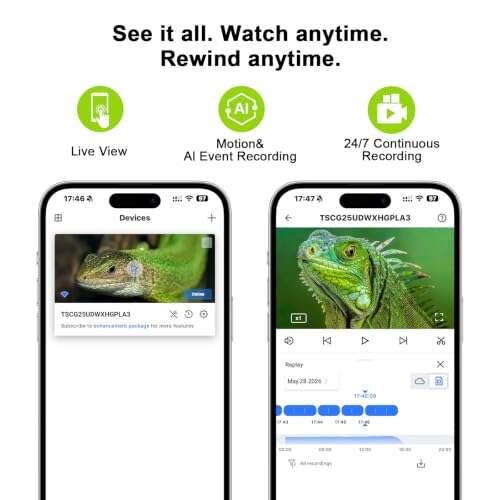
I like this style of camera for keepers who want daily checks without disturbing a reptile. You can watch basking, climbing, hiding, and feeding habits from a phone when the camera is connected to your home network. AI features may also help draw attention to movement, though you should still review the video yourself. For the best camera for reptile enclosure care, clear video matters most because small changes often tell the biggest story.
Pros:
- Sharp 2K video for useful enclosure detail
- Wide-angle view covers more habitat space
- AI features may help flag movement
- Good fit for routine behavior checks
- Useful for feeding and shed monitoring
- One camera can watch a broad enclosure area
Cons:
- AI alerts may need setup and adjustment
- Wide views can make small animals look distant
- Wi-Fi performance depends on router range
My Recommendation
I recommend the Vuepod to reptile owners who want one capable camera for everyday viewing. It suits geckos, small snakes, bearded dragons, and other pets that need regular checks but do not need a dedicated security system. The wide lens is helpful when the enclosure has a basking side, cool side, and hide. Overall, it offers a strong mix of detail and coverage for shoppers seeking the best camera for reptile enclosure monitoring, subject to current Amazon availability and listing specifications.
Litokam 2K 3MP Reptile Camera

The Litokam camera uses a close-focus lens, a bright F1.0 aperture, and a 147-degree ultra-wide view. Those features target a common terrarium problem: standard indoor cameras often focus poorly when placed close to glass. The 2K and 3MP rating should provide a detailed picture for watching fish, lizards, frogs, and reptiles. Its anti-glare design may also help reduce reflections from front glass.
The dual-band Wi-Fi support is a practical advantage in busy homes. A compatible 5GHz network can offer a fast connection near the router, while 2.4GHz usually travels farther through walls. The listed 3X zoom can help you inspect a basking animal without moving the camera. I see this as a strong choice for keepers who need both close detail and a broad view in one compact unit.
Pros:
- Close-focus lens suits glass-front terrariums
- F1.0 aperture may help in dim habitats
- 147-degree view covers a wide area
- 2K 3MP resolution supports detailed checks
- 3X zoom helps inspect small body areas
- 2.4GHz and 5GHz Wi-Fi offer network flexibility
- Anti-glare design may reduce glass reflections
Cons:
- Wide-angle edges may show some distortion
- 5GHz range can drop faster than 2.4GHz
- Bright enclosure lamps may still cause glare
My Recommendation
The Litokam is best for owners who place a camera close to the front glass and want a clear view of a small animal. It makes sense for nano terrariums, fish tanks, hatchling setups, and habitats where reflections cause trouble. I would choose it for a keeper who values close focus more than simple plug-and-play use. It is a serious contender for the best camera for reptile enclosure viewing when lens performance and dual-band Wi-Fi matter most.
3MP 2K AI Close-Focus Reptile Camera

This 3MP 2K camera focuses on the details that matter in a fish tank or reptile habitat. Its close-focus lens should help keep a nearby reptile sharp instead of making it look soft through the glass. The AI label suggests motion or activity tools designed to make remote monitoring easier. For a keeper who checks several times each day, that can reduce the need to stare at a live feed.
The compact camera format also works well in small spaces around a terrarium. You can position it to watch a hide entrance, water bowl, or basking platform. I would still test the view before final mounting because lamps, mesh tops, and front glass can change the image. Its main appeal is focused observation, making it a useful best camera for reptile enclosure candidate for owners who care about close animal behavior.
Pros:
- 3MP 2K image offers good viewing detail
- Close-focus lens suits nearby enclosure subjects
- AI tools may make motion easier to notice
- Compact shape can fit beside smaller habitats
- Useful for watching hides and feeding spots
- Works for fish and reptile observation
Cons:
- AI detection can mistake moving plants for pets
- Close focus may not cover a large habitat alone
- App functions should be checked before purchase
My Recommendation
I recommend this model for keepers with a small or medium enclosure who want close views of a shy pet. It is especially helpful for watching hatchlings, juvenile geckos, and animals that spend time near the front wall. The camera may also suit a breeder who needs quick checks during feeding or shed periods. If you want the best camera for reptile enclosure detail rather than the widest possible room view, this model deserves attention.
Mini Wi-Fi Reptile Habitat Camera

This mini Wi-Fi camera is built around a simple idea: small habitats need small gear. Its compact design can be useful for hatchling care, incubation areas, and terrariums where a full-size camera blocks the view. Wireless connection helps reduce cable clutter near the enclosure. Motion alerts may tell you when an animal moves, even if you are in another room.
I would consider this camera when space matters more than very high resolution. It can help you check whether a hatchling is active, whether a pet has left its hide, or whether a feeding dish needs attention. Small cameras still need careful placement, since a poor angle can hide half the habitat. As a budget-minded best camera for reptile enclosure option, it is most appealing for focused monitoring in tight spaces.
Pros:
- Mini size takes up little enclosure space
- Good fit for hatchling and incubation areas
- Wireless Wi-Fi reduces cable clutter
- Motion alerts can support quick checks
- Easy to place near a small terrarium
- Useful for simple activity monitoring
Cons:
- Small body may have fewer advanced controls
- Motion alerts can create unwanted notifications
- May not show a large enclosure in one frame
My Recommendation
This mini camera is best for breeders, hatchling owners, and anyone working with a tight enclosure layout. It is also a sensible choice for a second camera aimed at an incubator or hide area. I would not select it for a large habitat if you need fine detail across every corner. For compact setups, however, it can deliver practical value without making the enclosure feel crowded.
HOMIQ LIFE 3MP 2K Terrarium Camera

The HOMIQ LIFE camera is designed for close viewing of fish, lizards, reptiles, and even a window bird feeder. Its 3MP 2K video and close-focus lens should make a nearby subject easier to see. Auto-focus can save time when an animal moves from the front glass to a rear branch. Dual-band Wi-Fi gives it wider network compatibility than many basic cameras.
The listed 24/7 recording feature may appeal to keepers who want a longer behavior record. Continuous video can help you review feeding habits, unusual movement, or changes in daily activity. I suggest using a memory plan or storage method that matches your recording needs and checking privacy settings during setup. This is a flexible best camera for reptile enclosure choice for owners who want both live viewing and a record of events.
Pros:
- 3MP 2K resolution supports clear viewing
- Close-focus lens works well near glass
- Auto-focus follows changing subject distance
- 2.4GHz and 5GHz Wi-Fi improve compatibility
- Listed 24/7 recording suits behavior logs
- Can serve aquarium and terrarium users
Cons:
- Continuous recording may require extra storage
- Auto-focus can shift during fast movement
- More features may mean a longer setup
My Recommendation
I recommend the HOMIQ LIFE model for reptile owners who want to review behavior over time. It is a good fit for a lizard that hides often or a snake that becomes active after dark. Breeders may also like the ability to keep a visual record of feeding and activity. Choose it when recording matters as much as live monitoring, and confirm the current storage details before ordering.
3MP 2K Aquarium and Terrarium Camera

This 3MP 2K camera adds a light to its aquarium and terrarium design. The extra light may help illuminate a dark corner during setup or inspection, but I would use it with care around reptiles. Many reptiles need a stable day-and-night cycle, and a bright camera light should not replace proper heat or UVB equipment. The camera’s main job is viewing, while habitat lighting must still follow the needs of the species.
The sharp image can help you check a pet’s posture, eyes, skin, and movement from a safe distance. It may also help aquarium owners see fish in a shadowed area. I would aim the camera away from reflective glass and keep the light off during sleep hours unless a brief check is needed. For owners who need occasional fill light, this can be a useful best camera for reptile enclosure option.
Pros:
- 3MP 2K image gives useful visual detail
- Built-in light can brighten dark viewing areas
- Useful for both fish and reptile habitats
- Helps inspect posture and movement remotely
- Can support setup checks in low light
- Compact design may suit many terrarium stands
Cons:
- Light may disturb nocturnal animals if misused
- It does not replace UVB or heat lighting
- Glass reflections may reduce image clarity
My Recommendation
This camera is best for owners who often need to inspect a dim habitat but can manage light use carefully. It suits fish tanks, planted terrariums, and reptiles that need occasional extra visibility. I would select it for a room where the camera angle makes shadows a frequent issue. Keepers of nocturnal reptiles should use the light sparingly and protect the animal’s normal dark period.
HOMIQ 3MP Aquarium Reptile Camera

The HOMIQ 3MP camera takes a simple approach to aquarium and reptile viewing. Its 3MP image should show enough detail for daily checks, while the window pet security design may offer flexible placement. A camera that can mount near glass is handy when shelf space around the enclosure is limited. It may also serve more than one role in a home with a tank, terrarium, or bird feeder.
I see this as a practical option for a first-time camera buyer. You can use it to check whether a reptile is visible, confirm that a water dish is in place, or watch an aquarium while away. It may not have the most specialized lens in this group, so careful positioning remains important. Still, its broad use makes it a helpful best camera for reptile enclosure pick for basic remote checks.
Pros:
- 3MP resolution supports routine monitoring
- Flexible placement near windows or glass
- Useful for aquariums and reptile habitats
- Simple design may suit first-time users
- Can help check water and food areas
- May serve multiple pet-monitoring roles
Cons:
- May lack specialized close-focus controls
- Placement affects the final field of view
- Security features can vary by app and setup
My Recommendation
I recommend this model for a beginner who wants a flexible indoor pet camera. It fits owners who need basic live checks rather than advanced behavior analysis or long-term recording. Its window-style placement can help when the terrarium sits against a wall or on a narrow shelf. It offers sensible value for general use, provided the current listing confirms the functions you want.
5MP Wi-Fi Reptile and Terrarium Camera
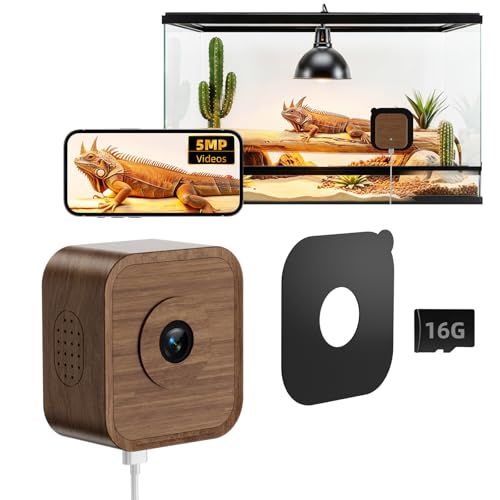
The 5MP camera is the resolution leader in this group. More pixels can help when you crop or zoom into a wide enclosure view, although final quality also depends on lens design, light, and app compression. Its time-lapse function gives keepers a quick way to review movement across a long period. That can reveal patterns that a short live check misses.
Time-lapse can be useful for reptiles that spend much of the day hidden or still. You may spot a change in basking location, climbing route, or night activity without watching hours of video. I would use it as a behavior tool rather than a health test, since a camera cannot replace hands-on care. For detailed records, this could be the best camera for reptile enclosure buyers who value high resolution and time-lapse review.
Pros:
- 5MP resolution offers extra image detail
- Time-lapse helps show long-term activity patterns
- Useful for zooming into a broad enclosure view
- Good fit for behavior and habitat records
- Can reduce the need to watch live video
- Useful for reptiles with quiet daily habits
Cons:
- Higher resolution can use more storage
- More pixels do not fix poor lighting
- Time-lapse may miss brief fast movements
My Recommendation
This camera is best for experienced keepers, breeders, and hobbyists who enjoy studying behavior. It makes sense for a planted enclosure where movement occurs across many branches and levels. I would also consider it for documenting a new reptile’s routine after a habitat change. Select it when resolution and time-lapse matter more than the smallest possible camera body.
2026 Upgraded 2K Terrarium Camera

This upgraded 2K camera combines several features that reptile keepers often request. The close-focus lens targets nearby fish, lizards, and reptiles, while dual-band Wi-Fi can make connection easier in different home layouts. Full-color night vision may show more natural detail than a plain black-and-white feed. The listed motion detection and loop recording also support ongoing monitoring.
Loop recording is useful because it can replace older clips when storage fills, so you do not need to manage files every day. Motion detection can draw your attention to activity during evening hours or while you are away. I would place the camera outside the enclosure when possible and keep all cables away from chewing, misting, and heat sources. This balanced feature set makes it a strong best camera for reptile enclosure choice for all-day monitoring.
Pros:
- Close-focus lens suits terrariums and aquariums
- 2K video gives clear daily viewing
- 5GHz and 2.4GHz Wi-Fi improve flexibility
- Full-color night vision may show more detail
- Motion detection highlights activity
- Loop recording helps manage storage
- Easy installation may reduce setup time
Cons:
- Full-color night vision may add visible light
- Motion alerts can trigger false alarms
- Loop recording settings need careful review
My Recommendation
I recommend this upgraded model for keepers who want a complete monitoring package. It is a good fit for a medium terrarium, a busy reptile room, or an owner who checks the enclosure at night. The close focus, recording, and night-view tools cover more needs than a basic camera. If you want a modern best camera for reptile enclosure setup with broad daily features, this is one of the strongest choices in the group.
What Makes the Best Camera for Reptile Enclosure Use?
A reptile camera is not just a small indoor security camera. The lens often sits close to glass, mesh, wood, or acrylic. That distance can confuse ordinary auto-focus systems. A close-focus lens helps keep a nearby lizard or snake sharp instead of focusing on a reflection behind it.
Resolution also matters, but numbers do not tell the whole story. A 2K or 3MP camera can show useful detail for most home habitats. A 5MP model may help when you crop or zoom, but it needs good light and enough storage. I always judge the lens, view, focus, and app along with the pixel count.
The best camera for reptile enclosure monitoring should also fit the animal’s routine. A nocturnal gecko may need a low-light view. A bearded dragon may need a wide shot that includes the basking platform. A shy snake may benefit more from quiet recording than from bright night alerts.
Key Features I Check Before Buying
Close Focus
Close focus is one of the most important camera traits for terrariums. Many cameras are made for rooms, not subjects only a few inches away. A close-focus lens can show the eyes, skin, food, and body position of a small reptile with more clarity.
Before mounting the camera, place it at the planned distance and test the image. Look for a sharp animal, clean glass, and no large blind spot. If the camera focuses on the mesh or reflection, move it slightly back or change the angle.
Wide Viewing Angle
A wide lens can cover a whole enclosure from one point. This is useful when you want to see the warm side, cool side, hides, and water dish. The trade-off is that very wide views can make a small reptile look tiny.
A camera with a wide view works best when the animal spends time across the habitat. For a small enclosure, a close view may be more useful than maximum coverage. The right choice depends on the size and layout of your terrarium.
Night Vision
Night vision can help you observe natural activity without opening the enclosure. Some models use infrared light, while others offer full-color viewing with visible light. Neither option should disrupt the animal’s normal rest cycle.
I prefer a camera with adjustable night settings. Turn off status lights when possible. Keep bright LEDs away from nocturnal reptiles, and never treat a camera light as a substitute for a species-appropriate lighting system.
Reliable Wi-Fi
A camera is only useful when it stays connected. Most home pet cameras use Wi-Fi, so router distance, thick walls, and crowded networks can affect performance. The 2.4GHz band usually reaches farther, while 5GHz can offer faster speed at shorter range.
Set up the camera near the final location before you attach it. Check the live feed at different times of day. A stable connection is more valuable than a long list of features that fail when the signal drops.
Recording and Alerts
Motion alerts can tell you when a reptile leaves its hide or moves near a food dish. They can also alert you to false movement from plants, water, shadows, or changing light. Adjust the detection zone and sensitivity after installation.
Loop recording is convenient for long-term use. It can save new footage over older footage when storage fills. If you need health or breeding records, download important clips instead of assuming the camera will keep them forever.
Safe Placement
I suggest placing the camera outside the enclosure whenever possible. This keeps wires, plastic parts, and the device away from climbing, chewing, misting, and high heat. Never place a camera where it can fall into water or block ventilation.
Avoid mounting it directly above a heat lamp. Heat can shorten electronics life and may create an unsafe surface temperature. Check the enclosure after installation to make sure the camera does not cast a new shadow over a basking area.
How I Would Set Up a Reptile Enclosure Camera
First, I choose the viewing goal. Do I need the whole enclosure, a hide entrance, a basking area, or a feeding dish? One camera cannot show every detail from every angle. A clear goal makes placement much easier.
Next, I test the camera before final mounting. I check the image through the glass, with the enclosure lights on and off. I also check the view after dark. This simple step can reveal glare, focus errors, and blind areas before they become frustrating.
I then secure the camera and route the cable away from the habitat. I leave enough slack for small adjustments but not enough for the animal to reach. I keep power adapters dry and use a safe outlet setup that matches the manufacturer’s instructions.
Finally, I set alerts with a quiet approach. I start with low sensitivity and a small activity zone. After a day or two, I adjust the settings based on real movement. A calm alert system is far better than a phone that buzzes every time a leaf moves.
Camera Care and Reptile Safety Tips
Clean front glass can improve the image more than a higher camera rating. Dust, mineral spots, and water marks scatter light and create haze. I use a soft, clean cloth and follow the camera maker’s cleaning directions. I never spray liquid directly onto the camera.
Keep humidity in mind. A camera made for indoor rooms may not tolerate constant mist, steam, or condensation. Place it outside the wet zone and inspect the body, cable, and mount from time to time.
Do not use a camera to diagnose illness. Video can show reduced movement, poor posture, or a changed routine, but it cannot replace an exam by a qualified reptile veterinarian. Veterinary care remains important when an animal stops eating, struggles to breathe, loses balance, or shows other warning signs.
Animal welfare guidance also supports limiting unnecessary handling and disturbance. Remote viewing can help you observe natural behavior, but it should not become a reason to keep lights on or repeatedly wake a nocturnal pet. The camera should fade into the background like a quiet window.
Best Uses for a Reptile Camera
A camera can help you learn a pet’s normal routine. You may discover that a snake becomes active after the room goes dark. You may see a gecko drink from a surface at night. These details can make daily care more informed.
It can also support feeding checks. You can watch whether a reptile finds food, whether live prey remains too long, or whether a pet avoids a feeding area. Remove unsafe leftover prey according to the needs of the species.
Breeders can use a camera to monitor hatchlings with less disruption. A small camera can show movement in an incubator or nursery setup, but temperature and humidity still need separate, reliable instruments. A camera records what happens; it does not control the habitat.
A camera may also help when a family member or pet sitter checks the room. You can confirm that the enclosure door is closed and that the water dish is present. Always protect account passwords and use secure home network practices.
Best Features Comparison
| Best for | Why |
|---|---|
| Overall enclosure monitoring | Vuepod offers a strong balance of 2K detail, wide coverage, and AI activity tools. |
| Close glass viewing | Litokam combines a close-focus lens, wide view, zoom, and dual-band Wi-Fi. |
| Long-term behavior records | The 5MP model adds high resolution and time-lapse for reviewing activity patterns. |
How These Cameras Compare by Reptile Type
For a leopard gecko, close focus matters because the animal may stay near a hide or front wall. The Litokam, 3MP AI model, and HOMIQ LIFE camera all fit that need well. A wide view is still useful, but you should avoid placing the camera so far away that the gecko becomes a small blur.
For a bearded dragon, I would look for a wider image that includes the basking platform and floor. The Vuepod and upgraded 2K model are attractive because their feature sets support broad daily checks. Make sure the camera does not block the dragon’s view of the room or change the basking setup.
For a snake, recording can matter more than constant live viewing. Snakes may remain still for long periods and become active when the room is quiet. The 5MP time-lapse camera and HOMIQ LIFE model can help you review activity without sitting beside the enclosure.
For a chameleon or arboreal lizard, placement becomes critical. A camera must show upper branches and feeding points, not only the floor. A wide lens can help, but glare from glass and leaves may reduce contrast. Test the camera with the animal’s normal lighting in place.
For hatchlings, the mini Wi-Fi model may be a practical fit. Small animals can disappear in a large frame, so a close view of the nursery area may work better. I would use a separate thermometer and hygrometer for environmental checks.
What I Would Not Expect From These Cameras
No camera can measure temperature accurately unless it includes a dedicated sensor designed for that task. Video may show a reptile under a lamp, but it cannot confirm the basking surface temperature. Use trusted thermometers and follow care guidance for the species.
A camera also cannot confirm that a reptile has eaten simply because food is gone. Prey may hide, spoil, or move out of view. Video helps, but direct checks still matter.
Cloud features, storage plans, and app functions can change. I recommend reading the current Amazon listing and manufacturer details before checkout. Confirm whether the camera needs a subscription, what storage it supports, and which Wi-Fi bands it accepts.
Buying Advice for 2026
In 2026, many pet cameras focus on AI alerts, high resolution, and dual-band Wi-Fi. Those features can help, but I would rank close focus and safe placement first. A camera with fewer extras can be better if it shows the animal clearly and stays connected.
I also look at the total cost. The purchase price may not include a memory card, cloud plan, wall adapter, or longer cable. Add those costs before comparing models. A slightly higher-priced camera may offer better value if it includes the features you will use every day.
Privacy deserves attention too. Use a strong, unique password for the camera account. Turn on available two-factor security. Keep firmware updated, and avoid sharing access with more people than necessary.
FAQs Of best camera for reptile enclosure
What is the best camera for reptile enclosure monitoring?
The Vuepod 2K AI Reptile Camera is my top overall pick. It combines sharp 2K video, a wide-angle view, and activity-focused features. The best choice can still vary by enclosure size, lighting, and your need for recording.
Should a reptile camera have close focus?
Yes. Close focus helps the camera keep a nearby reptile sharp through glass or acrylic. It is especially useful for geckos, hatchlings, frogs, and small snakes.
Can I leave night vision on all night?
Check the type of night vision and your animal’s needs. Infrared may be less disruptive than visible light, but every setup is different. Disable bright status lights and avoid changing the reptile’s normal dark period.
Can a camera measure enclosure temperature?
Usually, no. A camera can show where the reptile sits, but it cannot reliably measure basking or cool-side temperature. Use suitable thermometers and humidity tools as separate equipment.
Is 2K better than 1080p for a terrarium?
2K can show more detail, especially when you zoom or crop the image. Lens quality, focus, lighting, and connection stability also affect the result. A clear 2K camera is often a useful upgrade for close reptile viewing.
Final Verdict: Which Should You Buy?
I would buy the Vuepod 2K AI camera for most keepers. It offers the best balance of clear video, wide coverage, and useful activity tools for everyday care.
If close glass viewing is your main need, consider Litokam. For the best camera for reptile enclosure use, choose the model that fits your animal, habitat, lighting, and recording needs.

Everett Ashford is a tech reviewer at mytechgrid.com specializing in SSDs, cameras, TVs, earbuds, headphones, and other consumer electronics. He provides honest, data-driven reviews based on hands-on testing and real-world performance analysis. Everett simplifies complex tech details to help readers make smart, confident buying decisions.