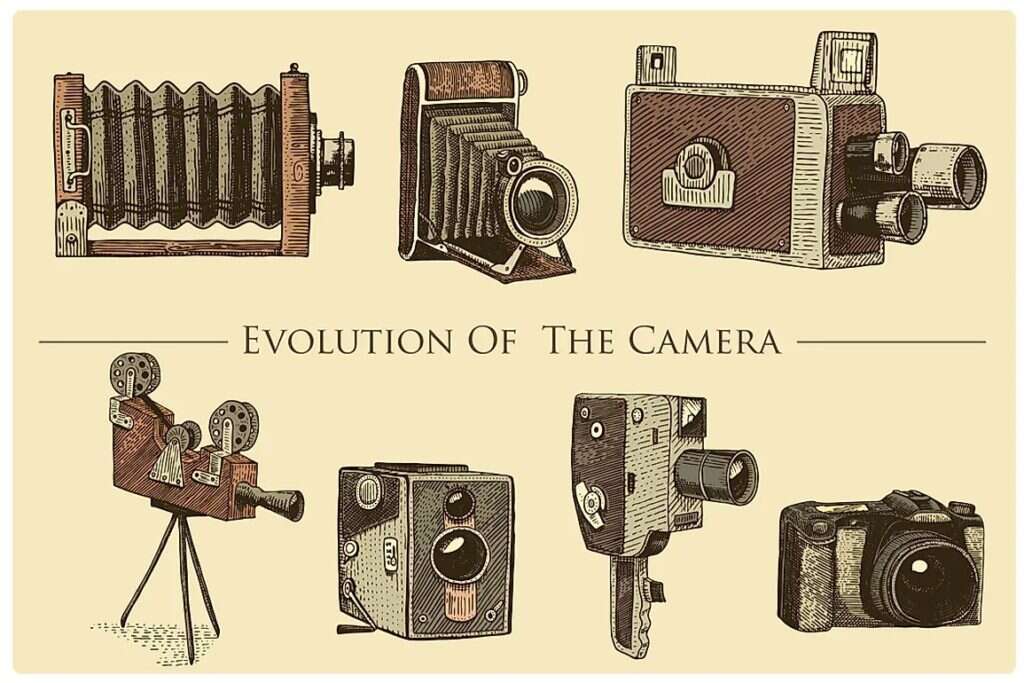
The first camera began as the camera obscura in ancient times, while the first permanent photo came in 1826 or 1827.
The question “when was first camera invented” has more than one correct answer because cameras evolved in stages. The ancient camera obscura created images, Joseph Nicéphore Niépce made the first lasting photograph, and Louis Daguerre later introduced the first practical photographic camera. This guide explains each milestone so you can see how a dark room became the modern camera.
When Was the First Camera Invented?
The first camera concept dates back to at least the fifth century BCE. Chinese philosopher Mozi described how light travels in straight lines and forms an upside-down image inside a dark space. Greek thinkers also studied similar effects.
This early device was called a camera obscura. The Latin name means “dark room.” It was not a camera in the modern sense because it could show an image but could not save that image permanently.
When people ask when was first camera invented, they often mean the first device that captured a lasting photograph. That milestone belongs to Joseph Nicéphore Niépce in 1826 or 1827.
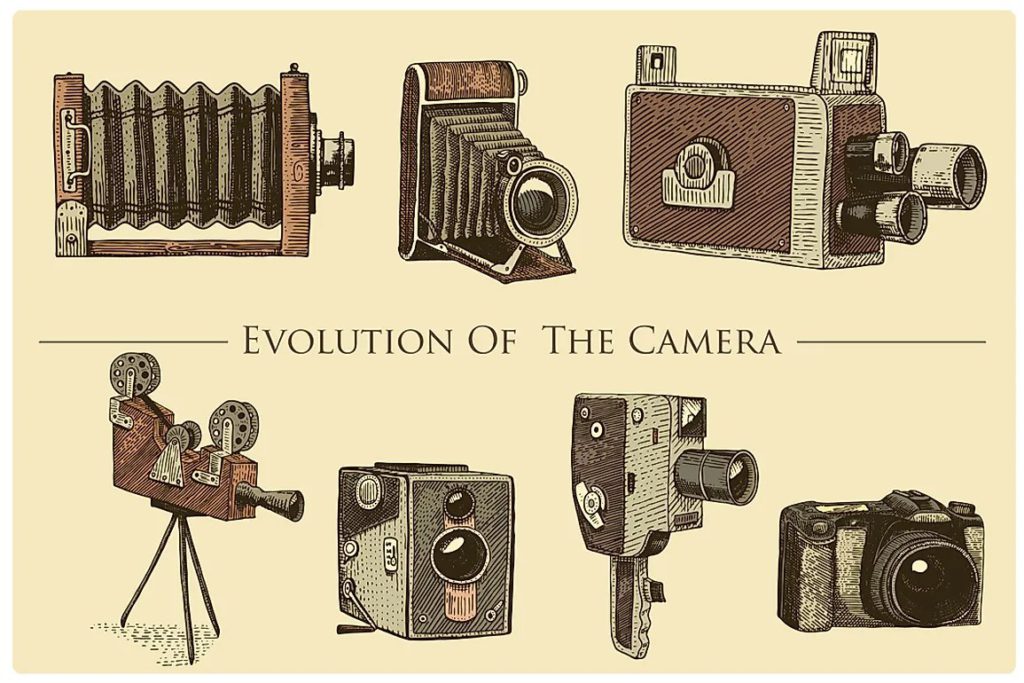
The Camera Obscura: The First Camera Idea
A camera obscura used a dark box, room, or tent with a small hole on one side. Light from the outside passed through the hole and projected an upside-down view onto the opposite surface.
The basic process was simple:
- Light traveled through a tiny opening.
- Rays from the subject crossed at the opening.
- An inverted image appeared on the inner wall.
- An artist traced the projected image by hand.
The camera obscura did not use film, glass plates, or digital sensors. Still, it contained the key idea behind every camera: control light inside a dark space.
Artists used camera obscura devices during the Renaissance. Leonardo da Vinci described the principle in his notebooks. Later artists used portable versions to help draw buildings, landscapes, and people with greater accuracy.
:max_bytes(150000):strip_icc()/brief-history-of-photography-2688527-FINAL-5bef134d46e0fb0026cda5f9.png)
Joseph Nicéphore Niépce and the First Permanent Photograph
Joseph Nicéphore Niépce created the first known permanent photograph around 1826 or 1827. He used a camera obscura and a polished pewter plate coated with bitumen of Judea, a light-sensitive material.
Niépce placed the plate inside the camera and exposed it to light for many hours. The result, known as “View from the Window at Le Gras,” showed buildings and parts of the countryside near his home in France.
This image was not sharp by modern standards. It also required a very long exposure. However, it changed the history of photography because the image remained on the plate instead of disappearing when the light was removed.
So, when was first camera invented in the sense of a camera that produced a permanent photograph? The best answer is 1826 or 1827, when Niépce used a camera to create that lasting image.
Why the Exact Date Is Unclear
The date is often listed as either 1826 or 1827. This is not a major historical error. It reflects the way records were kept and the time needed to confirm the photograph.
Niépce made the image in 1826 according to some historical accounts. Other records connect it with 1827, when the image was presented and discussed more widely. Museums and historians commonly use both dates.
The uncertainty also comes from the word “invented.” A camera can mean several things:
• A device that projects an image
• A device that records an image
• A practical tool for making photographs
• A modern film or digital camera
Each definition points to a different milestone. This is why a simple question about when was first camera invented needs a careful answer.
Louis Daguerre and the First Practical Camera
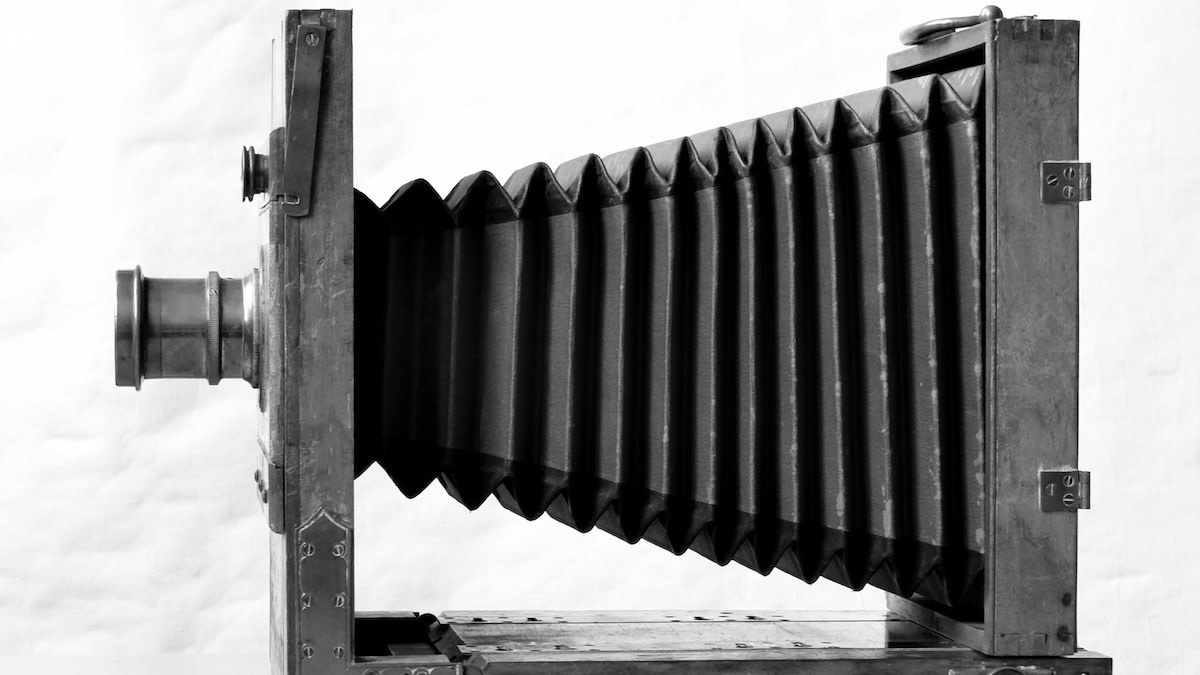
Louis-Jacques-Mandé Daguerre improved Niépce’s work and introduced the daguerreotype process in 1839. Daguerre used a silver-coated copper plate that was treated with iodine and exposed inside a camera.
The daguerreotype needed far less exposure time than Niépce’s early process. It produced highly detailed images, although each photograph was a unique plate rather than a simple negative that could create many copies.
The French government announced the process in 1839. That year is often treated as the birth of practical photography and the beginning of photography as a public technology.
If someone asks when was first camera invented and expects the date of the first commercially useful photographic camera, 1839 is the most helpful answer. The camera itself existed earlier, but Daguerre made photography far more usable.

The First Cameras Were Not Easy to Use
Early cameras were large, slow, and demanding. A photographer needed chemical knowledge, steady hands, and patience.
A typical early photographic session involved:
• Preparing a light-sensitive plate
• Loading the plate in a dark space
• Positioning the camera on a tripod
• Keeping the subject still
• Exposing the plate for several seconds or minutes
• Processing the image with chemicals
Portrait subjects often sat with support behind their heads. Even a small movement could blur the face. This explains why early portraits can look serious: smiling for a long exposure was difficult.
The first cameras also had no automatic focus, light meter, or built-in shutter like many modern cameras. Photographers judged light by experience. In practical terms, early photography was part science, part craft, and part endurance.

How Cameras Developed After 1839
Camera technology improved quickly after the daguerreotype. New methods made cameras smaller, exposures shorter, and photographs easier to copy.
Important developments included:
The Calotype
William Henry Fox Talbot introduced the calotype process in the 1840s. It used a paper negative, which allowed photographers to make multiple positive prints from one original image.
This was a major change. The daguerreotype created one detailed image, while the calotype supported reproduction. The idea of a negative and multiple prints later became central to film photography.
Wet-Plate Collodion
Frederick Scott Archer introduced the wet-plate collodion process in 1851. It produced detailed images on glass plates and became popular with professional photographers.
The plates had to remain wet during preparation and exposure. Photographers often carried portable darkrooms because the plates needed immediate processing.
Dry Plates
Dry-plate technology became widely available in the 1870s. These plates were more convenient because photographers could prepare them before a trip and develop them later.
This change helped photography move beyond studios. People could take cameras outdoors to record travel, news, family events, and scientific work.
Roll Film
George Eastman helped popularize roll film in the late nineteenth century. His Kodak camera made photography easier for ordinary consumers.
The company’s simple approach allowed people to take photographs without mastering every chemical step. Users could send the camera or film to the company for processing.
When Was the First Digital Camera Invented?
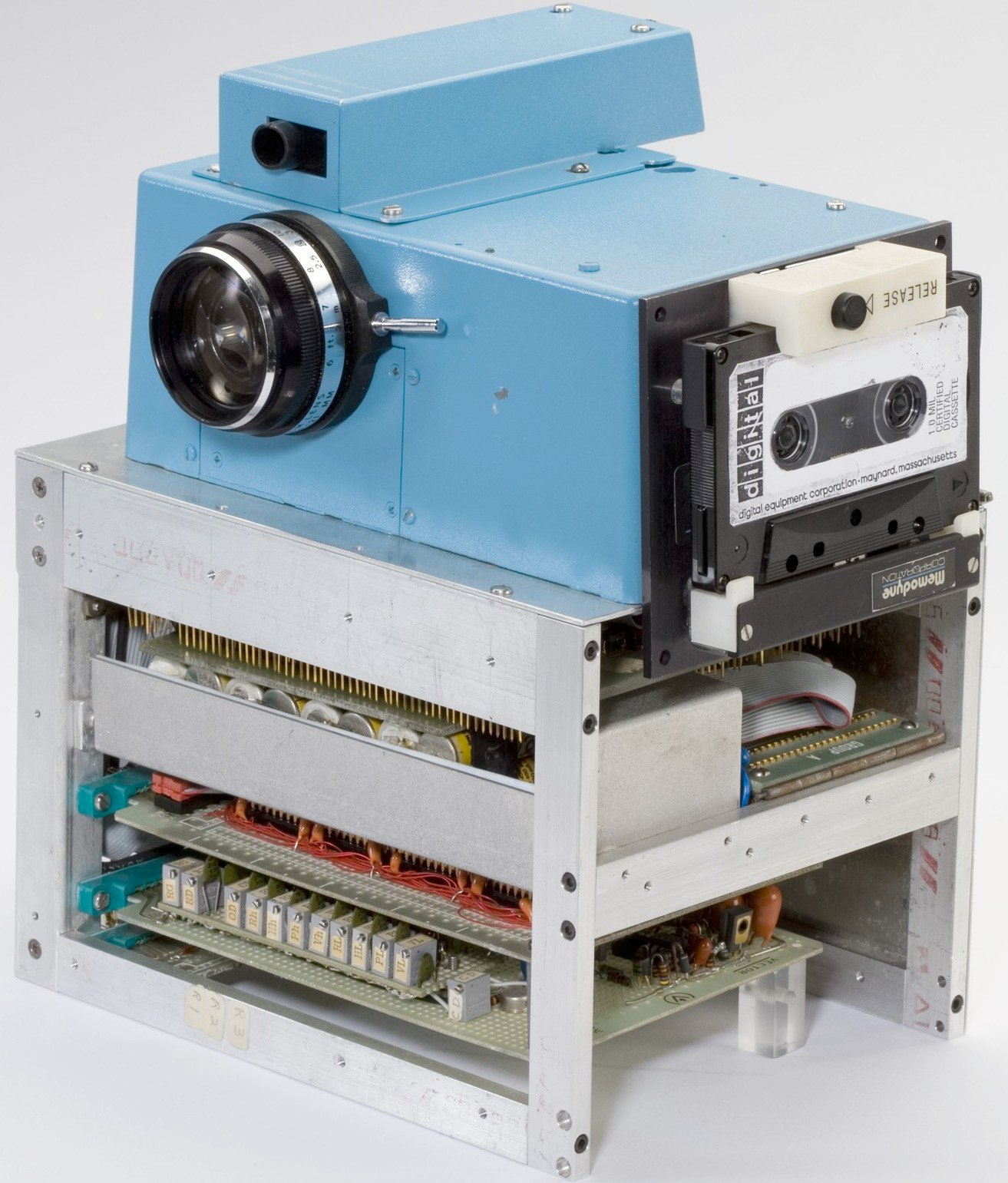
The first digital camera prototype was created by Steven Sasson at Eastman Kodak in 1975. It used a charge-coupled device, or CCD, to capture an image electronically.
The prototype was large and had very low resolution by today’s standards. It recorded black-and-white images onto a cassette tape. Saving one image took about 23 seconds.
This device did not resemble a smartphone camera. It was an experimental system designed to test whether electronic image capture could replace film. Still, it proved that a camera could record an image without chemical film.
Therefore, when was first camera invented depends on the type of camera being discussed:
• First image projection: Ancient camera obscura
• First permanent photograph: 1826 or 1827
• First practical photographic process: 1839
• First digital camera prototype: 1975
• First camera phone: Late 1990s
When Was the First Camera Phone Made?
The first widely recognized camera phone was the Sharp J-SH04, released in Japan in 2000. It had a built-in camera that could take pictures and send them through a mobile network.
Some earlier devices supported camera attachments or limited image features. However, the J-SH04 helped establish the camera phone as a normal consumer product.
Camera phones changed photography more than many early inventions did. People no longer needed to carry a separate camera for everyday moments. The best camera became the one that was already in a pocket.
This development also changed the answer people expect when asking when was first camera invented. Today, many people are asking about the first digital camera, smartphone camera, or camera phone rather than the first optical camera.
How the First Camera Worked
The first photographic cameras used the same basic principle as the camera obscura. They blocked most light and allowed a controlled amount to enter through a lens or small opening.
A simple explanation looks like this:
- Light reflected from a subject.
- The lens gathered and focused that light.
- The camera formed an image on a prepared surface.
- A chemical coating recorded the light.
- The photographer developed the image.
Modern cameras follow the same broad pattern. The main difference is the recording surface. Early cameras used metal plates, glass plates, or film. Digital cameras use electronic sensors made from millions of light-sensitive pixels.
This continuity is important. A smartphone camera may include advanced software, autofocus, and image stabilization, but it still relies on controlled light entering a dark chamber.
The Difference Between a Camera and a Photograph
A camera and a photograph are related but not identical inventions. The camera creates or projects an image. The photograph preserves that image.
The camera obscura came first. It could display a scene but could not store it. Niépce solved the preservation problem by using a light-sensitive coating. Daguerre later made the process practical for more users.
This distinction gives a clearer answer to when was first camera invented. The camera concept is ancient, while photographic capture began in the early nineteenth century.
It is similar to the difference between a screen and a recording device. A screen shows information, but a recorder saves it for later. Early optical devices showed images long before photography could preserve them.
Why the Invention of the Camera Matters
The camera changed science, art, journalism, family life, and historical records. It allowed people to study details that the human eye could miss.
Cameras helped with:
• Medical documentation
• Astronomical observation
• Motion studies
• Mapping and surveying
• News reporting
• Family memories
• Scientific experiments
• Legal and government records
Photography also made distant places more familiar. Images of wars, cities, landscapes, and people could reach audiences who would never see those places in person.
At the same time, cameras introduced ethical concerns. A photograph can preserve truth, but it can also be edited, staged, or taken without permission. Understanding the history of the camera helps us use the technology with care.
Common Mistakes When Explaining Camera History
Many articles give one date and present it as the complete answer. That approach can confuse readers because camera history includes several separate breakthroughs.
Avoid these common mistakes:
• Saying the camera was invented only in 1839
• Ignoring the camera obscura
• Calling the first photograph a modern snapshot
• Confusing the first camera with the first camera phone
• Treating 1826 and 1827 as a serious contradiction
• Assuming early cameras used film
A reliable explanation should state which milestone it means. For example, “The first permanent photograph was made by Niépce around 1826 or 1827” is more accurate than simply saying “the camera was invented in 1826.”
When I explain this topic, I find that a timeline works better than one isolated date. It shows that the camera was not born in a single moment. It developed through many small improvements.
A Simple Timeline of Camera Invention
Here is a brief timeline that brings the major events together:
• Fifth century BCE: Mozi describes the basic principles of the camera obscura.
• Renaissance period: Artists use camera obscura devices to study perspective and light.
• 1826 or 1827: Niépce makes the first known permanent photograph.
• 1839: Daguerre’s photographic process becomes public.
• 1840s: Talbot develops the calotype negative process.
• 1851: Wet-plate collodion photography improves detail and speed.
• 1870s: Dry plates make photography easier to manage.
• 1888: Kodak popularizes roll-film photography for consumers.
• 1975: Steven Sasson builds the first digital camera prototype.
• 2000: The Sharp J-SH04 helps popularize camera phones.
This timeline gives the clearest overall answer to when was first camera invented. The earliest camera principle is ancient, but permanent and practical photography arrived much later.
Frequently Asked Questions About When Was First Camera Invented
When was the first camera invented?
The camera obscura dates back to ancient times, with descriptions from at least the fifth century BCE. The first camera used to make a permanent photograph appeared around 1826 or 1827.
Who invented the first camera?
There is no single inventor of the camera because the idea developed over many centuries. Joseph Nicéphore Niépce is credited with making the first known permanent photograph using a camera.
What was the first photograph?
The first known permanent photograph is “View from the Window at Le Gras,” made by Niépce around 1826 or 1827. It was created on a pewter plate coated with bitumen and required many hours of exposure.
When did cameras become popular?
Cameras became more practical after 1839, when the daguerreotype process was announced. Consumer photography expanded greatly in the late 1800s after roll film and Kodak cameras became available.
When was the first digital camera invented?
Steven Sasson built the first digital camera prototype at Kodak in 1975. It captured black-and-white images electronically and stored them on a cassette tape.
Was the camera invented before photography?
Yes. The camera obscura could project an image centuries before people could preserve photographs. Photography began when inventors developed light-sensitive materials that could record the projected image.
Conclusion
The best answer to when was first camera invented depends on what you mean by “camera.” The camera obscura appeared in ancient times, Niépce made the first permanent photograph around 1826 or 1827, and Daguerre helped make photography practical in 1839.
Later advances brought film, roll cameras, digital sensors, and smartphone cameras. Each stage kept the same basic idea: place light inside a controlled space and record what it shows.
Now that you understand the timeline, look closely at the camera you use every day. Its small lens carries more than two thousand years of science and invention. Explore a museum collection, study an early photograph, or try building a simple camera obscura to see this history for yourself.

Everett Ashford is a tech reviewer at mytechgrid.com specializing in SSDs, cameras, TVs, earbuds, headphones, and other consumer electronics. He provides honest, data-driven reviews based on hands-on testing and real-world performance analysis. Everett simplifies complex tech details to help readers make smart, confident buying decisions.