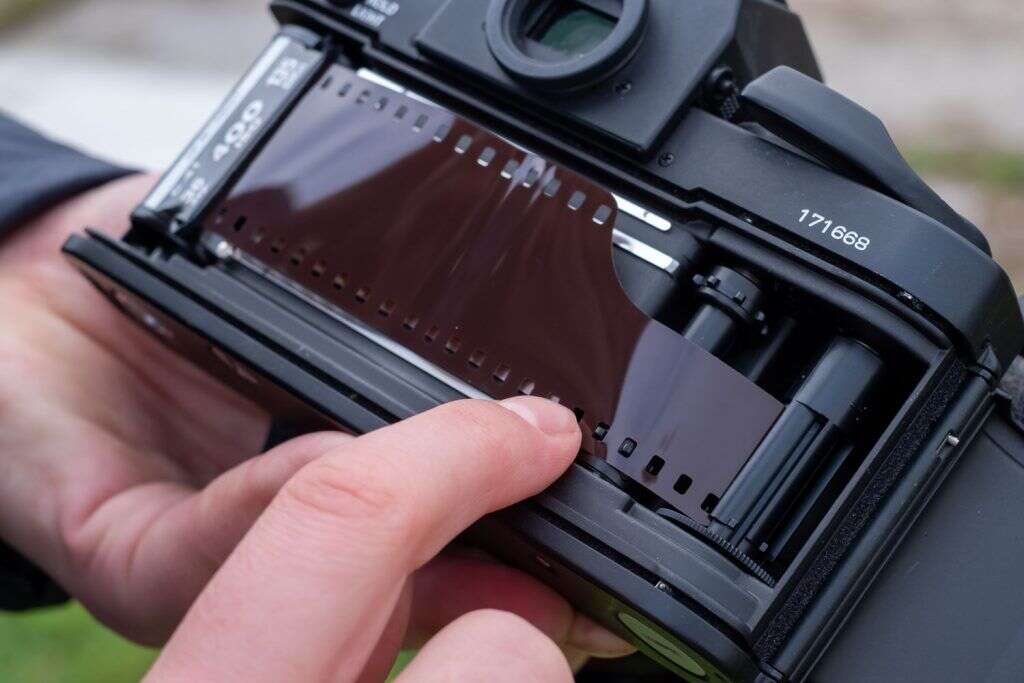
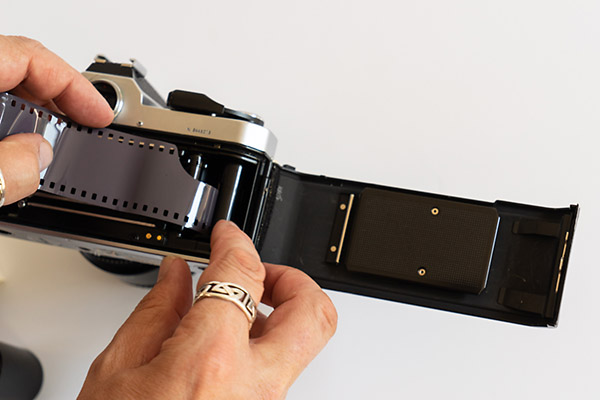
Open the camera back, insert the film cartridge, pull the leader to the take-up spool, and advance the film once.
I’ve loaded film hundreds of times across dozens of cameras, from old rangefinders to modern manual SLRs. This guide explains exactly how to load film into a camera, step by step, and it covers 35mm and medium-format film, common pitfalls, and practical tips I learned the hard way. Read on and you’ll be confident loading film into any compatible camera and avoid wasted frames or accidental light leaks.
Why film still matters for photographers
Film teaches patience and builds skill. Shooting on film slows you down and forces deliberate choices about exposure, composition, and light. Learning how to load film into a camera is one of the first, most useful skills for analog photography. It reduces mistakes, saves money on wasted rolls, and helps you get the most from each frame.
Film also produces a look many photographers love. That tone and grain are part of why people still shoot film today. If you plan to shoot regularly, knowing how to load film into a camera reliably is essential.

Camera types and film formats you should know
Different cameras use different film formats. Knowing which your camera accepts is the first step when learning how to load film into a camera.
- 35mm film
- The most common format. Comes in cartridges for single-use loading.
- 120 (medium format) film
- Rolls on spools. Used by TLRs, medium-format SLRs, and some rangefinders.
- Sheet film
- Individual sheets loaded in dark holders—advanced and rare for beginners.
Also note camera features that affect loading:
- Automatic film advance vs. manual advance
- Auto-rewind vs. manual rewind
- Film-specific guides like leader slots or removable spools
Identifying your camera model and format makes the steps below work smoothly.
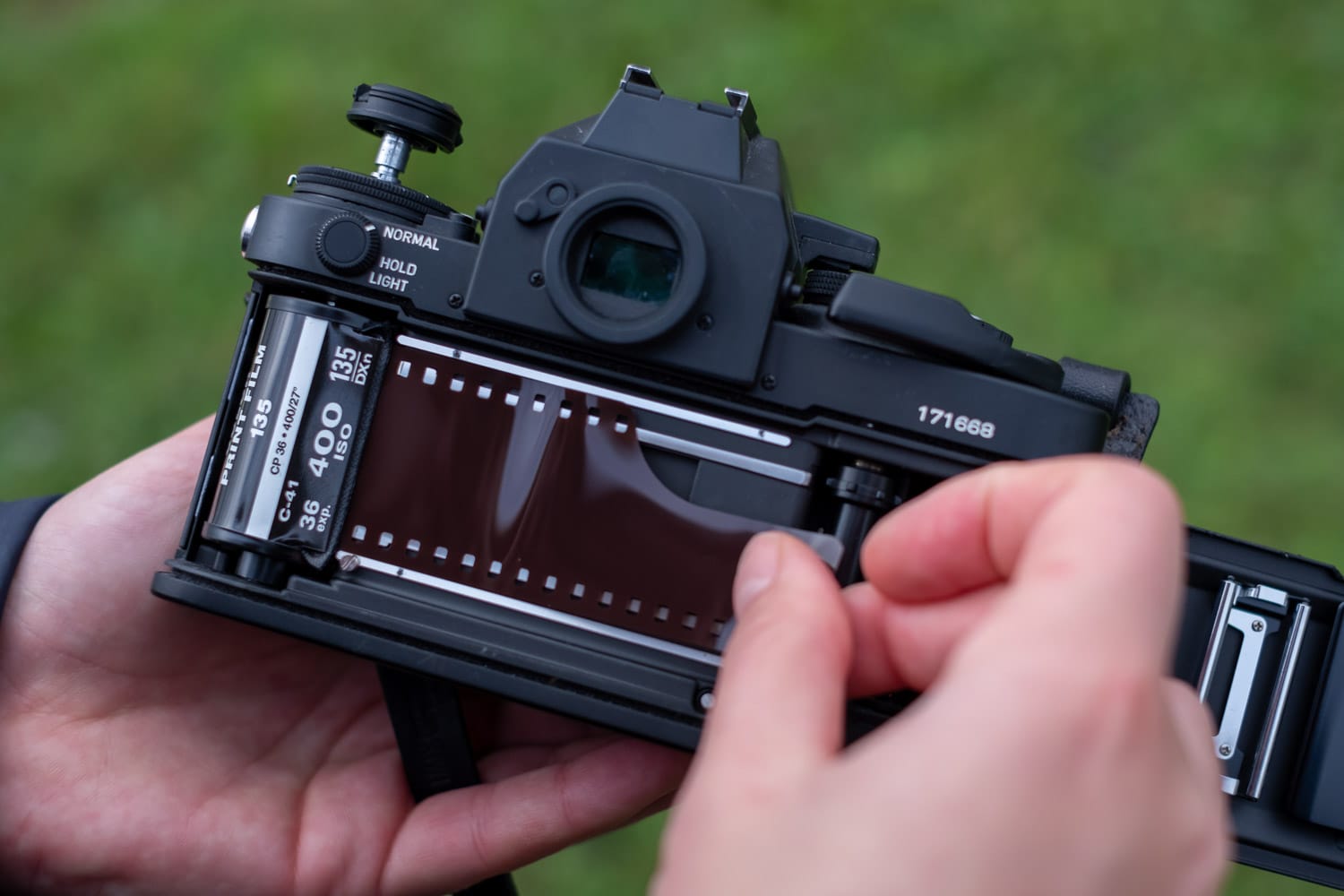
Step-by-step: How to load film into a camera (35mm)
This section walks through loading 35mm film, the most common case when learning how to load film into a camera.
- Prepare your workspace
- Work in a clean, dry area away from bright direct sunlight. Keep hands dry and clean.
- Open the camera back
- Release the back latch or lift the rewind knob, depending on the camera. The back should swing open fully.
- Insert the film cartridge
- Place the cartridge into the film chamber on the left side (usually). The flat end faces down and the sprocket holes align with the camera’s sprocket teeth.
- Pull the film leader across
- Gently pull the film leader across to the take-up spool on the right. Pull enough so the leader reaches the slot or teeth on the spool.
- Attach the leader to the take-up spool
- Insert the leader into the slot or align it with the spool teeth. Some cameras require you to wind slightly to tuck the leader into the slot.
- Advance and check engagement
- Advance the film one or two frames using the advance lever. Confirm the sprocket holes catch on the sprocket teeth and the rewind knob turns slightly as you advance.
- Close the back and set film speed
- Close the camera back securely. Set the ISO (ASA) on the camera to match the film box speed.
- Prime the film
- Advance and fire the shutter until the frame counter shows “1” or the first frame is ready. Some auto-advance cameras do this automatically when you close the back.
Practical tip: If the rewind knob does not rotate while advancing, the leader may not be engaged. Open the back and re-seat the leader.

Step-by-step: How to load film into a camera (120 / medium format)
Medium format loading is different but simple once you know the steps. Here’s how to load 120 film.
- Remove the camera back or open the film chamber
- Many medium-format cameras have a removable back or a hinged back that opens.
- Insert the new roll on the supply side
- Place the full 120 roll on the supply spindle. The paper leader should unwind toward the take-up spool.
- Pull the leader across
- Unwind the paper until the leader reaches the start mark or the slot on the take-up spool. Align any red start marks if present.
- Attach to the take-up spool
- Thread the leader into the take-up spool slot, or align it under the take-up slot teeth. Wind a little to secure it.
- Wind to the first frame
- Advance the backing paper until the frame counter or window shows “1” (some vintage cameras use a red window to see the backing paper number).
- Close and lock the back
- Make sure the back is closed fully and locked. Wind when required between frames.
Note: Medium-format cameras often use backing paper. Avoid touching the actual film when possible to prevent fingerprints or damage.

Troubleshooting common loading problems
Even with practice, problems can happen. Here are common issues when learning how to load film into a camera and how to fix them.
- Film not advancing
- The leader may not be engaged with the take-up spool. Open the back, re-seat the leader, and ensure sprocket holes align.
- Light leaks at the back
- Check that the back closes fully. Inspect foam seals and replace if brittle on older cameras.
- Rewind knob not turning
- For 35mm: If the rewind knob doesn’t turn during advance, the cartridge may not be seated. Remove and reseat the cartridge.
- Scratched or creased film
- Avoid forcing film and keep winding smooth. Replace damaged film and check camera pressure plates for burrs.
- Frames overlapping or miscounted
- Ensure the first frame is correctly set. If overlap occurs, rewind and reload, checking alignment.
PAA-style quick questions
Can I load film in daylight?
Yes. Most modern camera backs block light well. Avoid extremely bright direct sunlight and handle the leader quickly. For sheet film, you must work in a darkroom or use a changing bag.
How do I know if film is loaded correctly?
Advance one or two frames and watch the rewind knob; it should rotate slightly as you advance. Also check that sprocket holes are aligned with sprocket teeth.
What if the frame counter doesn’t move?
The camera may require manual priming to reach frame one. Follow the camera manual to advance until the counter reads “1,” or rewind and reload if necessary.

Care, storage, and tips from experience
A few practical habits make loading film into a camera easier and protect your images.
- Keep film cool and dry
- Store unused film in a cool place or fridge for long life. Let chilled film warm to room temperature before use.
- Use a changing bag for tricky conditions
- If you must change film outdoors in bright light, use a changing bag to avoid light leaks.
- Mark your film
- Note the film type and ISO on the film canister or camera to avoid confusion later.
- Inspect camera seals and pressure plate
- Old seals can crumble and cause light leaks. Clean the pressure plate with a soft cloth.
- Practice with expired or test rolls
- When learning, use cheap or expired film to practice loading and avoid wasting good film.
Personal note: Early on, I lost frames to mis-seated leaders. After that, I always check the rewind knob on the first two advances. That one habit saved me many rolls.

Frequently Asked Questions of how to load film into a camera
How do I tell which way the film cartridge goes in?
Place the cartridge so the flat or protruding lip fits the film chamber; sprocket holes should face the sprocket teeth. Most cameras have a clear orientation—check the camera’s manual if unsure.
How far should I pull the leader?
Pull the leader far enough to reach and secure in the take-up spool slot, usually a centimeter or two past the teeth. If it won’t catch, pull a bit more and try again.
Can I reuse a partially used roll of film?
You can reuse a partially used medium-format roll if the backing paper and frame count are correct. For 35mm, do not open the roll unless in a darkroom or changing bag; reopening exposes the film.
Why does the rewind knob not turn when I advance?
If the rewind knob doesn’t turn, the leader might not be properly engaged with the take-up spool, or the cartridge isn’t seated. Open the back and reseat the film.
How do I avoid scratches when loading film?
Handle the film by the edges and avoid touching the emulsion side. Keep the camera’s interior clean and free of dust and grit.
Conclusion
Loading film into a camera is a small ritual that becomes second nature with a little practice. Follow the step-by-step methods here for 35mm and 120 formats, check engagement by watching the rewind knob, and protect your rolls with simple storage and handling habits. Try loading a few practice rolls and you’ll quickly gain confidence.
Ready to shoot your first roll? Grab a roll of film, follow these steps, and share your results or questions below — I’d love to hear how it goes.

Everett Ashford is a tech reviewer at mytechgrid.com specializing in SSDs, cameras, TVs, earbuds, headphones, and other consumer electronics. He provides honest, data-driven reviews based on hands-on testing and real-world performance analysis. Everett simplifies complex tech details to help readers make smart, confident buying decisions.