The Polaroid camera was invented in 1947, then released commercially as the Model 95 in 1948.
The story of when was the Polaroid camera invented is more than a date in photography history. It explains how Edwin Land turned a child’s simple question into a new way to take, develop, and share pictures within minutes. This guide covers the invention, the first model, the science behind instant film, and Polaroid’s lasting influence.

When Was the Polaroid Camera Invented?
The Polaroid camera was invented in 1947 by Edwin H. Land, an American scientist and inventor. He introduced the first working instant camera prototype at a meeting of the Optical Society of America in New York City on February 21, 1947.
However, the first Polaroid camera was not sold to the public until 1948. The Polaroid Land Camera Model 95 went on sale at the Jordan Marsh department store in Boston on November 26, 1948.
This creates two correct answers to the question, “When was the Polaroid camera invented?”
• 1947 marks the invention and public demonstration of the instant camera.
• 1948 marks the first commercial sale of a Polaroid camera.
This distinction matters because inventing a product and selling it to the public are different steps. Land had the working idea in 1947, but his company needed more time to refine the camera, produce film, and prepare the product for stores.
The short answer to when was the Polaroid camera invented is 1947. If someone asks when the first Polaroid camera became available to consumers, the answer is 1948.
:max_bytes(150000):strip_icc()/GettyImages-151318603-56b008555f9b58b7d01f9c14.jpg)
Who Invented the Polaroid Camera?
Edwin Herbert Land invented the Polaroid camera. He was born in Bridgeport, Connecticut, in 1909 and showed an early interest in light, optics, and materials.
Land entered Harvard but left before completing his degree. He continued his research independently and later became known for his work in polarized light filters. In 1937, he founded the Polaroid Corporation with George Wheelwright III.
Land was not simply trying to make a faster camera. He wanted to change the full photography process. Traditional film required a photographer to take pictures, send the film for processing, and wait days for prints. Land imagined a camera that could complete much of that work on its own.
A well-known story says that Land’s young daughter asked why she could not see a photograph immediately after he took it. That question helped inspire his work on instant photography. Whether told as a family story or a historic turning point, it captures the core idea behind the invention: people wanted to see memories right away.
When asking when was the Polaroid camera invented, it is also important to recognize Land’s scientific skill. He combined optics, chemistry, mechanical design, and business planning into one consumer product.
How Did the First Polaroid Camera Work?
The first Polaroid camera used a special type of instant film. The film contained light-sensitive materials and chemical layers that developed the image inside the camera system.
After the photographer pressed the shutter, the camera exposed the film. Rollers then pulled the film out of the camera and spread chemical developer across its surface. After a short wait, the photographer peeled away the outer layer and revealed the finished photograph.
This process was very different from standard film photography. Regular film stored a hidden image that required chemical processing in a darkroom or laboratory. Polaroid film included much of the chemistry needed to create a visible print.
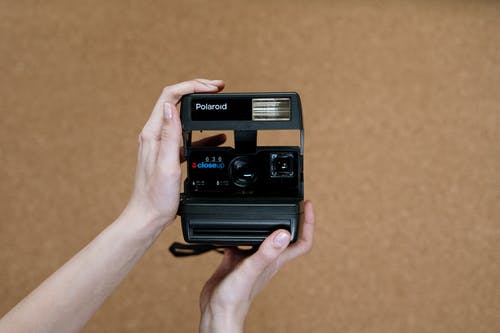
The first Model 95 used roll film. It produced sepia-toned images, rather than the bright color photographs many people now associate with Polaroid cameras. The camera also had a fixed-focus lens and a simple viewfinder, making it fairly easy for ordinary users to operate.
The development process was not perfect. Early prints could have uneven tones, soft details, or chemical marks. Still, the ability to hold a photograph within about a minute felt almost magical at the time.
That instant result is the key to understanding when was the Polaroid camera invented and why the invention became so important. Land did not merely make photography faster. He made the waiting period almost disappear.
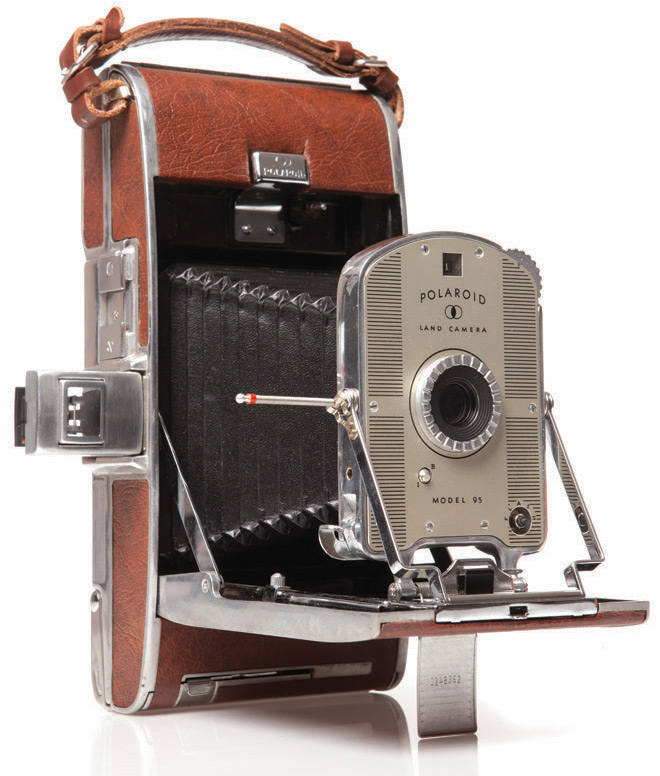
The First Polaroid Camera: Model 95
The Polaroid Land Camera Model 95 was the first commercial instant camera. It cost $89.75 in 1948, which was a high price for many households at the time. Despite the cost, the first batch sold out quickly.
The Model 95 had a folding design. When closed, it looked like a compact leather-covered case. When opened, it revealed the lens, bellows, viewfinder, and film path.
Its main features included:
• A roll-film instant photography system
• A fixed-focus lens
• A built-in electronic flash system on some versions
• Sepia-toned photographs
• A folding body made for easier storage
The camera was designed for convenience, but it still required careful handling. Users had to load the film correctly, pull the exposed print from the camera, and peel the print after the correct development time.
A common mistake was peeling the print too early. That could produce a weak or incomplete image. Peeling it too late could also affect the final result, especially in cold or hot conditions.
The Model 95 helped prove that instant photography could work as a consumer product. It also gave Polaroid valuable feedback about film speed, camera design, and customer habits.
For anyone researching when was the Polaroid camera invented, the Model 95 is a crucial part of the timeline. It turned Land’s 1947 demonstration into a product people could actually buy and use.

Why Did Edwin Land Invent Instant Photography?
Edwin Land wanted to solve a practical problem: the delay between taking a photograph and seeing the result.
Before instant photography, photographers had to wait for film development. Professional photographers might use a darkroom, while families usually sent film to a store or mail-order lab. The process could take several days.
Land saw that a faster process could help many types of users, including:
• Families who wanted immediate snapshots
• Scientists who needed quick visual records
• Artists who valued experimental images
• Police officers and investigators who needed fast documentation
• Businesses that used photographs for identification or records
The invention also changed the emotional side of photography. A Polaroid picture could be passed around at a party, signed by friends, or placed in a wallet before the day ended. The photograph became both a record and a shared event.
This is one reason the answer to when was the Polaroid camera invented remains culturally important. The invention changed how people interacted with photographs, not just how photographs were processed.
When Did Polaroid Color Film Arrive?
Polaroid introduced color instant film in 1963. The product was called Polacolor, and it allowed users to make color photographs without sending film to a laboratory.
Color instant film was a major development. It made Polaroid cameras more appealing for holidays, family events, travel, and creative work. Users could now capture a scene and receive a color print in minutes.
The process was more complex than black-and-white or sepia instant film. Color film had to manage several layers of light-sensitive materials and dyes. This required advanced chemical engineering and careful manufacturing.
Polaroid continued improving color film over time. Later products offered better exposure, stronger color, and more reliable development. Yet the basic promise stayed the same: take a picture and see it soon.
It is useful to separate the history of instant photography from the history of color Polaroid photography. When was the Polaroid camera invented? The answer is 1947. When did Polaroid color film become available? The answer is 1963.
How Polaroid Changed Photography
Polaroid made photography more direct and personal. With traditional film, photographers often waited before learning whether a picture worked. With an instant camera, they received immediate feedback.
That feature encouraged experimentation. People could try a new angle, adjust the lighting, and take another picture without waiting for film processing. The instant print also became an object that could be displayed, traded, or given away.
Polaroid cameras became popular in many settings:
• Weddings and family parties
• Travel and vacation albums
• Classrooms and school projects
• Scientific and technical work
• Fashion and art photography
• Photo booths and guest books
Artists also used Polaroid photographs as more than snapshots. The unusual colors, soft focus, white borders, and physical texture gave the images a distinct look. Some photographers treated each print as a small original artwork.
In my experience studying the history and use of instant cameras, the most important lesson is that convenience does not always reduce creativity. The limits of the camera often encourage better choices. Since every exposure costs money, photographers tend to slow down, notice the light, and think before pressing the shutter.
That practical lesson still applies today. Even with digital cameras, taking fewer and more deliberate photographs can make the final collection more meaningful.
Polaroid Cameras and the Digital Photography Era
Digital cameras and smartphones changed the photography market in the late 1990s and early 2000s. People could take unlimited pictures, view them instantly, and share them online.
At first, digital photography seemed likely to replace instant cameras completely. Digital images were cheaper to create and easier to store. Many consumers moved away from film and traditional print services.
However, Polaroid photography offered something digital images could not fully copy: a physical print made at the moment of capture. A small instant photograph could be held, signed, pinned to a wall, or placed in a scrapbook.
The familiar square format also became part of the visual language of photography. Its white border and soft colors created a style that many digital apps later tried to imitate with filters.
Polaroid Corporation stopped making its original instant film in 2008. Later, new companies and former Polaroid workers helped keep instant photography alive. The Polaroid brand also returned to the instant camera market with modern products that combine classic design with updated features.
This revival shows why knowing when was the Polaroid camera invented is not only a history exercise. The original idea still meets a modern need for slower, more tangible, and more personal images.
Polaroid Camera Benefits and Limitations
Instant cameras remain popular because they offer a special balance of simplicity and surprise. They are easy to share, but they also have limits that users should understand.
Benefits of a Polaroid Camera
• Immediate prints: You can hold the image soon after taking it.
• Simple operation: Most models use basic controls.
• Physical memories: Each picture exists as a real object.
• Unique appearance: Instant film has colors and textures that digital filters only imitate.
• Social value: Prints can be shared at events or given to friends.
Limitations of a Polaroid Camera
• Film cost: Each photograph has a direct material cost.
• Limited control: Many basic models offer few manual settings.
• Light sensitivity: Indoor scenes may need a flash or extra light.
• Storage needs: Film can be affected by heat, cold, and moisture.
• Unpredictable results: Exposure and color may vary from picture to picture.
For better results, store unopened film in a cool, dry place. Let cold film return to room temperature before use. Follow the development instructions, and do not shake modern instant prints unless the film maker specifically recommends it.
The biggest mistake new users make is treating instant film like a phone camera. It is not designed for unlimited trial shots. Think of each exposure as a small decision, not a disposable test.
A Simple Polaroid Photography Timeline
The following timeline summarizes the main events related to when was the Polaroid camera invented:
-
1937: Edwin Land and George Wheelwright III establish the Polaroid Corporation.
-
1947: Land demonstrates a working instant camera prototype in New York City.
-
1948: The Polaroid Land Camera Model 95 goes on sale in Boston.
-
1963: Polaroid introduces Polacolor, its color instant film.
-
1972: The company introduces the Polaroid SX-70, a folding instant camera that produces a finished print without peeling.
-
1980s: Instant photography becomes common at parties, family events, and workplaces.
-
2008: Polaroid ends production of its original instant film products.
-
2010s and after: New instant cameras and films help revive interest in analog photography.
The SX-70 deserves special attention. It was a major design achievement because it used a folding single-lens reflex body and self-developing film. The camera made instant photography more portable and helped define the classic Polaroid experience.
Frequently Asked Questions About When Was the Polaroid Camera Invented
When was the Polaroid camera invented?
The Polaroid camera was invented in 1947 by Edwin H. Land. The first commercial model, the Land Camera Model 95, was sold in 1948.
Who invented the first instant camera?
Edwin H. Land invented the first successful consumer instant camera. He developed the system through research in optics, chemistry, film, and camera design.
When did the first Polaroid camera go on sale?
The first Polaroid camera went on sale on November 26, 1948. It was the Polaroid Land Camera Model 95, sold first at the Jordan Marsh department store in Boston.
What was the first Polaroid camera called?
The first commercial Polaroid camera was called the Polaroid Land Camera Model 95. It used roll film and produced sepia-toned instant photographs.
Did Polaroid cameras use regular film?
No. Polaroid cameras used specially designed instant film. The film contained chemical layers that helped develop the photograph after exposure.
When did Polaroid introduce color film?
Polaroid introduced color instant film in 1963. The product was known as Polacolor and expanded instant photography into more family, travel, and creative uses.
Why are Polaroid cameras still popular?
Polaroid cameras remain popular because they create physical photographs immediately. Their unique colors, soft detail, and social appeal also give them a look that digital images do not fully replace.
Conclusion
The answer to when was the Polaroid camera invented is 1947, when Edwin Land demonstrated his working instant camera. The first commercial Polaroid camera followed in 1948 with the Land Camera Model 95.
Polaroid changed photography by making the waiting period shorter and the experience more personal. Its influence can still be seen in instant cameras, creative photography, photo keepsakes, and digital filters that copy the classic instant-film style.
If you use an instant camera today, slow down and treat each frame as a small story. Explore the history, try different lighting, and share your favorite Polaroid memories in the comments.

Everett Ashford is a tech reviewer at mytechgrid.com specializing in SSDs, cameras, TVs, earbuds, headphones, and other consumer electronics. He provides honest, data-driven reviews based on hands-on testing and real-world performance analysis. Everett simplifies complex tech details to help readers make smart, confident buying decisions.